Square
Following
Hot
News
Profile

Amfranklin1

vip
Peak Tier 0
Active for: 5y
No content yet
0
Following
28
Followers
80
Liked
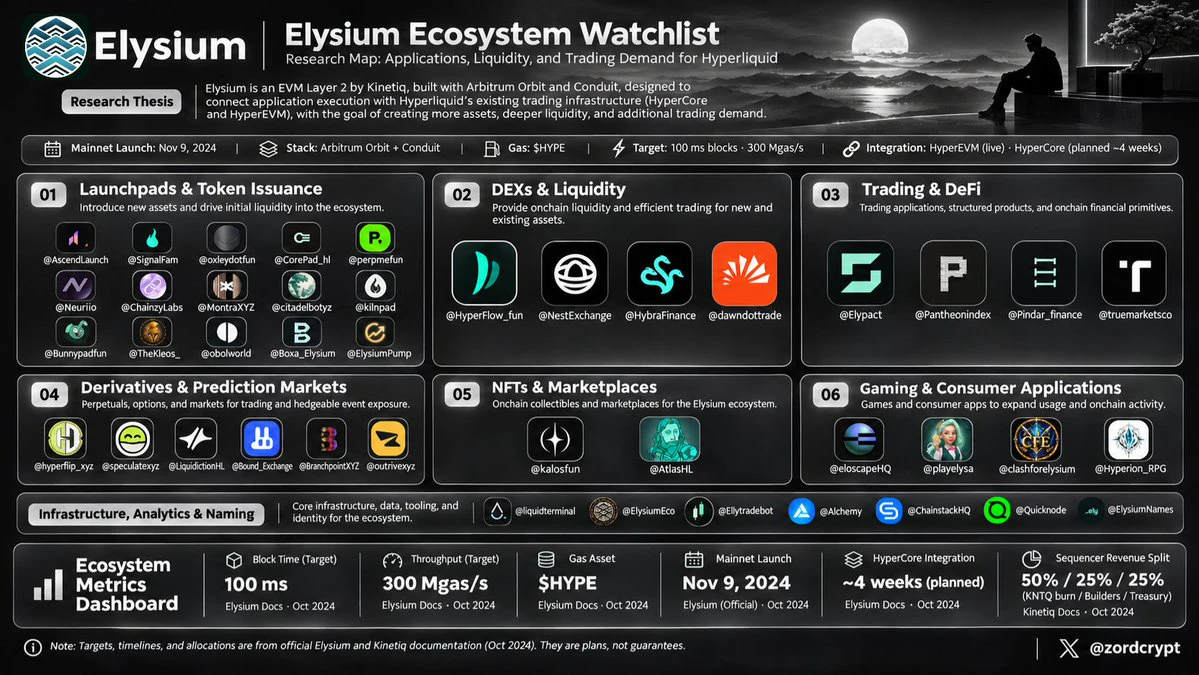
➥ @HyperliquidX doesn't necessarily need another trading venue. It needs more applications creating assets, liquidity, and demand for its existing markets.
That's the opportunity @Enter_Elysium is targeting with its November 9 mainnet launch.
Built by @Kinetiq_xyz using Arbitrum Orbit and @conduitxyz infrastructure, Elysium is an EVM Layer 2 designed to connect application execution with Hyperliquid's existing trading infrastructure.
The ambition goes beyond faster and cheaper transactions.
It’s about turning new applications into:
▸ deeper liquidity
▸ additional trading activity
▸ potential r
post-image
ARB+1.17%
HYPE+0.24%
USDC+0.01%
RION-0.84%
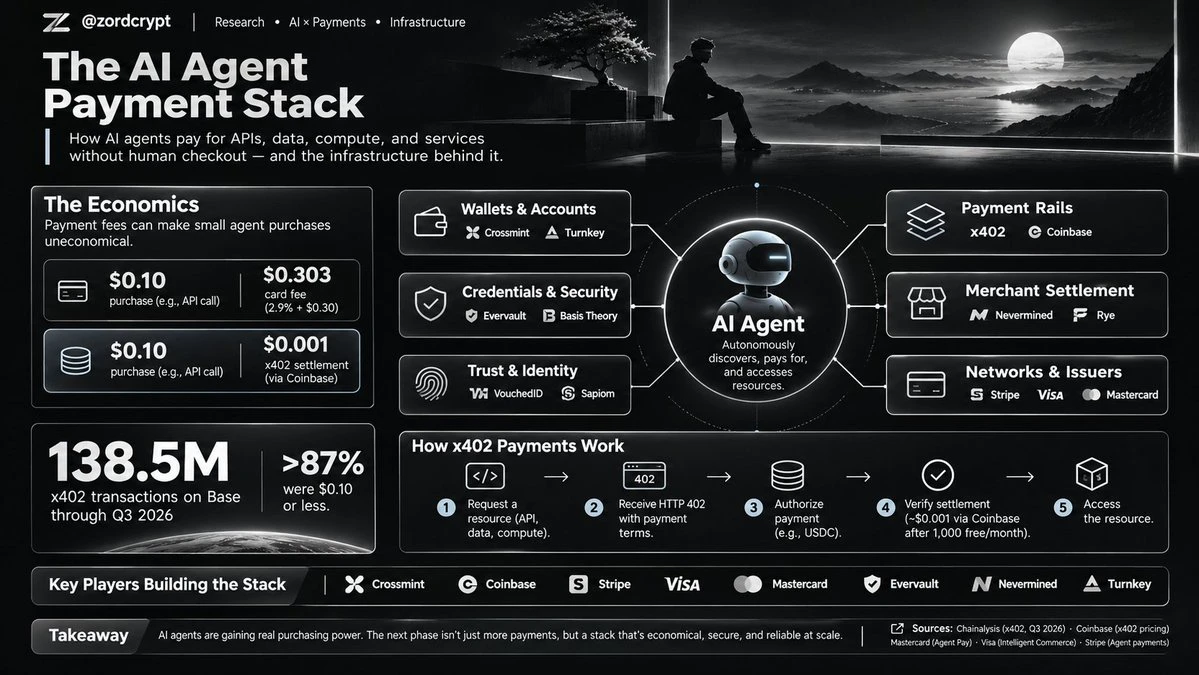
An AI agent wants to buy $0.10 worth of market data.
The data costs 10 cents, but processing the payment through a conventional card could cost another 30 cents.
Imagine that same agent making thousands of small purchases every day.
Suddenly, the cost of moving money becomes a bigger problem than the service itself.
This is one reason I've been paying closer attention to the 𝗲𝗺𝗲𝗿𝗴𝗶𝗻𝗴 𝗽𝗮𝘆𝗺𝗲𝗻𝘁 𝗶𝗻𝗳𝗿𝗮𝘀𝘁𝗿𝘂𝗰𝘁𝘂𝗿𝗲 𝗳𝗼𝗿 𝗔𝗜 𝗮𝗴𝗲𝗻𝘁𝘀.
And the numbers are getting difficult to ignore.
According to @chainalysis, x402 recorded approximately 138.5 million cumulative transa
post-image
COIN-3.95%
V+2.88%
MA+3.17%
  • 1
  • 1
Whenever a crypto project gives you two options:
• Claim 50% (or less) of your allocation immediately.
• Wait several months to receive 100%.
Bro, I'm starting to think taking the smaller allocation upfront is the smarter move.
@Humanityprot, @billions_ntwk, @MitosisOrg, and others have made me increasingly skeptical of these claim structures.
You wait months to unlock the full allocation, only to risk watching the token lose more value than the extra tokens are worth.
100% of your allocation doesn't automatically mean 100% of its original value.
I'd rather secure 50% today than wait months fo
TOKEN-0.16%
GM everyone, and happy new month! ☀️
Welcome to November.
Another month to learn, build, improve, and position ourselves for better opportunities.
October had its wins, lessons, and setbacks, but we're still here, still pushing.
Wishing everyone a productive November filled with good health, clarity, growth, and more wins.
May this month be kind to us all. ❤️
GM once again, CT! 🤝
post-image
Crypto hackers reportedly walking away with billions while I'm still calculating network fees before moving $50. 😭
Bro, at least leave some liquidity for the rest of us.
But if I somehow woke up with a couple billion in crypto, I already know where I'm going. 💀
@A7AinterX has offering USDT → SWIFT transfers in a single transaction.
Different financial problems entirely. 😂
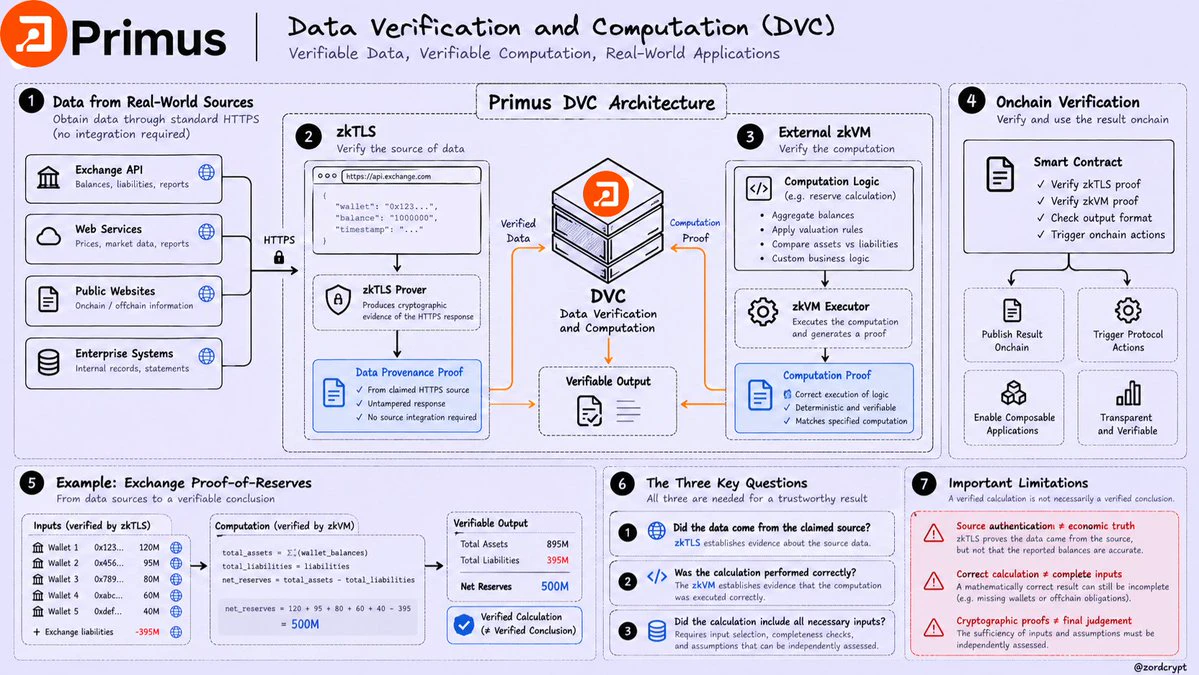
An exchange publishes a proof-of-reserves report showing $500 million in assets.
The figures add up. The supporting data looks legitimate, and the report gives the impression that everything has been verified.
But a correct calculation doesn't necessarily mean the reported reserves are complete.
Before trusting that figure, I'd want answers to three questions:
• Where did the data come from?
• Was the calculation performed correctly?
• Were all the necessary inputs included?
This is a useful way to understand what @primus_labs is building with its Data Verification and Computation (DVC) archit
post-image
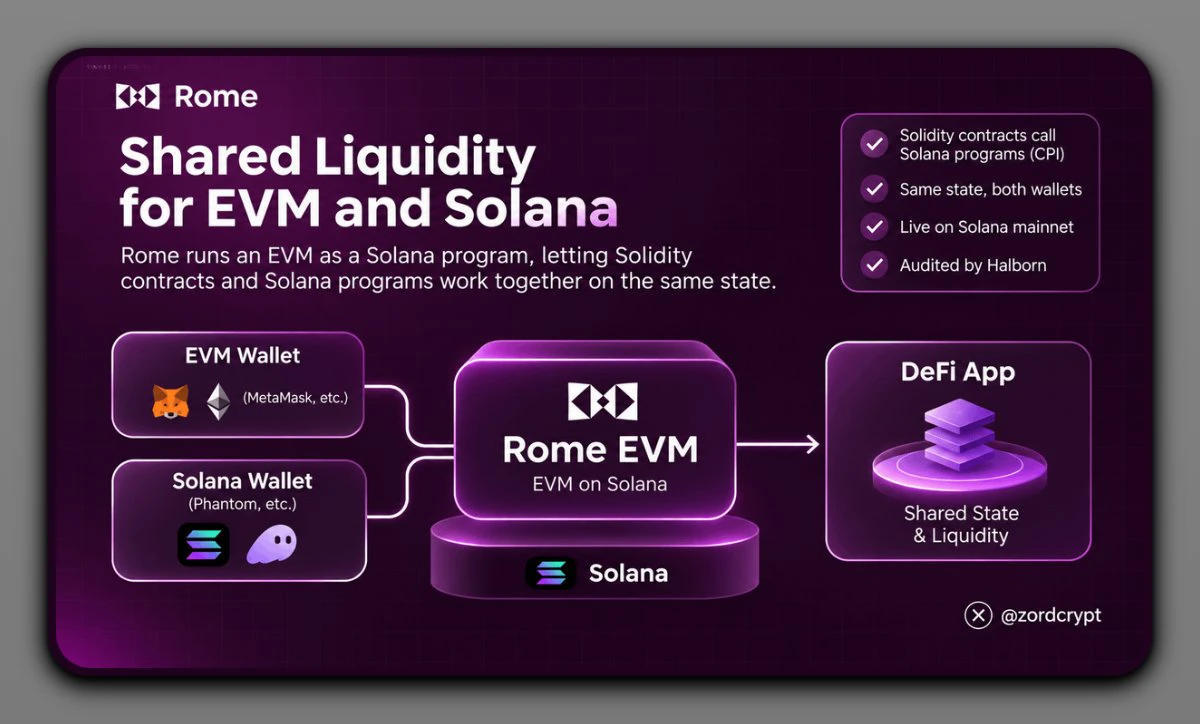
Imagine building a DeFi application where Ethereum and Solana users don't need separate liquidity pools.
That's one of the possibilities @RomeProtocol is introducing.
Rome runs an EVM as a native Solana program, allowing Solidity contracts to interact directly with Solana programs through cross-program invocation (CPI).
The architecture supports something quite practical:
→ An EVM wallet and a Solana wallet can interact with the same application state and liquidity
→ Without a separate bridge transaction
Rome's EVM is already deployed on Solana mainnet, with publicly available code and a Halbo
post-image
ETH-1.26%
SOL-0.77%
Giwa Chain mainnet is almost here.
Dear launchpads, please allow us to make money for at least 48 hours before turning us into long-term investors. 😭
GM CT, happy new week!
GMWAGMI+0.00%
CT-12.34%
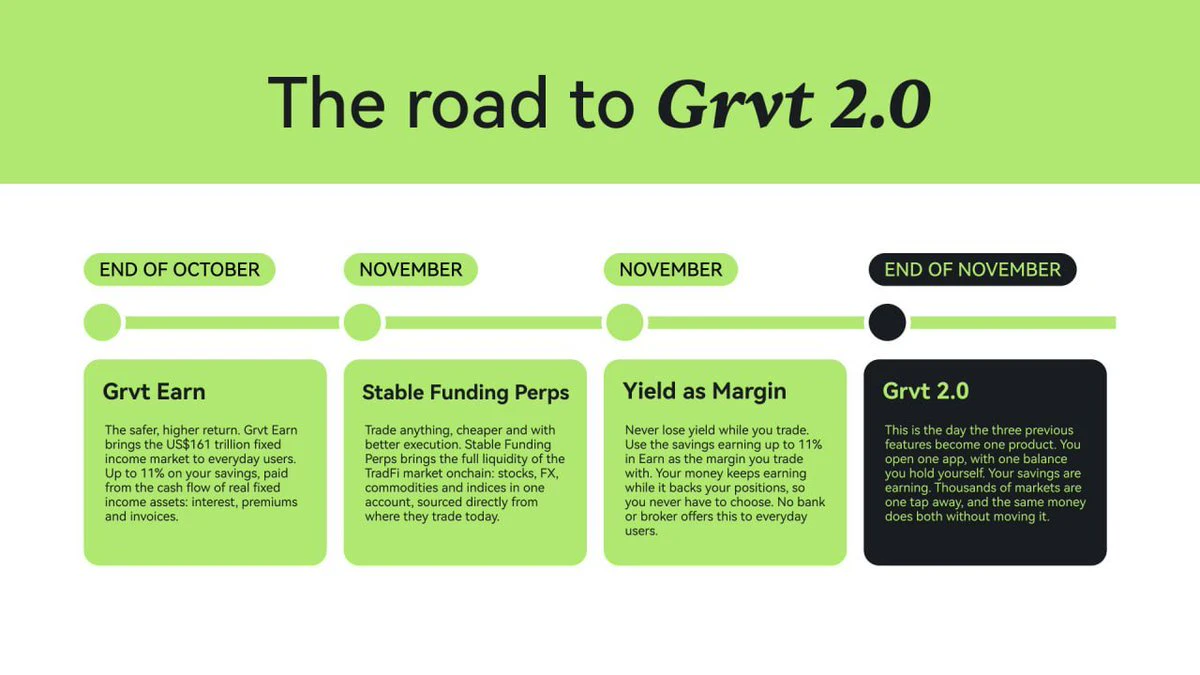
I spent some time reviewing @grvt_io's 2.0 roadmap, and I think the biggest opportunity isn't the expansion into new markets.
It's what $GRVT plans to do with 𝗰𝗮𝗽𝗶𝘁𝗮𝗹 that would otherwise sit 𝗶𝗱𝗹𝗲.
𝗧𝗵𝗿𝗲𝗲 𝘂𝗽𝗰𝗼𝗺𝗶𝗻𝗴 𝗿𝗲𝗹𝗲𝗮𝘀𝗲𝘀 𝗰𝗮𝘂𝗴𝗵𝘁 𝗺𝘆 𝗮𝘁𝘁𝗲𝗻𝘁𝗶𝗼𝗻:
➊ Grvt Earn (October)
Tokenized fixed-income strategies targeting yields of up to 11%, with returns dependent on underlying asset performance.
➋ Stable Funding Perps (November)
Access to stocks, FX, commodities and indices, with zero trading fees and once-daily funding. $Grvt is targeting 1,000+ markets by
post-image
GRVT-16.00%
STABLE-1.66%
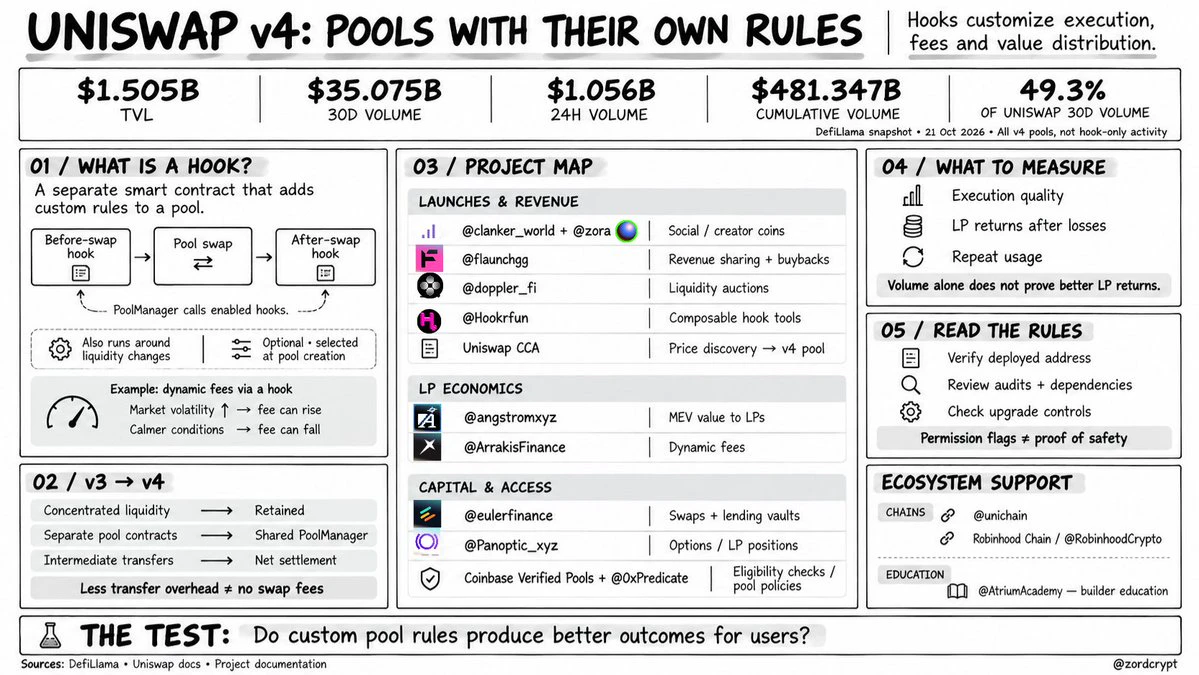
𝗨𝗻𝗶𝘀𝘄𝗮𝗽 𝘃𝟰 𝗹𝗲𝘁𝘀 𝗱𝗲𝘃𝗲𝗹𝗼𝗽𝗲𝗿𝘀 𝗰𝗵𝗮𝗻𝗴𝗲 𝘄𝗵𝗼 𝗲𝗮𝗿𝗻𝘀 𝗳𝗿𝗼𝗺 𝗮 𝘁𝗿𝗮𝗱𝗲 𝗮𝗻𝗱 𝘁𝗵𝗲 𝗿𝘂𝗹𝗲𝘀 𝘁𝗵𝗮𝘁 𝘁𝗵𝗲 𝘁𝗿𝗮𝗱𝗲 𝗳𝗼𝗹𝗹𝗼𝘄𝘀.
That’s what caught my attention while researching hooks.
A liquidity pool can adjust its fees, distribute revenue to creators, check who can participate, or connect trading capital to lending markets.
To understand why this matters, it helps to understand what a hook actually does.
➊ What is a hook?
A hook is a separate smart contract attached to a Uniswap v4 liquidity pool. It contains additional instructions that customize
post-image
UNI+3.05%
ETH-1.26%
USDC+0.01%
CLANKER-1.33%
ZORA-9.75%
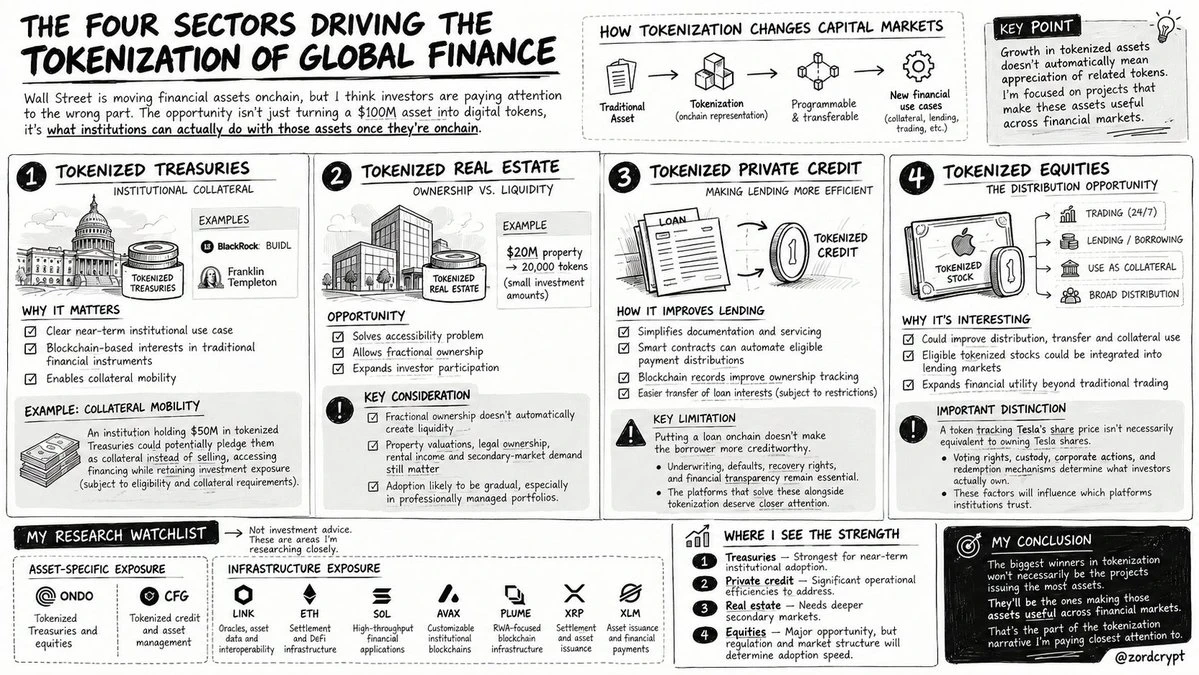
Wall Street is moving financial assets onchain, but I think investors are paying attention to the wrong part of tokenization.
The opportunity isn't simply turning a $100 million asset into digital tokens.
It's what institutions can actually do with those assets once they're onchain.
I've been looking at four sectors where tokenization could change how capital moves, and the differences are worth understanding.
➊ Tokenized Treasuries — Institutional Collateral
This is probably the clearest near-term use case.
Products like BlackRock's BUIDL and Franklin Templeton's tokenized money-market funds
post-image
BLK+1.58%
ONDO-0.29%
CFG+0.52%
ETH-1.26%
SOL-0.77%
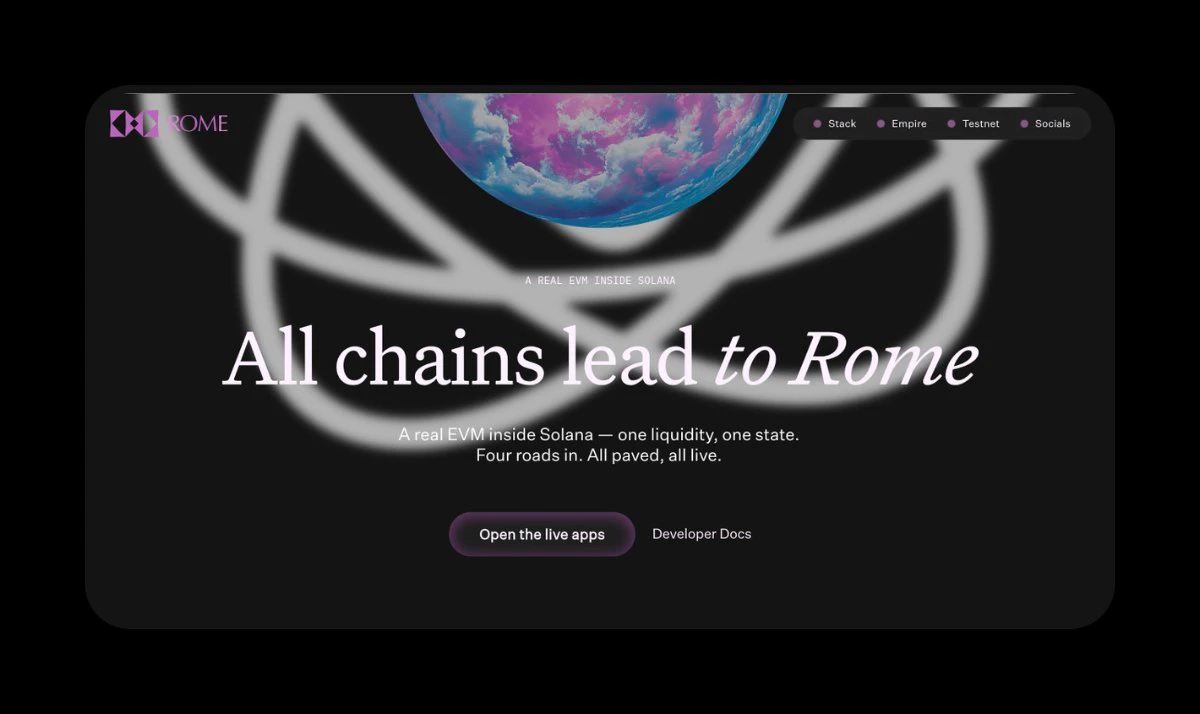
I spent some time reading through @RomeProtocol, and one detail made me rethink how EVM compatibility on Solana could work.
Why should an Ethereum application need a separate liquidity pool just because its contracts run in a different environment?
That’s the problem Rome is working on.
It runs an EVM inside Solana, allowing Solidity contracts and native Solana programs to interact without moving assets through a bridge.
→ Ethereum developers can bring existing contracts over, keep using familiar development tools, and access liquidity already on Solana.
→ Solana developers can make their appl
post-image
SOL-0.77%
ETH-1.26%
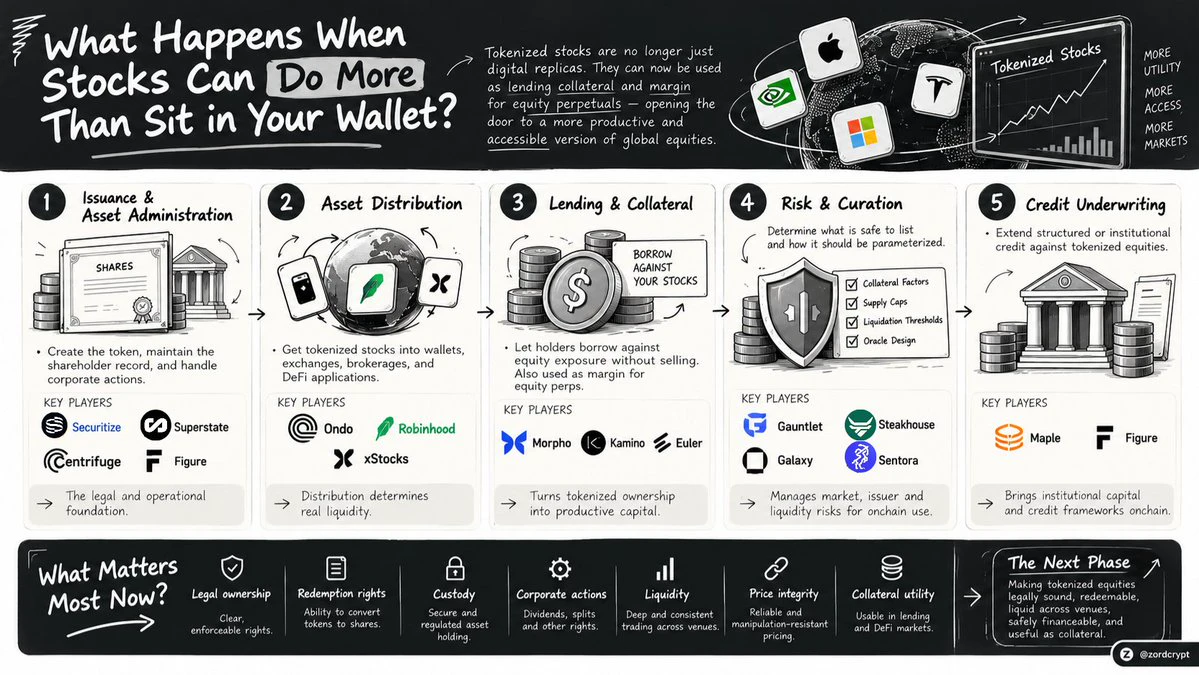
𝗪𝗵𝗮𝘁 𝗵𝗮𝗽𝗽𝗲𝗻𝘀 𝘄𝗵𝗲𝗻 𝘆𝗼𝘂𝗿 𝘀𝘁𝗼𝗰𝗸𝘀 𝗰𝗮𝗻 𝗱𝗼 𝗺𝗼𝗿𝗲 𝘁𝗵𝗮𝗻 𝗷𝘂𝘀𝘁 𝘀𝗶𝘁 𝗶𝗻 𝘆𝗼𝘂𝗿 𝗽𝗼𝗿𝘁𝗳𝗼𝗹𝗶𝗼?
You can now use certain tokenized equities as collateral to borrow stablecoins or support leveraged positions.
That's a significant change in how equities can be used.
But I think we're getting too focused on putting stocks onchain and not paying enough attention to the infrastructure making them useful.
Because wrapping a stock into a token is relatively straightforward compared to making that token legally enforceable, liquid, redeemable, and safe to use in D
post-image
CFG+0.52%
ONDO-0.29%
MORPHO-4.33%
KMNO+3.65%
Gm Chads, happy weekend 🩵
Away from the charts and endless timelines for a bit.
Fresh air, green views, and some peace of mind. Sometimes you need to step away from the market and enjoy what's around you.
Crypto will still be here on Monday.
Hope you're all having a good weekend 🤝
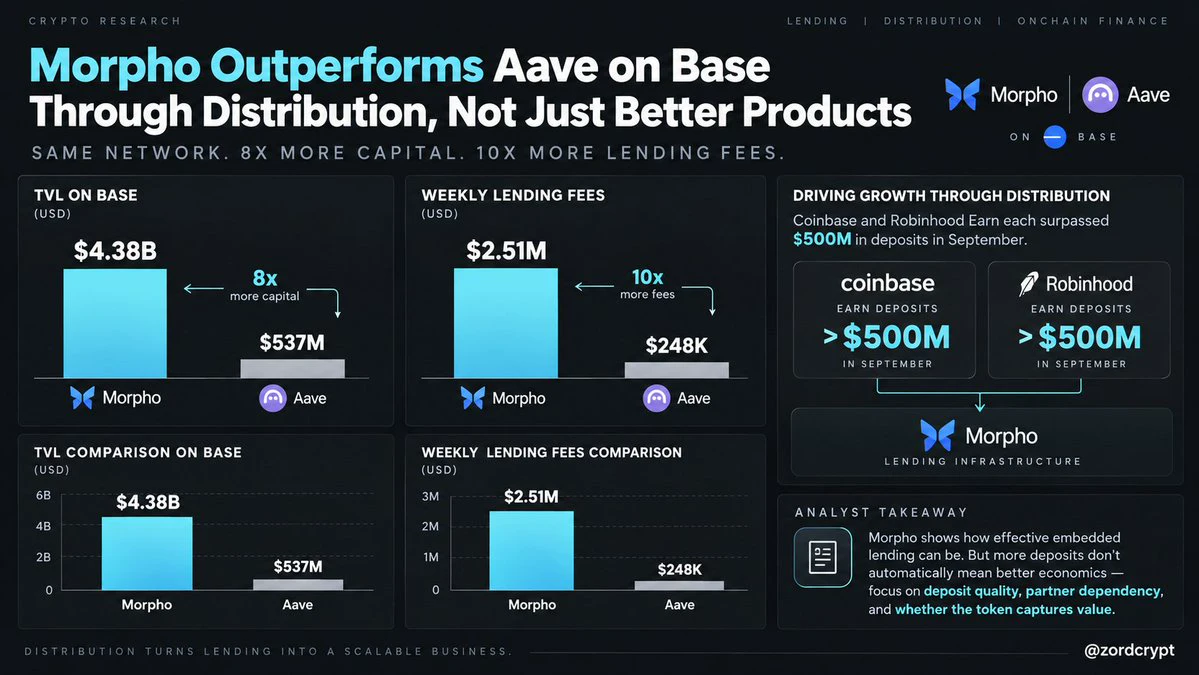
Aave has $18B in TVL globally, but on Base, Morpho is outperforming it by a huge margin.
I think there’s a lesson here about how lending protocols scale.
Look at the difference.
On Base (TVL):
• $Morpho: $4.38B
• $Aave: $537M
Weekly lending fees:
• $Morpho: $2.51M
• $Aave: $248K
Morpho holds roughly 8x more capital and generates 10x more lending fees on the same network.
But I wouldn’t attribute that entirely to better lending products.
A large part of Morpho’s growth comes from how its infrastructure reaches users.
Coinbase and Robinhood Earn products each surpassed $500M in deposits in Septe
post-image
AAVE-1.22%
MORPHO-4.33%
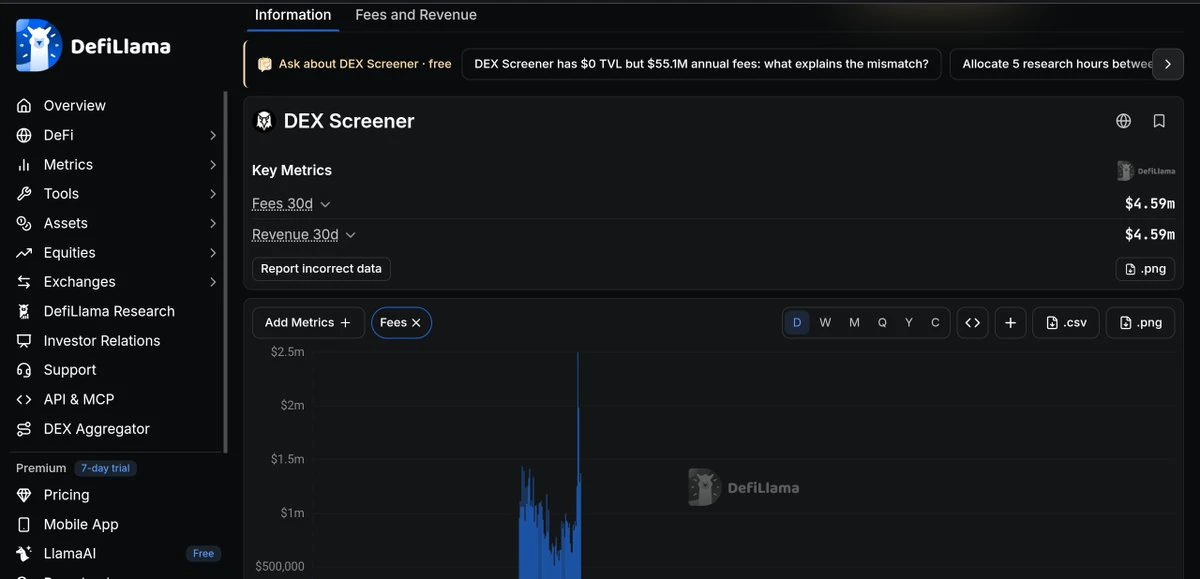
While you're busy hunting 100x memecoins, DEX Screener is quietly making money from the entire casino.
Just checked DefiLlama, and the numbers are ridiculous.
→ 24H revenue: $95.7K
→ 30D revenue: $4.59M
→ All-time revenue: $148.83M
And apparently, projects are paying around $500 just to update their token's profile picture. 💀 (Haven't verified that fee.)
Your token might never reach a $1M market cap, but at least its $500 profile picture will look good on the way to zero.
I'm starting to think the real winners in this memecoin casino aren't the traders.
It's the platforms collecting fees whet
post-image
TOKEN-0.16%
MEME-0.94%
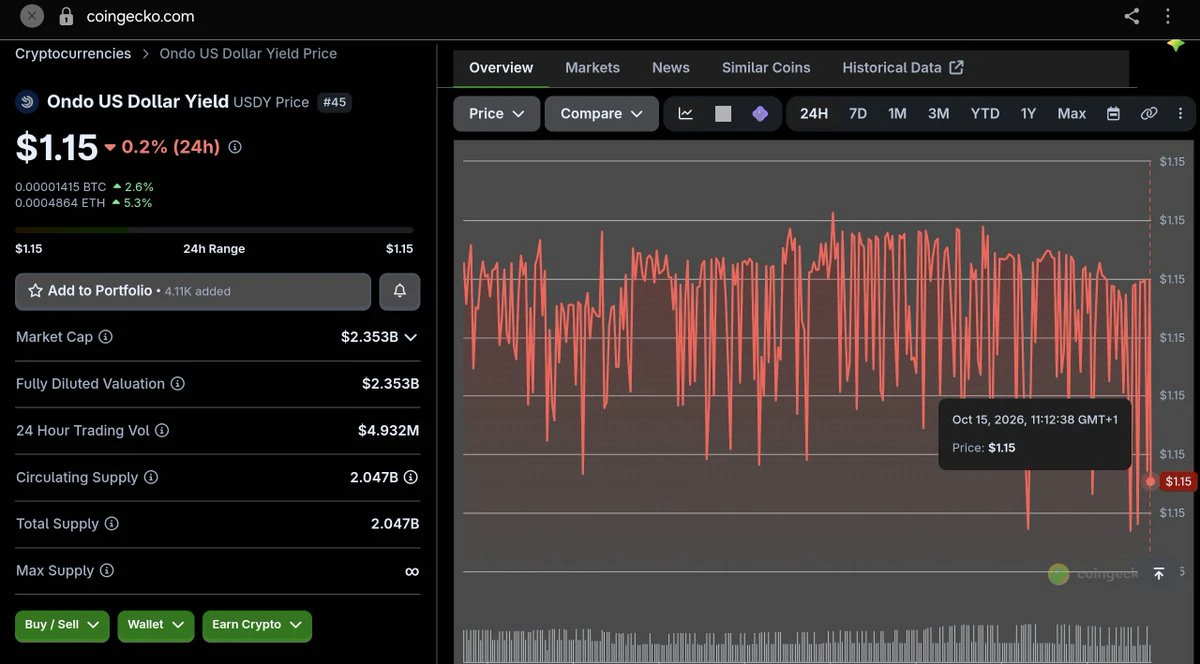
BlackRock helped put tokenized Treasuries on the map. Now two competitors are ahead of it in market size.
I was comparing RWA assets on @coingecko, and the numbers caught my attention.
Three products are competing for billions in tokenized Treasury exposure:
→ $Circle USYC: $2.39B
→ $Ondo USDY: $2.35B
→ BlackRock $BUIDL: $2.17B
That's nearly $7B across three products offering different routes to short-term US government debt exposure.
But the market caps aren't what I find particularly important.
Look at how they're positioning themselves.
• Circle USYC: Focused on institutional yield and maki
post-image
BLK+1.58%
CRCL+0.52%
ONDO-0.29%
USDY+0.02%
RWA-0.39%
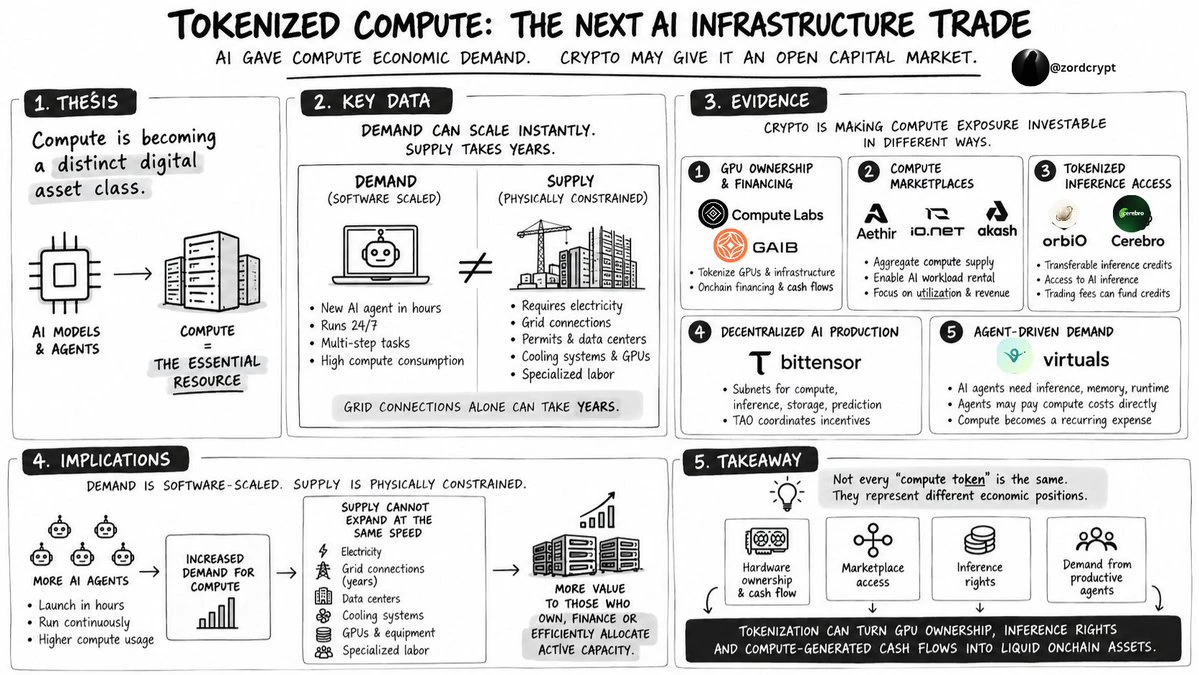
AI agents can be deployed in hours. The infrastructure powering them can take years to build.
I think this imbalance is creating a new investment opportunity in crypto: tokenized compute.
We've spent years investing in AI models, applications and agent tokens.
But there's another side of the market worth examining.
Every AI model needs processing power. Every active agent consumes inference, memory and computing resources.
And unlike software, physical compute capacity cannot scale overnight.
New GPUs require capital. Data centers need electricity, cooling, networking and grid connections.
Som
post-image
GAIB-5.50%
TAO+0.41%
CS+0.00%
TOKEN-0.16%
Good morning chads 🩵
Have a great day!!!
Load More