#WCTCS9 The Market Rebounds After You Stop Out: The Most Agonizing Test on the Trading Journey!
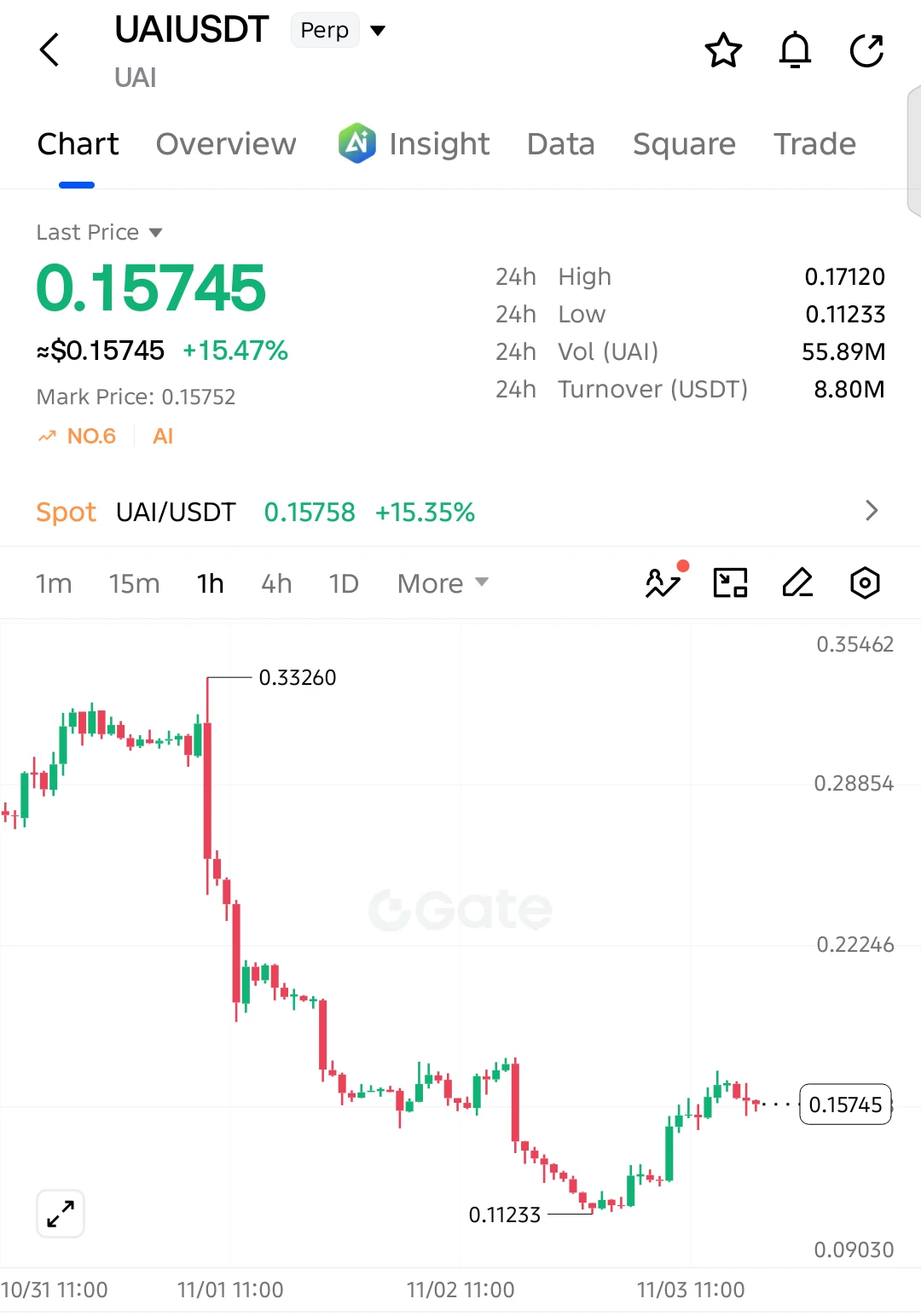
The market rebounds after you stop out. This is almost the most painful scar in every trader’s heart. You strictly follow the plan you made in advance, exit decisively at the set level, and cut your losses. But as soon as the position is closed, the candlesticks immediately turn around and rebound all the way up, making a substantial move in the direction you originally expected.
You stare at the screen and watch the profits that should have been yours slowly grow. Frustration, resentment, and doubt all come rushing in.
Many people gradually abandon their stop-loss discipline after being hit by this again and again, eventually holding losing positions, becoming deeply underwater, and getting liquidated.
Many people think the hard part of trading is reading candlesticks, identifying support and resistance, and predicting whether prices will rise or fall. But anyone who has stayed in the market for the long term understands: the hardest part has never been judging the market. It’s whether you can stick to your trading system when faced with the temptation of a rebound after stopping out.
I. That One Rebound Can Destroy All Your Faith in Risk Management
Let’s retrace the thought process most traders go through. Before opening a position, you carefully write out your trading plan: entry conditions, stop-loss level, maximum position size, and exit criteria, all clearly laid out in black and white. When the market reaches your stop-loss level, you grit your teeth and exit. The loss is within the plan and an acceptable cost. But the market plays a cruel joke. A few minutes or hours after you stop out, the price stops deteriorating and instead quickly reverses, producing a strong rebound. If only you hadn’t stopped out, you wouldn’t just have avoided a loss—you could have made a decent profit.
At that moment, every negative emotion in human nature is awakened. You start to question yourself: Did I set my stop-loss where it would be too easy to trigger? Does the market deliberately hunt stops before pushing prices up? Is strict stop-loss discipline itself a mistake? After it happens once or twice, a thought quietly takes hold: maybe holding the position is the right choice after all. This is one of trading’s most damaging traps. That rebound was just a chance gift of probability, but in your mind it creates a false positive feedback loop: if you don’t stop out, you can wait for a rebound and break even.
People instinctively seek gains and avoid losses. Compared with remembering the painful lesson of “not stopping out and ending up with a huge loss” ten times, the brain more easily remembers this one regret: “the market rebounded after I stopped out.” So the next time the market moves against your position and your floating loss gradually grows, you hesitate when it reaches the planned stop-loss level. You remember the rebound after your last stop-out and quietly tell yourself: wait a little longer; maybe it’ll reverse soon. The small, manageable loss you planned for gradually gets bigger. A small floating loss becomes a moderate loss, then slowly turns into a deeply underwater position. The market won’t be kind every time, and not every drop will be followed by a rebound.
When a one-way trend truly takes hold and the market keeps weakening without turning back, all you’re left with is a huge loss you can’t recover from. Many traders are liquidated not because they badly misjudged one major market move, but because of the psychological wound caused by “a rebound after stopping out.” One regret overturns a risk-management belief built over a long time, and the cost is depleted capital or even being forced out of the market altogether.
There’s a concept many people never quite distinguish: a rebound does not prove that your position logic was right. A market rebound is simply a normal feature of market fluctuations; it doesn’t mean your earlier judgment wasn’t wrong. By setting a stop-loss, we are essentially acknowledging that the current price action has shown our entry logic to be invalid and that the risk has exceeded what we can tolerate. Even if the market later comes back, that is just new price movement, not a vindication of your original position. The market has no obligation to protect your entry price. A rebound is simply the market’s choice, not a reward for “holding a losing position.”
II. Loss Aversion: Why We Can’t Let Go of “A Rebound After Stopping Out”
Loss aversion in behavioral finance perfectly explains this torment. The pain of losing a given amount is far greater than the joy of gaining the same amount. Exiting at a stop-loss confirms a real loss; the rebound that follows feels as though a profit that “should have been yours” has been snatched away right before your eyes, amplifying the sense of missed opportunity many times over. Our brains naturally want to “break even” and dislike “admitting a loss.” As long as a floating loss remains in the account and you don’t close the position, many people deceive themselves: the loss is just a number on the screen, and as long as I haven’t sold, it isn’t a real loss. Stopping out means personally making the loss real and admitting that you were wrong this time. The rebound that follows keeps reminding you: you could have avoided this loss.
This mindset can make traders confuse two completely different things: one is following the rules, accepting a small planned loss, protecting your capital, and waiting for the next qualifying opportunity; the other is abandoning the rules and betting on a market reversal to avoid regret. Amateur traders make decisions by watching profit and loss figures; professional traders make decisions by following their trading rules.
Professional traders also regret rebounds after stopping out. They feel disappointed too, but they know the difference: regret is an emotion; rules are a boundary. You can have the emotion, but you must not let it change your trading plan. In the records of many traders who have spent years in the market, two or three out of every ten stop-loss trades are followed by a rebound. That’s an inevitable feature of probability, not a flaw in the rules.
A trading system with positive expectancy has to accept that some rebounds will come after a stop-out. Its goal is not to avoid every stopped-out trade, but to make the sum of profits greater than the sum of stop-losses across a large sample of trades over the long term. If you loosen or abandon your stop-losses to avoid the regret of a few “rebounds after stopping out,” you’re embracing a high-probability risk of ruin just to avoid a low-probability regret. Over the long term, the numbers simply don’t work in your favor. Consider a simple set of figures: if an account loses 10%, it needs to gain 11% to break even; after a 30% loss, it needs to gain 43%; after a 50% loss, it needs to gain 100%. Once you let losses keep growing, the difficulty of breaking even rises exponentially. Getting lucky and holding through one loss until a rebound comes at the cost of planting a time bomb in your mind. The next time there’s no rebound, it will hit hard.
III. Distinguish Between Two Types of Rebound: A Corrective Bounce or a Trend Reversal
When the market rebounds after you stop out, take a step back and objectively distinguish between the two types. This is also one of the biggest differences between experienced traders and beginners.
The first type of rebound: a short-term corrective bounce within a choppy market, just market noise. The market has only pulled back briefly without changing its original structure; it’s merely a short-term bounce caused by liquidity. This kind of rebound is highly random, has no reliable signal, is difficult to predict, and isn’t an opportunity our trading system is designed to capture. Even if you hold through it and break even, that’s luck, not skill. The market will find a way to take back money earned through luck.
The second type of rebound: a trend reversal, where the market structure undergoes a fundamental change.
Support and resistance, moving-average structure, and candlestick patterns all form anew, generating a new entry signal. This is an opportunity worth entering again. But here’s the key: re-entering and holding onto your original position through a loss are two completely different things.
Holding through a loss means passively waiting for the market to show mercy while clinging to a loss and the fixation on breaking even. Opening a new position means letting go of the profit or loss from the previous trade and following a new signal as part of a complete new trading plan, with its own stop-loss and independent position management.
Many people fall into a trap here: they treat the rebound after stopping out as a continuation of their previous trade. They think, I stopped out at this level just now, and now the price is rising, which means my original judgment was right. I’d better chase it and make back the money I just lost. This turns into revenge trading. The goal is no longer to find an opportunity that meets your criteria, but simply to recoup the loss you just took. Once you enter with the fixation on breaking even, your risk-management standards can easily loosen again, your emotions can easily spiral out of control, and a string of losses often begins this way. When a trade is over, it’s over.
Exiting at a stop-loss means the life cycle of that trade has come to an end. What happens next is a new opportunity and should not be tied to the loss from the previous trade. Experienced traders treat every trade independently. If a position stops out, the loss is realized and the trade is put behind them. If the market later rebounds and a qualifying signal appears, they enter according to a new plan; if there’s no signal, they keep watching. They don’t rush to recoup their earlier loss in the rebound just because they lost money before.
IV. The Real Practice: Accepting “Imperfect Stop-Losses”
Many traders keep looking for the perfect stop-loss: a level after which the market never turns back and a stop-out is never immediately followed by a rebound. But the market itself is full of uncertainty; no such perfect level exists.
The purpose of a stop-loss has never been to sell precisely before a market reversal, but to define the boundary of risk and cap the loss on an individual trade at a manageable level. Its function is risk management, not prediction.
We need to gradually accept three realities:
First, getting stopped out and then seeing the market rebound is a normal part of trading, not a sign that you did something wrong;
Second, a trading system’s edge comes from its long-term probability advantage, and its merits cannot be judged by the result of a single trade;
Third, the goal of trading is not to catch every market move, but to catch only the moves that fit your own rules. Opportunities in the market are always coming, and if you miss this rebound, there will be another signal later. But once you suffer a large loss of capital, it takes several times the effort to get back to where you started. You can wait for opportunities; it’s hard to get lost capital back.
Many traders have strong technical skills and can read trends and chart patterns, but they still can’t achieve consistent results. The root cause is that they can’t get past “a rebound after stopping out.” Just one stop-out followed by a rebound is enough to throw them off, and they start changing their stop-loss parameters, loosening risk controls, and making frequent trial-and-error trades. They keep changing their system until the sound trading logic they started with is completely unrecognizable. A trading system should only be adjusted after the market closes, away from the emotions of live trading. Review dozens or hundreds of trades, analyze the win rate, risk-reward ratio, and drawdown, and assess whether market conditions are no longer suited to the strategy. During the trading session, your job is to execute, not change the rules. Doubting your system and making last-minute adjustments when you see a rebound are emotion-driven changes, unsupported by data and made only to ease your immediate frustration.
V. What to Do When the Market Rebounds After You Stop Out
Here’s a practical process for managing your mindset, so you don’t get caught in a cycle of frustration the next time this happens:
Step one: Steady your emotions and don’t act immediately.
Your position has already been stopped out. Don’t keep staring at the rebound candlesticks and regretting it. Step away from the screen for a few minutes, have a drink of water, and mentally detach yourself from the profit or loss on this trade. Tell yourself: this trade is over; the loss was a planned cost.
Step two: Review objectively and identify the type of rebound. Once you’ve calmed down, look at the chart again: was this a short-term, choppy bounce, or a structural reversal that produced a new trading signal? If it was just a small, random rebound without an entry condition that meets your criteria, let it go and wait. If the market produces a clear reversal signal that fits your system, treat it as a completely new trade and make a fresh plan: set the entry level, stop-loss, and position size independently, without increasing your position or loosening your stop-loss just because you lost money on the previous trade.
Step three: Record the trade and review it objectively, not emotionally. When reviewing the trade, don’t write: “I stopped out too early. If I’d held on, I could have broken even.” Record the facts: What was the logic behind this entry? What condition triggered the stop-loss? How did the market move afterward? Is this a normal situation that the system itself is expected to encounter? The goal of reviewing is to improve the system, not to prove that “I shouldn’t have stopped out just now.”
Step four: Track results over the long term and use a large sample instead of a single experience.
Don’t use one or two experiences of “a rebound after stopping out” to reject the entire strategy. Keep records and build up a sufficient sample of trades, then look at the long-term profit and loss results. A probability-based edge only becomes clear over a large number of trades.
Conclusion
The market rebounds after you stop out. This is the most grueling test of composure the market gives every trader. It tempts you with visible profits, tests your limits, and lures you into abandoning the risk-management rules you set in advance. Candlesticks can teach us how to find entry levels, and indicators can help us identify trends, but no technical tool can help you overcome the resentment and regret you feel after stopping out. Technical skills are the skeleton of trading; mindset and discipline are the flesh and blood that keep it standing over time. Trading has never been about catching every market move, and a rebound doesn’t have to follow every stop-out. True maturity means that even when you see the market rebound after you stop out, you still know clearly: I must stick to my rules and accept the imperfections of trading. Let go of the fixation on “selling at the highest point every time,” accept manageable losses, protect your capital, and patiently wait for the signals that fit your system. The market never runs out of opportunities; what it lacks are traders who can hold on to their principles in the face of temptation. Only when you can calmly accept a rebound after stopping out have you truly understood the meaning of a stop-loss.