
Futures
Access hundreds of perpetual contracts
CFD
Gold
One platform for global traditional assets
Options
Hot
Trade European-style vanilla options
Unified Account
Maximize your capital efficiency
Demo Trading
Introduction to Futures Trading
Learn the basics of futures trading
Futures Events
Join events to earn rewards
Demo Trading
Use virtual funds to practice risk-free trading
Launch
CandyDrop
Collect candies to earn airdrops
Launchpool
Quick staking, earn potential new tokens
HODLer Airdrop
Hold GT and get massive airdrops for free
Pre-IPOs
Unlock full access to global stock IPOs
Alpha Points
Trade on-chain assets and earn airdrops
Futures Points
Earn futures points and claim airdrop rewards


Promotions
AI
Gate AI
Your all-in-one conversational AI partner
Gate AI Bot
Use Gate AI directly in your social App
GateClaw
Gate Blue Lobster, ready to go
Gate for AI Agent
AI infrastructure, Gate MCP, Skills, and CLI
Gate Skills Hub
10K+ Skills
From office tasks to trading, the all-in-one skill hub makes AI even more useful.
GateRouter
Smartly choose from 40+ AI models, with 0% extra fees


OpenAI Court Hearing Sequel: Musk’s Outburst, Tesla’s Blood Transfusion, and the Inside Story of the “Haunted House Meeting”
Original | Odaily Planet Daily (@OdailyChina)
Author | Wenser (__@wenser 2010 __)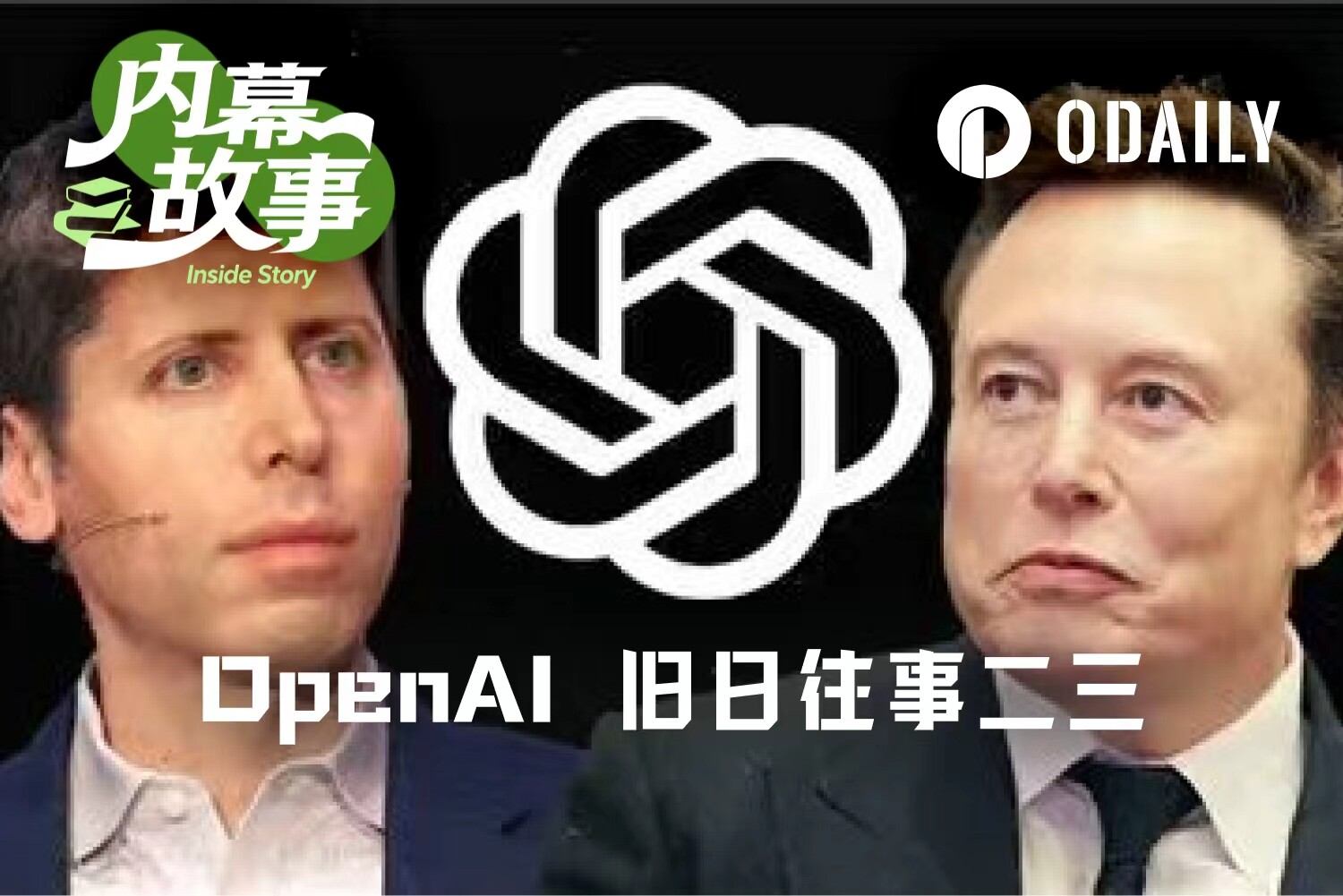
On April 28, Elon Musk and a group of OpenAI executives faced each other in federal court in Oakland, California. (For details, see “Musk vs. Altman: The biggest case in AI history has gone to court”)
This man, who wears the label of the world’s richest person, helped create OpenAI with his own hands—then, like Jobs back in the day, he abruptly made an exit in anger. With the release of insider information about the court hearings on May 6 and May 7, including opening statements and evidence presented in court, more unknown details involving two trillion-dollar tech giants—SpaceX and OpenAI—have gradually come to light. Among them are not only Musk’s various tactics, but also the self-interest of OpenAI executives.
Based on publicly available information and court documents, Odaily Planet Daily has compiled eight stories to help readers understand, from the side, the background behind “the biggest AI trial in history,” which involves a staggering $134 billion in settlement fees.
Insider Story One: Musk poured $38 million in startup capital; OpenAI executive Greg Brockman “made a killing” with $30 billion worth of equity
In the second week of Musk’s lawsuit against OpenAI, Greg Brockman—OpenAI co-founder and president—and his personal diaries from 2015 to 2023 appeared in California court as witnesses and exhibits. Immediately, Musk’s lawyer Steven Molo seized on a “small flaw.” Compared with Musk’s real, cash investment of $38 million to support OpenAI’s founding and early development, Brockman himself admitted that “he had not put in a single cent” during OpenAI’s creation and development. However, as of today, using OpenAI’s latest round valuation of $825 billion, the value of the OpenAI equity that Brockman personally holds is already about $30 billion.
Brockman’s diaries also expose his “wealth ambition”—including:
Although Brockman argued that some of the situations were hypothetical scenarios after the board would expel Musk, it’s still not exactly a picture of indifference to fame and fortune.
The reason this is emphasized is that Brockman previously promised to donate $100,000 to the OpenAI nonprofit foundation—but the promise was never fulfilled. When asked whether he wanted to fund a nonprofit, or instead become a billionaire through OpenAI, his response sounded rather generous: “Having $1 billion worth of stock is already enough for me.” But when Musk’s lawyer Molo asked why he didn’t donate the remaining $29 billion worth of equity to OpenAI’s nonprofit foundation, Greg was left speechless on the spot.
For comparison, Brockman previously invested $471 million in his former company Stripe and also held shares in cloud provider Corweave, which is one of OpenAI’s partners. Co-founding tech investments and equity became a hot-button issue for a time.
Insider Story Two: A former OpenAI board member met Musk through a team-building event; later she accepted sperm donation and had four children
On May 7 Beijing time, Shivon Zilis—a former OpenAI board member who has four children with Musk—also appeared in court as a witness.
According to her testimony, her first meeting with Musk was during a company team-building event at OpenAI. She joined OpenAI in 2016 and later served on the board for several years.
After deciding to become a single mother and have children, Musk—who has long positioned himself around “human-centeredness”—took the initiative to propose that, as a sperm donor, he would donate sperm for her to produce IVF babies.
As for their current emotional relationship, Shivon Zilis said, “We’re in a dating relationship now, and Musk will visit regularly.” However, she denied that she was Musk’s “secret agent” or “information channel,” while Musk gave her the title of “intimate advisor.”
After her relationship with the other co-founders broke down in 2018, she continued to play the role of a communication bridge. It wasn’t until Musk founded his AI competitor xAI in 2023 that she formally stepped down from the OpenAI board.
Insider Story Three: OpenAI’s original name was “AI Manhattan Project,” and later Musk personally set the name it has now
In May 2015, Sam Altman, the OpenAI founder who was then president of YC, sent Musk an email proposing that Y Combinator lead a “Manhattan Project-style AI experiment.” (Odaily Planet Daily note: a reference to the atomic bomb program led by Oppenheimer.)
But in the end, Musk personally named the new AI lab “Open AI Institute,” abbreviated as “OpenAI” (drawing on Open Source open-source ideas).—This name itself carries the core philosophy behind OpenAI’s birth: openness, transparency, and service to all humanity.
Looking back, the development path toward AGI and the awkward predicament the two now find themselves in before the court suggest that Sam Altman may have foreseen that OpenAI and large AI models would, like nuclear bombs, transform from a tool once expected to “end wars” into “weapons of mass destruction.” And OpenAI’s complete pivot into a commercial, profit-making company—with plans to list via IPO—also clearly shows that it has moved in the opposite direction from the original open-source open spirit.
Insider Story Four: Musk “recruited” former Google researcher Ilya Sutskever over a phone call; Sutskever switched to OpenAI
In 2015, Ilya Sutskever—who had been acquired by Google for talent—suddenly received a “cold email” from Sam Altman. (Odaily Planet Daily note: an email sent directly to someone who had never been known, with no prior direct interaction.) The email invited him to dinner with Greg Brockman and Musk to discuss setting up a new AI research organization (the later OpenAI). At the time, Sam Altman emphasized that the purpose of founding the organization was to develop AGI that would benefit all of humanity, and to avoid monopolization by a few giant companies.
At that time, he had already been working at Google for nearly 3 years, and he was highly valued and strongly retained by people including the Google Brain team and Demis Hassabis, the founder of DeepMind.
Facing the “chief scientist” offer from OpenAI, a rising “upstart” that had yet to achieve major results, Ilya Sutskever hesitated despite sharing the same ideals, due to a host of concerns. Ultimately, on the day OpenAI officially made its public launch announcement, Musk called him to persuade him to join—ultimately bringing a founding figure to OpenAI’s early development.
Unfortunately, in November 2023, one of the board members, Ilya Sutskever, made his involvement in the “removal of Sam Altman as CEO” over AI safety and commercialization development routes. The end result was that Sam Altman took control of the board, Ilya publicly apologized, and stepped down as a board member. In May 2024, he officially left OpenAI. At the time, Sam Altman publicly thanked him: “Without Ilya, there would be no OpenAI today.”
Insider Story Five: OpenAI almost became a subsidiary of Tesla; OpenAI employees once worked for Tesla for free
The two pieces of information come from Shivon Zilis, the former OpenAI board member mentioned earlier, and Greg Brockman, OpenAI co-founder and president.
According to Shivon Zilis, in 2017—about two years after OpenAI was founded—Musk, Sam Altman, and others were at a loss due to issues like computing resources and funding. Every day, they were trying to find ways to secure money and GPU resources.
One day, Musk suddenly proposed that OpenAI be merged into Tesla, becoming Tesla’s subsidiary and turning it into an internal AI lab to seek additional funding and resource support. In addition, Musk also prepared a Tesla board seat for Sam Altman. However, with strong insistence from Sam Altman and Greg Brockman, the plan ultimately could not be carried out. It was also after that that Musk gradually parted ways with OpenAI’s current founding team, and in 2018, their relationship completely broke down and he stormed out.
Also, according to Greg Brockman, Musk had “free labor” taken from multiple OpenAI employees to Tesla’s autonomous driving team, including Andrej Karpathy, a former OpenAI researcher who later officially joined Tesla and is now one of the leading figures in the “AI circle.”
Insider Story Six: Musk once “bribed” Greg Brockman and Ilya Sutskever with the Tesla Model 3 Founders Edition
In July 2017, just before the “haunted house meeting” over control of majority ownership of OpenAI, Musk clearly told certain OpenAI executives via email: “As a thank-you for the contributions you’ve made to OpenAI, I want to give each of you a Founder Series Model 3. These are the first units produced and are not yet open to the public.”
In August 2017, the text message that Sutskever sent to Brockman also mentioned the matter: “At least we’re getting our Teslas.” (At least we got the Model 3.)“Will a Model 3 make you be willing to accept massively unfavourable terms?”(Will a Model 3 make you willing to accept massively unfavorable terms?) At that time, OpenAI’s core leadership had already been prepared for Musk’s “sweetener.”
Greg Brockman also testified in court that Musk’s “Tesla car reward” was not because the work was done diligently, but because Musk wanted to give himself more say in OpenAI—essentially “flattering” them (Odaily Planet Daily note: even calling it a kind of indirect bribery). Because the cars were delivered in late August 2017—right on time, just before the meeting about the allocation of equity in OpenAI’s for-profit entity.
What’s more interesting is that as a goodwill gesture, Ilya Sutskever—who was then OpenAI’s chief scientist—commissioned a painting of a Tesla Model 3 and later gave it to Musk at the “haunted house meeting.”
Insider Story Seven: At the haunted house meeting, Musk suddenly blew up and almost “hit someone”
In August 2017, OpenAI beat the top human players in a Dota 2 game competition. Musk immediately suggested “celebrating,” and invited the OpenAI team to party at his 47-acre, $23 million Hillsborough, California mansion that he had just bought.
Because the mansion was old, poorly maintained, and had a strange atmosphere (like a Gatsby-style odd mansion), Musk jokingly called it a “haunted mansion” and even sent a warning email in advance that “you might see party carnage.”
As Brockman recalled in court, besides the OpenAI team, Musk’s then-girlfriend Amber Heard was also present at first. After pouring whiskey for everyone, she left with friends. At first the atmosphere was friendly, but when everyone started discussing the “next step” of turning OpenAI into a for-profit organization, something changed—after they didn’t get the response they expected when discussing equity distribution and control, Musk seemed like a different person: he “suddenly stood up, raged around the table, and was very angry.” Brockman said bluntly, “I genuinely thought he was going to hit me.”
In the end, Musk grabbed the painting that Ilya Sutskever had given him, announced he would cut off funding for OpenAI unless Brockman and Sutskever resigned, then stormed out of the room, ending the party on a sour note.
Insider Story Eight: Musk “bore humiliation” to fight for control of OpenAI—just to realize his “Mars dream”?
At the trial, when asked why Musk was determined to obtain control of OpenAI, Greg Brockman said that Musk told him that one of the reasons he needed to control part of OpenAI was: he needed $80 billion to carry out his grand plan to build a city on Mars.
On the other side, SpaceX’s IPO was also in full swing, and its fundraising target was exactly about $75 billion—fairly close to the $80 billion Musk mentioned.
After 8 years, the root cause of the love-hate relationship between Musk and OpenAI may finally be laid bare: Musk needed OpenAI to serve as a key container to fund SpaceX. If he had been able to gain control of OpenAI back then, he might have transformed OpenAI into a for-profit entity, just like Sam Altman, Greg Brockman, and others. The difference is that Musk might not have had to create xAI in an unnecessarily complicated way and ultimately fold it into SpaceX.
Of course, according to the latest updates, Musk has shifted to seeking cooperation with OpenAI’s biggest competitor, Anthropic. He is betting the computing resources he already has on the latter, trying to achieve his ultimate dream—landing on Mars—by a sort of curveball strategy. For details, see “Musk and Anthropic: Going to Space to Find Power.”
In the final part of the article, we end with a courtroom sidebar from this “first case in AI history,” involving up to $134 billion in compensation.
According to documents submitted by OpenAI’s attorneys, two days before the trial, Musk had texted Greg Brockman to probe OpenAI’s willingness to settle. And when Brockman said that “both sides should give up their respective claims,” Musk responded sharply: “This weekend, you and Sam will become the most hated people in all of America. If you insist, then so be it.”
Although the judge presiding over the case, Yvonne Gonzalez Rogers, ultimately did not accept that text as evidence, based on the situation so far, it’s clear that Musk and OpenAI’s “lawsuit war” is still far from reaching the point where the cards are fully revealed.