
Futures
Access hundreds of perpetual contracts
TradFi
Gold
One platform for global traditional assets
Options
Hot
Trade European-style vanilla options
Unified Account
Maximize your capital efficiency
Demo Trading
Introduction to Futures Trading
Learn the basics of futures trading
Futures Events
Join events to earn rewards
Demo Trading
Use virtual funds to practice risk-free trading
Launch
CandyDrop
Collect candies to earn airdrops
Launchpool
Quick staking, earn potential new tokens
HODLer Airdrop
Hold GT and get massive airdrops for free
Launchpad
Be early to the next big token project
Alpha Points
Trade on-chain assets and earn airdrops
Futures Points
Earn futures points and claim airdrop rewards


More


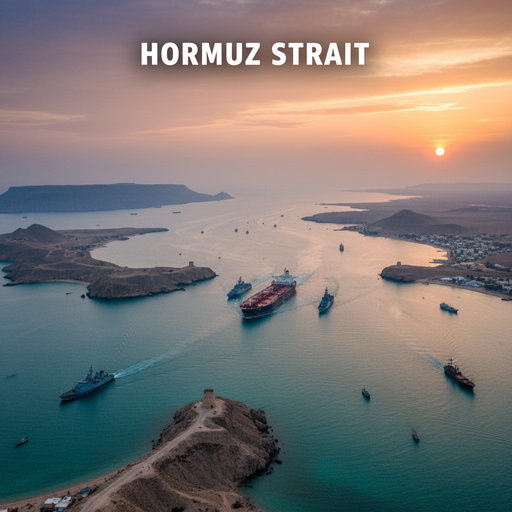



Oil prices are approaching a critical point—what will happen in mid-April?
Author: HFI Research; Compilation: Peggy, BlockBeats
Editor’s Note: This article argues that what truly drives oil prices is not only whether the conflict ends, but also “when it crosses the critical point.”
In the Iranian conflict, which has continued for nearly four weeks, the oil market is undergoing a typical case of “time pricing.” The release of strategic reserves delays the impact, but it cannot eliminate the supply gap. Disruptions in tanker transport and slower-than-expected capacity restoration cause inventory pressure to build up into the future. Once it clears the key node of mid-April, the price mechanism will shift from “buffer-backed volatility” to “a gap-driven repricing.”
More notably, the game structure itself is changing. The conflict is no longer taking the path of “escalation leading to de-escalation,” but instead is turning into a test of the market’s endurance around its critical points. Whoever can hold out until the market prices the imbalance between supply and demand will take the initiative in negotiations. This means that even if the conflict ends in the short term, oil prices will be hard-pressed to return to their prior range. The current supply losses are reshaping the global oil balance over the coming period.
The following is the original text:
In this article, I will break down several possible scenarios that could emerge right now. As the Iran conflict has lasted nearly four weeks, how will this situation affect the oil market?
On March 9, we published a public article titled “My Latest Assessment of the Oil & Gas Market Under the Iran Conflict,” in which we wrote:
The impact of oil prices under different scenarios (the “lost barrels” already includes the time required to restore production capacity):
Scenario 1: Tanker transport resumes the next day
→ The Brent full-year average price will fall within the range of the low 80s in the high $70s (approximately 210 million barrels of losses)
Scenario 2: Tanker transport resumes before March 15
→ The Brent full-year average price will be in the mid-to-high $80s (approximately 290 million barrels of losses)
Scenario 3: Tanker transport resumes before March 22
→ The Brent full-year average price will be in the low $90s (approximately 370 million barrels of losses)
Scenario 4: Tanker transport resumes before March 29
→ The Brent full-year average price will be in the high $90s (approximately 450 million barrels of losses)
If tanker transport still cannot return to normal after March 29, the situation facing the oil market is even one that nobody wants to imagine. The only way out will be for demand to be forced to contract, and prices to be pushed to extreme levels.
Shortly after the report was released, the International Energy Agency (IEA) announced coordinated releases totaling 400 million barrels of global strategic oil reserves (SPR). To some extent, this will mitigate the shock caused by the supply loss. But as we pointed out in a subsequent article, “IEA Coordinated Release of SPR—Delivering the Biggest Gift to Bulls”:
From a trading perspective, before this “buffer cushion” runs out, traders will not be in a rush to push oil prices higher. A concentrated release of SPR can indeed ease short-term supply anxiety, but this is only a temporary fix. The market will remain tense as long as tanker transport has not resumed normal operations—oil prices will rise gradually.
On the other hand, if the situation eases quickly—e.g., an immediate ceasefire or a deal—oil prices will drop rapidly. For example, if a peace agreement is reached before March 15, global inventories would net increase by 110 million barrels (400 million barrels released minus 290 million barrels lost).
This could push the Brent price back down to the mid-$70s range.
Conversely, if there is no peace agreement and the supply disruption continues until the end of March, global inventories will net decrease by 50 million barrels, and each additional week will widen the gap by about 80 million barrels.
Therefore, the role of SPR is only to “buy time,” not to solve the core problem. Tanker transport must return to normal. Still, it does prevent catastrophic price spikes in the short term, thereby preventing a large-scale collapse in demand.
As time has advanced to the present, we have entered the “March 29 scenario” set for early March. Next, we will judge where the oil market is headed based on the latest facts.
Facts
The total production outage from Saudi Arabia, the UAE, Kuwait, Iraq, and Bahrain has reached 10.98 million barrels/day:
Iraq: -3.6 million barrels/day
Kuwait: -2.35 million barrels/day
UAE: -1.8 million barrels/day
Saudi Arabia: -3.05 million barrels/day
Bahrain: -0.18 million barrels/day
Saudi Arabia has fully utilized the capacity of its eastward oil pipeline and is currently exporting about 4 million barrels/day through the Red Sea. The UAE is also rerouting via the Abu Dhabi pipeline (Habshan-Fujairah), and its capacity of roughly 1.8 million barrels/day has likewise reached its limit. Tanker transport across the Strait of Hormuz remains completely shut down. In fact, even if the war ends tomorrow, it would still take months to restore production and rebuild normal transportation.
Scenario Walkthrough
I will outline three possible paths:
The war ends within this week, and transport resumes by the end of this week
The war ends in mid-April
The war ends at the end of April
It should be noted that the release of 400 million barrels of SPR has bought the market more time compared with our initial assessment on March 9. The following oil-price scenarios have taken this change into account.
Scenario 1: Ends this week
Impact on global inventories: -50 million barrels (including SPR)
Impact on Brent: short-term pullback to the low $80s, with the full-year average in the mid-to-high $80s
Scenario 2: Ends in mid-April
Impact on global inventories: -210 million barrels
Impact on Brent: short-term pullback to the low $90s, with the full-year average in the high $90s
Scenario 3: Ends at the end of April
Impact on global inventories: -370 million barrels
Impact on Brent: short-term surge into the $110 range, with the full-year average at $110–$120
Key Turning Point: Mid-April
For the oil market, there is a clear “critical point.” The market broadly expects that the conflict will end before mid-April, and this expectation is crucial for how oil prices are priced.
Oil prices are a product of “marginal pricing.” As long as the market believes supply is still “barely sufficient,” panic will not emerge. That is the current state of the oil market—there is a lack of panic.
Policy statements from the Trump administration, the easing of sanctions on Iranian and Russian crude, and the release of SPR have all suppressed oil prices.
But once it crosses this critical point, these factors will become ineffective.
At present, the evaporation effect of global “in-transit crude” has not truly transmitted to onshore inventories. But our judgment is that by mid-April, this impact will become fully visible.
If the conflict is still not resolved before mid-April, the International Energy Agency (IEA) will have no choice but to coordinate another release of around 400 million barrels of strategic oil reserves (SPR). Otherwise, oil prices will surge into the “demand destruction” zone (above $200).
Long-Term Impact
In its latest weekly report from Energy Aspect, its estimates put the cumulative supply loss absorbed by the market at about 930 million barrels. Of that, the cumulative production loss from May to December is about 340 million barrels.
This assessment is clearly more aggressive than ours. In our inventory sensitivity analysis, we did not adequately account for the reality that restoring production capacity in countries like Iraq and Kuwait may require 3 to 4 months. This means our earlier estimates may have been too conservative.
For Goldman Sachs, the conclusion is straightforward: the longer the conflict lasts, the longer oil prices will remain high.
Under the above scenarios, Goldman Sachs also provided a hypothetical: if the conflict continues for another 10 weeks, what state would the market be in. Its judgment is broadly consistent with our scenario walkthrough above.
At its core, the oil market has a “critical point.” Once it is crossed, there is no going back.
Readers need to set expectations: future oil prices will show a structural lift. Even if the war ends within this week, the supply losses that have already occurred will have a real impact on the future global balance of oil supply and demand.
How long will it last?
So far, I have been avoiding making a call on when this conflict will end. On the one hand, I don’t want to “raise a flag.” On the other hand, it’s also true that I can’t predict it.
But one thing is clear: this time is different from past conflicts. In the past, the commonly seen strategy was “escalate to de-escalate,” whereas now there are hardly any signs of such a pattern.
Retaliatory strikes occur without warning; Iran’s strike scope also appears to no longer be limited to Israel, but instead has expanded to Gulf countries. It was precisely this kind of response pattern that made me realize from the beginning that this time is different.
As the conflict has now lasted nearly four weeks, I’m increasingly concerned that as no agreement is reached and the talks drag on, the probability of reaching an agreement will drop significantly with each additional day. As we analyzed in the article “Time Is Running Out,” Iran has a very clear logic for how it operates regarding the oil market. It only needs to wait until the market touches that “critical point,” and then it can extract the biggest concessions from the United States in negotiations. From a tactical perspective, agreeing to a deal at this point offers it no advantage. The “card” of the Strait of Hormuz has already been played, and it will be difficult to use it again in the future.
For the Gulf states, if the current Iranian regime is not overthrown, this kind of “choking” situation will keep recurring. Even if some kind of “toll” mechanism is established, this level of uncertainty is still hard to accept.
Therefore, logically, the initiative is not in the hands of the United States, but with Iran. In this situation, Iran has greater incentive to push the situation toward the oil market’s “critical point” to test the United States’ capacity to withstand it. All it needs to do is “hold on” for another three weeks, until the market begins to show cracks.
That said, it’s important to emphasize that I’m not a geopolitics expert, and I don’t have enough confidence in judgments like this. What I can offer is only my assessment of the current situation based on fundamentals.