
Futures
Access hundreds of perpetual contracts
TradFi
Gold
One platform for global traditional assets
Options
Hot
Trade European-style vanilla options
Unified Account
Maximize your capital efficiency
Demo Trading
Introduction to Futures Trading
Learn the basics of futures trading
Futures Events
Join events to earn rewards
Demo Trading
Use virtual funds to practice risk-free trading
Launch
CandyDrop
Collect candies to earn airdrops
Launchpool
Quick staking, earn potential new tokens
HODLer Airdrop
Hold GT and get massive airdrops for free
Launchpad
Be early to the next big token project
Alpha Points
Trade on-chain assets and earn airdrops
Futures Points
Earn futures points and claim airdrop rewards


More


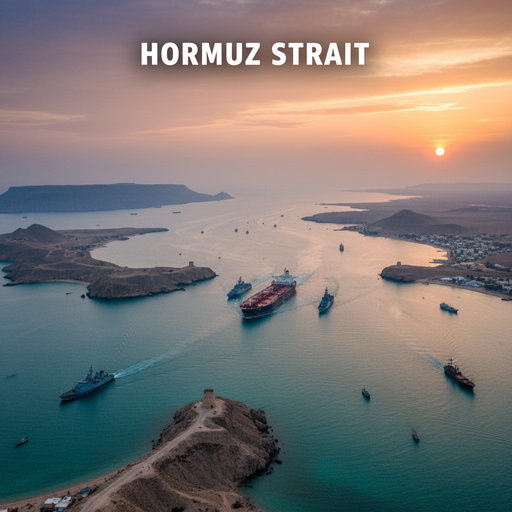


Zheshang Securities: Geopolitical uncertainties persist, oil prices remain volatile; stay steady and wait patiently for a rebound opportunity
Source: Guosen Securities
Key Viewpoints
This week, the situation in the Middle East is complicated and rapidly changing, with good and bad news alternating, and most broad-market indexes rebound strongly and then continue to adjust. Looking ahead, given the complexity of geopolitical turmoil in the Middle East and the conflict’s real-world “spiral escalation,” we expect global capital markets will remain under pressure, and A-shares may continue to show a pattern of sideways consolidation. We expect that in the short term, the Shanghai Composite Index will move in the manner of “range-bound volatility, a second attempt to find the bottom, support along the lower boundary, and pressure along the upper boundary.” The “right leg” of the second bottom may gradually take shape in mid-to-late April and is expected to form a weekly-level rebound. When extending the cycle, the continuation of the “systemic slow bull” pattern depends on whether, going forward, it can hold the high point of “Bull 1” in 2024; and whether, when it later pushes against the 4000-point level, it can “forcefully” return to the original volatility range. For positioning, based on our judgment of “geopolitical escalation amplifying global volatility, with A-shares experiencing range-bound second attempts to find the bottom,” we recommend: in the short term, remain cautious and treat the market index as range-bound volatility. When the index approaches the “upper boundary” of the new volatility range, give up greed and appropriately “take profit on the high side.” When the index runs to the “lower boundary” of the new volatility range, overcome fear and make a moderate “buy-the-dip.” If after mid-April the Middle East situation becomes clearer and the bottom structure of A-shares over the medium term takes shape, then you can actively increase allocations and expand upside flexibility.
This week’s market overview (2026-03-30 to 2026-04-03) (1) Major indexes: With the Middle East geopolitical situation being complicated and diverse, most broad-market indexes continued to adjust after rebounding and rallying in the short term.
(2) Sector watch: Communication sector cluster consumption turned bullish again; dividend/quality stocks held up under pressure, while the energy sector led the decline. (3) Market sentiment: Trading value in both Shanghai and Shenzhen markets decreased somewhat. (4) Capital flows: The balance in margin financing and securities lending edged down, and stock-type ETFs saw net outflows. (5) Quant “black-tech”: Valuations of the major indexes are moderately above average.
Attribution of this week’s market performance
(1) The People’s Bank of China Monetary Policy Committee held its meeting for the first quarter of 2026; (2) In January to March 2026, the total value of China’s innovative drug out-licensing transactions exceeded $60 billion.
Outlook for next week
Looking ahead, given the complexity of the Middle East geopolitical turmoil and the conflict’s real “spiral escalation,” we expect global capital markets will remain under pressure. And with A-shares unable to “stand apart,” they may continue to show a pattern of sideways consolidation. Among them, because the Shanghai Composite Index fell faster in the earlier period, it formed a “high concentration of trading” zone above 4000 points, which makes the 4000 to 4040 area the upper boundary of the trading range; and through recent price action, it is clear that since last April, the 0.382 level of the “Bull Market 3rd Wave,” near the integer threshold of 3800 points, has already become a strong support for the current situation (i.e., the lower boundary of the trading range). We expect that in the short term, the Shanghai Composite Index will move according to “range-bound volatility, a second attempt to find the bottom, support along the lower boundary, and pressure along the upper boundary.” The “right leg” of the second bottom may gradually take shape in mid-to-late April and is expected to form a weekly-level rebound. When extending the cycle, the continuation of the “systemic slow bull” pattern depends on whether, going forward, it can hold the high point of “Bull 1” in 2024; and whether, when it later pushes against the 4000-point level, it can “forcefully” return to the original volatility range.
For positioning, based on our judgment of “geopolitical escalation amplifying global volatility, with A-shares experiencing range-bound second attempts to find the bottom,” we recommend: in the short term, remain cautious and treat the market as range-bound volatility. When the index approaches the “upper boundary” of the new volatility range, give up greed and appropriately “take profit on the high side.” When the index runs to the “lower boundary” of the new volatility range, overcome fear and make a moderate “buy-the-dip.” If after mid-April the Middle East situation becomes clearer and the bottom structure of A-shares over the medium term takes shape, then you can actively increase allocations and expand upside flexibility.
Risk Warning
Domestic economic recovery falls short of expectations; global geopolitical risk involves uncertainty.
Massive information and precise interpretation—available in the Sina Finance APP
责任编辑:Guo Yutong