
Futures
Access hundreds of perpetual contracts
TradFi
Gold
One platform for global traditional assets
Options
Hot
Trade European-style vanilla options
Unified Account
Maximize your capital efficiency
Demo Trading
Introduction to Futures Trading
Learn the basics of futures trading
Futures Events
Join events to earn rewards
Demo Trading
Use virtual funds to practice risk-free trading
Launch
CandyDrop
Collect candies to earn airdrops
Launchpool
Quick staking, earn potential new tokens
HODLer Airdrop
Hold GT and get massive airdrops for free
Launchpad
Be early to the next big token project
Alpha Points
Trade on-chain assets and earn airdrops
Futures Points
Earn futures points and claim airdrop rewards


More





IEA: April Oil Supply Crisis Will Worsen
The head of the International Energy Agency (IEA) said that the already tight oil supply situation—driven by the Iran war since it began and causing oil prices to surge sharply—will further worsen over the next month.
In an interview with “In Good Company,” a podcast hosted by Nicolai Tangen, CEO of Norges Bank Investment Management, Bior said the energy crisis triggered by the U.S.-Iran war is the most severe in history.
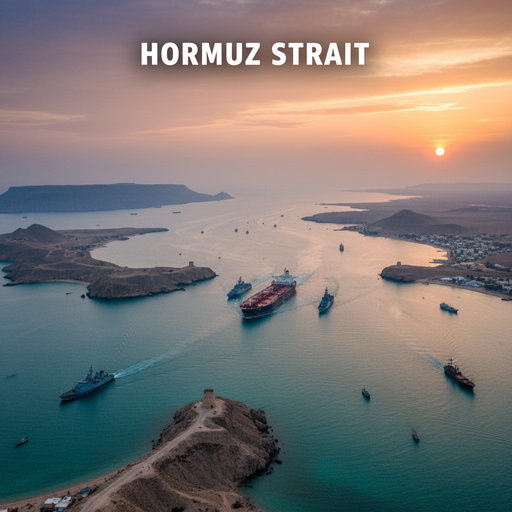
“Over the next month—April, in other words—the situation will be much worse than in March,” he said. He explained that in March, some cargo ships carrying oil and natural gas had passed through the Strait of Hormuz before the war broke out.
“They are still heading to ports and still transporting oil, energy, and other supplies,” he said. “But in April, there will be no additional supply. The amount of oil lost in April will be twice that of March. In addition, there will be losses of other energy sources, such as liquefied natural gas. This will feed through to inflation, and I think it will weigh on economic growth in many countries, especially emerging economies. Many countries may soon implement energy rationing.”
U.S. President Donald Trump said on Tuesday that U.S. troops will leave Iran “within two to three weeks,” triggering a broad rebound in financial markets.
But Bior said the supply gap caused by the war—which has now entered its fifth week—is even more severe than the crises following the oil shocks in the 1970s and the outbreak of the 2022 Russia-Ukraine conflict.
“Looking back at the two crises (1973 and 1979), each time we lost about 5 million barrels per day of oil. Those oil crises pushed many countries into a global recession,” he told Tangen. “And now, we are losing 12 million barrels per day—that’s more than the total of those two oil crises combined.”
He added that the amount of gas supply lost due to the conflict and the blockade of the key shipping route, the Strait of Hormuz, also exceeds the losses seen in the market when Russia’s gas supply was cut off four years ago.
“The current crisis is more severe than all three of those combined. In addition, there are many other important commodities—petrochemical products, fertilizers, sulfur—that are crucial to the global supply chain,” he said. “We are facing a major supply disruption—and the worst in history.”
A massive amount of information and precise analysis—right on the Sina Finance APP
Responsible editor: Zhang Jun SF065