
Futures
Access hundreds of perpetual contracts
TradFi
Gold
One platform for global traditional assets
Options
Hot
Trade European-style vanilla options
Unified Account
Maximize your capital efficiency
Demo Trading
Introduction to Futures Trading
Learn the basics of futures trading
Futures Events
Join events to earn rewards
Demo Trading
Use virtual funds to practice risk-free trading
Launch
CandyDrop
Collect candies to earn airdrops
Launchpool
Quick staking, earn potential new tokens
HODLer Airdrop
Hold GT and get massive airdrops for free
Launchpad
Be early to the next big token project
Alpha Points
Trade on-chain assets and earn airdrops
Futures Points
Earn futures points and claim airdrop rewards


More





"First Copper Cultural and Creative Stock" Master Copper Debuts with a Drop on Its First Trading Day; Performance Concerns and Market Ceiling Await Resolution
On March 31, Tong Shifu (00664.HK), a company known for copper-based cultural and creative products, officially listed on the Main Board of the Hong Kong Stock Exchange. However, on the very first day of trading, it ran into a steep post-listing price drop. The company’s offer price was set at HK$60 per share, but the opening price was only HK$35.42, which represented a sharp drop of 40.97% below the offer price. During the trading session, the intraday decline once came close to 50%. By the close of trading that day, the stock price was HK$38.9, down 35.17% from the offer price, and its total market capitalization shrank to HK$2.505 billion.
According to information disclosed in the prospectus, Tong Shifu’s global offering involved 7.4068 million H shares, with net proceeds of approximately HK$390 million. Although the public offering was oversubscribed, institutional investors were relatively cautious: the international offering was only subscribed by 1.56 times. In the off-exchange, “dark” trading session on March 30, the company’s share price already showed signs of weakness. The decline on that day exceeded 6%, and the final closing drop widened to about 30%, laying the groundwork for the official listing.
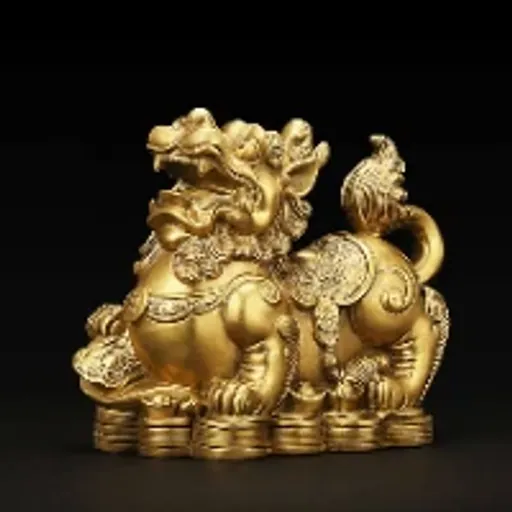
As a leading enterprise in China’s copper-based cultural and creative handicrafts market, Tong Shifu was established in 2013. By combining traditional copper雕 craftsmanship with modern design concepts, it developed cultural and creative products that combine artistic value with practical functionality. The company adopts a sales model that combines direct sales, distribution, and consignment sales, and its product range covers multiple categories such as home décor ornaments and decorative items. A report by Frost & Sullivan shows that, based on total revenue in 2024, Tong Shifu held 35% of the share in this sub-segment, maintaining the No. 1 position in the industry.
From a financial performance perspective, the company’s revenue growth has shown signs of slowing. From 2022 to 2024, annual operating revenues were RMB 503 million, RMB 506 million, and RMB 571 million, respectively. In the same period, net profit fluctuated noticeably: RMB 56.938 million, RMB 44.131 million, and RMB 78.982 million, respectively. The first three quarters of 2025 show that the company’s revenue increased by 11.26% year over year to RMB 448 million, but net profit decreased by 21.99% year over year to RMB 41.553 million, exhibiting an “increase in revenue but not in profit” phenomenon.
In terms of shareholding structure, founder Yu Guang holds 26.27% of the shares, making him the company’s largest shareholder. Xiaomi-related capital, through Shunwei Capital and Tianjin Jinmi, holds 13.39% and 9.56% of the shares respectively, making them the second- and third-largest shareholders. Yu Guang has previously stated publicly that he would introduce Xiaomi’s cost-performance strategy and its fan-operations model into the company’s operations, and Lei Jun has also commented that it is “the company outside Xiaomi’s ecosystem that is closest to the Xiaomi model.” This cross-industry integration DNA has given Tong Shifu a distinctive positioning in the cultural and creative space.
Too high a degree of product concentration has become a key factor constraining the company’s development. Data show that from 2022 to the first nine months of 2025, the revenue share of copper-based cultural and creative products has consistently remained at 94% or above, with copper-based display ornaments contributing more than 85% of revenue. Although the company has attempted to expand into new categories such as plastic trend toys and silver- and gold-based cultural and creative products, these businesses currently contribute an extremely small portion to overall revenue. This single-product structure tightly links the company’s performance to fluctuations in copper prices. From 2020 to 2025, the compound annual growth rate of copper prices reached 10.7%, directly compressing profit margins.
The “industry ceiling” effect cannot be overlooked either. The market for copper-based cultural and creative handicrafts is a highly segmented area: in 2024, the market size was only RMB 1.6 billion, and it is expected to grow to RMB 2.3 billion by 2029. By contrast, the overall metal cultural and creative market size is RMB 25.2 billion, while the plastic resin cultural and creative market is expected to surge from RMB 38 billion in 2019 to RMB 155.5 billion by 2029. This market structure limits Tong Shifu’s growth imagination. Even while maintaining a leadership position in the sub-segment, it is still difficult to break through the industry’s size bottleneck.
In a research report, Guotou Securities noted that Tong Shifu has vertical integrated production capabilities and advantages in original IP design, with a mature all-channel sales network and relatively high brand awareness. However, risk factors such as volatility in raw material prices, reliance on e-commerce platforms, and operational pressure brought by offline expansion may affect the company’s profitability in the short term. In particular, against the backdrop of sustained rising copper prices, how to balance cost pressure with product pricing will be a key issue that tests the management’s operating wisdom.