
Futures
Access hundreds of perpetual contracts
TradFi
Gold
One platform for global traditional assets
Options
Hot
Trade European-style vanilla options
Unified Account
Maximize your capital efficiency
Demo Trading
Introduction to Futures Trading
Learn the basics of futures trading
Futures Events
Join events to earn rewards
Demo Trading
Use virtual funds to practice risk-free trading
Launch
CandyDrop
Collect candies to earn airdrops
Launchpool
Quick staking, earn potential new tokens
HODLer Airdrop
Hold GT and get massive airdrops for free
Launchpad
Be early to the next big token project
Alpha Points
Trade on-chain assets and earn airdrops
Futures Points
Earn futures points and claim airdrop rewards


More






Zhang Yaoxi: Geopolitical tensions escalate again, gold prices remain volatile, consolidating before a rebound
Zhang Yaoxi: Geopolitical situation escalates again; gold prices remain in choppy consolidation, laying a base and waiting to rebound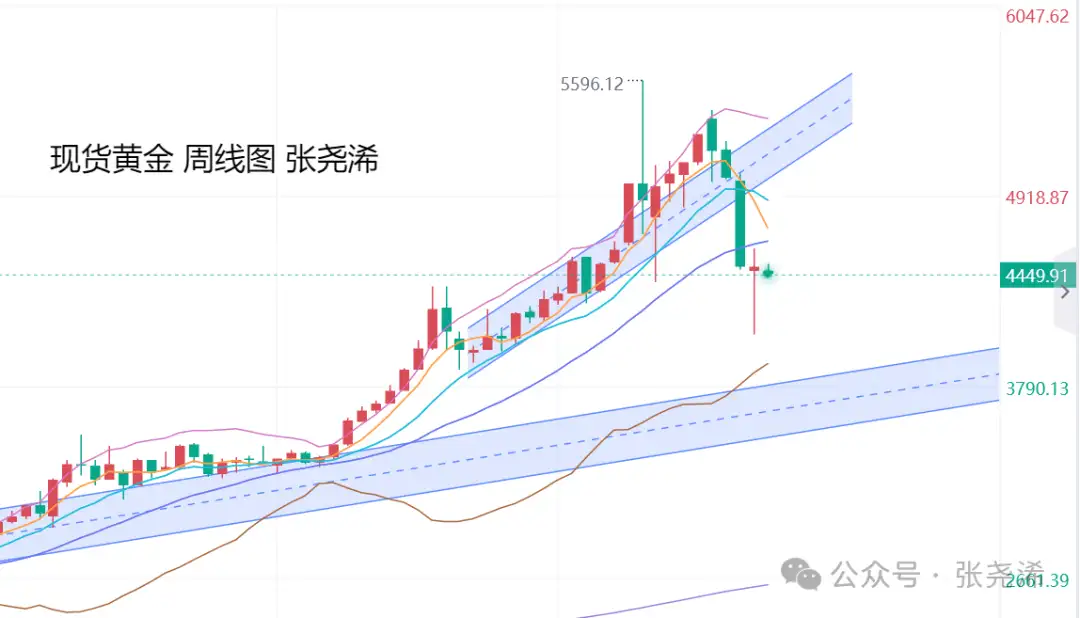
Gold market last week: International gold opened lower, then plunged deeply before bottoming out and rebounding to close flat. The long lower shadow it formed and the bullish reversal pattern suggest a bottoming signal and add bullish momentum for what’s next. Although geopolitics has been volatile, by the end of the week Iran fully blocked the Strait of Hormuz, pushing oil prices higher. Gold has already become somewhat desensitized to these developments. Losing patience with geopolitics, the impact going forward will, just like the Russia-Ukraine war, weaken as time drags on. Therefore, in the next phase, gold prices are also expected to return to demand for safe-haven assets and asset allocation.
In terms of the specific trend: gold opened lower at $4,469.46 per ounce at the start of the week, then immediately sold off sharply to hit that week’s low at $4,099.12. This is also the level of the 200-day moving average support. From there, long positions were initiated. The market began to rebound, rally, and recapture the losses. On Wednesday, it reached that week’s high at $4,602.30. Although it met resistance and pulled back afterward, and on Thursday again regained gains, on Friday the bulls once again stepped up, moving back above $4,500. It ultimately held steady and closed at $4,505.63. The intraday swing was $503.18. Compared with the prior week’s closing price of $4,503.13, it rose by $2.50, an increase of 0.055%.
In terms of drivers: At the start of the week, Iran’s strong stance on blocking the strait as geopolitical tensions escalated boosted the U.S. dollar and crude oil, pressuring gold and sending it lower. But afterward, Trump said that in the past two days, the U.S. and Iran had a good and effective dialogue, and with technical-support buying pushing the rebound, gold began to recover and recapture losses. Meanwhile, technical resistance and remarks such as Iran denying Trump’s talks limited the rebound’s momentum. However, in the Friday session, Iran fully blocked the strait, helping oil prices climb higher. Meanwhile, the U.S. and Israel bombed Iran’s nuclear facilities and steel facilities, and gold quickly returned to safe-haven demand and rebounded.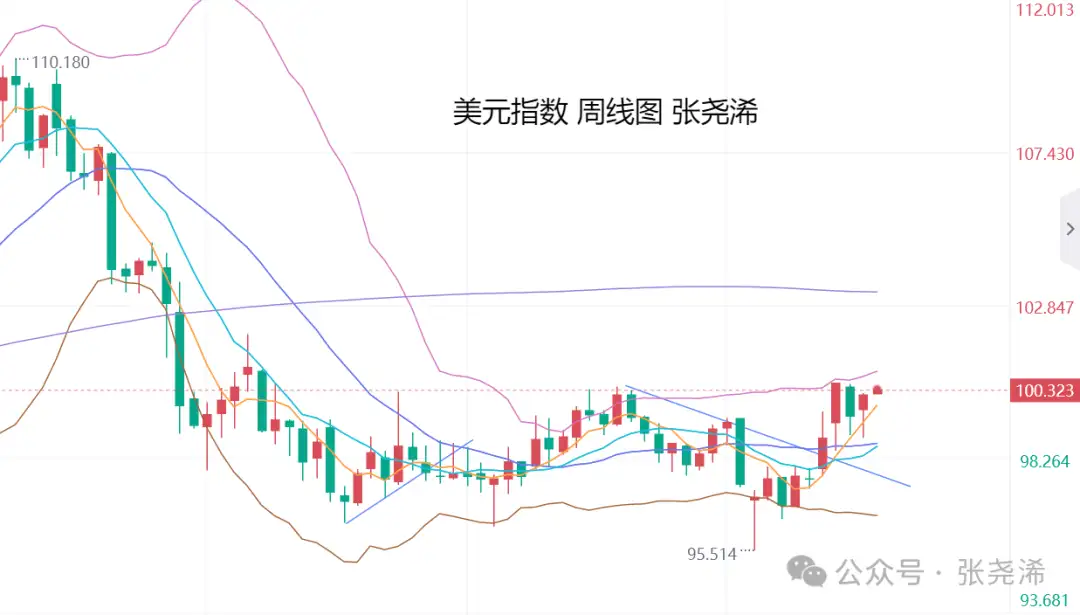
Looking ahead to this week’s Monday (March 30): International gold opened lower in the Asian session, trading choppily and weakening. Over the weekend, geopolitical tensions escalated, and the Houthis also joined attacks on Israel, increasing uncertainty and risk. The market has fully ruled out the possibility of U.S. rate cuts in 2026. That pushed oil prices to open higher and trade higher. In addition, the U.S. Dollar Index strengthened at the open, which weighed on gold prices. However, gold still has demand for buying. Price action is holding above key support, and its reaction to oil has also weakened somewhat. Going forward, the trend is likely to stay in range-bound consolidation and build a base, with expectations still for upside.
No key data will be closely watched during the day. We will continue to wait for employment data to be released in the second half of the week. At present, the market expects a higher probability of negative news for gold, which would weigh on gold prices. If it matches expectations, gold would likely move lower again. Otherwise, it may consolidate and strengthen.
However, the Strait of Hormuz has not been completely sealed. Malaysia says Iran has allowed Malaysian oil tankers to pass and remain. Thailand has also reached an agreement with Iran regarding the passage of its own oil tankers through the Strait of Hormuz. In addition, India and Pakistan also said Iran has agreed to allow them to pass. This will also reduce some concerns about oil prices.
Overall, this week’s trend is biased toward range-bound action or another “selloff then rebound.” The trading approach is to sell first and then buy. Conversely, if this week falls and closes lower around the $4,200 level or below, then the next phase would likely see another decline to $3,800 or $3,500.
On fundamentals: Iran is blocking the strait, while the U.S. and the U.S.-Israel side continues to hit Iran. Geopolitical tensions have not eased; instead, they remain deadlocked and further escalate. At present, the disruption to oil tankers directly drives crude oil prices higher again, which lifts global inflation expectations while also reducing the probability of the Federal Reserve cutting rates quickly. The U.S. dollar, as the global reserve currency and a traditional safe-haven asset, earns a natural premium in a “geopolitical risk + high interest rates” dual environment, and it also rebounds and strengthens. This, in turn, limits upside for long positions in gold.
Although Trump has repeatedly said negotiations are going smoothly and has announced a delay in strikes, he is also continuing to send large numbers of troops, keeping the option of a ground invasion. In addition, Iranian officials have repeatedly denied any substantive dialogue and refused the U.S. side’s 3:00 p.m. (15:00) proposal. These signals of “inconsistent words and actions” lead investors to believe that the risk of the conflict becoming prolonged remains, so safe-haven funds continue to flow into the U.S. dollar.
At the same time, the market has significantly lowered and even eliminated expectations for rate cuts this year. A high interest-rate environment in itself is a long-term supporting factor for the U.S. dollar. Combined with the inflation pressure pushed up by higher oil prices, the probability of the Federal Reserve “cutting later” rises further, providing solid fundamental support for the dollar. Gold, in response, lacks momentum to rise.
Overall, even though gold prices have stopped falling and rebounded somewhat after a big plunge, they still face significant suppression from the high interest-rate environment. In the short term, price action depends heavily on how the Middle East situation evolves next.
If unexpected breakthroughs emerge in Iran’s negotiations, the safe-haven premium could fall quickly, the dollar would face pressure to correct, and gold would keep rebounding. Conversely, if signs of the conflict worsen or oil prices continue to climb, the dollar would benefit further, and gold’s rebounds would be capped—leading to choppy consolidation and possibly further declines.
However, Zhang Yaoxi believes the long-term logic that supports gold still remains. Under accelerated changes in the geopolitical landscape, the marginal weakening of U.S. dollar credibility has not changed, and the underlying logic of global central banks “de-dollarization” has not wavered. The size of U.S. Treasury issuance continues to rise, and reliance on loose money remains high. Therefore, there is still no foundation for a trend reversal in gold. This round of sharp pullback in gold is more of a deep correction after prior overextension. It is expected that base-building and repair will take a long time afterward. The launch of a new gold bull cycle may wait for the Fed’s rate-cut expectations to restart.
Also, if you compare 2020 to 2022, and the two instances of oil price surges doubling, such as from July 2007 to August 2008, after those episodes, gold prices all entered bull market conditions. Therefore, today’s rise in oil prices is also creating opportunities for a bull market in the second half of the year or next year. So, is this wave of gold’s decline truly a trend reversal, or is it just an intermediate correction within a larger upswing cycle? Personally, I still lean toward the latter.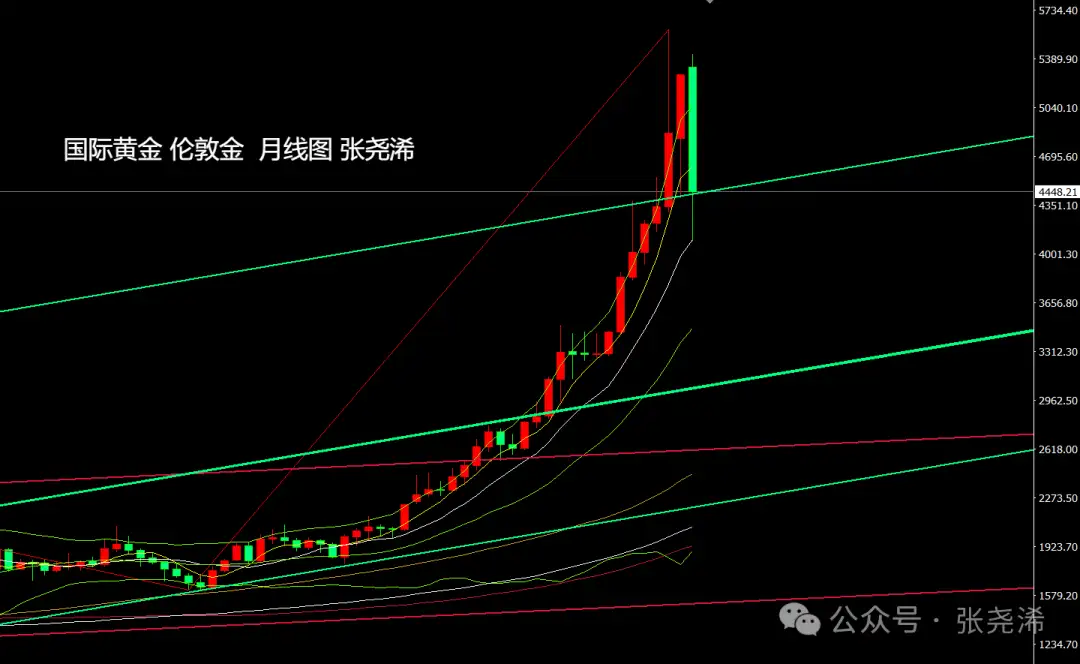
Technically: on a monthly timeframe, gold’s performance this month has continued to weaken. It once recovered the gains from the prior three months, showing a tendency to reverse into a bull market. But at present, it has not yet broken materially below the support of the prior rising trendline. If this month’s candle closes above that line, then the outlook would lean toward continued range-bound correction, with expectations still for another push higher after that. Otherwise, there remains the risk of probing new lows.
On a weekly timeframe: gold last week formed a clear bullish reversal pattern with a prominent long lower shadow that signaled a stop to the decline. That implies bullish expectations for this week or next week. In the short term, it could rebound and potentially test the $4,700 or $5,000 level range. But if the market does not continue to follow through and strengthen from the open this week, then there are two outcomes for what’s next. If this week again closes with a “selloff then rebound” pattern, then you can still look for bullish opportunities on dips and wait for gold to return to the $5,000 level. If it directly regains last week’s long lower shadow, then the outlook would lean toward falling to the $3,800 or $3,500 area. If this week turns stronger and breaks above the 20-day moving average with a positive close, then the outlook would be able to make a fresh new high.
On a daily timeframe, gold is stuck in range-bound consolidation, and price action faces pressure. It still has not turned clearly stronger. But personally, I still lean toward building a base in consolidation, followed by another rebound and strengthening. Focus on support at the bottom of the recent range of consolidation, as well as support from the lower band of the Bollinger Bands. These remain opportunities to enter for a bullish view. Above, we continue to wait for price to reach the $4,700 or $5,000 level.
Gold: Support to watch below at around $4,400 or $4,330; Resistance to watch above at around $4,530 or $4,640;
Silver: Support to watch below at $65.90 or $64.00; Resistance to watch above at $69.75 or $71.70;
Note:
Gold TD = (International gold price × exchange rate) / 31.1035
A $1 move in international gold implies about a 0.25 yuan move in gold TD (theoretically).
U.S. futures gold price = London spot price × (1 + gold swap interest rate × days to futures maturity / 365)
Follow me so your gold trading ideas become clearer!
Review historical cause and effect, interpret the current environment, and look forward to future directions. Adhere to bold forecasting, and trade cautiously. – Zhang Yaoxi
The above viewpoints and analysis only represent the author’s personal thinking, for reference only, and do not constitute a basis for trading. If you act on it, you bear the profits and losses at your own risk.
You decide your own money.