
Futures
Access hundreds of perpetual contracts
TradFi
Gold
One platform for global traditional assets
Options
Hot
Trade European-style vanilla options
Unified Account
Maximize your capital efficiency
Demo Trading
Introduction to Futures Trading
Learn the basics of futures trading
Futures Events
Join events to earn rewards
Demo Trading
Use virtual funds to practice risk-free trading
Launch
CandyDrop
Collect candies to earn airdrops
Launchpool
Quick staking, earn potential new tokens
HODLer Airdrop
Hold GT and get massive airdrops for free
Launchpad
Be early to the next big token project
Alpha Points
Trade on-chain assets and earn airdrops
Futures Points
Earn futures points and claim airdrop rewards


More





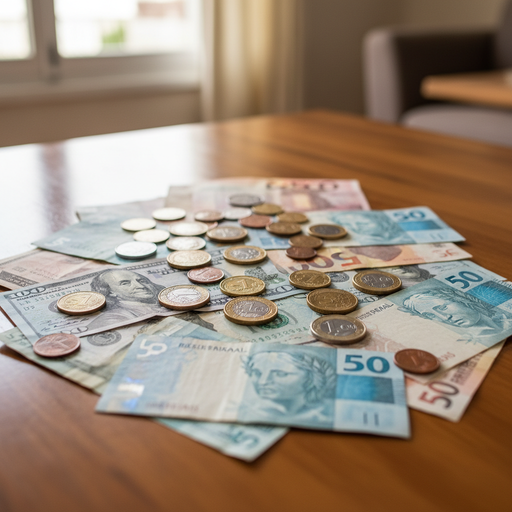
The five major listed insurance companies plan to distribute dividends exceeding 100 billion yuan
China Life Insurance, China Life, China Ping An, China Taiping, and New China Insurance have fully disclosed their 2025 performance and dividend distribution plans. A “one-hundred-billion-yuan红包雨” for investors is about to arrive as scheduled. On March 30, a reporter from Beijing Business Daily compiled figures: the five A-share listed insurers’ full-year net profit attributable to shareholders totaled 4252.91 billion yuan, with an annual planned total dividend amount of more than 1 trillion yuan. With their strength, they have presented the market with a substantial “return report.” However, when faced with dividend plans totaling hundreds of billions of yuan from each insurer, investors can’t help asking with joy: will this wave of “红包雨” keep coming year after year? Behind high dividends, where does insurers’ confidence ultimately come from?
China Ping An’s 14-Year Consecutive Rise
In addition to attention on operating performance itself, the dividend distribution plans of the five major A-share listed insurers have also drawn investors’ focus. After review and statistics by a Beijing Business Daily reporter, the combined planned total dividends of these five insurers have already exceeded 1 trillion yuan.
Specifically, China People’s Insurance Company (PICC) plans to distribute a 2025 final cash dividend of 1.45 yuan per 10 shares (including tax), totaling 6.412 billion yuan. The total annual cash dividend amounts to 9.729 billion yuan, accounting for 20.9% of net profit, and the dividend payout has hit a record high.
The board of directors of China Life Insurance recommends distributing a 2025 final cash dividend of 6.18 yuan per 10 shares (including tax). Together with the already distributed 2025 interim cash dividend, the full-year cumulative dividends amount to 8.56 yuan per 10 shares (including tax). The total dividend payout is 24.195 billion yuan, up 31.7% year over year.
Also as a “large dividend payer,” in recent years China Ping An has continued to increase its dividend payout ratio. Regarding its 2025 dividends, the company said it plans to distribute a 2025 final dividend of 1.75 yuan in cash per share. The full-year cash dividend will be 2.7 yuan per share, up 5.9% year over year; the total cash dividend payout reaches 48.891 billion yuan, maintaining a rising trend for 14 consecutive years.
China Taiping Insurance plans to distribute 2025 annual cash dividends based on the total share capital of 9.62 billion shares, at 1.15 yuan per share (including tax), for a total distribution of 11.063 billion yuan. New China Life Insurance states that it plans to distribute a 2025 final cash dividend to all shareholders of 2.06 yuan per share (including tax), totaling 6.426 billion yuan. In 2025, the company plans to distribute a total of 8.516 billion yuan in cash dividends, up 7.9% year over year, which is about 25.1% of the net profit attributable to shareholders of the parent company after deducting non-recurring gains and losses in the company’s 2025 annual financial report.
In recent performance meetings held by multiple insurers, a signal has been released that “dividends have increased compared with the previous year.” Recently, China Taiping Insurance held its 2025 annual performance briefing. Su Shaojun, Secretary to the Board of Directors of China Taiping Insurance, said that for 2025 dividends, the board proposes distributing cash dividends of 1.15 yuan per share, which is higher than last year. The dividend level has been further raised, consistent with the company’s dividend policy.
At a performance briefing for PICC 2025, Zhao Peng, President of China People’s Insurance Company (PICC), said the company has always placed great importance on shareholder returns and maintained the continuity and stability of cash dividends. In 2025, the group’s full-year dividend per share was 0.22 yuan, up 22.2%; over the past three years, the compound annual growth rate of cash dividends for PICC Group reached 18.8%.
With dividend intensity continuing to increase, executives from several insurers also provided “reassuring statements” during their performance briefings. As Zhao Peng noted, “The company will deepen its focus on its core insurance business, continuously improve quality and efficiency, strengthen payment management, and enhance performance evaluation. By working in the same direction from both the liability side and the investment side, we will strive to achieve sustained and stable growth in profitability, thereby repaying the trust and support of our broad investor base.”
Why Insurers Dare to “Distribute Generously”
This dividend of over 1 trillion yuan did not come out of thin air. Executives from multiple insurers gave clear responses in their performance meetings. On March 27, at the site of China People’s Insurance Company (PICC)’s 2025 annual performance briefing, Zhao Peng explained the logic behind the dividends. He said the company’s dividend policy mainly considers the following three factors: first, overall consideration of differences between new and old standards; second, fully considering capital constraints; and third, striving to achieve long-term stable growth in dividends per share.
Wang Zhaojiang, Executive Dean of the Shenzhen Beishan Changcheng Fund Research Institute, analyzed the signals and significance of sustained high dividend payouts by listed insurers in an interview with Beijing Business Daily. He believes high dividends are based on a solid business fundamental, with strong earnings and cash flows. The five insurers’ total net profit attributable to shareholders for 2025 was 4252.91 billion yuan; the total dividend payout exceeded 1 trillion yuan. With two consecutive years of high growth, this confirms high-quality earnings driven by both premium growth on the liability side and investment returns on the investment side.
Looking back, in the annual reports of the five major A-share listed insurers, the total dividend amount mentioned was 63.825 billion yuan. Combined with dividends paid earlier during the interim period, total dividends by listed A-share insurers in 2024 amounted to 90.789 billion yuan, up 20.21% year over year.
“Dividend growth by insurers also indicates that the policy direction of insurers has been implemented in practice: prioritizing long-term stable returns.” Wang Zhaojiang also said insurers respond to the new “Nine Provisions” and “improve quality and efficiency and return to shareholders,” shifting from “earnings delivery” to continuous, predictable, and high-proportion dividends. China Ping An has seen dividend increases for 14 consecutive years, while China People’s Insurance Company and New China Life Insurance have both reached record highs in dividend distributions. It also highlights that insurers have sufficient capital strength, with a “cushion” in solvency; even after large dividend payouts, they can still meet regulatory requirements, reflecting capital redundancy and controllable risk, providing support for business expansion and the sustainability of dividend payments. In addition, it further proves the investment value of the insurance sector. High dividend yield and stable growth align with institutional and long-term investors’ preferences, strengthening the sector’s defensive and return attributes.
Wang Zhaojiang further explained the key considerations for insurers’ proposed dividend policies. He said that evaluating profitability and cash flow is the main foundation and also the upper limit factor for dividends; capital and solvency are the bottom line for dividends; regulatory and policy guidance is also equally important and needs to comply with new regulations to ensure stability and continuity. In addition, companies also need to consider their own business development situation and long-term strategy, maintaining the sustainability of long-term interests.
When discussing the impact of increased dividends, Wang Zhaojiang said that for investors, it directly enhances cash returns, increases the sense of gains from holding shares, and strengthens willingness to hold long term. For insurers themselves, high dividends convey confidence in operations, stabilize market expectations, and can help with stock price and market value management. For the industry and the market, establishing a benchmark for high dividends can also encourage other financial blue-chip companies to follow, improving the overall dividend level of the A-share market, while strengthening the value-investment label of the insurance sector, attracting incremental capital, and further improving sector liquidity and valuation.
Su Shaojun also expressed a similar view at the performance meeting. He said investors can make reasonable expectations of potential dividend returns by tracking and assessing insurers’ medium- to long-term development potential. The company’s management teams can further focus on shaping intrinsic development momentum by solidifying the capabilities to obtain sustainable business, release profitability, and control risk to strengthen the foundation for shareholder returns. At the same time, they should appropriately realize the positive contribution of current-period investment performance and share it with investors through the company’s operations and results.
Beijing Business Daily reporter: Hu Yongxin
(Editor: Qian Xiaorui)
Keywords: