


Futures
Access hundreds of perpetual contracts
TradFi
Gold
One platform for global traditional assets
Options
Hot
Trade European-style vanilla options
Unified Account
Maximize your capital efficiency
Demo Trading
Introduction to Futures Trading
Learn the basics of futures trading
Futures Events
Join events to earn rewards
Demo Trading
Use virtual funds to practice risk-free trading
Launch
CandyDrop
Collect candies to earn airdrops
Launchpool
Quick staking, earn potential new tokens
HODLer Airdrop
Hold GT and get massive airdrops for free
Launchpad
Be early to the next big token project
Alpha Points
Trade on-chain assets and earn airdrops
Futures Points
Earn futures points and claim airdrop rewards


More




A-shares make a desperate comeback, but the true reversal is still missing two signals
Ask AI · Why did U.S. negotiation signals trigger a rebound in A-shares, while Iran denied dialogue?
Key points of the article: Today, A-shares rebounded with volume, the Shanghai Composite Index rose 1.78% back to 3881 points, over 5100 stocks increased, with the electric power and military industry sectors leading the gains. However, the core driver of the rebound is the U.S. unilaterally releasing negotiation signals, with no substantive alleviation of the geopolitical situation. Before the reconstruction of the oil supply gap and unchanged inflation expectations, the rebound is still an emotional repair rather than a logical reversal, and it is not advisable to chase high in the short term, while long-term positioning can be considered.
Today’s A-shares provided all investors with a strong boost.
As of the close, the Shanghai Composite Index rose 1.78% to 3881 points, the Shenzhen Component Index rose 1.43%, and the ChiNext Index rose 0.5%. The total market turnover was 2.1 trillion yuan, a decrease of 352 billion yuan compared to the previous period; over 5100 stocks rose, with more than a hundred stocks hitting the daily limit. Hong Kong stocks were also strong, with the Hang Seng Index soaring 2.63%, and the Hang Seng Tech Index rising 2.3%. The gloom from the previous trading day seemed to clear, and many began to ask: Is it time to bottom fish?
On the market, the electric power sector was the brightest star. The State Power Investment Corporation plans to invest 200 billion yuan this year, a 17% increase year-on-year, which directly ignited the market—energy-saving wind power, Huayin Electric Power, and Huadian Liaoning Energy saw over a dozen stocks hit the daily limit. The military industry sector performed actively, with stocks like Great Wall Military Industry and Galaxy Electronics sealing the boards; the CRO sector rose, with Jinkaisheng Science and Technology up over 9% and WuXi AppTec up over 6%. Environmental protection, building materials, and non-ferrous metals, all cyclical sectors, also saw significant gains.
From the performance of the sectors, the market exhibited typical news-driven characteristics. Influenced by expectations of a brief easing of the Middle East situation, international oil prices fell, and oil and gas stocks collectively declined, with Keli Co. falling over 6%, and the coal chemical sector also dropped, with coal stocks slightly down by 0.49%. The A-share oil and petrochemical sector fell by 0.86%, and the Hong Kong energy index also dropped by 1.6%. Meanwhile, cyclical sectors like environmental protection, building materials, and non-ferrous metals saw substantial increases, reflecting optimism in the market about economic recovery following a de-escalation of the situation.
This sector performance is not contradictory in itself, but the real question is: Has the situation really eased?
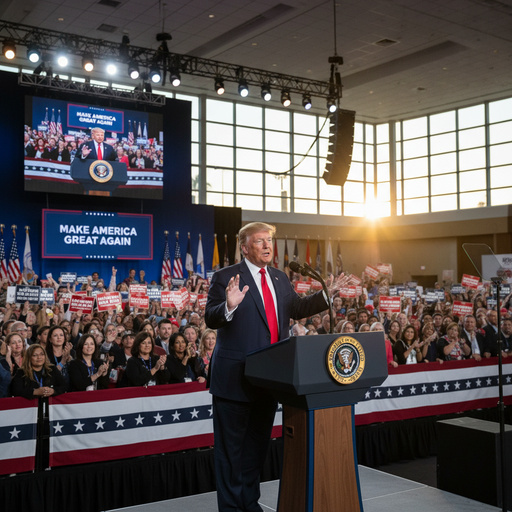
The catalyst for the rebound is the negotiation signals released by the U.S. On March 23, local time, Trump stated that the U.S. and Iran had engaged in “productive dialogue” and announced a five-day delay on military strikes against Iran. The market quickly interpreted this as a glimmer of easing, and funds previously suppressed by panic began to replenish, driving the index higher.
However, the key issue is that this signal has not been confirmed by the other party involved in the conflict.
From the latest information, the so-called “negotiation” resembles a “Rashomon.” The Iranian side firmly denies any contact with the U.S., and the Foreign Ministry explicitly stated that “there is no dialogue,” with Speaker of Parliament Ghalibaf directly pointing out that the U.S. is spreading “false news” and conducting “psychological warfare.” Both sides have only released a unilateral willingness to negotiate from the U.S., rather than a genuinely reached agreement. The U.S. president’s postponement of military action does not mean that the root cause of the conflict has been eliminated.
On the other hand, the physical destruction of energy facilities still exists. The blockade of the Strait of Hormuz has not been lifted—although Iran claims the strait “has not been completely blocked,” it also emphasizes that it is “only closed to enemies and harmful passage,” warning that if the U.S. threatens to strike Iranian power stations, it will immediately take four “punitive” measures, including a total closure of the Strait of Hormuz. Additionally, the damage to energy facilities in dozens of countries in the Middle East cannot be repaired within a few days.
In other words, the core logic supporting this market adjustment—the inflation expectations arising from the reconstruction of the oil supply gap, and the resulting pressures for monetary policy tightening—has not undergone any substantial change.
In this context, the market rebound is more of an emotional response rather than a reversal of fundamental logic. Today’s rise is based on the “verbal signals” unilaterally released by the U.S., and the reliability of this signal itself is questionable— the other party to the conflict not only has not confirmed it but has publicly denied it. This means that the foundation of the rebound is weak.
Experienced investors know that before significant uncertainties dissipate, the market is prone to “false moves.” A seemingly strong rebound may only be a brief respite in a downtrend, and funds that rush in may easily find themselves in a passive situation of “catching the bottom halfway up the mountain.”
So, when will the true reversal moment come? At least two signals need to be seen: first, a substantial recovery signal from the energy supply side, such as the reopening of the Strait of Hormuz or predictable repair processes for damaged facilities; second, effective control of inflation expectations and a reduction in the tightening pressures of the central bank’s monetary policy.
Before that, any rebound based on news lacks a solid foundation.
This is not pessimism, but a fundamental respect for risk. One of the greatest traps in investing is to substitute short-term fluctuations for long-term judgments. A day’s rise can easily create the illusion that “the worst is over,” leading to a relaxation of vigilance against underlying risks. But in fact, the formation of a market bottom is never instantaneous; it requires time for panic emotions to be fully released, for selling pressure to gradually wane, and for funds that genuinely believe in long-term value to slowly take over.
For short-term traders, it is essential to closely monitor substantive changes in the geopolitical situation; maintaining caution and controlling positions remain necessary until these signals emerge.
But for long-term investors holding positions for years, the current volatility actually provides an opportunity for phased positioning. It is advisable to focus on high-quality companies that align with national strategic directions, have solid fundamentals, and reasonable valuations, using methods like dollar-cost averaging or phased buying, and to keep a longer-term perspective. The market always oscillates between pessimism and optimism, and those who truly navigate through cycles are the investors who remain undistracted by short-term noise and adhere to long-term value judgments.
After leaving the fire scene, do not return. This is not a slogan, but a survival rule validated by countless market cycles. When the dust settles, risks are cleared, and logic reverses, it will not be too late to enter calmly. Before that, maintaining patience and observing changes may be the more prudent choice.
Note: The market has risks, and investments should be made cautiously. The content of this article is based on publicly available information and does not constitute any investment advice.
Author’s statement: Personal views, for reference only.