


Futures
Access hundreds of perpetual contracts
TradFi
Gold
One platform for global traditional assets
Options
Hot
Trade European-style vanilla options
Unified Account
Maximize your capital efficiency
Demo Trading
Introduction to Futures Trading
Learn the basics of futures trading
Futures Events
Join events to earn rewards
Demo Trading
Use virtual funds to practice risk-free trading
Launch
CandyDrop
Collect candies to earn airdrops
Launchpool
Quick staking, earn potential new tokens
HODLer Airdrop
Hold GT and get massive airdrops for free
Launchpad
Be early to the next big token project
Alpha Points
Trade on-chain assets and earn airdrops
Futures Points
Earn futures points and claim airdrop rewards


More




Super Central Bank Week & Nvidia GTC Conference Incoming US Plans to Establish Strait of Hormuz "Escort Alliance"
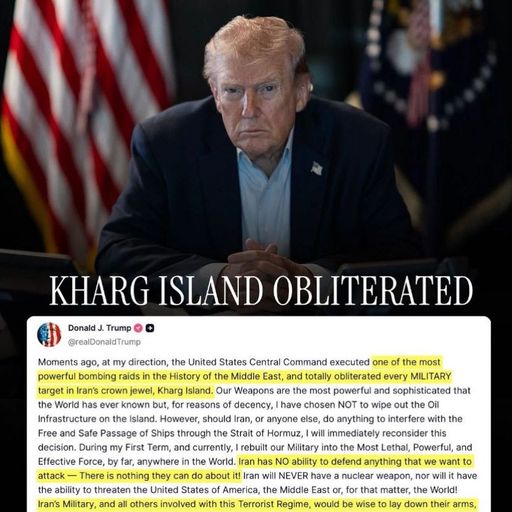
March 16 News: Due to the ongoing escalation of the Iran conflict, soaring oil prices have heightened inflation concerns. U.S. stocks experienced a turbulent week, with the three major indices falling for three consecutive weeks—the longest losing streak for the S&P 500 in a year—and the Mag7 index entering a correction zone. This week, markets will continue to monitor the Middle East conflict, with reports that Trump is forming a “Maritime Escort Alliance” for the Strait of Hormuz. The Federal Reserve’s policy meeting is also approaching, along with Nvidia’s annual GTC conference.
【U.S. Stock Indices】
As of last Friday’s close, the S&P 500 fell 0.61%, closing at 6,632.19; the Dow Jones Industrial Average declined 0.26%, ending at 46,558.47; the Nasdaq dropped 0.93%, finishing at 22,105.36.
On a weekly basis, the Dow fell 1.99%, the Nasdaq declined 1.26%, and the S&P 500 decreased 1.60%.
The ongoing Iran conflict continues to push oil prices higher and intensify inflation worries. Some analysts believe that recent volatility in the energy market is comparable to any two-week period of sharp fluctuations in cryptocurrency history. Therefore, it’s hard to say whether this volatility is driven by fundamentals.
Market sentiment remains highly emotional, making rational trading and investing difficult in this environment. The better approach is to stay on the sidelines, wait for the situation to develop and stabilize, which could take several weeks. As of last Friday’s close, Brent crude has stabilized above $100.
Meanwhile, the Federal Reserve’s meeting will be held this week. While a pause in rate hikes seems almost certain, markets are more focused on how the Fed assesses the impact of the war and energy shocks on inflation and economic growth. The Fed will also release dot plots and economic forecasts, giving investors a glimpse of future interest rate paths. Powell’s speech will also be a focal point, less than two months before his term ends.
Analysts note that the Fed will be the market’s core focus, especially as expectations for rate cuts have already been significantly lowered. The market is highly volatile, with traders reacting swiftly to any news related to the Iran conflict—whether positive or negative. As of last Friday, federal funds rate futures indicate that the market expects a rate cut of slightly less than 25 basis points by December. Before the conflict erupted in late February, the market had expected two rate cuts this year.
In addition to the Fed, the European Central Bank, Bank of Japan, Bank of Canada, Reserve Bank of Australia, and Bank of England will also announce interest rate decisions.
Furthermore, this week will see a major tech event—the Nvidia GTC conference—potentially shifting market focus back to AI trading themes. Nvidia is expected to unveil new details about its AI-optimized CPUs, possibly including a pure CPU rack server. Jensen Huang will deliver a keynote speech on Monday (early Tuesday Beijing time).
【U.S. Treasury Bonds】
Last Friday, U.S. Treasury yields continued to rise, with the 10-year yield closing at 4.282%, and the 2-year yield, sensitive to Fed policy, at 3.734%.
【Popular U.S. Stocks】
Last Friday, among popular stocks, Nvidia fell 1.58%, Apple declined 2.21%, Google A dropped 0.42%, Google C fell 0.58%, Microsoft decreased 1.57%, Amazon declined 0.89%, TSMC rose 0.48%, Meta dropped 3.83%, Tesla fell 0.96%, Seagate Technology declined 2.20%, and Intel rose 1.15%.
In major news, on Saturday local time, Tesla CEO Elon Musk posted on X that the company’s Terafab project to produce AI chips will launch in seven days.
Meta plans to undertake large-scale layoffs, potentially involving 20% of its workforce, to offset costs related to AI infrastructure investments and prepare for future AI-assisted work.
【Global Indices】
Last Friday, in Europe, the FTSE 100 index slightly declined 0.43%, closing at 10,261 points. France’s CAC 40 fell 0.91% to 7,912 points. Germany’s DAX decreased 0.60%, ending at 23,447 points.
In Asia, the Hang Seng Index dipped 0.98% to 25,466 points. The China Enterprises Index declined 0.32% to 8,671 points. The Nikkei 225 fell 1.16% to 53,820 points.
【China Indices】
On March 13, overnight, the Hang Seng Tech Index futures dropped 1.23%, the Nasdaq China Golden Dragon Index rose 0.76%, and the FTSE China A50 Index declined 0.04%.
【Chinese Concept Stocks】
Last Friday, among popular Chinese stocks, Tencent Holdings (HK) rose 0.18%, Alibaba gained 0.75%, Pinduoduo increased 1.01%, NetEase rose 1.07%, Baidu gained 0.74%, Ctrip fell 0.40%, Xpeng Motors declined 0.05%, Li Auto dropped 2.80%, and NIO rose 5.59%.
【Forex and Commodities】
Last Friday, due to ongoing uncertainty from the Iran conflict, the US dollar remained a safe haven, with the dollar index rising and returning above 100 for the first time since November last year, ending up 0.62% at 100.362, marking the third consecutive day of strength.
Supported by the dollar’s strength and market expectations of lower global interest rate cuts, spot gold prices continued to decline intra-day, with London gold closing down 1.56% at $5,017.93 per ounce. Silver followed gold downward, briefly falling below $80, with London silver ending down 4.09% at $80.57 per ounce.
Due to the continued blockade of the Strait of Hormuz, oil prices kept rising. WTI crude oscillated during the Asia-Europe session but surged during the US session, approaching $100, and finally closed up 3.04% at $99.29 per barrel. Brent crude surpassed $100, ending up 1.96% at $100.90 per barrel.
【Key Highlights】
U.S. Reportedly Planning to Form “Escort Alliance” for the Strait of Hormuz
According to CCTV News, on March 15, the U.S. government plans to announce the formation of a so-called “Escort Alliance” for the Strait of Hormuz. U.S. officials say some countries have agreed to provide escort for ships passing through this critical international oil shipping route. Discussions are ongoing about whether the escort operations will begin before the U.S. and Israel halt large-scale military actions against Iran.
U.S. Q4 GDP Revised Significantly Down to 0.7%; Government Shutdown Hampers Growth
U.S. GDP growth slowed more than expected at the end of last year, with actual growth revised down to 0.7%. Exports, consumer spending, government expenditure, and investment were all downgraded simultaneously. The BEA estimates that the ongoing federal government shutdown from October to November 2024 reduced quarterly GDP growth by about 1.0 percentage point.
Mag7 Tech Giants Have Fallen Over 10% from Highs; Microsoft Worst Performer This Year
As of last Friday, the Tech Seven Index has fallen more than 10% from its October peak, entering a technical correction zone. All seven companies are down this year, with Microsoft dropping over 18%. Market doubts about the profitability of massive AI investments and geopolitical tensions suppress risk appetite, shifting funds toward defensive sectors.
Meta Plans New Large-Scale Layoffs; AI Investment Pressures May Force Thousands of Job Cuts
Recent reports indicate that Meta is planning a large-scale layoff, potentially involving 20% or more of its workforce. The move aims to offset the huge costs of AI infrastructure investments and prepare for higher efficiency with AI assistance. If layoffs reach 20%, it would be Meta’s largest restructuring since its “Efficiency Year,” cutting about 16,000 jobs.
Elon Musk Announces: Terafab Project to Launch in 7 Days
On Saturday, Tesla CEO Elon Musk announced on X that the company’s Terafab project to produce AI chips will start in seven days. He did not disclose specific details but indicated that his team might soon explain how the chip factory will be implemented. This marks another expansion beyond Tesla’s core electric vehicle business and signals the start of a costly, large-scale project.
U.S.-Iran Conflict Ends “Buy on Dips”; U.S. Retail Investors Halt “Bottom-Fishing” for Over a Year
According to JPMorgan, retail investors’ weekly purchase volume from March 5-11 plummeted by about 30%, with weekly net inflows into retail ETFs decreasing by 22%, and individual stock buying sharply contracting. Retail investors continue to increase AI-related holdings while selling energy, financials, and healthcare sectors. Oil options trading volume surged, and fixed income and low-volatility ETFs saw increased retail inflows.
U.S. Private Credit: Storm in a Teapot or Canary of the Financial System?
Huatai Securities reports that the over $2.3 trillion U.S. private credit market faces multiple shocks—high interest rates, default waves, AI valuation reshaping, and retail redemptions—significantly increasing fragility. Current risks are mainly in the “deleveraging” phase, with systemic spillovers being controllable under a soft landing scenario, more like a “storm in a teapot.” However, if the economy slips into stagflation or an AI bubble bursts, the warning signals could rapidly escalate into systemic risks.
Tianfeng’s Guo Minghao: Nvidia’s Next-Gen Rubin Platform Starts New Material Testing; PCB Upgrade Cycle Approaching
According to Tianfeng International’s Guo Minghao, Nvidia has begun testing the next-generation M10 copper-clad laminate, targeting applications including Rubin Ultra and Feynman platforms’ orthogonal backplanes and switch blade mainboards, with mass production expected in late 2027. The scope of M10 testing has expanded to three suppliers, including two new Chinese manufacturers, potentially improving supply chain resilience.