Share crypto content and earn up to 60% commissions through content mining.
placeholder
gatefun
7.23 Gold midnight wrap: All short-on-rallies ideas in the evening call were perfectly realized
The evening rebound short call was completely on point. After the gold price rebounded and met resistance, it kept sliding lower, smoothly breaking below 4070 to reach the 4040 lows. The bearish sell-off pace and all pressure/support levels matched the forecasts, and the weak pattern continues.
Technical analysis: The 1-hour and 30-minute Bollinger Bands are opening downward in sync. The current price is around 4052, running near the lower Bollinger Band. RSI is still in the low zone, and downward m
XAUT-2.35%
View Original
post-image
  • Reward
  • 2
  • Repost
  • Share
什破天:
How do I do it?
View More
🔥Night free orders 👇
🔥Multiple long-position order opening units (see the top pinned subscription post for the second opening unit + short unit + take-profit unit; both short-term and long-term spot layouts are seen in the pinned post)
===========
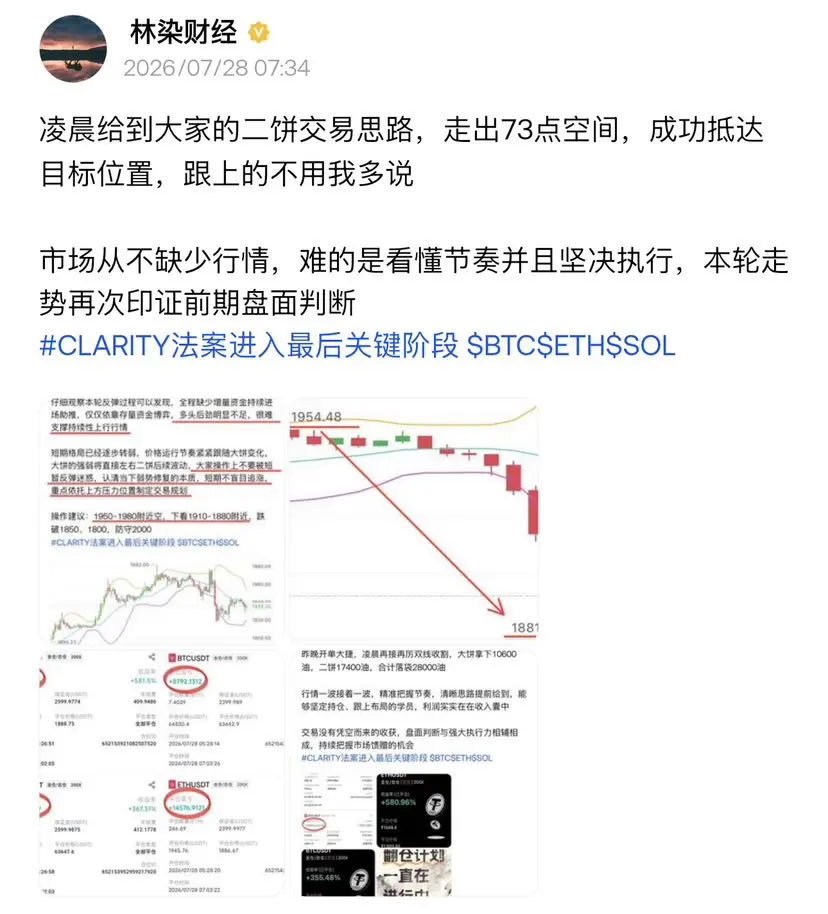
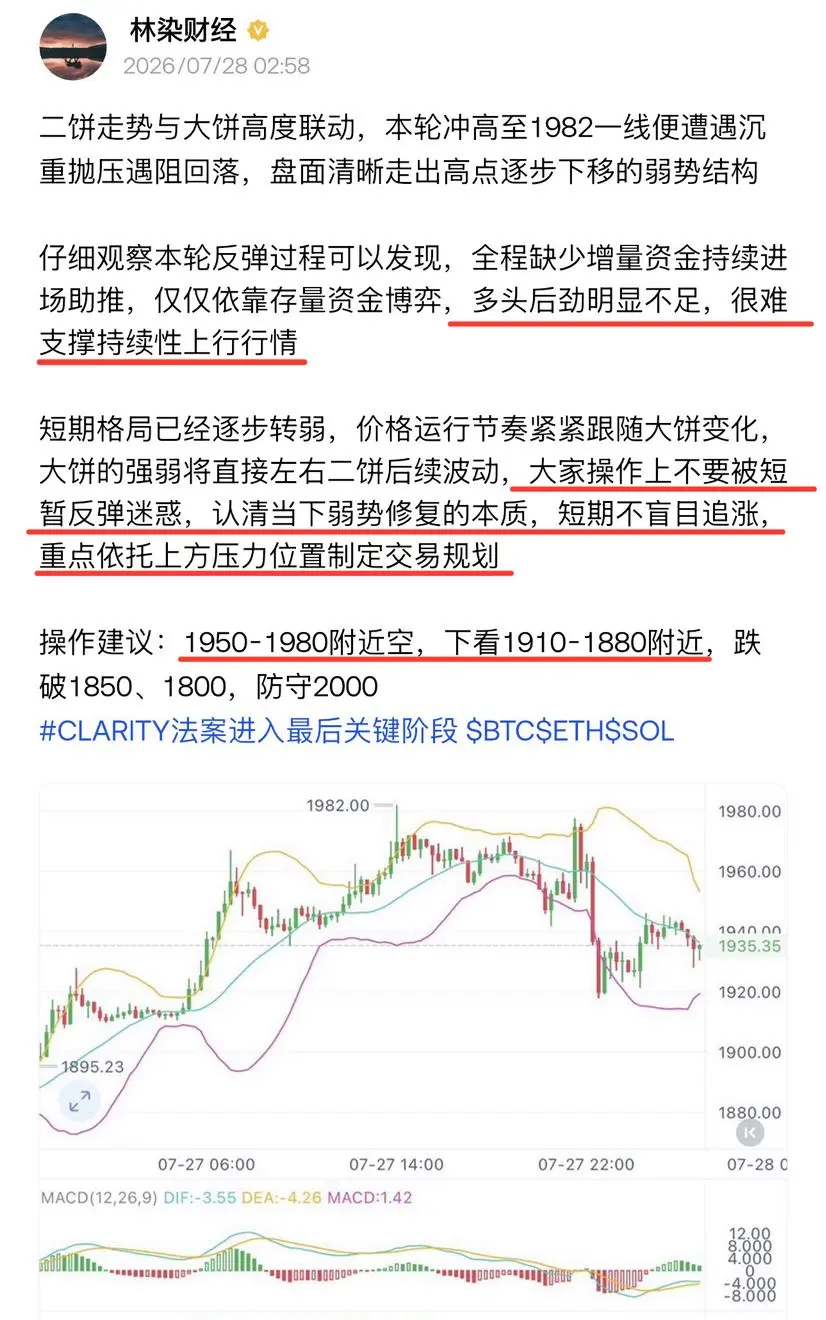
Around 64,350 – around 64,050, 62,650
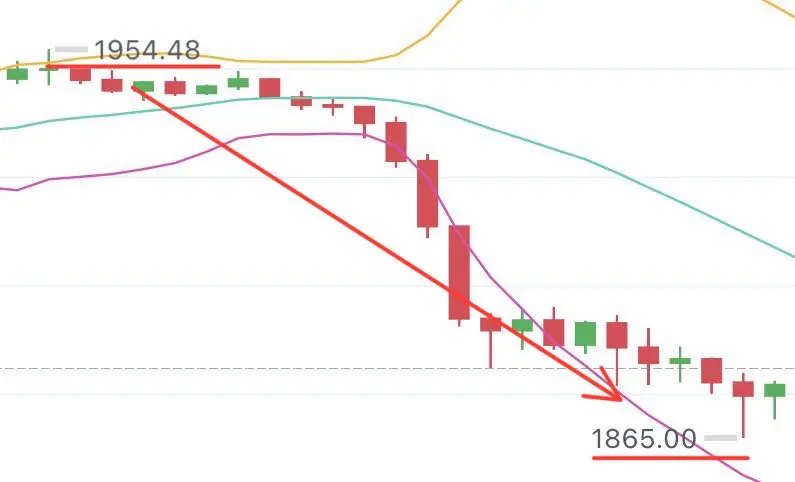
Around 1,865 – around 1,845, loss 1,800
#Gate事件合约首发狂欢
View Original
post-image
post-image
post-image
  • Reward
  • Comment
  • Repost
  • Share
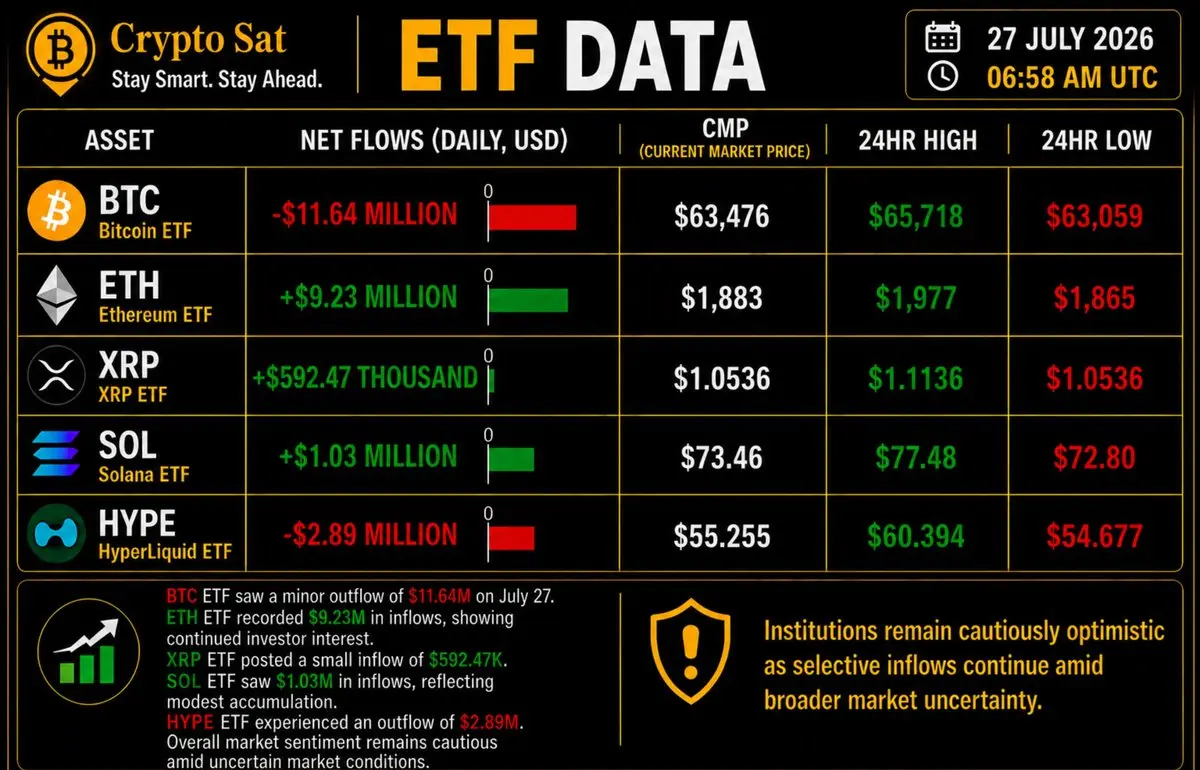
BTC MARKET UPDATES
gate liveLIVE
1,770
  • Reward
  • Comment
  • Repost
  • Share
Perp DEX attacked again! AFX Trade loses 24.15 million USDC—has the decentralized exchange security
gate liveLIVE
1,843
live-coin
  • Reward
  • Comment
  • Repost
  • Share
#SummerCreationCamp Creativity grows when curiosity meets action. is more than a seasonal program—it's a chance to explore new ideas, develop practical skills, and connect with a community of passionate learners. Every challenge completed and every lesson learned builds confidence for future opportunities. Whether you're discovering a new talent or strengthening an existing one, consistent effort leads to meaningful progress. Stay inspired, keep creating, and make this summer a stepping stone toward your goals. The skills you build today can open doors tomorrow. Join the journey, embrace innov
post-image
  • Reward
  • Comment
  • Repost
  • Share
🐋 WHALE WATCH : $285M Drift Protocol exploiter wakes up.
After 3 months of complete silence Arkham data confirms the hacker is currently slamming funds into Tornado Cash in rapid 100 $ETH batches.
Classic Lazarus Group playbook in full effect:
=> Drain $285M
=> Wait out the heat for 90 days
=> Mass mixer laundering run
Watch $ETH market liquidity carefully over the next 48 hours sell pressure and volatility incoming.
DRIFT-8.52%
ETH-2.85%
post-image
  • Reward
  • Comment
  • Repost
  • Share
“Slippage” is often blamed for every DEX swap mismatch. The settled result is actually a stack of separate mechanisms. 🔍
Quote: a snapshot of the selected route and pool state.
Price impact: how the order size moves through available liquidity.
Tolerance: the execution boundary, often expressed as minimum received—not a fee.
Routing: the pools, hops and fee tiers used.
Gas: a separate network cost.
Ordering: transactions ahead of yours can change pool state before execution.
Before naming the cause, compare the quoted output, route, price impact, minimum received, gas and execution time.
post-image
  • Reward
  • Comment
  • Repost
  • Share
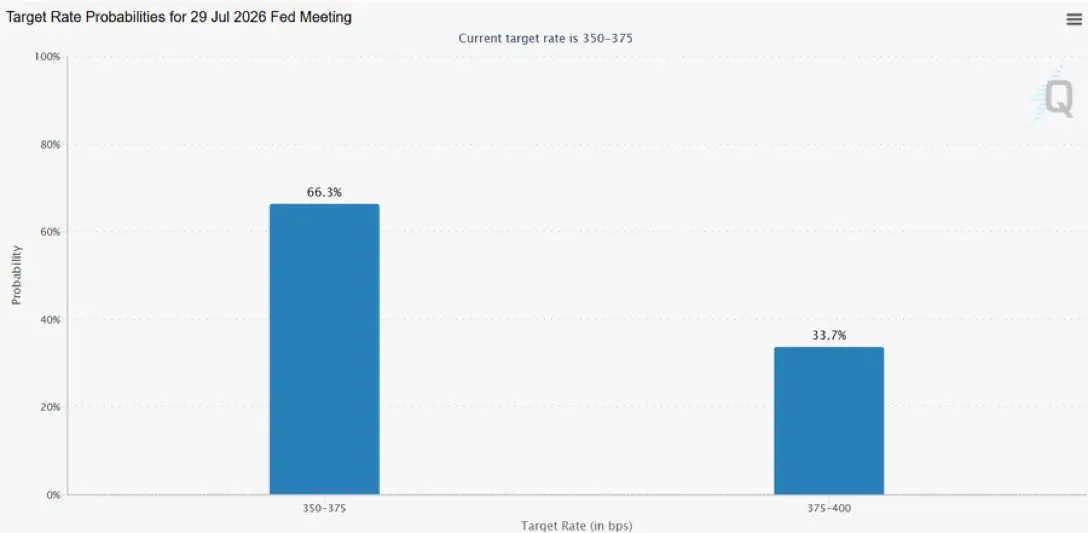
🔴 The ECB does not raise its rates again, after having increased them by 0.25% last month. The rates remain at 2.25%.
In contrast, the Fed now plans to raise its interest rates twice this year.
View Original
post-image
post-image
  • Reward
  • Comment
  • Repost
  • Share
#GOOGLEarningsBeatButStockDrops3%
Google’s 2026 Q2 earnings report may have exceeded expectations significantly on both revenue ($119.8 billion) and its cloud business ($24.8 billion, +82% year over year), but the after-hours stock price still fell by more than 3%. The core reasons are the “expectations gap” in the report and the market’s concerns about future profitability and cash flow. The specific reasons are as follows: 1. Doubts about the “quality” of net profit (one-off gains mask underlying weakness in the core business)
The earnings report shows net profit surged 294% year over yea
SPCX0.86%
post-image
Yusfirah
#GOOGL财报亮眼但盘后跌超3% Google’s 2026 Q2 earnings report may have exceeded expectations significantly on both revenue ($119.8 billion) and its cloud business ($24.8 billion, +82% year over year), but the after-hours stock price still fell by more than 3%. The core reasons are the “expectations gap” in the report and the market’s concerns about future profitability and cash flow. The specific reasons are as follows: 1. Doubts about the “quality” of net profit (one-off gains mask underlying weakness in the core business)
The earnings report shows net profit surged 294% year over year to $112.1 billion, but about $71.4 billion of that came from one-off equity investment gains (mainly paper gains from Anthropic and SpaceX), not from core operating profit.
·After excluding one-off gains, core operating EPS was only about $2.90-$3.00, slightly above expectations, failing to meet the market’s expectation of “explosive” growth.
2. Capital expenditures surge and free cash flow turns negative (worry over burn rate)
Q2 capital expenditures for the quarter reached $44.9 billion, doubling year over year, and the full-year Capex guidance was raised sharply to $195.0-$205.0 billion, indicating that investment in an AI arms race continues to expand.
Because the major Capex outlay consumes cash flow, free cash flow for the quarter turned to -$5.86B in Q2, the first time since Alphabet’s listing. The market worries whether such heavy investment can translate into profits in the near term, raising doubts about the sustainability of “burning cash for growth.”
3. Core business “Search” growth slows (a subtle concern in the base business)
Search business (including search ads) revenue was $63.3 billion, up 17% year over year, slightly below market expectations ($63.4 billion). Some institutions also point out that search growth may slow due to the high base.
The market originally had high expectations for a “Search + Cloud” dual-engine drive, and the relative weakness in the Search business to a certain extent dampened market sentiment. 4. Core AI model delayed (growth expectations take a hit)
The market expected the frontier AI large model Gemini 3.5 Pro, but it was delayed for reasons, and combined with AI talent loss, it raised concerns about whether its full-stack AI advantages can continue to lead and about the pace of AI commercialization.
5. Valuation has partially “Price in” (good news fully reflected)
Alphabet’s high revenue growth and cloud business growth were already partially reflected in the stock price before the earnings release. In after-hours trading, the market focuses more on “incremental negative factors” (such as negative cash flow and Capex exceeding expectations), leading to profit-taking and a reversal of sentiment in after-hours trading.
In summary, the “impressively strong” surface of Google’s earnings failed to fully offset the market’s concerns about its “high investment, low short-term returns.” Combined with some core metrics falling short of expectations, this led to downward pressure on the stock price in after-hours trading. #夏日创作营
  • Reward
  • 2
  • Repost
  • Share
HighAmbition:
Diamond Hands 💎
View More
$AKE Signal】1H breaks above the Bollinger upper band + bullish momentum expansion
$AKE 0.002085 breaks above the 4H Bollinger band upper rail; on 1H, the MACD bullish histogram continues to expand with volume. RSI is 71.23, but it has not diverged.
Bid depth is slightly skewed; the funding rate is 0.005%, neutral, and O I is stable.
Current risk-reward ratio is 1.5; the breakout structure is intact, making short-term trades cost-effective.
🎯 Direction: long
⚡ Entry / limit orders: 0.00207874 - 0.00208500
🛑 Stop loss: 0.00198075
🚀 Target 1: 0.00224138
🚀 Target 2: 0.00231956
🛡️ Trade mana
AKE27.04%
GOOGL-6.16%
BTC-1.87%
ETH-2.85%
SOL-3.02%
View Original
post-image
  • Reward
  • Comment
  • Repost
  • Share
$ETH Signal | Bears break below + 1H Bollinger lower band fails
$ETH 1H RSI 37.04, the price directly pierces the Bollinger lower band at 1900.84. 4H MACD green histogram continues to expand, and bearish momentum shows no signs of waning. Buy order depth is 6.34x, but the price doesn’t rise—support orders are essentially ineffective.
🎯Direction: short
⚡Entry/limit order: 1895.098 - 1900.800
🛑Stop loss: 1937.954
🚀Target 1: 1845.069
🚀Target 2: 1817.204
🛡️Trade management: After reaching target 1, cut 50%, and move the stop loss up to breakeven. If price drops back to the entry zone, exit au
ETH-2.83%
BTC-1.87%
SOL-3.02%
GOOGL-6.16%
View Original
post-image
  • Reward
  • Comment
  • Repost
  • Share
Why is todays AM session so bad?
Large overnight moves are a warning of a low probability session
This is what was mentioned before hand in the discord
(+ we also took a major liquidity objective on $ES)
post-image
  • Reward
  • Comment
  • Repost
  • Share
$AIA Signal】1H buy-side liquidity gap + depth imbalance, targeting the long blow-up point
$AIA Order book depth ratio 1.60, with a Bid/Ask imbalance of 23.21%, and the sell pressure being quickly absorbed by the buyer side. The 4H Bollinger upper band at 0.0717 has been broken; the MACD histogram at 0.0015 is still expanding. Frequent long upper wicks on 1H, but price is moving sideways at high levels—revealing an intention to prop up the funds.
🎯Direction: long
⚡Entry/limit orders: 0.0745557 - 0.0747800
🛑Stop loss: 0.0740322
🚀Target 1: 0.0759017
🚀Target 2: 0.0764626
🛡️Trade management:
AIA1.87%
GOOGL-6.16%
BTC-1.87%
ETH-2.85%
SOL-3.02%
View Original
post-image
  • Reward
  • Comment
  • Repost
  • Share
$AIA Signal】Bullish chase higher; 1H breaks the Bollinger upper band
$AIA RSI 1H 75.9; price has stayed above the Bollinger band outer track for two consecutive hours, while the 4H MACD histogram is steadily expanding. The sell-side order depth is 1.7 times that of the buy-side, but bulls and bears are still in a fierce contest. Watch support around 0.0755. Trend momentum has not faded, and there is still short-term inertia.
🎯 Direction: Go long
⚡ Entry / orders: 0.0753234 - 0.0755500
🛑 Stop loss: 0.0747945
🚀 Target 1: 0.0766833
🚀 Target 2: 0.0772499
🛡️ Trade management:
- Execution st
AIA2.07%
GOOGL-6.16%
BTC-1.87%
ETH-2.85%
SOL-3.02%
View Original
post-image
  • Reward
  • Comment
  • Repost
  • Share
$SOL Signal】Bearish momentum accelerates as selling pressure intensifies; 1H RSI stays in oversold range for continued downside
$SOL 1H RSI 27.94, with sell-side dominance. The lower Bollinger Band at 76.5530 is repeatedly broken through. 4H MACD histogram negative values expand, and the short-side lineup is clearly arranged. Order book depth is imbalanced by 20.69%; the thickness of sell orders far exceeds that of buy orders, leaving limited room for rebound.
🎯 Direction: short
⚡ Entry/limit order: 75.7022 - 75.9300
🛑 Stop loss: 76.6893
🚀 Target 1: 74.7911
🚀 Target 2: 74.2216
🛡️ Trade
SOL-3.04%
GOOGL-6.16%
View Original
post-image
  • Reward
  • Comment
  • Repost
  • Share
train your brain to glorify not losing as much as it enjoys winning
you're going to need that vindication the next time the market forces you to manage your risk
the trade I'm showing was 'high conviction', and incredibly clean - pretty much exactly what I would look for
a beautiful breakout of a key region: a very HTF trend reclaim in combination with a key support level. confluence on lower timeframes around that area as well if you were to zoom in.
with some discretionary backtesting, if I had taken the exact same setup at any other point in the past 5+ years, it would have paid off in mult
post-image
  • Reward
  • Comment
  • Repost
  • Share
Trump is really getting desperate this time! 😰
He lays it all out—if the Republicans in the Senate only have 53 seats, and if every Democrat votes against, ordinary bills can’t even pass, and the government might shut down directly! This isn’t a bluff; it’s a real, tangible risk.
The question is: how much impact will a government shutdown really have on our crypto market and the US stock market? Let’s dig into history and see the pattern.
In the short term: panic first, then divergence
Once the government stalls, tens of thousands of employees take unpaid leave, economic data stops updating,
BTC-1.85%
ETH-2.85%
CL6.53%
View Original
post-image
post-image
  • Reward
  • Comment
  • Repost
  • Share
#SECWarnsOnChainLendingMayFallUnderSecuritiesLaw
Headstands and Summervaults" When DeFi's Favorite Loophole Runs Into the Howey Test
Hester Peirce just dropped what might be the most consequential regulatory signal for DeFi since… well, since the last time someone at the SEC decided to remind the industry that laws still exist. Her statement provocatively titled "Headstands and Summervaults" isn't a vague warning. It's a surgical dissection of the exact business model that now controls billions in on-chain deposits: the vault curator.
Here's the uncomfortable truth she laid out. Moving som
MORPHO3.98%
AAVE-2.53%
post-image
CoinSniper
#SECWarnsOnChainLendingMayFallUnderSecuritiesLaw
Headstands and Summervaults" When DeFi's Favorite Loophole Runs Into the Howey Test
Hester Peirce just dropped what might be the most consequential regulatory signal for DeFi since… well, since the last time someone at the SEC decided to remind the industry that laws still exist. Her statement provocatively titled "Headstands and Summervaults" isn't a vague warning. It's a surgical dissection of the exact business model that now controls billions in on-chain deposits: the vault curator.
Here's the uncomfortable truth she laid out. Moving something on-chain doesn't make it legally invisible. If a vault operator is choosing which markets to allocate capital to, picking collateral types, setting liquidation thresholds, or rebalancing yield strategies that's not decentralization. That's asset management. And asset management, whether it runs on a blockchain or in a Manhattan office tower, has a regulatory framework that already exists.
The phrasing was deliberate and almost playful: "If you do headstands, backflips, and other gymnastics to read the law so that it does not apply to crypto assets and activities that are well within the scope of the federal securities laws, you will have a painful fall." Peirce — the same commissioner affectionately called "Crypto Mom" for her years of pro-innovation advocacy isn't anti-DeFi. She's anti-delusion. And the delusion she's targeting is the one where deploying a smart contract somehow exempts you from the same legal architecture that governs every pooled investment vehicle in the United States.
The Curator Problem Is Real
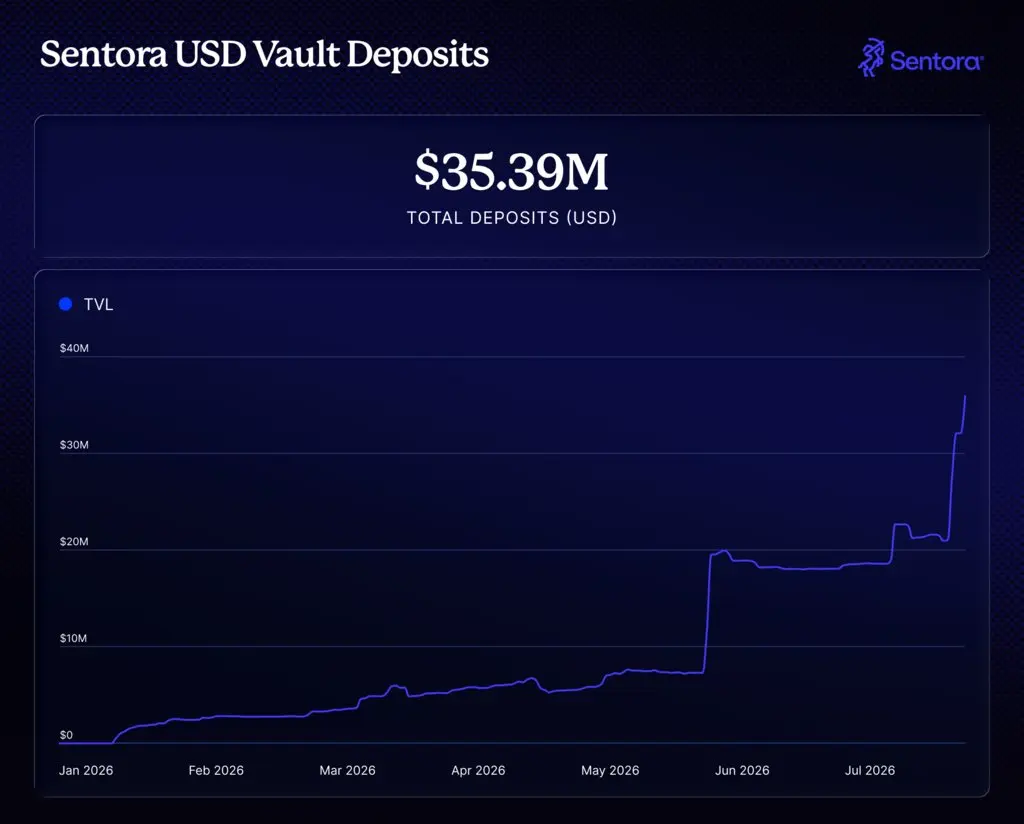
This lands squarely on the Morpho-style architecture where anyone can spin up an isolated lending market, but most retail depositors never touch those individual markets directly. Instead, they place funds into vaults curated by third parties firms like Gauntlet, which manages over $1.5 billion across Morpho vaults. The curator decides allocation, exposure, and risk parameters. On Aave, Gauntlet's role was advisory: they published recommendations and governance voted. On Morpho vaults, the curator holds the keys. That shift from analyst providing input to allocator exercising discretion is precisely the line Peirce drew in the sand.
She's not pretending all vaults are identical. She acknowledged they fall on a spectrum. At one end, purely programmatic allocations governed by immutable smart contracts with zero human discretion. At the other, a person or team making real-time decisions about where capital flows. The regulatory question turns on where a particular vault sits on that spectrum. And the answer isn't "we used a blockchain so it's fine."
Howey Doesn't Care About Your Tech Stack
The implications cut deep. Vaults that pool depositor funds into a common enterprise, where returns depend on a curator's efforts, tick every box of the Howey Test the SEC's longstanding framework for identifying investment contracts. Vaults allocating into securities themselves could fall into investment company territory, triggering a completely separate layer of regulation. On-chain loans, depending on motivations and distribution structure, could qualify as securities under the "notes" prong. And anyone managing these vaults or strategies could be acting as an investment adviser, whether they registered for that role or not.
Peirce also noted that this holds whether vaults are actively managed, passively managed, or structured as separately managed accounts offering individualized treatment. Several vault operators have started designing segregated structures to avoid comingling but she's essentially saying the architecture of your vault doesn't automatically get you out of the regulatory perimeter. Facts and circumstances matter. Each vault gets evaluated individually. There is no blanket exemption, and there is no blanket prohibition.
The Bigger Picture: DeFi's Regulatory Identity Crisis
What makes this statement particularly significant is who's delivering it. This isn't Gary Gensler's maximalist "everything is a security" posture. This is the commissioner who has consistently advocated for clearer rules, for safe harbors, for breathing room for innovators. Peirce is saying: I want you to succeed. I want rules that accommodate on-chain finance. But I can't help you if you're pretending the current rules don't apply.
She explicitly invited feedback from market participants on how existing regulations could better accommodate DeFi structures — a genuine call for engagement, not a wall. The SEC Crypto Task Force, which she leads, has been exploring potential exemptive orders for tokenized securities and innovative trading systems. But that path forward requires honest acknowledgment of where things stand today, not creative reinterpretation of what the law means.
The timing matters too. Tokenization is booming $31 billion in real-world assets have migrated to blockchain rails, though only about $3 billion is actually active in DeFi protocols. Vault deposits are growing fast. The Morpho curator model is proliferating. If this space gets regulated badly through blunt enforcement instead of thoughtful rulemaking — everyone loses. Peirce is essentially saying: engage now, while the door is open, because pretending you're outside the perimeter isn't a strategy. It's a bet that the SEC won't notice, and that bet is losing.
What Should Vault Operators Actually Do?
First, audit your architecture. If a human or team exercises discretion over allocation, risk parameters, or strategy selection, you're probably inside the securities perimeter. Document exactly where your vault falls on that spectrum Peirce described — and be honest about it.
Second, stop relying on the "it's on-chain" argument as a legal shield. The commissioner said it plainly: moving regulated activities onto a blockchain doesn't remove them from regulation. The medium doesn't rewrite the law.
Third, engage proactively. Peirce invited it. The Crypto Task Force is actively seeking input on how rules should evolve. This is a rare moment where the regulator is asking for your perspective before writing the rules not after enforcing them.
Fourth, consider structural redesign. Segregated accounts, immutable programmatic allocation, genuine decentralization of decision-making these aren't just marketing features. They're the exact factors that might place a vault outside the securities perimeter. But the redesign has to be real, not cosmetic.
The Takeaway
DeFi's most creative innovation the vault curator model that channels billions into yield strategies just got its clearest regulatory warning yet. And it came from the industry's most sympathetic voice inside the SEC. That's not a threat. It's a signal that the window for constructive engagement is open, but it won't stay open indefinitely. The more managerial discretion your vault involves, the clearer your compliance obligations become. No headstand changes that. #SummerCreationCamp
#Blockchain #CryptoEducation @Gate_Square
repost-content-media
  • Reward
  • 1
  • Repost
  • Share
HighAmbition:
Ape In 🚀
#夏日创作营 On July 22, 2026, Hester Peirce, a commissioner at the U.S. SEC, issued a statement titled “Upside Down and the Summer Vault,” directly pointing to the possibility that crypto vaults and on-chain lending strategies may fall under the regulatory scope of federal securities laws. Peirce sharply warned that attempts to evade regulation through legal interpretations in an “upside-down, backflip” manner will ultimately “hurt badly when you land.”
The statement’s core logic is clear and concise: moving financial activity onto the blockchain does not automatically grant an exemption from secur
View Original
post-image
  • Reward
  • 1
  • Repost
  • Share
Falcon_Official:
2026 GOGOGO 👊
#SECWarnsOnChainLendingMayFallUnderSecuritiesLaw
The cryptocurrency industry continues to evolve at an incredible pace, but so does regulatory oversight. One of the latest developments attracting attention across the digital asset market is the U.S. Securities and Exchange Commission's (SEC) warning that certain on-chain lending platforms and DeFi lending products may fall under existing securities laws. This statement has sparked discussions among investors, developers, and blockchain projects about the future of decentralized finance.
What Is On-Chain Lending?
On-chain lending allows users
post-image
post-image
post-image
  • Reward
  • Comment
  • Repost
  • Share
Load More

Join 40 M users in our growing community

⚡️ Join 40 M users in the crypto craze discussion
💬 Engage with your favorite top creators
👍 See what interests you
  • Pinned