

Trade
Basic
Futures
Futures
Hundreds of contracts settled in USDT or BTC
TradFi
Gold
Trade global traditional assets with USDT in one place
Options
Hot
Trade European-style vanilla options
Unified Account
Maximize your capital efficiency
Demo Trading
Futures Kickoff
Get prepared for your futures trading
Futures Events
Participate in events to win generous rewards
Demo Trading
Use virtual funds to experience risk-free trading
Earn
Launch
CandyDrop
Collect candies to earn airdrops
Launchpool
Quick staking, earn potential new tokens
HODLer Airdrop
Hold GT and get massive airdrops for free
Launchpad
Be early to the next big token project
Alpha Points
Trade on-chain assets and enjoy airdrop rewards!
Futures Points
Earn futures points and claim airdrop rewards
Investment
Simple Earn
Earn interests with idle tokens
Auto-Invest
Auto-invest on a regular basis
Dual Investment
Buy low and sell high to take profits from price fluctuations
Soft Staking
Earn rewards with flexible staking
Crypto Loan
0 Fees
Pledge one crypto to borrow another
Lending Center
One-stop lending hub
VIP Wealth Hub
Customized wealth management empowers your assets growth
Private Wealth Management
Customized asset management to grow your digital assets
Quant Fund
Top asset management team helps you profit without hassle
Staking
Stake cryptos to earn in PoS products
Smart Leverage
New
No forced liquidation before maturity, worry-free leveraged gains
GUSD Minting
Use USDT/USDC to mint GUSD for treasury-level yields

More


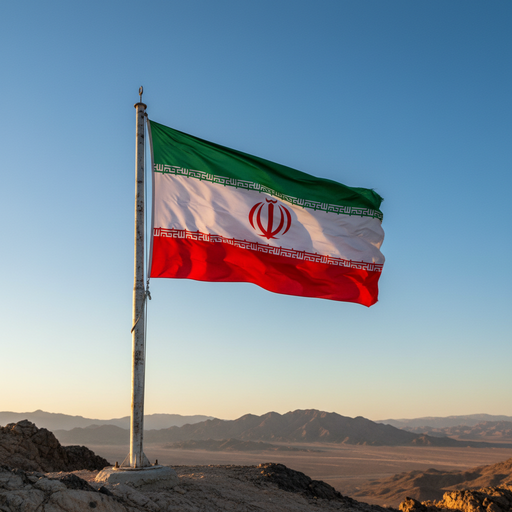




Iranian conflict destroys economic "confidence"! Federal Reserve's Kashkari urgently warns: The outlook for monetary policy has become completely unclear
Bloomberg News reports that Minneapolis Federal Reserve President Neel Kashkari said on Tuesday that the escalation of the Iran conflict has increased uncertainty about the U.S. economic outlook, making it more difficult to predict the Federal Reserve’s monetary policy and interest rate trajectory.
Kashkari, speaking at an event, stated: “Just a few days ago, before the U.S.-Israel joint action against Iran began, I was quite confident about the economic outlook.”
As a voting member of the Federal Open Market Committee (FOMC) this year, Kashkari said he initially expected inflation pressures to continue easing through 2026, creating conditions for the Fed to cut rates. Now, when discussing monetary policy, “we need to observe this new shock — which could be a new variable impacting the global economy — how long its effects will last and how deep they will be.”
“I think both the Fed and the markets are currently pondering the same question: how long will this conflict last? How bad could the situation get? Is it more like the Russia-Ukraine conflict, or more like Hamas’s attack on Israel? All of this will influence monetary policy,” Kashkari said.
He pointed out that the impact of such geopolitical conflicts on inflation is hard to predict, and therefore he needs to wait for further data before making judgments.
To curb high inflation and support the gradually weakening labor market, the Fed last year lowered the federal funds rate target range by 75 basis points to 3.5%–3.75%.
Although Fed officials have been relatively cautious in their guidance on monetary policy this year, markets had generally expected the Fed to start cutting rates in 2026. With oil prices rising and the inflation cooling process under threat, market expectations for rate cuts have begun to decline. However, if the Trump administration’s military actions significantly slow economic activity, expectations for rate cuts could rise again.
Kashkari mentioned that the Fed usually assesses inflation outlooks through core inflation indicators, but the current situation might be different.
“After experiencing five years of high inflation, if overall inflation remains elevated for an extended period, that’s a scenario we must be highly alert to,” he said. This situation could also influence inflation expectations.
Kashkari said that before the Iran strike, he was quite optimistic about the U.S. economic outlook: inflation was expected to further ease, and the labor market was “doing well” but gradually cooling.
“I originally thought monetary policy was at a fairly appropriate level, and we had room to gradually bring rates back to a neutral level,” he said, but now the outlook is full of uncertainty.
Kashkari also expressed his expectation to establish effective cooperation with Kevin Woor, who is set to become the new Fed Chair. Woor will succeed Jerome Powell, whose term as Chair ends in May.
He noted his willingness to communicate with the prospective Fed Chair regarding criticisms of the Fed and his views on managing the central bank’s large balance sheet and interest rate policy system.
Kashkari also said he would be “very happy” if Powell continues to serve as a Fed governor after his term ends. Powell’s term as a governor can be extended until 2028, and it is widely believed he may choose to stay on to maintain the Fed’s independence amid criticism from the Trump administration.