


Futures
Access hundreds of perpetual contracts
TradFi
Gold
One platform for global traditional assets
Options
Hot
Trade European-style vanilla options
Unified Account
Maximize your capital efficiency
Demo Trading
Introduction to Futures Trading
Learn the basics of futures trading
Futures Events
Join events to earn rewards
Demo Trading
Use virtual funds to practice risk-free trading
Launch
CandyDrop
Collect candies to earn airdrops
Launchpool
Quick staking, earn potential new tokens
HODLer Airdrop
Hold GT and get massive airdrops for free
Launchpad
Be early to the next big token project
Alpha Points
Trade on-chain assets and earn airdrops
Futures Points
Earn futures points and claim airdrop rewards





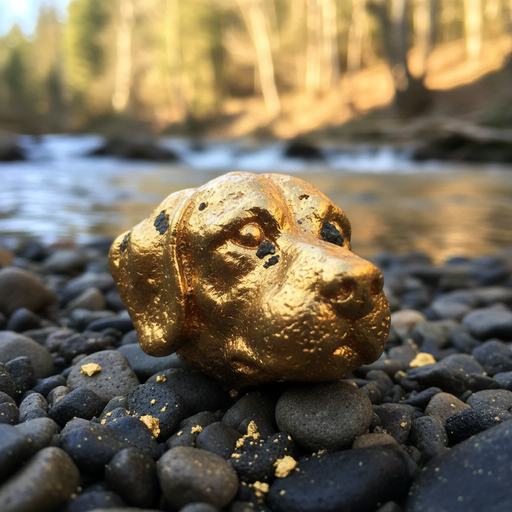
Transformative Gold Discovery in China Reshapes Global Supply Dynamics
A monumental geological find has positioned China to potentially reduce its reliance on global gold imports, addressing a long-standing supply-demand imbalance. Recently disclosed by Chinese authorities, the Wangu gold field in Hunan province contains an estimated 1,000 metric tons (MT) of gold reserves—a quantity substantial enough to reshape international precious metals markets and strengthen China’s position as the world’s leading bullion producer and consumer.
Unveiling the Scale of China’s Gold Discovery
The deposit represents what geologists classify as a “supergiant” reserve, substantially surpassing South Africa’s renowned South Deep mine, which maintains reserves of approximately 930 MT. Initial surveys identified over 40 distinct gold veins extending to depths of 6,600 feet, yet three-dimensional geological modeling reveals the deposit likely extends considerably deeper—potentially reaching 9,800 feet—suggesting even larger quantities await extraction.
With a concentration of 138 grams per metric ton (considered “maximum quality”), the total estimated value approaches US$83 billion at current market rates. This discovery arrives at a critical juncture for China, which currently dominates global gold production, accounting for roughly 10 percent of worldwide annual supply. Yet despite this productive capacity, China’s internal demand consistently outpaces domestic output, making it the world’s largest gold importer.
The People’s Bank of China has strategically expanded its bullion reserves in recent years, positioning the nation to shift from net importer to a more self-sufficient producer should mining operations commence.
Where China Ranks in Global Gold Reserves
According to data from the US Geological Survey, the global hierarchy of gold reserves reveals China’s historical positioning relative to other major holders. The following represents the current top-ten nations by proven reserves:
The Wangu discovery could vault China substantially higher within this ranking if commercialization proceeds successfully.
Technical Obstacles and Environmental Considerations
Despite the remarkable scale of the deposit, industry specialists have emphasized that extracting gold from such extreme depths presents formidable obstacles. Mining operations exceeding 6,000 feet demand sophisticated cooling, ventilation, and occupational safety infrastructure to manage extreme subterranean temperatures and pressure conditions. The financial expenditure and technological sophistication required remain considerable.
Beyond engineering challenges, environmental sustainability warrants careful examination. Large-scale precious metals extraction in ecologically sensitive zones carries inherent risks to regional ecosystems and local populations. While Chinese authorities have pledged adherence to responsible extraction methodologies, stakeholders continue monitoring environmental safeguards and community impacts.
The Broader Context: Peak Gold and Future Discoveries
The Wangu find contributes meaningfully to ongoing scientific discourse surrounding “peak gold”—the hypothesis that humanity has already extracted most readily accessible deposits, rendering major new discoveries increasingly improbable. However, contemporary research suggests an alternative narrative.
Recent technological breakthroughs have identified novel mechanisms linking seismic phenomena to gold formation and concentration. In 2024, Australian researchers documented these seismic-metallogenic connections, suggesting substantial untapped reserves remain sequestered beneath Earth’s surface. Concurrently, scientists are investigating unconventional extraction methodologies, including deep-ocean mining and urban recycling programs, though these approaches remain contentious as international bodies deliberate their ecological ramifications.
The convergence of new discoveries, technological innovation, and evolving extraction methodologies suggests the next chapter of gold exploration may differ substantially from conventional expectations—with China’s monumental discovery serving as a significant milestone in that unfolding narrative.