


Futures
Access hundreds of perpetual contracts
TradFi
Gold
One platform for global traditional assets
Options
Hot
Trade European-style vanilla options
Unified Account
Maximize your capital efficiency
Demo Trading
Introduction to Futures Trading
Learn the basics of futures trading
Futures Events
Join events to earn rewards
Demo Trading
Use virtual funds to practice risk-free trading
Launch
CandyDrop
Collect candies to earn airdrops
Launchpool
Quick staking, earn potential new tokens
HODLer Airdrop
Hold GT and get massive airdrops for free
Launchpad
Be early to the next big token project
Alpha Points
Trade on-chain assets and earn airdrops
Futures Points
Earn futures points and claim airdrop rewards


More



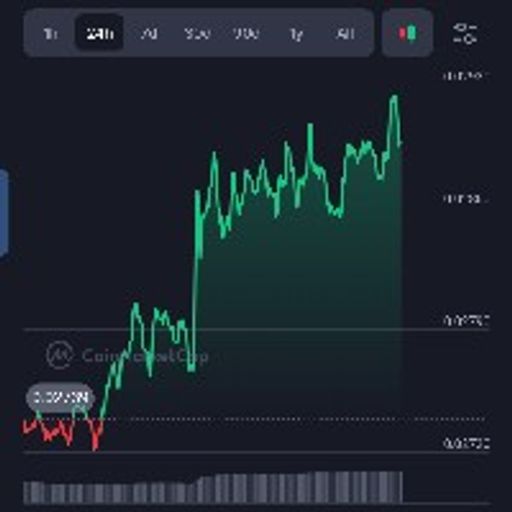


Last year at this time, I attended a market seminar. Gold was at $3,200, and everyone was debating whether it could break through $3,500 — the on-site discussion was indeed lively, with everyone sticking to their own judgments.
Looking back now, that $3,500 level feels like a past that can never be revisited. Gold prices have been rising steadily northward, just like after a breakup when you really won't look back — you want to apologize, wishing you hadn't missed the opportunity back then, but there's no chance now. As of today, gold has surpassed $4,600.
This is not to prove how wrong the initial judgment was, nor to regret not catching up in time. The key point is that the previous cognitive framework has completely failed. The increase in gold prices has broken through the original structural limits, and a new analytical model must be established to understand it.
On the surface, the reasons for gold's rise seem quite clear: escalating geopolitical risks, rising trade tensions, slowing economic growth, emerging debt crises, and pressure on the US dollar credit system... These are all real factors, but they are only superficial causes. The more fundamental change is that the market structure has shifted, and the consensus has been rewritten.
The crucial transformation is that gold's role is evolving from a 'currency anchor' to a 'credit anchor.' This is not just a name change but an update to the entire financial paradigm.
Gold prices are setting new historical records every day, and we are all part of this process. Wealth itself has never disappeared; it has only been redistributed. Making money is no longer harder, but the old routines have become ineffective — the golden age of rapidly accumulating wealth through information asymmetry and real estate has come to an end. New wealth creators are emerging in the financial markets.
What we need to think about now is no longer how much gold will be worth in 2026, but how to reposition ourselves under the new market logic.
Initially, we were still debating whether it could break 3500, and now it's already soared to 4600, feeling like the entire game rules have changed.
The old tactics are really dead, the information gap strategy is outdated, now whoever acts faster wins.
This wave of market trend is probably going to rise further, new wealth opportunities are all in the financial markets.
Suddenly feeling that last year's meeting discussions were all in vain...
The statement that the cognitive framework has failed is too extreme. I just want to ask, how long can we trust our current "brand new model"?
From currency anchor to credit anchor, it sounds sophisticated, but honestly, isn't it just betting on what the dollar will do? I really can't get a handle on it.
Wealth redistribution? Nice words, but I was basically redistributed out in this wave.
---
It's that same "paradigm shift" rhetoric again. Hearing it so many times has become tiresome.
---
Basically, the old model has collapsed. We need to find new ways to survive. It's not that complicated.
---
Gold as a credit anchor? What a desperate situation that must be.
---
This article is just saying one thing: we're all walking in the dark.
---
From monetary anchor to credit anchor, it sounds sophisticated, but in reality? It's just risk hedging.
---
The dispute over $3,500 back then does seem a bit funny now. The market is much crazier than people imagined.
---
Wealth redistribution, that's true, but the real question is: into whose pockets is it redistributed?
---
Has the era of making quick money through information asymmetry really passed? I don't think so; it's just taken a different form.
---
New wealth creators are emerging in the financial markets. Then why am I still so poor?
---
Instead of obsessing over historical highs, it's better to think about how to keep up with this wave.