


Futures
Access hundreds of perpetual contracts
TradFi
Gold
One platform for global traditional assets
Options
Hot
Trade European-style vanilla options
Unified Account
Maximize your capital efficiency
Demo Trading
Introduction to Futures Trading
Learn the basics of futures trading
Futures Events
Join events to earn rewards
Demo Trading
Use virtual funds to practice risk-free trading
Launch
CandyDrop
Collect candies to earn airdrops
Launchpool
Quick staking, earn potential new tokens
HODLer Airdrop
Hold GT and get massive airdrops for free
Launchpad
Be early to the next big token project
Alpha Points
Trade on-chain assets and earn airdrops
Futures Points
Earn futures points and claim airdrop rewards


More


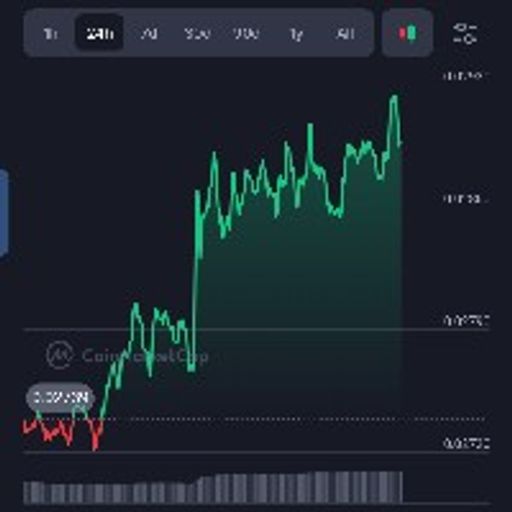



#数字资产行情上升 Speaking of which, it's a bit embarrassing—my account once dropped from 20,000 USDT straight down to 300 USDT. That night, I didn't sleep at all, staring at the market charts like a madman. That feeling is really something I never want to experience again.
But after waking up, I realized one thing—relying solely on luck to turn things around? Dream on. You must have a systematic approach.
The first trick is to learn to "stay alive." No full positions, no all-in, and don't indulge in wild fantasies. Even with 300 USDT, you can use it wisely; the key is not to get wiped out halfway. My approach is simple: as soon as I make a profit, I withdraw thirty percent immediately, and the remaining is my capital to continue trading. This way, I add to my position gradually, round after round, which may seem slow, but I will never blow up my account.
The second trick is to "follow the trend." Don't guess the top or the bottom; it's exhausting and easy to get caught. Just look at the current trend—sell when it's time to sell, admit losses when needed. The real insight is here—markets won't change because of your stubbornness, and those who can wait and endure will ultimately live the most comfortably.
The third trick is to "control yourself." Smaller positions mean less profit, I admit that, but if your position gets out of control and your mindset collapses, even surviving becomes a luxury. Instead of chasing big wins, it's better to keep a steady mindset. Sometimes, doing nothing is the smartest choice.
After three months, my account recovered from 300 USDT to 30,000 USDT. No magic involved—just countless stop-losses, market reviews, and those sleepless nights piled up.
Someone asked me what my secret to turning things around is. My answer is simple—no greed, no panic, no rush. The crypto world is never short of people who make money; what’s scarce are those who can survive for the long haul.
Not greedy, not panicking, not rushing—easy to say, but hell to do.
Empathizing deeply, that feeling of insomnia is truly tormenting.
Stop-loss, stop-loss, stop-loss—saying it a thousand times still doesn't mean you can actually execute it.
Position size is small, but at least the sleep quality is good haha.
This is the real way to live in the crypto world, not the dreamer's approach.
But honestly, the author's methodology really hits the mark. Especially this sentence: "Those who can survive longer," is more effective than any technical indicator.
I'm now following his advice—taking out 30% of the profits first, and continuing with the rest. Although the gains are slow, my sleep quality has really improved, haha.
Stop-loss is the hardest part; once your mindset collapses, everything is over. You have to admit that.
However, I have to admit, your phrase "those who can live long" really hit me. I used to be a fool all-in too, and I’m still reflecting on it.
Listen, can you elaborate on how to "control yourself"? I feel like that's the hardest part, especially when the market is soaring.
Three months from 300 to 30,000, that number looks a bit unrealistic, but it's not entirely impossible. It mainly depends on your principal and trading frequency.
Really, I resonate a lot with those sleepless nights. Who hasn't gone through that?
The key idea is, stop-loss, stop-loss, and stop-loss again; mindset is everything. I couldn’t hold back a few times, and I’m still catching up on lessons.
Exactly, going all in is truly a lifesaver. That's how I'm playing now too.
Wait, you said three months? Why do I feel like I need to tinker for two years?
The last sentence is brilliant—living longer is the key, not cap.
To be fair, how many people can actually do it?
I have to admit, not going all in, living longer is indeed more important than gambling everything...
It sounds easy, but actually executing it is really tough.