


Futures
Access hundreds of perpetual contracts
TradFi
Gold
One platform for global traditional assets
Options
Hot
Trade European-style vanilla options
Unified Account
Maximize your capital efficiency
Demo Trading
Futures Kickoff
Get prepared for your futures trading
Futures Events
Join events to earn rewards
Demo Trading
Use virtual funds to experience risk-free trading
Launch
CandyDrop
Collect candies to earn airdrops
Launchpool
Quick staking, earn potential new tokens
HODLer Airdrop
Hold GT and get massive airdrops for free
Launchpad
Be early to the next big token project
Alpha Points
Trade on-chain assets and earn airdrops
Futures Points
Earn futures points and claim airdrop rewards




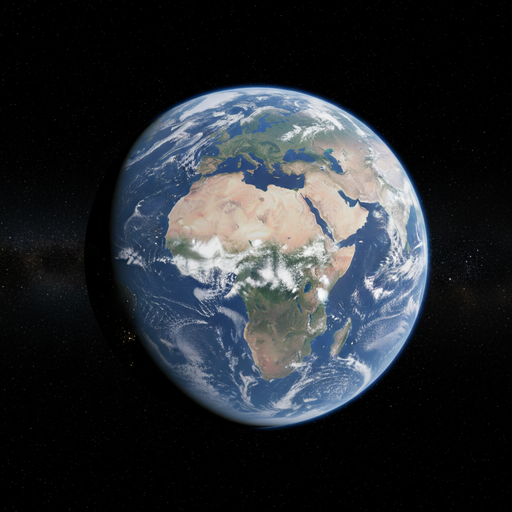


Global Poverty Ranking: Which Are the Poorest Countries in the World in 2025?
The analysis of the poorest countries in the world reveals economic and social patterns that intrigue researchers, investors, and policymakers. Institutions like the World Bank and the IMF regularly update their development indicators, providing an accurate view of global income distribution. This article presents a comprehensive overview of the territories facing the greatest economic challenges, explaining the mechanisms behind this persistent reality.
Understanding the Metric: How to Measure Poverty Among Nations
To identify the poorest countries in the world, the primary measure used is the GDP per capita adjusted by Purchasing Power Parity (PPP). This indicator divides the total value of goods and services produced by a country by its population, considering local cost variations.
Why is this approach preferred?
Despite its limitations — it does not fully capture income inequality or the quality of public services — GDP per capita remains the most reliable instrument for international comparisons of average living standards. Volatile currencies and differences in the cost of living between regions would make any other comparison inaccurate.
The Poorest Countries in the World: Updated Data for 2025
The concentration of economies with extremely low income occurs predominantly in Sub-Saharan Africa, as well as territories affected by prolonged conflict. The following overview reflects the current situation:
These figures indicate highly vulnerable economies, where the average annual income is at critical levels for human subsistence.
The Roots of Structural Poverty
The poorest countries in the world share economic and political characteristics that perpetuate cycles of stagnation. Understanding these dynamics is essential for any serious analysis of global development.
Dependence on Primary Sectors
Many of these economies rely on subsistence agriculture or the export of unprocessed raw materials. The lack of significant industrialization and a robust service sector leave these nations exposed to international price fluctuations and climate crises, hindering capital accumulation.
Deficit in Human Capital
Inadequate investments in education, health, and sanitation infrastructure drastically reduce the productivity of the population. A workforce with low skills limits the ability to attract investments in higher value-added activities, creating a vicious cycle of low income.
Unfavorable Demographic Dynamics
When population growth exceeds economic expansion, the result is a contraction of GDP per capita, even if total gross domestic product shows some increase. This phenomenon perpetuates widespread poverty regardless of absolute gains.
Institutional Fragility and Conflict
Political instability, civil wars, and weak rule of law discourage private investments, degrade essential infrastructure, and divert resources to military spending or corruption. When there is no legal security or minimal stability, economic growth becomes virtually impossible.
Detailed Analysis of Territories with the Lowest GDP per Capita
South Sudan: The Poorest
Since its independence in 2011, South Sudan has faced ongoing internal conflict. Despite significant oil reserves, the lack of political stability prevents these resources from generating distributed economic benefits. The per capita income is only 960 dollars, reflecting the reality of a population largely dependent on humanitarian aid.
Burundi and Central African Republic: Fragile Rural Economies
Both countries are characterized by predominantly low-productivity agricultural economies. Burundi has a history of political instability that undermines public institutions, while the Central African Republic, despite mineral wealth, suffers from recurrent internal conflicts and massive population displacement.
Malawi, Mozambique, and Madagascar: Climate Vulnerability
These three territories demonstrate high dependence on agriculture combined with adverse climatic factors. Recurring droughts and changes in precipitation patterns directly impact food production. Limited industrialization and rapid demographic growth worsen the situation, keeping per capita income at critical levels.
Somalia and Democratic Republic of the Congo: Conflict and Corruption
After decades of conflict, both nations face weakened institutions. Somalia is characterized by state fragmentation and a predominantly informal economy, while the DRC, despite vast mineral resources, sees its natural wealth diverted by endemic corruption and inadequate exploitation.
Liberia: Legacy of Civil War
The impacts of previous civil wars persist in Liberia’s economy. Destroyed infrastructure, reduced industrial capacity, and relative isolation in regional trade keep the economy fragile.
Yemen: Humanitarian Crisis Outside Africa
As the only non-African country on the ranking, Yemen presents a distinct geographic reality but equally challenging. The civil war that erupted in 2014 has turned it into one of the worst contemporary humanitarian crises, with the economy virtually collapsed.
Perspectives for Investors and Decision Makers
Identifying the poorest countries in the world goes beyond a statistical exercise — it is about recognizing the mechanisms that perpetuate global inequality. These data reveal how conflict, weak institutions, and inadequate structural investment compromise long-term development trajectories.
For professionals operating in international markets, understanding the global economic reality provides valuable insights into risk allocation, economic cycles, and potential geopolitical transformations. Before engaging in operations in emerging or fragile markets, it is advisable to use platforms that offer advanced analysis tools, diversified access to global assets, and appropriate risk management resources.
A responsible approach begins with education: familiarize yourself with macroeconomic dynamics, test strategies in risk-free environments, and build progressive knowledge before allocating capital to active operations. Discipline, quality information, and proper infrastructure are indispensable foundations for any initiative in the international financial market.