


Futures
Access hundreds of perpetual contracts
TradFi
Gold
One platform for global traditional assets
Options
Hot
Trade European-style vanilla options
Unified Account
Maximize your capital efficiency
Demo Trading
Introduction to Futures Trading
Learn the basics of futures trading
Futures Events
Join events to earn rewards
Demo Trading
Use virtual funds to practice risk-free trading
Launch
CandyDrop
Collect candies to earn airdrops
Launchpool
Quick staking, earn potential new tokens
HODLer Airdrop
Hold GT and get massive airdrops for free
Launchpad
Be early to the next big token project
Alpha Points
Trade on-chain assets and earn airdrops
Futures Points
Earn futures points and claim airdrop rewards


More


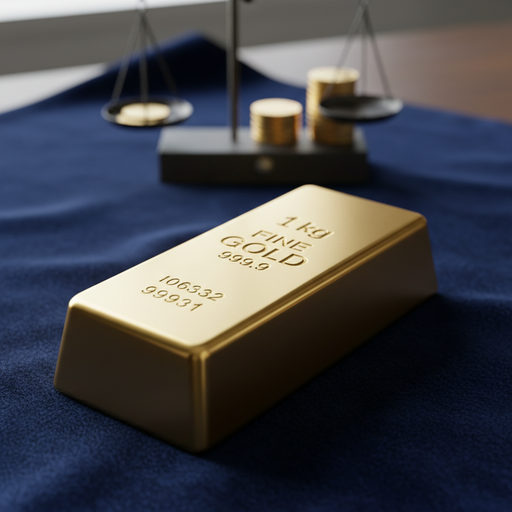

A topic about gold price adjustments suddenly flooded major social media platforms, prompting reactions from the jewelry consumer market. A well-known jewelry brand announced a price increase in December, marking their third price hike cycle for 2025 — the first round in March saw a 10%-20% increase, the second at the end of October saw a 12%-18% rise, and now another wave, with some products experiencing a cumulative increase of over 50% this year.
The data is quite startling. Comparisons between new and old price tags at counters show that this round of price hikes mainly range from 4% to 16%, but some popular items surged more aggressively: a 32.35g pure gold bracelet jumped from 56,800 yuan to 65,800 yuan, a single increase of 9,000 yuan, or 15.8%; a new price for the Wudi coin bracelet is 53,800 yuan, more than doubling its value from the discount price at the beginning of the year; a 30g Fuk Fook bracelet will break through 60,000 yuan after the price adjustment. The entire industry is following suit, with top brands like Chow Sang Sang, Chow Tai Seng, and Lao Miao not sitting idle. Retail prices for pure gold jewelry have already exceeded 1,353 yuan per gram, an increase of over 550 yuan per gram since the beginning of the year.
What’s behind this? The crazy performance of international gold prices. At the start of 2025, gold was around $2,650 per ounce, then continuously broke through the $3,000 and $4,000 marks, with a year-to-date increase of over 66%, creating a rare bull market in history. What’s the driving force? The gold-buying frenzy among central banks worldwide. China’s central bank has increased its gold holdings for 13 consecutive months, with net purchases reaching 634 tons in the first three quarters globally. Coupled with tense Middle East tensions, Federal Reserve rate cuts, and other risk factors, gold’s safe-haven attributes have been amplified to an unprecedented level, and its value preservation has soared accordingly.
Market reactions are polarized. On one side, discussions on social platforms about "buy early, save money" are booming, with many consumers rushing to purchase during the price adjustment window; on the other side, the pressure on newly engaged couples is mounting, as the cost of a wedding "hardware" set has increased by over 30,000 yuan since the beginning of the year. Some are turning to swapping old gold, while others opt for smaller weight styles.
Interestingly, this pricing strategy is a double-edged sword for brands. On one hand, the retail value of gold products has increased by 43.7% year-on-year, becoming a key driver of performance recovery; on the other hand, the high gold prices have directly suppressed overall consumption demand, with national gold jewelry consumption in the first half of the year dropping by 26% year-on-year. Price hikes boost revenue but sell fewer units — this is the market reality.
Looking ahead, many international institutions are generally optimistic, predicting gold prices could reach $4,200–$4,300 per ounce within 6-12 months, and even potentially challenge the $5,000 mark in the medium to long term. But don’t get too excited; the risk of short-term technical corrections is also increasing. Whether for consumption or investment, the oscillation and tug-of-war in the gold market seem likely to become the norm.