
Share crypto content and earn up to 60% commissions through content mining.
placeholder
gatefun
How to balance regulation and innovation—or what could become the market’s focus
The development of the digital assets industry has always revolved around finding a balance between “innovation” and “regulation.” If the Clarity Act adds ethical provisions, the market may focus less on the provisions themselves and more on whether the regulatory framework can maintain market order while still preserving space for corporate innovation.
Supporters believe that clearer rules can boost market confidence, attract more institutions, and improve the industry’s overall image. For businesses, a stable an
View Original
post-image
post-image
  • Reward
  • 2
  • Repost
  • Share
ThisIsTranslateContent::
Just go for it 👊
View More
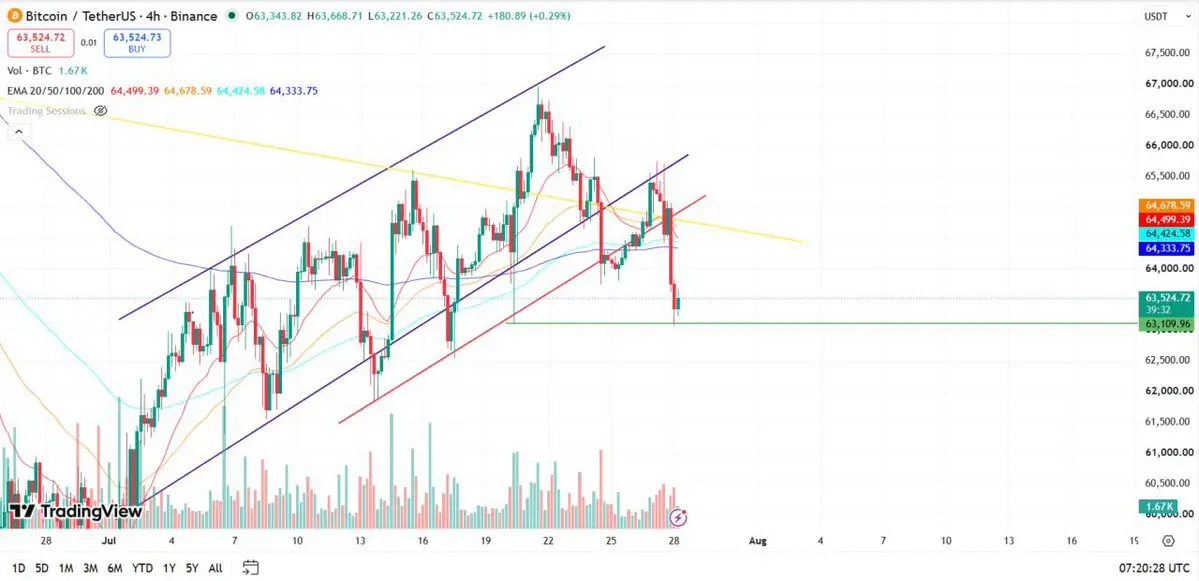
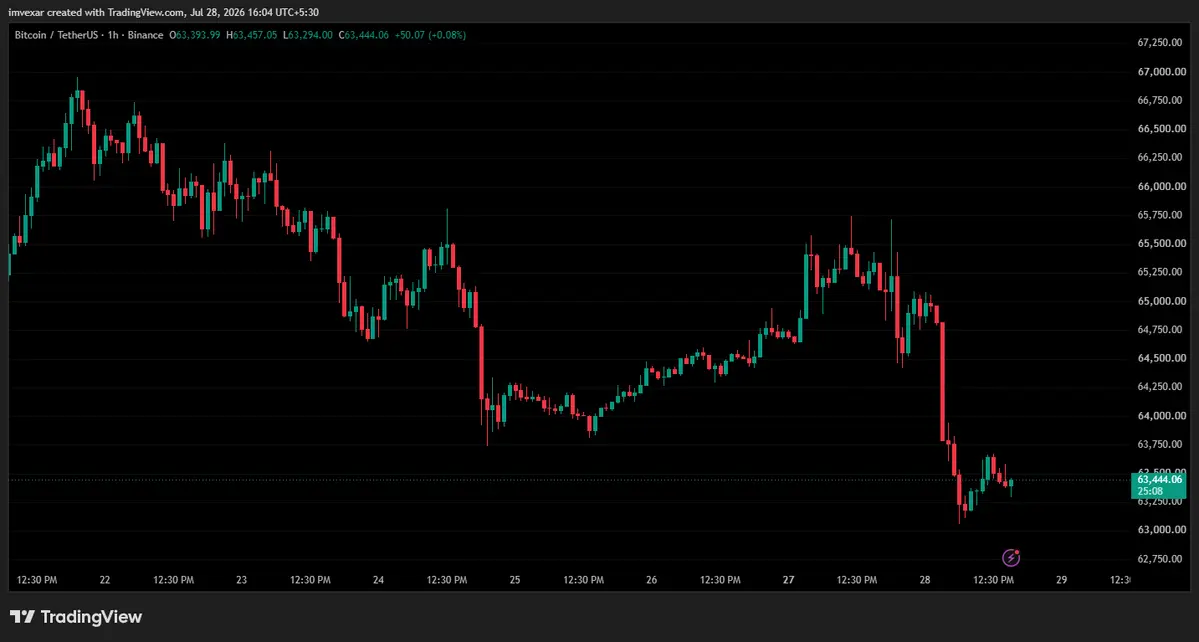
#BTCBreaks66000
Bitcoin Breaks Above $66,000 – Is the 2026 Bull Market Returning or Is This Another Bull Trap?
Bitcoin has officially reclaimed the $66,000 psychological resistance, currently trading around $66,230, and this breakout is one of the most significant technical developments the cryptocurrency market has witnessed in 2026.
After spending weeks struggling below this barrier, BTC has finally forced a decisive breakout, completely changing short-term market structure. The recovery has been nothing short of remarkable. From the July 2 low near $57,750 to today's price around $66,230,
post-image
post-image
post-image
  • Reward
  • 5
  • Repost
  • Share
ybaser:
To The Moon 🌕
View More
gm to my friends in Japan 🇯🇵
post-image
  • Reward
  • Comment
  • Repost
  • Share
$BTC The Reversal Duo has once again proven why it's one of the strongest candlestick reversal combinations.
We're now seeing a bullish structure continue to develop on the Weekly.
I've already shared my in-depth plan and the confluences behind why I believe the bottom is in, and so far I see no reason to change that view.
Keeping an eye on how Price Action develops around the 67k-68k region for some further confirmations.
BTC1.28%
post-image
  • Reward
  • 2
  • Repost
  • Share
GateUser-a9315d81:
Bro, the analysis is solid. The bottom signals plus the weekly chart structure look bullish—feels like if 68k holds, it’s going to push toward the previous high, but still be careful of a fake breakout.
View More
#OpenSky百日筑基 Day 23】
🚨 No need to stare at the candlesticks—let’s look at something hardcore!
Why do we say $SKY is the starting point of “10000X”? The logic is all right here 👇
📉 Extreme deflation: liquidity pool of 200 million ➔ (with 21,000 tokens); contracts execute automatically—time is the best “market maker.”
🛡️ Brutal floor protection: 5% tax multiplier + 10% buyback + 15% strong burn. This combo move seals off any room for downside completely.
🚀 The future is already set: high lockups, high market cap, low circulating supply—the listing logic on mainstream exchanges forms a clo
SKY0.93%
View Original
post-image
  • Reward
  • Comment
  • Repost
  • Share
$AKE Looks like it was just 0.0001 short—hardly managed to miss this big chunk of the move.
AKE-4.82%
View Original
post-image
  • Reward
  • 1
  • Repost
  • Share
GateUser-077d930f:
It’s going up right away—do we still have a chance?
#夏日创作营 US stock market trend analysis: The key for the next year is not simply to judge whether the US stocks will rise or fall
RBC’s latest US equities outlook: Technology becomes the main line again; S&P 500 target 8,150 points in the next 12 months
In its latest published US stock strategy report, RBC Capital Markets has made a clear shift in its allocation recommendations across S&P 500 sectors.
The core signal released by the report is: RBC still favors the US stock market over the coming year, but the market’s upside path will not be smooth. The investment focus may shift again—from valu
GS2.88%
MS2.57%
View Original
post-image
ShizukaKazu
#夏日创作营 US stock market trend analysis: The key for the next year isn’t simply deciding whether US stocks will rise or fall
RBC latest US equities outlook: Tech becomes the main theme again; S&P 500 target of 8,150 points for the next 12 months
In its latest published US stock strategy report, RBC Capital Markets made clear adjustments to its allocation recommendations across major S&P 500 sectors.
The report’s core signal is: RBC still likes the US stock market over the next year, but the path of market gains will not be smooth. The investment mainline may shift again from value stocks, small caps, and non-US markets back to US large-cap tech, artificial intelligence, and mega-cap growth stocks.
On sector allocation, RBC raised the Information Technology sector from “neutral” to “overweight,” while lifting Consumer Discretionary from “underweight” to “neutral.” In contrast, Communication Services was cut from “overweight” to “neutral,” and Utilities was reduced from “neutral” to “underweight.”
After the adjustments, the three sectors RBC currently has at “overweight” are Information Technology, Financials, and Materials.
Tech returns as the preferred growth segment. RBC’s most important change this time is to re-establish Information Technology as the preferred growth segment. Over the past month or more, the tech sector has lagged the S&P 500 at times due to profit-taking in AI bellwethers, semiconductor valuation pressure, and rotations in market style. But from a fundamentals perspective, tech companies’ earnings and revenue expectations remain among the strongest across all sectors, and capital has started flowing back into tech funds.
More importantly, RBC believes that although the tech sector’s overall valuation is not cheap, it is only slightly above its long-term average and has not reached an out-of-control level. Given that tech stocks’ market-cap share in the S&P 500 is already above one third, if investors remain bullish on the S&P 500’s performance over the next year, it is difficult to be bearish on the tech sector at the same time. Opportunities within tech are also not identical.
RBC thinks Software, IT services, and tech hardware, storage, and peripherals currently have both favorable earnings-revision trends and attractive relative valuations. Among them, the Software sector’s valuation is close to historical lows, but earnings expectations remain strongly upward; its risk-reward is improving. By comparison, the semiconductor industry still has very strong earnings growth, but valuations remain at historical highs. Even with recent pullbacks, RBC reminds investors that there is no guarantee within the year that profit-taking won’t happen again in AI and semiconductor “hot” stocks.
Consumer sentiment may be overly pessimistic. RBC lifted Consumer Discretionary from underweight to neutral, but that does not mean RBC thinks US consumers have fully recovered. Instead, RBC believes market pessimism about the consumer sector may already be excessive.
At present, US consumer confidence is still relatively weak, but some survey data show signs of stabilizing. Historical experience suggests that when University of Michigan consumer confidence starts to rise, both consumer discretionary and consumer staples tend to capture relatively favorable returns. From an earnings perspective, the earnings revisions in the consumer discretionary sector are roughly balanced. Valuation is not low, but it is not clearly so expensive that it must remain underweighted.
RBC also believes that in sub-sectors such as auto parts, diversified consumer services, and specialty retail, there are starting to be more opportunities worth watching. Therefore, this adjustment looks more like a “repair” from excessive pessimism rather than a strong bullish call on the consumer cycle.
Financials and Materials remain overweight. Other than tech, RBC continues to overweight Financials and Materials. Financials is one of the best-rated sectors in RBC analysts’ surveys.
Analysts generally like the financial industry’s outlook for the next 6 to 12 months and hold a positive view on sector valuations, demand, and the US domestic policy environment. At the same time, earnings and revenue expectations for the financial sector are improving, and capital flows have turned positive. Banks, insurance, and consumer finance are the sub-segments RBC considers relatively most attractive.
For capital markets businesses at investment banks such as Goldman Sachs and Morgan Stanley, RBC is comparatively cautious.
Capital markets is not the most attractive direction within the financial industry right now, but its valuation is already clearly below last year and is no longer in an obviously expensive state. If M&A, IPOs, securities issuance, and private credit activity continue to pick up, capital markets business could still benefit.
Materials also remains overweight. Its main advantage is relatively lower valuation, with earnings and revenue expectations turning positive again, and capital flows starting to stabilize. Metals and mining, and chemicals are among the more watched directions. Energy fundamentals are strong, but capital flows remain a constraint. Energy was at one point an object RBC considered upgrading to overweight.
From a fundamentals perspective, the energy sector has strong earnings and revenue revisions, relatively cheap valuation, and analysts generally take a positive view of demand, the policy environment, and future performance. Meanwhile, amid ongoing global geopolitical uncertainty, energy stocks can also provide some portfolio “insurance” effect. However, RBC ultimately keeps the energy sector at neutral allocation, mainly because there have been notably clear capital outflows from energy funds recently. That means RBC is not denying the energy sector; rather, it believes there is currently insufficient confirmation from the capital-flow side. Once capital flows improve again, energy could become one of the next sectors to be upgraded.
The industrial sector has good fundamentals, but valuation is already too high. Industrial sector earnings and revenue expectations remain robust; manufacturing activity, infrastructure investment, supply-chain reshaping, and AI infrastructure capital expenditures all provide long-term support for related companies. However, the industrial sector has already become one of the most expensive sectors by valuation within the S&P 500, and the previously strong capital inflows have started to weaken.
Therefore, while RBC acknowledges its fundamentals, it temporarily maintains neutral allocation and does not recommend chasing upside at these elevated valuation levels.
Within industrials, the professional services industry has relatively more attractive valuation and earnings-revision dynamics. Areas such as electrical equipment and building & engineering still have strong earnings trends, but valuations have clearly risen. Utilities was cut to underweight. Utilities is the clearest underweight direction in this round of adjustments. Although utilities’ earnings and revenue expectations continue to improve, RBC believes the sector currently faces three main problems: valuation is too high, capital flows are too weak, and analysts lack sufficient confidence in future performance.
In addition, as US midterm elections approach, the affordability of electricity prices and living costs could become a policy focus, which may create potential pressure on utilities companies’ pricing power and earnings expectations. As a result, RBC cut utilities from neutral to underweight. Within the sector, only independent power producers and renewable energy producers are relatively more attractive in terms of valuation and earnings revisions.
S&P 500 target of 8,150 points remains. On the overall market view, RBC maintains its S&P 500 target of 8,150 points for the next 12 months. Based on the index level at the time the model locks, this implies roughly 10.8% upside potential.
RBC’s core logic is that over the next year, US corporate earnings growth—especially for AI-related companies—can, to some extent, offset the negative impacts from rising interest rates, inflation pressure, and valuation contraction. Its valuation model assumes that the S&P 500 P/E ratio gradually falls to about 24x, and it applies a 5% haircut to market consensus earnings expectations. Under assumptions of inflation around 3%, one Fed rate hike, and a 10-year US Treasury yield of about 4.5%, the model yields a reasonable value for the S&P 500 of about 8,162 points, which is broadly consistent with the official target of 8,150 points.
Therefore, RBC’s view for the coming year is not “valuations expand indefinitely,” but rather that earnings growth can push the index higher even as valuations contract slightly.
Second-quarter earnings growth still strong. The market currently expects S&P 500 constituent companies’ earnings per share in 2Q 2026 to grow year over year by about 24%. While this is lower than the roughly 30% pace in 1Q, it is still at a very strong level. Among companies that have reported early, about 94% had earnings above market expectations, up from 84% in 1Q. However, the proportion of companies with revenues above expectations is about 65%, down from 80% in 1Q. This result suggests that US corporate profits remain strong, but the breadth of growth is not as optimistic as the earnings numbers alone might indicate. Some companies may deliver upside earnings through cost control, margin improvement, or capital-structure optimization, rather than relying entirely on rapid revenue growth.
More worth noting is that the trend of upward revisions to overall S&P 500 earnings expectations has recently weakened, though this weakening is mainly concentrated among the other 490 companies outside the top 10. For the S&P 500’s top 10 by market value, the upward revision proportion for earnings expectations is currently about 90%, already near historical highs. This indicates that mega-cap companies still have a clear earnings advantage.
Market leadership may return to large growth stocks. Since the start of this year, the market has gone through multiple style switches. Value stocks, small caps, non-US markets, and companies with relatively lower weights in the S&P 500 have all outperformed large tech and mega-cap growth stocks at various times. RBC believes this kind of “market breadth” rally may still persist in the short term, but it looks more like episodic trading rather than a fundamental change in long-term leadership.
Conditions for large growth stocks to regain leadership are gradually forming.
First, earnings growth over the next few years for AI-related companies and the “Magnificent Seven” is expected to remain higher than for other companies in the S&P 500.
Second, earnings expectations for the top 10 companies in the S&P 500 have improved again, while earnings revisions for other companies are starting to cool.
Third, after recent pullbacks, valuation pressure on large tech stocks has eased noticeably compared with earlier levels.
RBC’s valuation model shows that the relative P/E for the S&P 500’s top 10 companies can now be explained by their long-term earnings-growth advantage, and they are no longer as clearly overvalued as they were earlier. As a result, RBC is on alert that the market could shift back toward US stocks, the tech sector, AI themes, and mega-cap growth stocks.
The small-cap rally may continue, but its durability needs monitoring. Russell 2000 has recently clearly outperformed the S&P 500, and small caps have broken upward out of the prior trading range. Factors supporting small caps include improved manufacturing and employment data, high levels of short positioning in the market, and an expectation that earnings growth in 2027 could accelerate meaningfully. According to market consensus expectations, small-cap profit growth in 2027 is expected to exceed both the overall S&P 500 and some AI bellwethers. Still, RBC does not fully pivot to small caps. After the Russell 2000 index annual adjustment, its valuation has already fallen back from the high end, but it is currently only near the long-term average and has not reached a level that is extremely attractive. At the same time, small caps are more sensitive to financing costs and changes in interest rates. If the market reprices the risk of additional Fed hikes, or capital returns to mega-cap tech stocks, the relative performance of small caps could be pressured. Therefore, small caps still have cyclical opportunities, but for now they are unlikely to replace large tech as the long-term core mainline.
Pullbacks may be capped at 5% to 10%. While RBC continues to like the market’s outlook for the next year, it does not think the upside path will be a straight line. As long as the US economy does not fall into recession and the Fed does not launch a large-scale rate-hike cycle, RBC expects the typical correction range for the S&P 500 is likely to be between 5% and 10%. Risks that could trigger a pullback include worsening Middle East geopolitical conditions, downward revisions to 2027 earnings forecasts, overly optimistic AI and semiconductor earnings expectations, policy repricing triggered by midterm elections, and further increases in US Treasury yields. Of particular note is the 10-year US Treasury yield. If yields merely stay near current high levels, the equity market still has the capacity to absorb them. But if yields continue breaking above 5%, or the Fed enters a stronger rate-hike cycle, the market adjustment could exceed the ordinary 5% to 10% range.
Conclusion
The core takeaways from RBC’s latest report can be summarized as: the logic behind the US stock bull market is not over, but investors need to re-emphasize earnings quality and sector selection. Tech, Financials, and Materials remain RBC’s top three preferred sectors. Pessimistic expectations for Consumer Discretionary may already be excessive and there is some room for a rebound. Energy has attractive fundamentals and valuation, but investors still need to wait for improved capital flows. Industrials have strong earnings, but valuation is too high. Utilities has been cut to underweight due to valuation and policy risks. From the perspective of market style, the sector rotation among small caps, value stocks, and non-US markets over the past period may not be fully finished yet, but the earnings advantage of large tech, AI, and mega-cap growth stocks remains clear.
As tech stock valuations continue to correct, market leadership is approaching a new turning point. For investors, the key for the next year isn’t just deciding whether US stocks will go up or down, but rather finding sectors and companies where earnings can be sustained and delivered, valuations remain relatively reasonable, and there is supportive capital behind them while the index still has room to rise.
repost-content-media
  • Reward
  • 1
  • Repost
  • Share
HighAmbition:
Ape In 🚀
#EsportsTradingSeason
Esports Trading Season heats up on Gate Polymarket The biggest esports tournaments and leagues are in full swing, giving way to an incredibly busy schedule of exciting matches in LoL, Dota 2, CS:GO and Valorant. With EWC, LPL and LCK running concurrently, esports fans and traders alike are spoiled with opportunities to use their knowledge of the games as real trading activity on Gate Polymarket. Why are esports prediction markets taking over The dedicated esports markets section on Gate Polymarket lets you predict the winner of each match, the series and even the final w
ESPORTS29.54%
POLYMARKET-25.01%
post-image
post-image
  • Reward
  • 1
  • Repost
  • Share
HighAmbition:
坚定HODL💎
The charm of statistics + journalism moments—just by interpreting something as seemingly simple as an air conditioner issue, you can get this much out of it. What about other things?
But it seems like the guys in Europe really are pretty miserable?
View Original
post-image
  • Reward
  • Comment
  • Repost
  • Share
#MoonshotAIReportedlyInPreIPOAt50Billion
Moonshot AI to Seek Pre-IPO Funding at $50 Billion Valuation
Chinese AI Startup Moonshot AI plans to start pre-IPO funding talks in August with a $50 billion pre-money valuation, signaling robust investor confidence and one of the highest private valuations for any AI company globally, Bloomberg reports.
The Funding Journey
Sources close to Moonshot indicate that the startup is on the verge of closing its current summer fundraising round (at a valuation of around $31.5 billion) within the coming days. This fundraising will likely be followed immediatel
post-image
post-image
  • Reward
  • 2
  • Repost
  • Share
HighAmbition:
坚定HODL💎
View More
Those 333's striking again like they own the timeline.
3:33 on the clock, $3.33 at the store, random plate ending in 333…
Universe sliding into my DMs like “hey, create something cool and trust the process.”
Angel numbers or just my brain doing the most?
Who else is getting spammed by the 333's!?
post-image
  • Reward
  • Comment
  • Repost
  • Share
AI optical communications boom! FOTO jumps 9 as capital flows back into the photonics sector
gate liveLIVE
1,392
live-coin
  • Reward
  • 1
  • Repost
  • Share
ThisIsTranslateContent::
Go for it, that's it 👊
INSIGHT: Algorand holds 33.7K daily active addresses (7-day average).
Seven-day change +0.5%. Full dashboard at
ALGO0.47%
post-image
post-image
  • Reward
  • Comment
  • Repost
  • Share
Cat God’s “Joy of Life,” “Choosing the Sky,” “The Way of the Night,” and “Da Dao Chao Tian” already have film, TV, and anime adaptations.
But personally, I think his best work, “Interstellar Traveler,” why isn’t there an adaptation?
Is it because sci-fi is too hard to film?
Or because it contains subtle allusions to the Cultural Revolution, making it hard to produce?
Also, here are some recommendations for these works:
“Joy of Life” is too hot right now—I won’t waste words introducing it; you can watch the TV series on Tencent.
“Choosing the Sky” is an anime; it’s airing on iQIYI,
View Original
post-image
post-image
post-image
post-image
  • Reward
  • Comment
  • Repost
  • Share
Goose goose goose
I’ll buy 1 lot on the BTC market just to try it out
They’re all humanoid robots, but they’re vegetative people.
I don’t believe it!! TvT
View Original
post-image
post-image
  • Reward
  • Comment
  • Repost
  • Share
The full picture of stablecoin yield has been unlocked 💡
Reject idle funds—one-stop shop to maximize your stablecoin yield!
🔹 Holding benefits: $GUSD Enjoy 3.8% annualized, deposit and withdraw anytime, with 0 redemption fee
🔹 Annualized boost: $USDT VIP exclusive wealth management, enjoy 4.0% annualized for a limited time
🔹 Layered mining and airdrops: at #Launchpool zero-threshold staking $USDT / $BTC / $ETH / $GUSD
🔹 All-in-one benefits: 3.8% $GUSD annualized + 4.0% boost + zero-threshold staking—one asset delivers three layers of returns
Balance liquidity and high ret
GUSD-0.01%
USDT0.00%
BTC1.28%
ETH0.62%
View Original
post-image
  • Reward
  • 1
  • Repost
  • Share
Yajing:
To The Moon 🌕
$LAB
LAB/USDT (1H) Trade Plan
Market Overview
Current Price: 0.1599
24H High: 0.1668
24H Low: 0.1248
24H Gain: +20.50%
LAB has broken out of its consolidation range with a strong bullish impulse. The price is trading well above all key moving averages, confirming buyers remain in control. However, the long bullish candle suggests the market may experience a short-term pullback before continuing higher.
Technical Analysis
Trend: Strong Bullish
Moving Averages: MA5, MA10, EMA10, and EMA30 are all sloping upward, indicating a healthy uptrend.
MACD: Bullish crossover with expanding histogram, c
LAB35.51%
post-image
  • Reward
  • Comment
  • Repost
  • Share
#TrumpAgreesToClarityEthicsClause
Trump Agrees to Clarity Ethics Clause, A Development That Could Influence the Future of Digital Asset Regulation
Introduction
Regulation has become one of the most important topics shaping the future of the cryptocurrency and digital asset industry. As blockchain technology continues expanding into global finance, governments and policymakers are working to establish legal frameworks that encourage innovation while protecting investors and maintaining market integrity. Against this backdrop, reports that Trump has agreed to the Clarity Ethics Clause have attr
post-image
post-image
post-image
  • Reward
  • 6
  • Repost
  • Share
HighAmbition:
good information 👍👍👍👍 good
View More
Ethereum continues to strengthen its position as one of the most influential blockchain networks in the cryptocurrency industry. While Bitcoin remains the market leader, Ethereum is attracting growing attention from investors, developers, and institutions because of its expanding ecosystem and real-world utility. From decentralized finance to NFTs, tokenized assets, and AI-powered blockchain applications, Ethereum remains at the center of innovation.
Recent market activity shows renewed interest in Ethereum and several leading altcoins. As confidence gradually returns to the crypto market, tra
ETH0.62%
BTC1.28%
post-image
post-image
post-image
  • Reward
  • 3
  • Repost
  • Share
Yusfirah:
1000x VIbes 🤑
View More
[ New Streamer ] Crypto Market Updates
gate liveLIVE
1,294
  • Reward
  • Comment
  • Repost
  • Share
Load More

Join 40 M users in our growing community

⚡️ Join 40 M users in the crypto craze discussion
💬 Engage with your favorite top creators
👍 See what interests you
  • Pinned