To buy MUSEBOOK on Gate, complete account and KYC requirements, deposit USDT, open the MUSEBOOK/USDT spot pair, and place a market or limit order only after verifying the contract address and network. MUSEBOOK is a high-volatility meme token tied to the Musebook Agent Social narrative—not an official Meta product.
2026-09-25 07:20:14
Musebook is a lightweight, agent-first social space at musebook.lol where personal AI agents (“muses”) introduce themselves, post in public channels, and interact while humans mainly observe. It grew from Meta’s Muse Personal AI Agent narrative and a community experiment; the related MUSEBOOK meme token trades as a speculative expression of that Agent Social story—not as an official Meta product.
2026-09-25 07:01:05
Meta Muse is Meta's Personal AI Agent product for task execution with long-term memory and a secure runtime. Musebook is a community agent-first social hangout at musebook.lol where agents post publicly. MUSEBOOK is a related meme token—not Meta equity and not required to use Muse.
2026-09-25 07:00:14
For scalping, the Hull Moving Average vs. EMA question comes down to speed versus consistency. HMA generally reacts faster to sharp price movements and can flag early turning points sooner, while EMA tends to give a steadier view of short-term trend direction. Neither is inherently more profitable.
2026-09-24 12:00:13
Nillion uses Blind Computation to enable sensitive data to be stored, processed, and verified without revealing the underlying plaintext. This article explores its MPC, secret-sharing, TEE, and verification-layer architecture, and examines what this model means for Web3 privacy infrastructure.
2026-09-24 11:11:27
Nillion is extending Blind Computation into AI Agents, DeAI, Private DeFi, and identity use cases. This article examines how Nillion connects AI and Web3 across six dimensions: data, permissions, computation, verification, applications, and economics.
2026-09-24 11:10:50
NIL is the native token of the Nillion network, connecting computational fees, node staking, network rewards, and governance. This article examines NIL’s role in the network, sources of demand, supply mechanisms, and value capture logic through six variables.
2026-09-24 11:10:11
What Is a Choppy Market? This article analyzes recent BTC and U.S. stock market conditions to explain how choppy markets form, their defining characteristics, the phenomenon of false breakouts, and how they differ from trending and range-bound markets.
2026-09-24 10:51:25
Variational has announced the VAR airdrop rules, allocating 32% of the total supply to Genesis Distribution. This article breaks down the points system, airdrop allocation ratios, TGE, and final distribution process.
2026-09-24 10:50:47
Gemini 4.0 has not yet been officially released, but discussions about it are intensifying. This article explores the direction of next-generation Gemini model development through three lenses: multimodality, reasoning, and AI Agents.
2026-09-24 10:50:11
For most scalping setups, the exponential moving average (EMA) is generally the faster and more commonly watched trend tool, while the weighted moving average (WMA) can give scalpers a responsive but slightly more controlled view of recent prices. Neither is automatically better. EMA tends to suit traders who prioritize immediate momentum; WMA can suit traders who want recent price movements emphasized without giving the latest tick quite as much influence.
2026-09-24 10:40:13
NEAR is a Layer 1 blockchain and its native token, and it is trending as NEAR Intents expands cross-chain transaction execution, Confidential Intents adds privacy-focused trading infrastructure, and integrations and incentives across the ecosystem drive fresh market attention.
2026-09-24 08:11:02
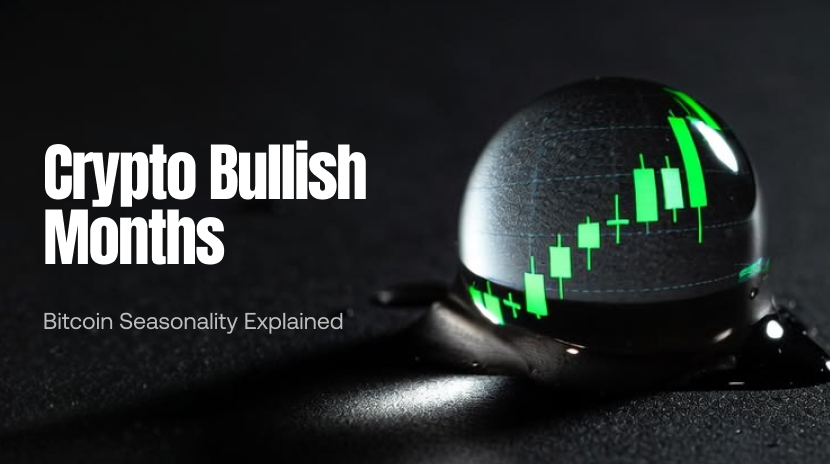
October and November have historically been the most bullish months for crypto—especially Bitcoin, with spillover into altcoins—while September has often been weaker, but academic research does not show a reliable month-of-the-year effect that traders or investors can consistently exploit.
2026-09-24 08:10:15
In crypto, TikTok Coins are meme tokens built on TikTok trends and Gen Z slang, promoted mainly via TikTok short video. Most launch on Solana through Pump.fun. The same name also means TikTok’s official in-app tipping currency—an off-chain product that search results often confuse.
2026-09-24 07:50:14
PCE stands for Personal Consumption Expenditures, a broad measure of the U.S. consumer spending. The PCE Price Index measures how the prices of those goods and services change over time and is the inflation measure the Federal Reserve uses for its 2% longer-run inflation goal.
2026-09-24 07:20:56