Vanar Chain (VANRY) isn't just another high-throughput public blockchain—its core mission is to unify verifiable data, contextual reasoning, and on-chain execution within a single technical stack. Unlike typical Layer 1s that focus primarily on transaction speed, Vanar’s narrative centers on enabling applications to both execute contracts and natively understand structured semantic information on-chain.
This approach directly addresses a common disconnect in Web3 x AI integration: data is often stored off-chain, reasoning happens off-chain, and execution is brought back on-chain—fragmenting verifiability, traceability, and governance. Vanar aims to bridge these gaps through architectural integration, creating clear links between data sources, reasoning processes, and execution outcomes.
Three key concepts are essential to understanding Vanar:
- The Neutron Seed mechanism, which transforms files into queryable semantic objects.
- The Kayon on-chain reasoning engine, which triggers on-chain actions based on contextual data.
- The comparison between Vanar and modular Layer 1 plus external AI approaches, highlighting differences in system boundaries.
What Is Vanar Chain (VANRY) and What Problems Does It Solve?
Vanar Chain is designed as an AI Native blockchain infrastructure. Its core insight: traditional blockchains excel at “bookkeeping and execution” but offer limited support for semantic understanding and strategic decision-making. To integrate AI, applications typically rely on multiple off-chain layers, increasing system complexity, audit challenges, and governance overhead.
Vanar’s solution is a unified stack integrating the settlement layer, semantic memory, and reasoning. This doesn’t mean all computation must be on-chain, but that critical state transitions, strategy verification, and data provenance have consistent on-chain anchors. For scenarios requiring traceable rules and auditable behaviors, this “end-to-end verifiable chain” delivers structural value.
How Do Vanar’s Five Layers Work Together? What Are the Roles of Chain, Neutron, Kayon, Axon, and Flows?
Vanar’s architecture is a five-layer model: Vanar Chain, Neutron, Kayon, Axon, and Flows. The focus isn’t on the number of terms, but on clear separation of duties and minimizing redundant implementations across systems.
| Layer |
Core Role |
Main Responsibilities |
| Vanar Chain |
Modular L1 |
Transaction settlement, security, and on-chain state foundation |
| Neutron |
Semantic Memory |
Compresses raw files into queryable, verifiable Seeds |
| Kayon |
Reasoning Engine |
Executes rule judgments and triggers strategies based on context |
| Axon |
Automation Layer |
Orchestrates programmable execution logic (per roadmap) |
| Flows |
Application Layer |
Productizes for specific industry use cases |
Data flows from raw input through Neutron (semantic indexing), then Kayon (contextual reasoning and execution), mapping final decisions to on-chain actions. This structure prioritizes verifiable, end-to-end logic over isolated performance metrics.
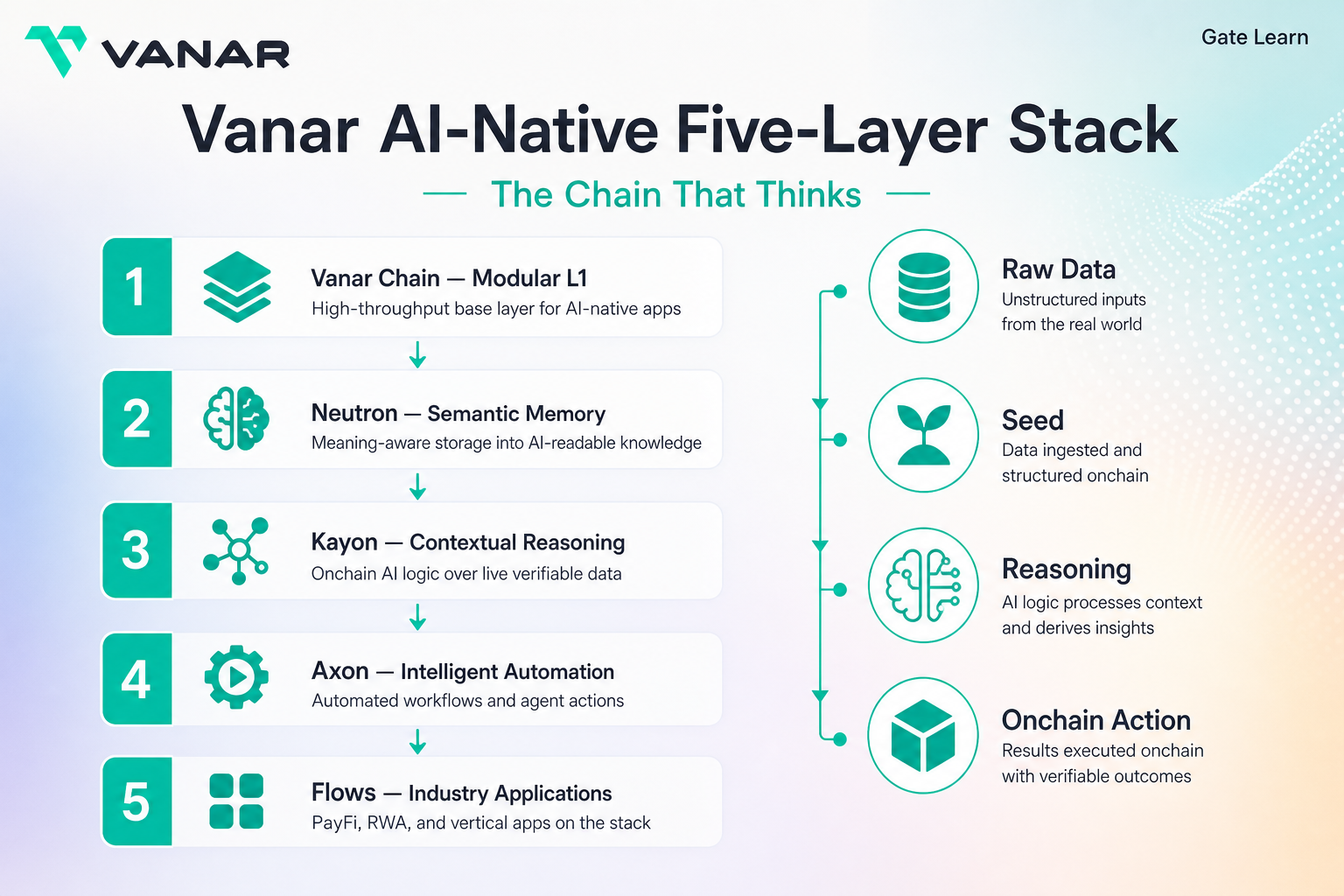 Figure 1. Vanar’s five-layer architecture and the main data-to-execution pathway.
How Does Neutron Turn Files into Queryable Seeds, and Why Is This Important?
Neutron’s core concept is the Seed—a semantically compressed data object with a verifiable fingerprint and structural metadata. Unlike basic hash or external link storage, Seeds are designed for seamless reading, searching, and referencing during subsequent reasoning steps.
This is critical: without stable access to structured context, AI systems default to unconstrained text generation. Seeds organize data semantically, upgrading “file existence” to “file comprehension and invocation by strategy systems,” providing reliable, bounded inputs for decision-making.
How Does Kayon Enable On-Chain Contextual Reasoning? How Is It Different from Traditional External AI?
Kayon is Vanar’s contextual reasoning engine. It reads Neutron’s structured objects, applies preset strategies and state conditions, and directly links outputs to on-chain actions. The focus isn’t on model size, but on maintaining an auditable, consistent reasoning-to-execution path.
Traditional approaches separate “off-chain AI judgment” from “on-chain contract execution” with multiple intermediaries. Kayon shortens this path, tightly aligning rule execution with on-chain state. For compliance, conditional payments, and asset flow management, this architecture reduces cross-system reconciliation costs.
What Role Does VANRY Play in the Ecosystem?
VANRY is Vanar’s foundational token, powering network operations, ecosystem incentives, and collaborative participation. It functions as infrastructure, not a single-use point system. Understanding VANRY requires focusing on network utility and ecosystem collaboration—not short-term price movement.
In AI Native infrastructures, token value derives from network usage, developer and application adoption, and ecosystem component growth. VANRY’s long-term value is shaped by all three—no single dimension tells the whole story.
What Use Cases Suit Vanar? How Should PayFi, RWA, and Agent Applications Be Understood?
Vanar’s primary use cases are PayFi and RWA, both requiring high standards for rule verifiability, process traceability, and data auditability. For simple content generation or low-constraint automation, on-chain reasoning and semantic memory aren’t always necessary.
In payments and on-chain asset processes, common needs include conditional triggers, strategy validation, credential referencing, and state tracking. Vanar’s value is in unifying these within a single stack, minimizing system switching and data fragmentation. Suitability depends on whether the business truly requires verifiable decision chains.
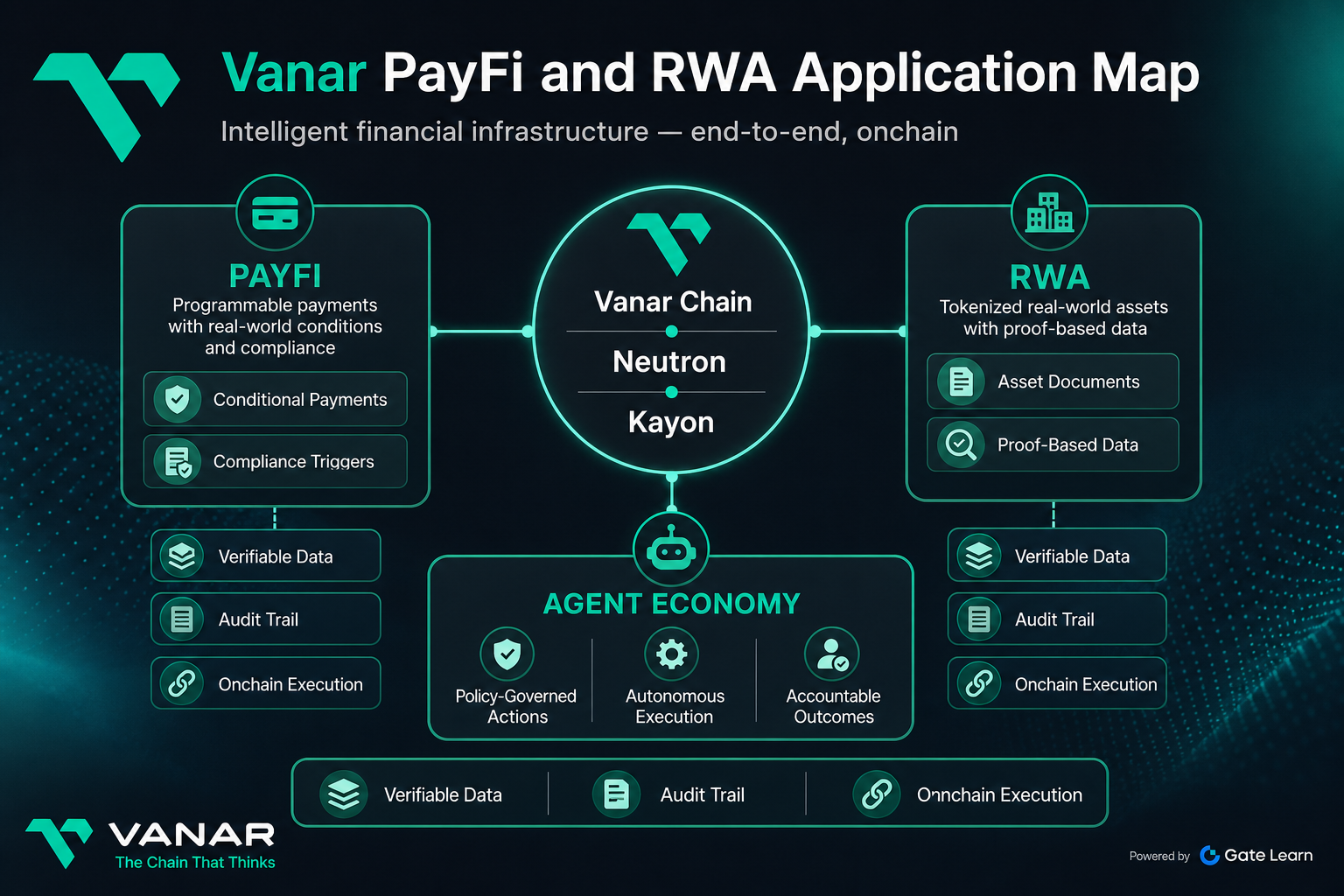
Figure 2. Vanar’s ecosystem mapping for PayFi, RWA, and Agent scenarios.
What Are the Benefits, Risks, and Limitations of Using Vanar?
Benefits: Vanar’s unified architecture for semantic data, reasoning, and on-chain execution reduces integration costs and enhances traceability for automated, auditable workflows. For compliance-driven automation, this design has strong engineering appeal.
Risks and Limitations:
- Ecosystem maturity affects tool availability and development efficiency.
- Reasoning quality depends on data structure and rule design—faulty context amplifies execution errors.
- Integration reduces some costs but can increase vendor lock-in and migration complexity.
| Dimension |
Main Advantages |
Main Risks/Limitations |
| Architecture |
Consistent data-to-execution chain |
Higher dependency on a single stack |
| Development |
Centralized component integration |
Tool maturity impacts efficiency |
| Governance |
Traceable decision pathways |
Rule design errors propagate systemically |
| Business |
Suited for compliance/process flows |
May not be cost-effective for simple use cases |
Summary
Vanar Chain (VANRY) is not “just another chain.” Its innovation is integrating semantic memory and contextual reasoning into core blockchain infrastructure. Neutron transforms raw data into queryable objects; Kayon turns context into executable strategies; Chain anchors state and settlement. This unified path defines Vanar’s differentiated approach to AI Native blockchains.
FAQ
What’s the biggest difference between Vanar Chain and a standard Layer 1?
Vanar integrates semantic data, reasoning, and execution—beyond transaction settlement. Standard Layer 1s focus on state and execution, often relying on off-chain AI. Vanar shortens these cross-system paths and enhances traceability.
What is VANRY’s primary function in the Vanar ecosystem?
VANRY powers network usage and ecosystem collaboration, supporting on-chain operations and incentives. It’s an infrastructure token, not a single-use point. Its value is shaped by network adoption, developer onboarding, and ecosystem expansion.
How does Neutron Seed differ from regular data storage?
Neutron Seed transforms files into semantically readable, searchable, and verifiable objects. Standard storage only proves existence; Seeds enable stable, system-level reasoning and invocation.
What problem does Kayon’s on-chain reasoning specifically solve?
Kayon reliably connects contextual judgment to on-chain execution, linking structured inputs and rules to actions—reducing the complexity of auditing and reconciliation between off-chain and on-chain processes.
Is Vanar a fit for all Web3 projects?
Not every project needs this architecture. For rule-intensive, traceable, and compliance-driven scenarios, Vanar’s unified stack offers significant value. For lightweight or low-constraint use cases, external solutions may be simpler.