The Event Contracts Win Streak Challenge is a Gate campaign built on short-dated binary contracts. It pays Event Contract Vouchers with face values from 10 to 200 USDT for consecutive winning rounds on 5-minute BTC and all stock event contracts. A round enters the statistics only when held to expiry, with at least 20 USDT net buy, and settled normally; a win needs a 20% net profit rate after fees.
Round 2 runs from 21 October 2026, 00:00 UTC to 28 October 2026, 00:00 UTC, seven full UTC days. The headline figure is 26,000 USDT: a 10,000 USDT streak ladder, a 7,000 USDT win-rate leaderboard, a 3,500 USDT volume sprint, and 5,500 USDT of new-user vouchers. Unlike WCTC, which scores weighted volume across product lines, this challenge scores individual calls, so size alone does not move a player up the ladder.
Four definitions decide most outcomes: what counts as a round, what counts as a win, how a streak is counted, and which pool pays first.
Key Takeaways
- The challenge has four reward tracks worth 26,000 USDT; only the volume sprint pays USDT, while the streak ladder, win-rate board, and new-user gift pay vouchers.
- A valid round must be held to expiry, carry at least 20 USDT of net buy, and settle normally; early close, reduction, or reverse hedging removes it from the statistics.
- A win is a net profit rate of at least 20%, not merely a correct direction, so the entry price matters as much as the forecast.
- Invalid rounds do not break a streak, but a valid round that fails the 20% test resets it to zero.
What Is the Event Contracts Win Streak Challenge?
Event contracts are short-dated derivatives: each contract is tied to a defined price outcome and a fixed payout, with no ownership or cash flow attached. Each contract trades between 0.01 and 0.99 USDT, a price that reflects the market’s probability assessment. Traders speculate on a five-minute price move rather than on a scheduled data release, and a winning contract pays a fixed 1 USDT while a wrong call settles at zero. There is no leverage or liquidation, and the maximum loss is the amount paid. Bitcoin event resolution uses Chainlink as the data source: a time-weighted average price is compared with the cycle-start benchmark, the rules are public, fixed, and fully traceable, and a brief spike does not decide the result. The event contracts win streak challenge on Gate.com is a trading contest built around that structure: participants try to stack consecutive valid wins with at least a 20% net profit rate, while also competing across the win streak ladder, win-rate leaderboard, volume sprint, and new-user gift. The structure is closer to Kalshi, a CFTC-regulated exchange that received approval to trade event contracts in 2020, than to perpetual futures, even though the underlying is BTC or a stock price over a short time window. That distinction matters when comparing offshore contracts with regulated futures venues.
In the United States, the Commodity Futures Trading Commission oversees commodities and derivatives, including event contracts traded on regulated exchanges, and availability differs by state. CFTC-regulated venues must publish rulebooks defining each contract, and the CFTC treats these instruments as derivatives rather than wagers. CFTC oversight stops at the US border, however, and Gate is not a US-regulated venue; it operates outside the US framework under its own regional restrictions, so a comparison based on US practice is context, not a guide. The four pools are scored independently, so reaching the 15,000 USDT volume floor produces no valid round, and a 15-win streak can be reached on far less than 15,000 USDT of volume. The key variables are what counts as a valid round, how net profit rate determines a win, which contracts are eligible, how rewards are paid, and how venue rules shape settlement and access.
| Track |
What it measures |
Pool |
Payout form |
| Win streak ladder |
Highest consecutive valid wins |
10,000 USDT |
Event Contract Voucher |
| Win-rate leaderboard |
Win rate over 70+ valid rounds |
7,000 USDT |
Event Contract Voucher |
| Volume sprint |
Cumulative event-contract volume |
3,500 USDT |
USDT |
| New-user gift |
First event-contract trade |
5,500 USDT (1,000 × 5.5) |
Event Contract Voucher |
Which Trades Count, and When?
Timing and scope are narrower than the product catalogue. The event runs on UTC calendar days, and only trades placed after the player taps Join Now are counted; earlier trades are not backfilled.
The streak ladder and win-rate leaderboard count only BTC and stock 5-minute event contracts. ETH contracts, 15-minute contracts, and other durations sit outside the round statistics: they do not break a streak, but they do not extend it. The product allows early exit at any time before expiry, though a closed position stops counting as a round. The volume sprint accepts any underlying, with no per-order net-buy minimum and no daily round cap.
| Track |
Underlying scope |
Minimum per order |
Enters round statistics? |
| Streak ladder |
BTC + stock event contracts, 5-minute |
20 USDT net buy |
Yes |
| Win-rate leaderboard |
BTC + stock event contracts, 5-minute |
20 USDT net buy |
Yes |
| Volume sprint |
Any event-contract underlying |
None stated |
No |
| New-user gift |
Any event-contract underlying |
20 USDT net buy on first trade |
No |
A 15-minute ETH contract adds to the 15,000 USDT volume target while contributing nothing to the 70-round leaderboard or the streak. The product's minimum order is 5 USDT, so the event's 20 USDT floor is the binding constraint for rounds. The same 20 USDT floor applies to both counted boards.
Only one order per user is counted per market, defined as the same underlying and the same period. Simultaneous bullish and bearish orders in one market are excluded, as are matched orders, self-trading, and bulk account registration.
What Makes a Round Valid?
A round is judged at settlement, so the net buy value recorded then is the one that matters. A round must pass all three tests to count toward a streak; failing any one removes it from both the streak and the win-rate denominator.
- Held to expiry and auto-settled, with no position reduction and no reverse hedging during the holding period.
- Net buy value of the position is at least 20 USDT at the time of settlement.
- Settled normally by the platform, not voided or refunded.
| Counts as a valid round |
Does not count |
| Held to expiry and auto-settled |
Closed early, reduced, or reverse-hedged |
| At least 20 USDT net buy at settlement |
Less than 20 USDT net buy |
| Normal settlement |
Voided or refunded |
| BTC or stock 5-minute contract |
Out-of-scope contract (does not count, does not break the streak) |
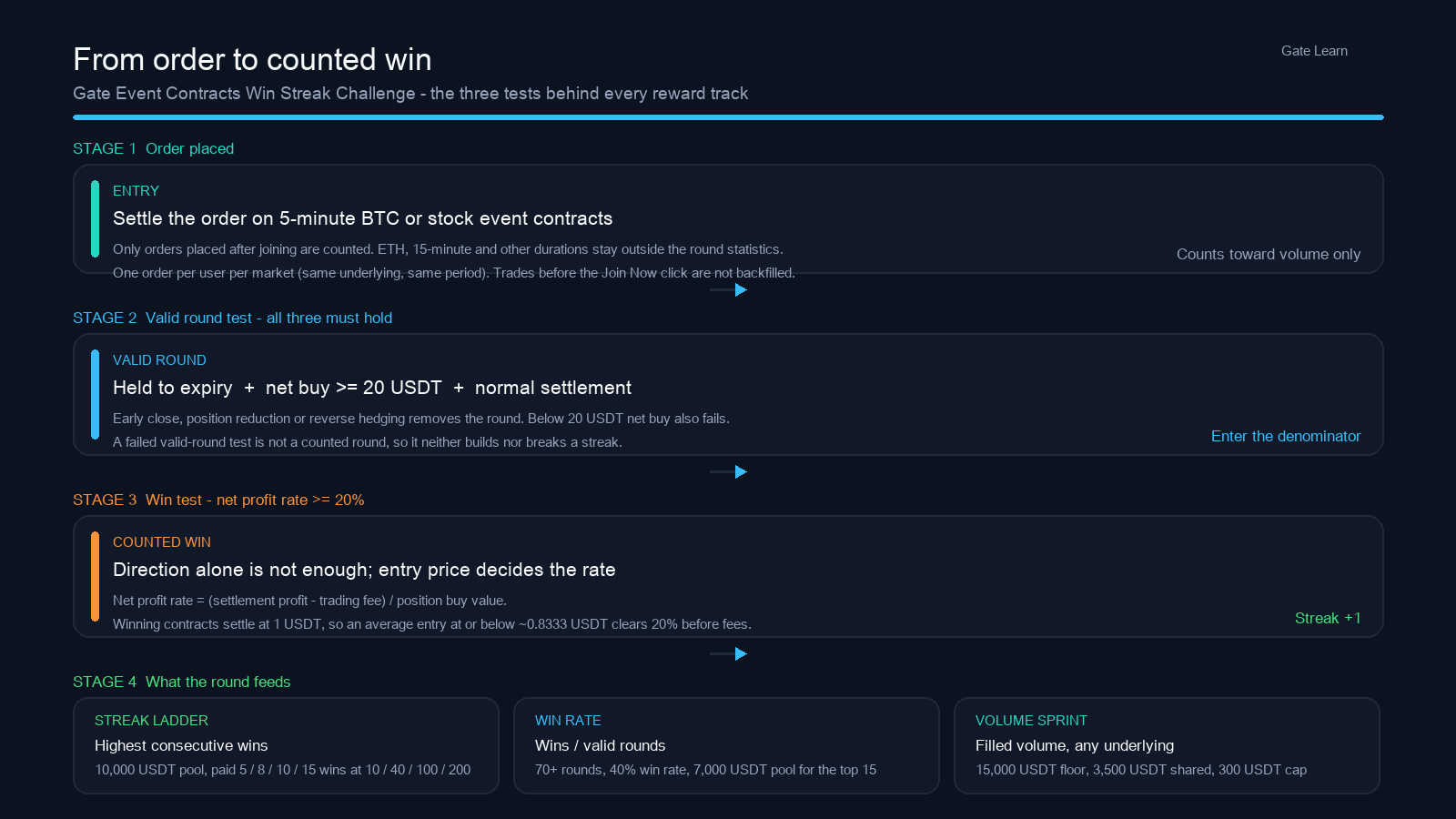
Figure 1. Order to counted win, and the three reward tracks.
The official rules state five situations as not counted and not breaking the streak: early close, position reduction, reverse hedging, net buy below 20 USDT, and an out-of-scope underlying. A valid round that fails the profit test is a different case.
The one-order rule means ten fills in one five-minute BTC market count once.
What Counts as a Win When a Contract Settles? The 20% Net Profit Rate
A win is not a correct direction. Among valid rounds, an order counts as a win only when its net profit rate at settlement is at least 20%:
Net profit rate = (settlement profit − trading fee) / position buy value
The tracked event here is a price move rather than an external outcome such as an election, a sports fixture, or a macro release. The test works on a single position at a time. The formula is net of trading fees, which Gate charges on opening and closing positions; settlement at expiry carries no delivery fee, and Gate does not list a separate commission, so the deduction is one fee item. Fees therefore sit in the numerator and never in the denominator.
Because a winning contract settles at 1 USDT, a position bought at price p earns 1 − p per contract, a gross rate of (1 − p) / p. Before fees, the average entry must be at or below about 0.8333 USDT to clear 20%; the fee tightens that ceiling slightly, and because any fee or commission sits in the numerator, 0.8333 USDT is a pre-fee figure.
| Average entry price |
Gross profit per contract |
Gross return |
Meets the 20% test? |
| 0.60 USDT |
0.40 USDT |
66.7% |
Yes |
| 0.70 USDT |
0.30 USDT |
42.9% |
Yes |
| 0.80 USDT |
0.20 USDT |
25.0% |
Yes |
| 0.83 USDT |
0.17 USDT |
20.5% |
Yes |
| 0.90 USDT |
0.10 USDT |
11.1% |
No |
| 0.95 USDT |
0.05 USDT |
5.3% |
No |
Any valid round that does not clear the 20% threshold resets the streak immediately. A good call bought at 0.95 USDT earns about 5.3% before fees, so a trader can be directionally right and still be wrong under the rules. The same forecast at 0.80 USDT returns 25% and extends the streak. A good forecast at a bad price is not a counted win. Understanding which input binds, the entry price or the fee, separates a profitable call from a counted win.
Net profit rate is not net profit margin in company accounting: net margin divides net income by revenue and shows how good a business converts sales into profit, while this test uses one position's buy value. Accounting for the fee is the only overlap, and a good call still fails if the entry price leaves less than 20% on the table.
How Does the Win Streak Ladder Pay?
| Highest win streak |
Voucher value |
Increment over the previous tier |
| 5 rounds |
10 USDT |
— |
| 8 rounds |
40 USDT |
+30 USDT |
| 10 rounds |
100 USDT |
+60 USDT |
| 15 rounds |
200 USDT |
+100 USDT |
The ladder pays once, at the highest tier reached: a 15-win streak receives 200 USDT, not 350 USDT from adding lower tiers. A streak of 15 or more is paid at 200 USDT. The 10,000 USDT pool is distributed from the highest streak downward; ties are ordered by the time the streak was reached, and payment stops when the pool is exhausted.
At 200 USDT per recipient, the pool covers 50 users at most. A five-win streak sits at the back of the queue, so reaching the first tier is not a guarantee of payment.
The count is consecutive: fifteen wins across 70 valid rounds do not equal a 15-win streak. In the official example, a trader with four wins places a 15 USDT order, below the floor, so the streak stays at four; a 25 USDT win next takes it to five. An invalid round pauses the count; the streak ends when a valid round does not happen to qualify as a win under the 20% rule.
How Do the Win Rate Leaderboard and Volume Sprint Pay?
Win-rate eligibility requires at least 70 valid rounds, at least 20 USDT net buy per order, and a win rate of at least 40%. Because each valid round carries at least 20 USDT, 70 rounds imply at least 1,400 USDT of net buy held to settlement.
| Rank |
Voucher value |
| 1st |
2,400 USDT |
| 2nd |
1,600 USDT |
| 3rd |
1,000 USDT |
| 4th–10th |
200 USDT each |
| 11th–15th |
120 USDT each |
Ranking is based on win rate, with ties broken by cumulative valid volume. Win rate is wins divided by valid rounds, so invalid rounds neither help nor hurt. Clearing the board requires 70 valid rounds and at least 28 wins, and a higher win rate beats extra volume unless two entrants are tied.
The volume sprint requires 15,000 USDT of cumulative volume on any underlying and shares 3,500 USDT pro rata by share of total qualifying volume, capped at 300 USDT per user. It uses actual filled volume and ignores the per-order minimum and daily round cap.
The cap dominates at the entry level: a trader who exactly meets 15,000 USDT receives the full 300 USDT while total qualifying volume stays at or below about 175,000 USDT, because 3,500 × 15,000 / 175,000 = 300. Above that, the payout scales down, because the pool is shared and every qualifier competes for the same 3,500 USDT.
What Else Decides Whether You Get Paid?
Payout form is the first check, and identity verification is required before any reward is claimed. The streak ladder and win-rate leaderboard pay in Event Contract Vouchers, not cash; the volume sprint pays USDT; the new-user gift is a voucher. Voucher face value is equivalent to USDT and can be used for event-contract trading at 1:1; the usage scope and validity period follow the official voucher terms. A voucher is not cash. Rewards are not mutually exclusive, so one account can qualify for several tracks at once.
| Reward |
Form |
Precondition |
| Streak ladder |
Voucher |
Identity verification before claiming |
| Win-rate leaderboard |
Voucher |
70 valid rounds and 40% win rate |
| Volume sprint |
USDT |
15,000 USDT cumulative volume |
| New-user gift |
5.5 USDT voucher |
First 1,000 eligible new users with a 20 USDT first-trade net buy |
The new-user gift applies to users who had not traded event contracts before the start, and pays the first 1,000 who complete a first trade with at least 20 USDT net buy, on any underlying. Multiple accounts under one verified user count as one, and duplicate claims are recovered. Simultaneous bullish and bearish orders in one market, matched orders, self-trading, and bulk account registration are not counted; serious cases lose eligibility and forfeit rewards.
Stock event contracts need App v8.36.0 or later; the web version already supports them, and BTC contracts carry no extra version requirement.
Event contracts are a high-risk innovative product: prediction markets on real-world outcomes with a binary payout: a loser settles at zero, and the maximum loss is the principal paid. Here, the tracked event is a price move, not a sports result or a macroeconomic release. No leverage and no futures liquidation does not make the product low-risk, because a five-minute cycle can erase the full amount. Every round risks real balance. The format is not a hedge against a portfolio. The announcement states that rewards are finite and first come, first served, and that terms can be amended; traders in the UK and other restricted regions cannot take part or use all or part of the services. Before a first event-contract trade, the risk disclosure and User Agreement must be read and confirmed. Reward figures shown on the event page are estimates; actual values follow the official announcement and distribution results. Where a translation differs from the English version, the English version prevails, and Gate reserves the right of final interpretation and may amend the terms or cancel the event without prior notice. The event is not affiliated with Apple Inc.
Summary
The challenge is a rules contest more than a trading contest. Three checks decide most outcomes: whether a round is valid (held to expiry, at least 20 USDT net buy, normal settlement; a contract can be sold before expiry, but that round then stops counting), whether the net profit rate clears 20% (which depends on the entry price, not only the direction), and whether the trade sits inside BTC or stock 5-minute contracts. Volume alone only reaches the third pool. Those three questions decide most disputes.
Payout form is the second layer: streak and win-rate rewards arrive as vouchers, and only the volume sprint pays USDT. The streak pool is finite and pays from the top down, so a five-win streak is not guaranteed. Reading the four pools separately avoids the common error of treating a correct prediction, a profitable round, and a counted win as the same thing, because those can diverge.
FAQ
How many consecutive wins are needed to reach the 200 USDT tier?
Fifteen. The ladder pays 10 USDT at 5 wins, 40 at 8, 100 at 10, and 200 at 15, once at the highest tier reached. Streaks of 15 or more are paid at 200 USDT, and the 10,000 USDT pool is distributed from the highest streak downward.
Does a losing round reset the win streak?
A valid round that fails the 20% test instantly resets the streak to zero. Rounds that are not counted, including early closes, reductions, reverse hedges, orders below 20 USDT net buy, and out-of-scope contracts, do not break it. The distinction is between a valid non-win and a non-round, so only a counted loss resets the streak rather than the result you expected from the forecast.
Are the streak and win-rate rewards paid in cash?
No. Both are paid in Event Contract Vouchers, whose face value is equivalent to USDT and can be used for event-contract trading at 1:1, subject to the voucher's scope and validity period. The volume sprint is the track paid in USDT.
How is the win rate leaderboard calculated?
Win rate equals wins divided by valid rounds. Entry requires at least 70 valid rounds, at least 20 USDT net buy per order, and a win rate of at least 40%, and volume only matters as a tiebreaker. Ranking is based on win rate, with ties broken by cumulative valid trading volume, and the 7,000 USDT pool pays the top 15 places.
Do ETH or 15-minute event contracts count toward the challenge?
They do not enter the streak or win-rate statistics, which cover only BTC and stock 5-minute contracts. They can still add to cumulative volume for the 15,000 USDT volume sprint, which accepts any underlying. Out-of-scope rounds do not break an existing streak.