ArbDoge AI (AIDOGE) is a community-led experiment on the Arbitrum network that combines meme branding with Web3 products such as NFTs, staking, gaming, and planned metaverse utilities, launched through a fair airdrop rather than traditional VC backing. This Gate Learn guide is written for both beginners and more experienced crypto users evaluating Layer 2 meme tokens on Arbitrum, with a focus on ArbDoge AI’s history, product features, tokenomics, token distribution, governance intentions, risk factors, market context, and the main ways people typically access or trade the token—mechanisms first, charts second.
Beginners evaluating Layer 2 meme launches often need a clear map of products: collectibles, draws, staking, issuance tools, launchpad functions, and a planned metaverse. More advanced readers usually want the same project assessed through utility, security, trading options, and downside risk. For anyone researching high-variance meme tokens on Arbitrum, understanding how ArbDoge AI is structured helps separate community narrative from token mechanics before making a trading or research decision.
What is ArbDoge AI (AIDOGE)?
ArbDoge AI is not framed as a conventional venture-backed company, but as part of the Arbitrum ecosystem: public materials describe its creators as a group of AI organisms building on the Arbitrum network, a Layer 2 Optimistic Rollup that inherits Ethereum settlement assumptions while offering faster transaction speeds through higher throughput and lower fees. There were no VC institutions or team shares at launch, no ICO or public sale, and most of the token was distributed fairly to the community through an airdrop, a structure that helped feed its early popularity.
The fair-launch story is central: first distribute ownership widely, then build one connected Web3 ecosystem that gives the token something to do beyond speculation. Whether those products sustain demand remains an open question, so treat marketing claims carefully.
History of the launch
ArbDoge AI launched on April 15, 2023, with a thirty-one-day airdrop window through May 15, 2023 for eligible participants on the Arbitrum network, known for faster transaction speeds and lower fees. Messaging presented the release as an experiment or adventure story rather than a traditional roadmap company, aiming to build attention around the concept. On 30 July 2023, the founder posted identity details on X and has since emphasized finishing AIFI-related work.
Early updates mixed humor with product roadmap language. That tone can attract attention quickly, especially because meme-project popularity can draw attention fast, but it also means documentation quality varies by module. When you compare announcements to on-chain behavior, look for matching contracts, fee parameters, and liquidity venues rather than slogans alone.
Risk ratings, float, and holders
Practical risk ratings should separate network settlement from token-contract controls. Arbitrum inherits Ethereum proof-of-stake settlement assumptions at L1, and AICODE was described as CertiK-audited, while the project was also presented as an experiment aiming to build beyond a typical roadmap company. Listing pages still warn that fee parameters may be changeable, that Uniswap V3 may not honor the burn-tax design, and that wallet security should be reviewed before approvals or larger transactions. Those banners belong on any serious checklist before spender approvals, especially when contract assumptions can affect execution and perceived reliability.
Holder distribution usually mixes airdrop recipients with secondary-market buyers and stakers. Explorer views on a blockchain explorer help you see whether float is widely spread or concentrated. Inactive airdrop wallets can make circulating behavior differ from headline issuance. If a small set of wallets dominates free float, price impact from routine trades can be higher than the meme narrative suggests.
Market context, market cap, without forecasts
People often open a price chart while studying ArbDoge AI, alongside smart-contract security and operational reliability checks. Market cap and trading volume move with float after burns, liquidity depth, meme-cycle attention, and headline risk; broader moves in bitcoin can also shape short-term sentiment. On micro-priced units, percentage changes are best measured in relative terms because absolute dollar moves can stay tiny even when the aidoge price swings sharply. Price history highlights are useful for volatility context—chart pages often note the lowest price, describe periods as bullish, and discuss the influence of market conditions—but those snapshots should sit inside a checklist that also includes spender approvals and token transactions. Outside forecast pages publish multi-year targets, yet those estimates should still be treated cautiously. Finally, volatility, float, and trader behavior matter more than headline targets.
Features of ArbDoge AI
ArbDoge AI pairs meme branding with several product experiments. It operates across DeFi, NFTs, and crypto gaming, positioning itself among community-led meme coins and meme tokens while framing its future around added utility. The sections below summarize how those products were described at launch and in early updates, and how they connect through one token route.
Truth AIDO NFT collection
Truth AIDOGE NFT (also called AIDO) caps at 10,000 AI-made avatars. Up to 500 can be created by community members with AIGC tools; accepted creators can receive 50% royalties in perpetuity. Holding AIDO may unlock channels, drops, early product access, and events. Unminted units after the mint window are destroyed. AICODE can be used to purchase NFTs.
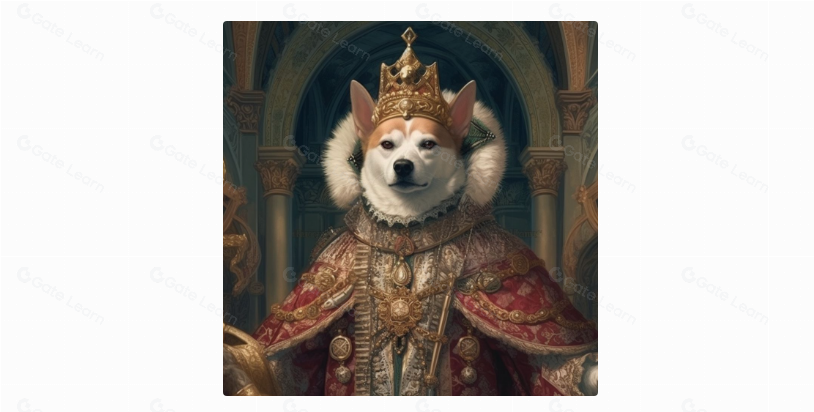
NFT membership perks are one of the clearer “utility” stories, but royalty cashflows still depend on secondary trading and marketplace rules. Always confirm which chain and which contract you are minting; beginners can review a how to buy NFT checklist first.
Lucky Drop game
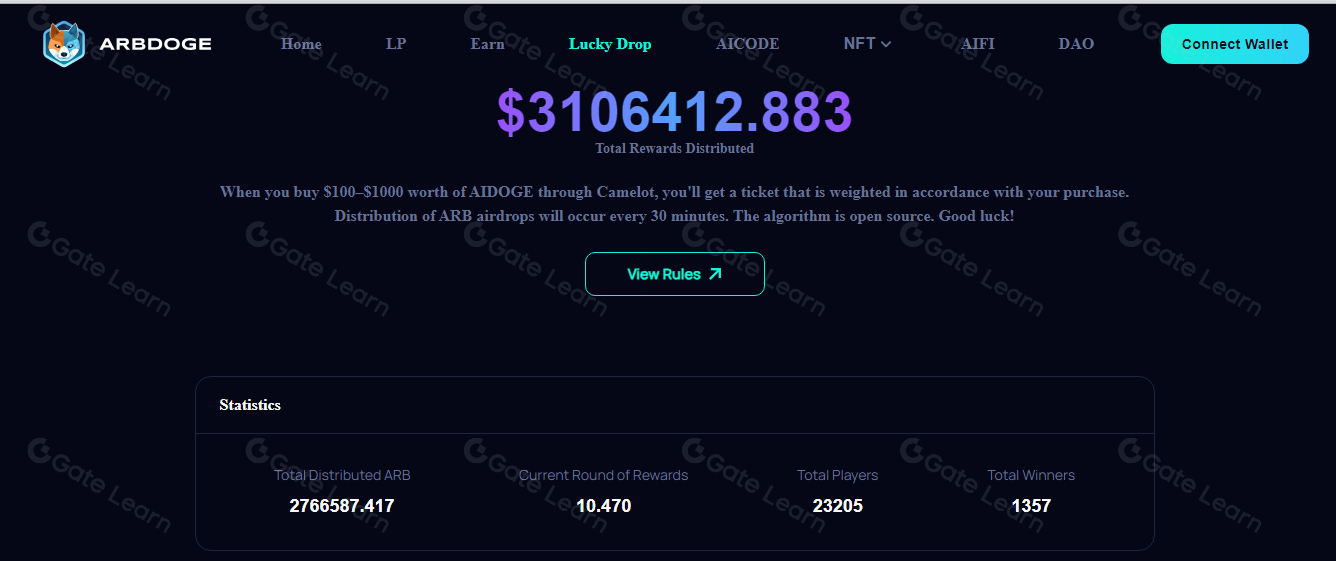
Lucky Drop is an open-source, algorithm-based draw. Purchases above $100 can mint tickets; ticket value bands often sit between $100 and $1,000. Draws refresh about every 30 minutes and invalidate prior-round tickets. A 3% fee on purchases converts to ARB for the prize pool. Because tickets expire each round, participation is operationally active rather than passive.
AIFI is described as an AI-powered metaverse stage, starting with GameFi ideas such as MUD+AI. Team posts have said player conversations with AI NPCs can change virtual-world direction. Incentive designs referenced burn-mining routes tied to AICODE. Until modules are live and verifiable on-chain, treat AIFI as planned work rather than guaranteed utility for ArbDoge AI holders.
Liquidity pool and Earn
Liquidity routes have included AIDOGE/ETH style pools where providers can remove LP when the interface allows. Earn redistributes about 0.7% of trading volume to stakers; rewards scale with size and duration.
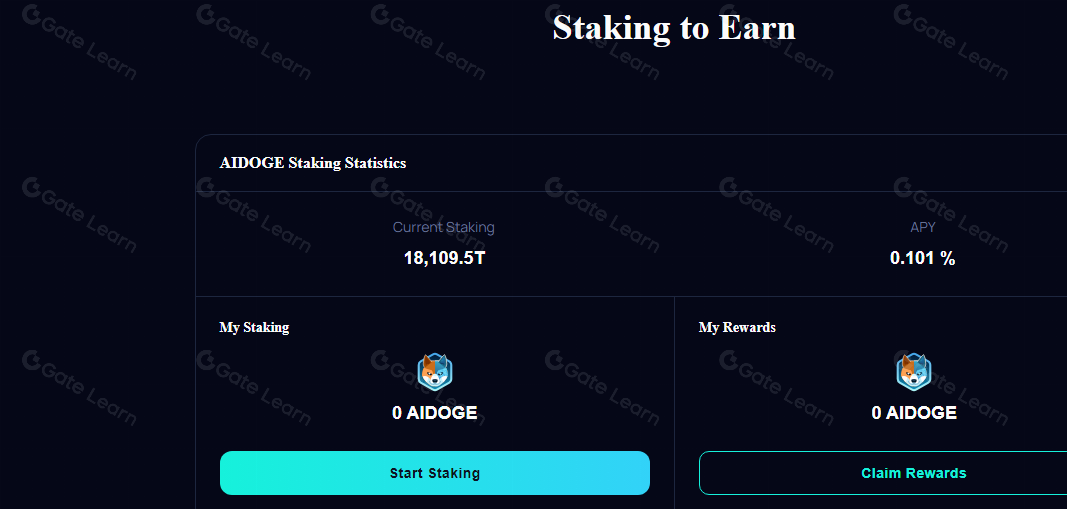
Staking and LP incentives can change effective float. Read lock terms, reward token identity, and exit paths before depositing. Smart-contract risk applies even when the interface looks simple.
Launchpad and DAO direction
The Launchpad is a multi-chain issuance tool, and materials also point users to staking AIDOGE tokens through LP and Earn routes. Materials state that at least 5% of each launched asset is earmarked for token holders as staking rewards, and those returns can vary by stake size and duration, so check reward conditions and lock terms before joining. Early August 2023 posts claimed rapid license-free mints across chains such as Arbitrum, Ethereum, BNB Chain, Optimism, and zkSync. External project links still require caution—avoid casual spender approvals.
A DAO is planned so holders can propose and vote on funding, resources, roadmap changes, and broader operations. Until governance is live on-chain, “100% community-owned” remains an aim rather than a finished control structure for ArbDoge AI.
What is AIDOGE Token?
AIDOGE is the deflationary utility token used for NFT purchases, staking, and planned governance, positioning it within meme markets beyond many dog themed tokens. Its total supply was set at launch at 210 quadrillion tokens, and that fixed supply underpins its tokenomics. Initial distribution targeted ARB airdrop recipients, with later secondary trading on centralized venues and Arbitrum DEX pools including Camelot and Uniswap V3. Unclaimed tokens funded incentives and burns in the early design, while DAO governance is intended to influence funding, resource allocation, and project operations once live on-chain.
Airdrop design
During Call to AIDOGE, 95% of issuance went to the claim pool for ARB-eligible users and 5% to inviters (about 10% of each invitee claim), placing it among dog-themed tokens with utility ambitions. The fixed total supply shapes tokenomics, and the invite path increased reach quickly across a growing community, but it also means some wallets received tokens without long-term conviction. That distribution pattern is common in fair launches and should inform how you interpret holder counts, since wallets do not always equal committed investors.
AICODE companion token
AICODE was introduced for Arb City utilities—NFT acquisition, governance, AIFI value paths, and payments. Earning paths included irreversible burns and trading-mining chances for large Camelot buys. After high early inflation and community losses, holders voted 99.35% Yes to stop issuance on May 24, 2023. Contract ownership was forfeited and circulation fixed at 1,025,569.669477 tokens. The episode is a useful case study in how companion tokens can create short-term sell pressure even when the parent brand remains active.
Tokenomics split
Source: ArbDoge.AI
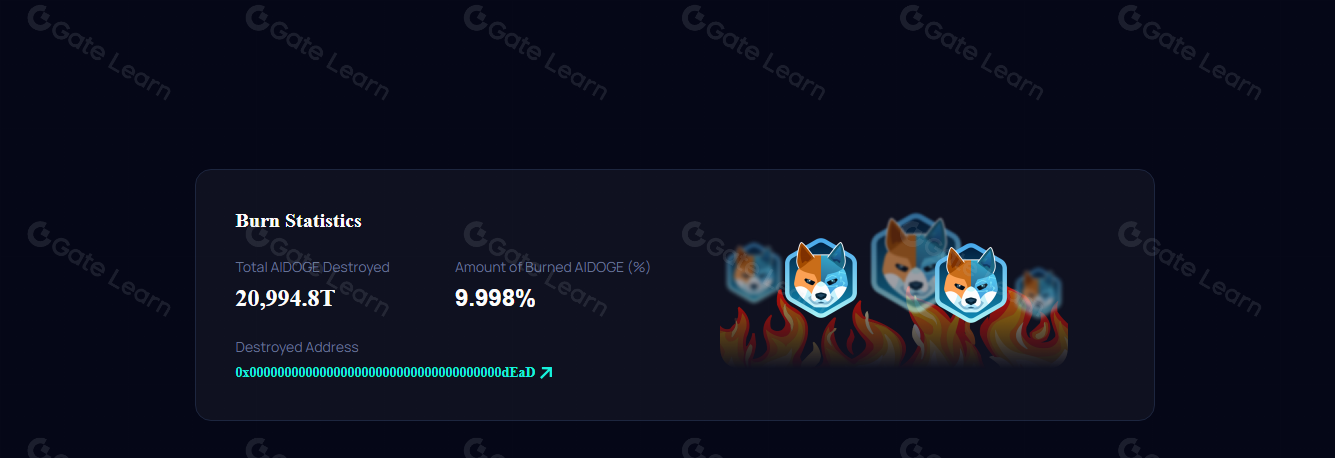
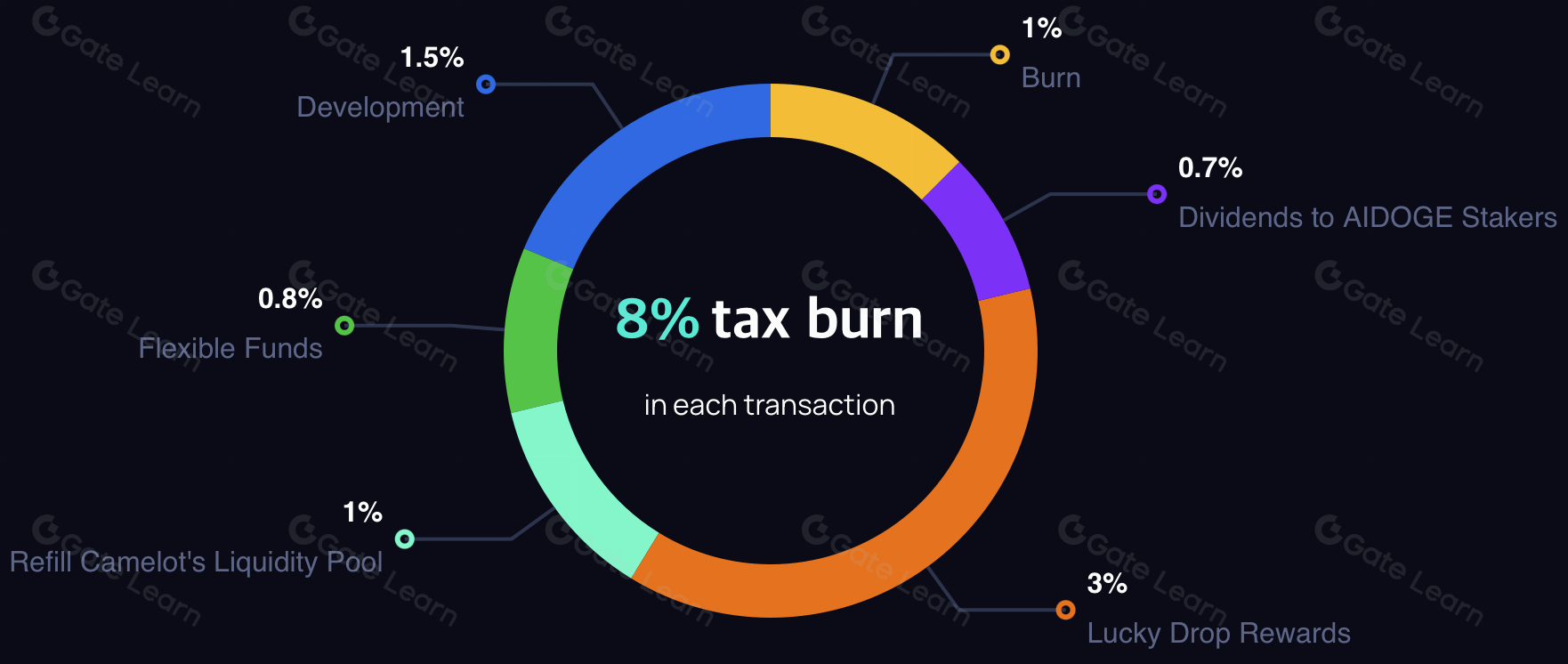
An 8% burn tax on buys and sells is commonly described as: 1% permanent burn, 1% ETH-pair liquidity refill, 0.8% returned as ARB flexible funds, 1.5% development, 0.7% to Earn stakers, and 3% to Lucky Drop.
Source: ArbDoge.AI
Tax design only works as intended on venues that actually apply it. If a pool or router bypasses the tax logic, realized burns and reward flows can diverge from whitepaper tables. That mismatch is one reason tracker warnings mention Uniswap V3 behavior.
Investment framing
Scarcity mechanics can support a narrative, but meme outcomes still depend on attention and delivery of products. Read tracker warnings, confirm contract addresses, and size any exposure carefully after your own research. ArbDoge AI should be evaluated as a high-variance meme asset with optional utilities—not as cash-flow equity.
How to get and buy ArbDoge AI
You can obtain AIDOGE and AICODE on centralized and decentralized venues. Common pairs include AIDOGE/USDT, AIDOGE/ETH, AIDOGE/BTC, and AICODE/USDT on platforms such as Gate.com (and other liquid venues). Before you buy ArbDoge AI, conduct thorough research, confirm the contract on an explorer, compare the ticker spelling, and verify that your venue supports the intended tax behavior. For traders, account setup is typically straightforward: fund a spot balance, then place an order. When comparing venues, use a safe cryptocurrency exchange checklist; meme-market liquidity context is also covered in the top meme coin trading platforms overview. DEX routes still need an Arbitrum-capable wallet and ETH for gas.
Phishing sites are common around meme launches; bookmark official domains instead of following random redirects. Because this is a high-variance meme asset, only invest what you can afford to lose.
Product updates worth noting
May–June 2023 included community NFT creation windows. July 2023 updates referenced Binance NFT INO proceeds of about $150,000 in sales with roughly $120,000 net after platform fees, subject to member voting on use. These updates show how ArbDoge AI tried to fund and expand products beyond the initial airdrop moment.
Trading links and AIDOGE price
Conclusion
ArbDoge AI (AIDOGE) is a community-led AI meme experiment on Arbitrum: airdrop launch, no VC/team allocation, and a product path spanning NFTs, Lucky Drop, Earn, Launchpad, and planned AIFI. Verify contracts, tax-enforcing venues, and liquidity before treating slogans or multi-year price targets as facts. Educational content only—not investment advice.
FAQ
What is ArbDoge AI used for?
AIDOGE is used for NFT purchases, Earn staking, Lucky Drop thresholds, and planned governance. Companion AICODE historically supported Arb City utilities.
Why do explainers get mixed with price pages?
Search results often mix education with live charts. Start with mechanisms and risk banners, then decide whether a price chart is relevant to your question.
Are multi-year predictions useful?
Long-horizon prediction pages are speculative opinions. Prefer float, liquidity, and contract-control checks over target prices.
How should beginners approach access?
Verify contracts, prefer liquid venues, avoid unknown Launchpad links, then use spot pairs after funding—or a DEX with enough gas.
Where do you review history and holders?
Use major market-data sites for charts and Arbitrum explorers for holder lists. Cross-check two sources because micro-priced assets can round differently.
How do ArbDoge AI products connect?
Collectibles, draws, staking, Launchpad allocations, and planned AIFI loops all route through the same token economy. Connecting products does not remove fee-control or liquidity risk.