Meme prices move on attention, community narratives, and pool depth. A token can move from launch, pump, migration, and cooldown within days, so platform choice comes down to where new tokens appear, whether data can verify risk in time, and whether orders fill at the expected price.
Key Takeaways
- Meme coin trading platforms occupy different roles. Launchpads, terminals, bots, screeners, and exchange-based on-chain products complement each other; most traders use two or three together.
- Compare token coverage, supported chains, liquidity depth, routing quality, and total cost. Thin pools and rug pulls usually cause larger losses than interface differences.
- Gate Trenches lets users buy and sell on-chain meme coins by name or contract address with an exchange balance, reducing wallet setup, private-key handling, and manual bridging.
- Platform lineups change quickly, so an older high-profile entry may disappear within months. Recheck venue status before relying on any list.
November 2026 activity update
Pump.fun set a new monthly volume record of $28.87 million in October 2026, up 29.5% month over month. Its official X post on Nov. 1, 2026 reported more than $2 million in daily revenue over the prior 30 days and more than 1.16 million tokens launched.
Gate Trenches reported 30-day data through Oct. 27, 2026: 13,638 addresses, $916 million in volume, 7,327,553 transactions, a 54.5% share of Gate Alpha activity, and 6,388,000 POINTS. The two datasets show continued launch-side issuance and concentrated execution through the exchange-based on-chain entry.
How do platforms divide the work?
A meme coin usually starts on a launchpad bonding curve, migrates to a DEX pool on Solana, Base, or BNB Chain, and only a small share reaches centralized spot markets. The meme launchpad competition keeps changing where volume sits:
| Stage |
Main tools |
What users check |
| Earliest discovery |
Pump.fun, DEXRabbit |
Bonding-curve progress, new pools, and migration status |
| Fast verification |
DEXTools, blockchain explorers |
Liquidity, locks, holder concentration, and contract address |
| High-frequency execution |
Axiom, GMGN, FOMO |
Preset sizes, priority fees, alerts, and fast exits |
| Post-migration fills |
Jupiter, Raydium, PancakeSwap |
Pool selection, price impact, and slippage |
| Low-friction execution |
Gate Trenches |
Name or address search and orders with an exchange balance |
The sequence maps function. Supported chains, liquidity depth, execution speed, fee transparency, and custody decide the actual experience.
How were the platforms ranked?
The order follows role: earliest discovery, terminals and social apps, screeners, then execution venues. Four criteria decide the list:
- Current activity: retained revenue or volume backed by a dated source.
- Operating status: closed or inactive venues, including BullX and Chef.fun, are excluded.
- Chain coverage: support for flows rotating across Solana, Base, and BNB Chain.
- Cost and custody transparency: fees, routing, and key handling documented before a trade.
Top 10 Meme Coin Trading Platforms
Pump.fun
Pump.fun is the leading Solana launchpad for new meme coins. Tokens trade on a bonding curve and migrate to PumpSwap after graduation, so users should check bonding-curve progress before buying because migration changes pool depth, fees, and price impact.
Pump.fun kept the earliest-entry advantage, but failure rates remain high. In August 2026, it retained about $58.2 million in protocol revenue, first among Solana applications (Source: DeFiLlama data via Solana Compass). It removed bonding-curve trading fees on Aug. 7, 2026 (Source: OpenChainBench). October volume reached a record $28.87 million, up 29.5% month over month (Source: Pump.fun official X, Nov. 1, 2026).
Axiom
Axiom is a new-token trading terminal built for fast execution. Hotkeys, preset sizes, priority-fee controls, and API access suit disciplined high-frequency users more than newcomers who only follow headlines.
In August 2026, Axiom retained about $24 million in protocol revenue, second among Solana applications (Source: DeFiLlama data via Solana Compass). As of Aug. 26, 2026, OpenChainBench placed GMGN and Axiom in the leading tier by daily volume.
GMGN
GMGN covers Solana, Ethereum, BNB Chain, and Base, with wallet tracking, copy trading, and cross-chain watchlists. It reduces the cost of following known address flows across networks without rebuilding the same list on each chain.
On Aug. 26, 2026, GMGN led 24-hour platform volume at about $87.6 million (Source: OpenChainBench, based on Dune community datasets). Cross-chain execution should focus on gas and slippage on each chain, especially for small positions.
FOMO
FOMO is a mobile-first social trading app that uses leaderboards and activity feeds to surface active addresses and trending tokens, with a strong Solana presence. It works best as a research cue for active addresses, followed by independent position review.
In August 2026, FOMO retained about $14.6 million in protocol revenue and held roughly 46% of Solana trading-platform spot volume late that month (Source: DeFiLlama data via Solana Compass). Leaderboards reveal early positioning; late entrants can face a different liquidity structure.
DEXRabbit
 图 1. DEXRabbit 多链交易对监控界面。
DEXRabbit uses Bitquery data to monitor pairs on eight networks, including Ethereum, Solana, BNB Smart Chain, Base, Polygon, Tron, and Arbitrum, with gainers, losers, and unusual-volume views.
 图 2. DEXRabbit 的 Pump.fun 联合曲线与迁移状态。
It tracks Pump.fun bonding-curve progress and migration status, making it useful for watching early activity before broader listings. The Tron SunPump page shows price and trader count.
 图 3. DEXRabbit 的 Solana Pumpfun 活跃代币列表。
The Solana Pumpfun page lists active tokens. Before buying, check liquidity locks, holder concentration, and genuine volume so wash trading between a few addresses is easier to identify.
DEXTools
 图 4. DEXTools 的新池与新币筛选视图。
DEXTools provides new pools, new tokens, and DeFi market screeners for a repeatable observation workflow.
 图 5. DEXTools 资金池浏览器与流动性指标。
The pool explorer shows transaction count, liquidity, lock ratio, total supply, and fee ranges. Saved filters by chain, token age, and volume pattern turn trend-chasing into a more stable verification process. Blockchain explorers complete the check on contracts, holders, and approvals.
Gate Trenches
Gate Trenches lets a Gate account buy and sell on-chain tokens by name or contract address with the exchange balance. Users avoid separate wallet creation, private-key storage, and manual bridging; discovery, verification, and ordering stay in one interface while orders settle to on-chain liquidity.
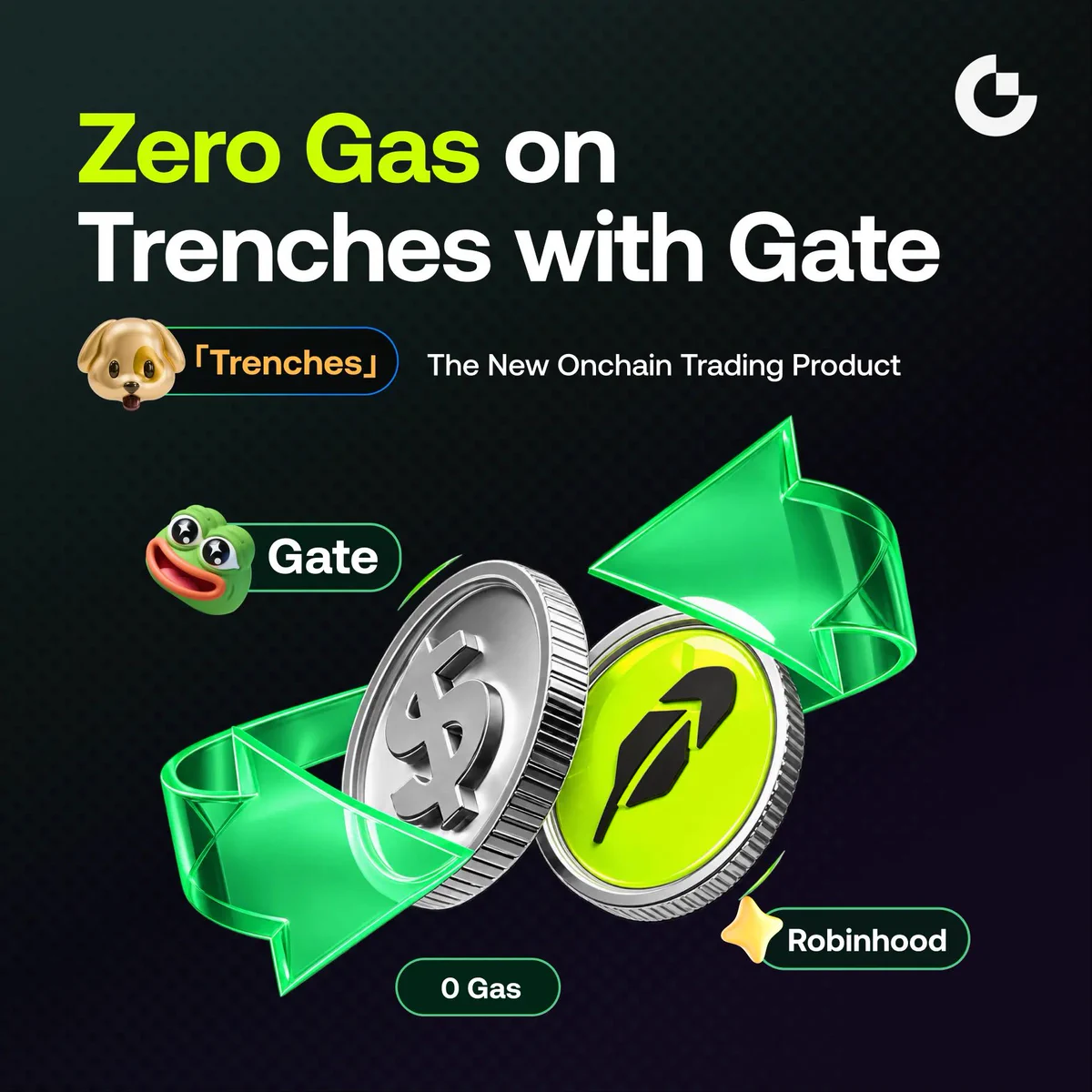 图 6. Gate Trenches 搜索下单与链上交易入口。
The product covers more than a dozen networks, including Robinhood Chain, Solana, Ethereum, Gate Layer, BNB Chain, Base, SUI, Arbitrum, World Chain, Avalanche, Polygon, Linea, ZKsync, Optimism, and Berachain. Buy and sell fees were 0.5% at launch on Sept. 7, 2026 (Source: Gate announcement). Through Oct. 27, 2026, 30-day data showed $916 million in volume, 13,638 addresses, and 7,327,553 transactions (Source: Gate Trenches official X). Callout and KOL panels show discussion heat, and other Gate on-chain trading products use the same account model.
Jupiter
 图 7. Jupiter 聚合路由与 Solana 流动性入口。
Jupiter is a leading DEX aggregator on Solana. It routes orders across liquidity sources and supports limit orders, DCA, perpetual futures, with JUP used for governance.
In thin pools, compare quoted prices with expected proceeds before choosing a limit order or a small test trade. For larger positions, staged execution usually controls price impact better than one market order.
Raydium
 图 8. Raydium AMM 流动性与毕业代币承接入口。
Raydium is a Solana DEX and AMM that carries liquidity for many graduated meme coins. On July 22, 2026, Raydium removed the idle OpenBook dependency from AMM v4 (Source: Raydium docs).
Liquidity providers can earn rewards, and RAY supports staking. Pool curves amplify price impact as position size grows, so split large orders and confirm target-pool depth before execution.
PancakeSwap
 图 9. PancakeSwap 多链兑换与流动性池入口。
PancakeSwap is a major BNB Chain DEX and a primary execution venue after meme coins leave launchpads. Lower gas suits small positions, and multichain support extends coverage to networks such as Base.
Core functions include liquidity-pool swaps, yield farms, LP token staking, and multichain swaps. One token can appear in multiple pools with different fee tiers, so confirm which pool the route uses before ordering.
Which execution route fits your setup?
| Route |
Custody |
Check before trading |
Preparation |
| Wallet plus DEX or aggregator |
Self-custody |
Gas, swap fee, slippage, approvals |
Create wallet, fund it, switch chains |
| Telegram trading bot |
Bot wallet |
Bot fee, gas, priority fee |
Bot setup and key handling |
| Exchange-based on-chain trading |
Exchange custody |
Trading fee and applicable network fee |
Existing exchange account |
Telegram bots add speed but require extra review of key handling and approvals. Wallet routes offer flexibility; exchange routes reduce setup friction. A dedicated Gate Trenches vs DEX comparison helps match custody preference to execution speed.
How to choose a platform?
- New to on-chain trading: start with exchange-based on-chain products to lower wallet and cross-chain barriers, then add a screener for verification.
- Focused on launches: a launchpad plus a fast terminal matters more than deep charting.
- Rotating across chains: a multichain terminal and reusable watchlists reduce switching costs.
- Before buying: check contract address, liquidity locks, holder concentration, and genuine volume. The DYOR checklist covers disclosure and holder structure.
Every route returns to two variables: total completed-trade cost including gas and priority fees, and who controls the private key.
Summary
A meme coin trading stack turns early discovery, fast verification, and low-friction execution into a manageable workflow. Pump.fun provides the earliest entry, Axiom, GMGN, and FOMO add speed and social signals, DEXRabbit and DEXTools support data checks, Jupiter, Raydium, and PancakeSwap handle post-graduation fills, and Gate Trenches compresses on-chain trading into an exchange account. The right combination depends on chain coverage, position size, and risk tolerance.
FAQ
Which type of meme coin trading platform suits beginners?
Beginners benefit most from clear navigation, intuitive liquidity data, and fewer setup steps. A common path starts with DEXTools for new pools and locks, then moves to an exchange app with on-chain trading; high-frequency terminals and bots fit later after the workflow is familiar.
Are meme coin trading platforms the same as crypto exchanges?
They are different scopes. A meme coin trading platform is a functional bundle of launchpads, terminals, bots, social apps, screeners, DEXs, and exchange-based on-chain products. Centralized spot listings cover a limited token set, while Gate Trenches reaches on-chain tokens through the same exchange account.
How do you find new meme coins before spot markets?
Start with launchpads such as Pump.fun, then use DEXRabbit or DEXTools to check bonding-curve progress, new pools, and migration status. The contract address is the most direct search entry, and data tools usually show a pool within minutes of deployment.
What matters most when comparing platforms?
Prioritize token coverage, supported chains, liquidity access, charting and screening, execution speed, total cost, wallet handling, one-click ordering, and automation. On the risk side, check liquidity locks, holder concentration, approval scope, and new-token listing speed.
Is meme coin trading high risk?
Yes. Prices are driven by attention and thin liquidity, and rug pulls, steep drawdowns, failed trades, and poor fills can occur within minutes. Position sizing, address verification, and exit rules matter more than rank on a list.