The mechanics below follow the European cash-settlement rules in Gate crypto options. Order placement, margin screens, and contract specs match how to trade crypto options on Gate; differences versus linear futures or event-style products appear in Gate options vs futures vs event contracts. The sections cover structure and settlement logic only—not whether any overlay fits a particular portfolio.
Key Takeaways
- A hedge overlay starts from an existing BTC spot position; opening options alone without spot exposure is directional speculation, not a classic hedge.
- Protective puts pay premium upfront; at European expiry, in-the-money puts add cash settlement that can partially offset spot losses below the strike.
- Covered-call-style structures collect call premium but obligate the short call side to post seller margin and accept capped upside above the strike at cash settlement.
- Premium, time decay (theta), and strike distance from spot define how much protection or income the overlay buys before expiry.
- Residual risks include basis between spot and the option’s reference index, liquidity at exit, margin calls on short options, and total loss of premium on long options.
What Does Hedging With Options Mean for a BTC Holding?
Hedging with options, for a BTC holding, means using option payoffs to change how spot Bitcoin P&L behaves over a chosen horizon without necessarily closing the spot position. The spot leg keeps economic exposure to Bitcoin’s price path; the option leg adds a second cash flow tied to the same BTC reference at expiry and gives the right, not the obligation, to transact at a set price.
An overlay is not the same as a naked long call or long put. A long put with no BTC is a bearish or volatility bet. A long put while holding spot is the textbook protective put: spot can still rise, while the put’s settlement can add cash if the reference price finishes below the strike; the put gains value when BTC falls, helping provide downside protection for the investment. Industry primers on equity index options describe the same split between insurance-style long puts and income-style short calls (Source: Options Industry Council — protective puts and covered calls).
Gate crypto options are European: exercise and final settlement occur at the contract’s stated expiry time, not at any moment before expiry. Quotes are typically USDT-denominated (T-quotes), and settlement is cash-based on the contract’s defined payoff formula rather than physical delivery of BTC into the wallet, with BTC as the underlying asset for the contract.
How Does a Protective Put Structure Work Mechanically?
A protective put structure, mechanically, combines spot BTC with put options on a BTC-linked option contract. The holder pays premium when opening the long put; that premium is the explicit cost of downside-linked cash settlement rights through expiry.
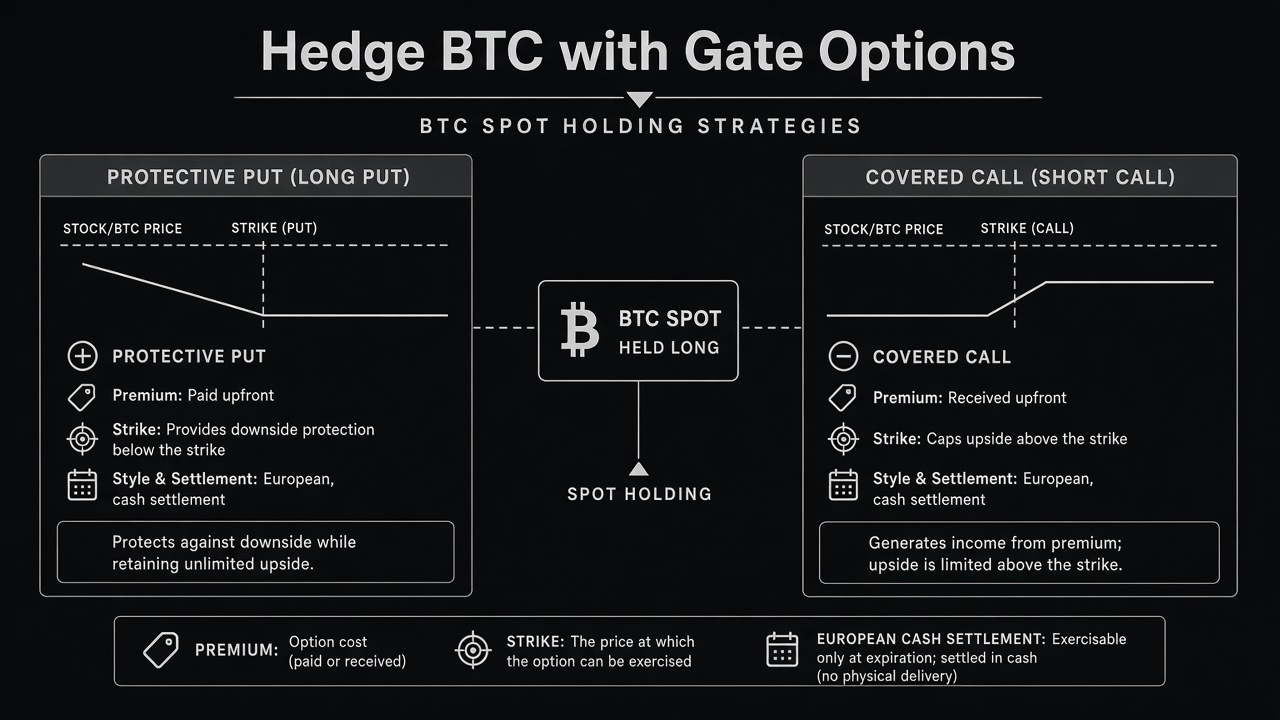
Figure 1. Hedging BTC with Gate crypto options: protective put and covered-call-style overlays.
Before expiry, the long put’s mark-to-market value usually rises when the reference price falls and falls when time passes (theta decay) or implied volatility drops, but option prices also react to market conditions, so a volatile tape can materially change the hedge’s mark-to-market. Because the option is European, early exercise is not available—only holding to expiry or closing the option position in the order book before expiry changes the outcome.
At expiry, if the reference price is below the put strike, cash settlement on the put is positive by the contract’s in-the-money amount (subject to tick size and fee schedule in Gate’s product rules). That cash inflow can offset part of the spot BTC mark-to-market loss over the same window. If the reference price finishes at or above the strike, the put expires worthless from a settlement perspective; the holder keeps spot BTC but does not recover the premium paid.
Choosing the strike price is the main trade-off in the strategy between premium cost and protection depth. A higher strike (more in-the-money or closer to spot) generally costs more premium but starts paying settlement sooner on a moderate decline. A lower out-of-the-money strike costs less premium but leaves a larger spot drawdown band before settlement cash arrives.
How Does a Covered Call Strategy Structure Work Mechanically?
A covered-call-style structure, mechanically, combines a long position in spot BTC with a short call option on a BTC-linked Gate option. The spot leg is the “cover” in classical equity terminology: without spot (or without equivalent long delta), a naked short call is not a covered hedge but a directional short-volatility position with uncapped theoretical loss if price rises sharply.
The short call side collects option premiums at entry, and higher implied volatility can increase them. That premium is income against spot holding costs but is not guaranteed profit: sharp upward moves can produce losses on the short call mark-to-market before expiry, and Gate requires seller margin on short option positions. Margin rules interact with portfolio equity; a rising BTC price can increase short call liability and trigger additional collateral requirements even while spot BTC gains on paper.
At European expiry, if the reference price is above the call strike, cash settlement on the short call is a payment obligation proportional to the in-the-money amount. Economically, spot BTC may have gained, while the option leg pays away part of that gain through cash settlement—hence the “capped upside above the strike” description. If the reference price finishes at or below the strike, the short call typically expires without settlement payment, and the seller retains the premium collected at entry minus fees.
Writers sometimes use this overlay to monetize a range-bound assumption by choosing the strike and expiration date around market expectations; that is an income overlay on spot, not full downside insurance. Pairing only a short call without a long put leaves spot drawdown largely unhedged except for the call premium cushion, so a covered call strategy can generate income but offers only limited downside protection.
What Costs, Strike Price, Expiry Choices, and Failure Conditions Matter?
Option hedging is one of several risk management tools and hedging strategies for a BTC holding, with costs dominated by premium on long puts, fees, and—for short calls—the opportunity cost of capping upside above the strike. Time decay erodes long option value as expiry approaches if the reference price stays near the entry level; a hedge that “fails” in practice often means spot moved sideways and the long put premium is largely consumed by theta without triggering settlement.
Expiry choice fixes the European exercise clock. Shorter-dated puts usually cost less in absolute premium terms but expire sooner, forcing a roll if protection must continue. Longer-dated puts cost more upfront, and the total cost of staying protected can rise across repeated rolls even if each single expiry looks manageable. Rolling—closing one option and opening another—adds spread and fee friction not visible in a single expiry diagram.
Failure conditions for protective puts include: spot falls less than premium paid (net loss versus unhedged spot over the period), spot falls beyond the strike but total spot loss still exceeds put settlement cash, and liquidity is poor when attempting to close early. Failure conditions for covered-call-style structures include: sharp rallies that create short call losses and margin stress despite spot gains, the risk of having to forgo selling spot above the strike when BTC trades at a higher price, and drawdowns where the call premium collected is small relative to spot loss.
How Do Margin and Cash Settlement Interact With a Hedge?
Margin and cash settlement on Gate crypto options interact with a hedge because spot BTC in a wallet is separate collateral from option seller margin accounts, and some traders also manage the same exposure with perpetual futures or perpetual positions. Long puts generally require premium payment upfront; short calls require margin according to Gate’s crypto options risk engine. A spot-plus-short-call overlay therefore spans two balances: unencumbered spot (subject to its own transfer and custody rules) and an options account that can demand additional USDT or eligible collateral if short position risk increases.
For some users, self custody matters because they want more control of funds rather than moving assets onto a centralized venue, even though platform-specific margin rules still apply.
Cash settlement at European expiry means no automatic conversion of spot BTC through the option leg. Settlement credits or debits USDT (or the contract’s stated settlement asset) based on the published reference price versus strike. A protective put holder still holds the same spot BTC after expiry unless they sold spot separately; only cash balances change from option settlement. A covered-call-style holder likewise retains spot unless they choose to sell; cash settlement on a losing short call reduces USDT available for the next trade or margin buffer.
Basis risk appears when the spot BTC price on Gate spot markets diverges from the index or reference price used for option settlement. That means there is no perfect hedge when spot and settlement references diverge; the overlay hedges the reference, not every tick of a specific spot order book.
What Risks to Downside Protection Remain After Building an Options Overlay?
An options overlay reduces or reshapes specific risks but does not remove Bitcoin spot volatility, custody risk, or platform operational risk during market crashes or sharp price drops. Long puts cap neither funding costs nor the psychological path of spot drawdown before expiry. Short calls introduce margin and short-gamma-style mark-to-market swings into the options account even when the long-term intent is to keep spot.
Regulatory and product-rule changes, contract delistings, and maintenance windows can limit the ability to adjust the hedge near expiry, and local regulations can also affect access to derivatives or short selling. Counterparty and clearing structure risks sit with the exchange’s listed product framework described in Gate’s official crypto options documentation (Source: Gate Help — Gate Options Product Overview).
After building the overlay, residual tasks are operational: track expiry timestamps in UTC, reconcile settlement statements with spot P&L, and distinguish accounting P&L (premium spent or collected) from economic exposure (spot still 100% long unless reduced), with leveraged positions increasing monitoring demands if used alongside the hedge.
Summary
Hedging BTC with Gate crypto options is implemented as defined overlays on spot, a strategy designed to reshape returns while preserving the chance to benefit from favorable BTC moves: protective puts add long put settlement cash on downside moves at European expiry; covered-call-style structures add short call premium and seller margin obligations while limiting upside participation above the strike through cash settlement. Premium, theta, strike distance, time to expiry, and the relationship between the current price and strike price determine how much protection or income the overlay provides. Cash settlement separates option payoffs from spot coin movement; margin applies especially to short calls. Overlays differ from naked directional option trades because the starting point is an existing BTC holding and the goal is payoff shaping, not a standalone bet on implied volatility alone, with a trade-off between protection, capped upside, and premium cost.
FAQ
Can you hedge Bitcoin on Gate without selling spot BTC?
Yes, mechanically, by holding spot BTC and adding Gate crypto options positions whose expiry payoffs offset part of adverse reference-price moves. A protective put is the usual long-option example; a covered-call-style overlay changes upside participation rather than adding full downside insurance. Spot remains in the wallet unless sold separately; the option leg adjusts cash at settlement or via closing trades before expiry.
What is the difference between a protective put and buying a put without holding BTC?
A protective put combines an existing long spot BTC position with a long put. A long put without spot is a directional or volatility trade: settlement cash may arrive on a decline, but there is no spot gain to offset on rallies, and the position is not classically described as hedging inventory. The same contract can be used for either purpose; the label depends on whether spot BTC is held as the primary exposure.
Why do Gate crypto options use European exercise for hedging plans?
European exercise means settlement timing is fixed at expiry, so the hedge’s payoff diagram is known in advance relative to the reference price at that timestamp. Hedgers cannot exercise early when spot dips intraday and then recover before expiry; only closing the option early in the market or holding through expiry changes outcomes. That constraint simplifies expiry planning but makes short-dated liquidity important if the overlay must be adjusted mid-period.
How does cash settlement affect a BTC hedge versus physical delivery?
Cash settlement credits or debits settlement currency based on in-the-money value at expiry without delivering BTC through the option contract. Spot BTC quantity unchanged by the option leg must still be managed separately—transfers, sales, or lending decisions are independent. Physical-delivery options (not Gate’s listed crypto options model) would couple coin movement to exercise; cash settlement decouples coin custody from option payoff.
Does a covered-call-style overlay protect BTC against a crash?
Not in the same way as a protective put. A short call mainly affects upside participation and adds premium income; large spot declines still reduce spot mark-to-market value, with only the call premium as a partial buffer if the call expires out of the money. Downside-focused hedging, in option terms, typically requires long puts or other structures that pay increasing settlement cash as the reference price falls below a strike.