The biggest pitfall node operators encounter with Glamsterdam is viewing the upgrade as just a "version update." True stability hinges not on a single update, but on a comprehensive management cycle: preparation, validation, switching, monitoring, rollback, and review.
This process is closely tied to the Glamsterdam upgrade overview, as the upgrade objectives dictate operational priorities. When the mechanism layer involves changes like ePBS (EIP-7732) and BAL (EIP-7928) with parallel execution, node monitoring parameters and alert thresholds must be updated accordingly. Compared to the Dencun phase, Glamsterdam significantly increases the complexity for infrastructure providers, as detailed in the Glamsterdam vs. Dencun/Fusaka comparison. The impact of Glamsterdam on DApps highlights the need for node-side exception semantics to be aligned with application teams, preventing cross-layer misdiagnosis.
What prerequisites must be confirmed before an upgrade?
First, conduct a thorough inventory of assets and responsibilities. Identify the node’s roles—validator, RPC service, archive node, index service node, or hybrid. Each role has unique requirements for downtime, consistency, and latency, so a one-size-fits-all checklist is insufficient.
Second, map out the component matrix. Document versions of the execution layer, consensus layer, monitoring proxies, alert systems, log pipelines, and automation scripts, clarifying all dependencies. Hidden dependencies can become critical failure points during upgrades. Create a version matrix that assigns responsible parties for each component and designates rollback contacts.
Third, establish maintenance windows and responsibility mechanisms. Before the upgrade, define who is on duty, who makes rollback decisions, the conditions for aborting the upgrade, and post-upgrade acceptance criteria. Without organizational structure, technical preparations lack effectiveness. According to the Ethereum.org roadmap, Glamsterdam is a mainnet milestone. Node teams should plan backwards from roadmap timelines, but base actual deployment on testnet maturity.
How to design a client upgrade plan?
Upgrade plans should follow a "layered gray-scale" approach—not simultaneous updates across all nodes. Typically, validation starts with standby nodes, then expands to non-critical production nodes, and finally to the critical path. This method ensures behavioral consistency within a controlled risk envelope.
| Stage |
Objective |
Output |
| Rehearsal |
Verify basic compatibility |
Version matrix and exception list |
| Gray-scale |
Validate real traffic |
Alert thresholds and rollback criteria |
| Formal |
Manage switch risks |
Upgrade records and acceptance results |
The plan must specify "failure conditions." For example, if critical indicators remain abnormal beyond thresholds, halt expansion and initiate troubleshooting or rollback. During the gray-scale stage, log timestamps and metric snapshots for post-upgrade analysis and external reporting.
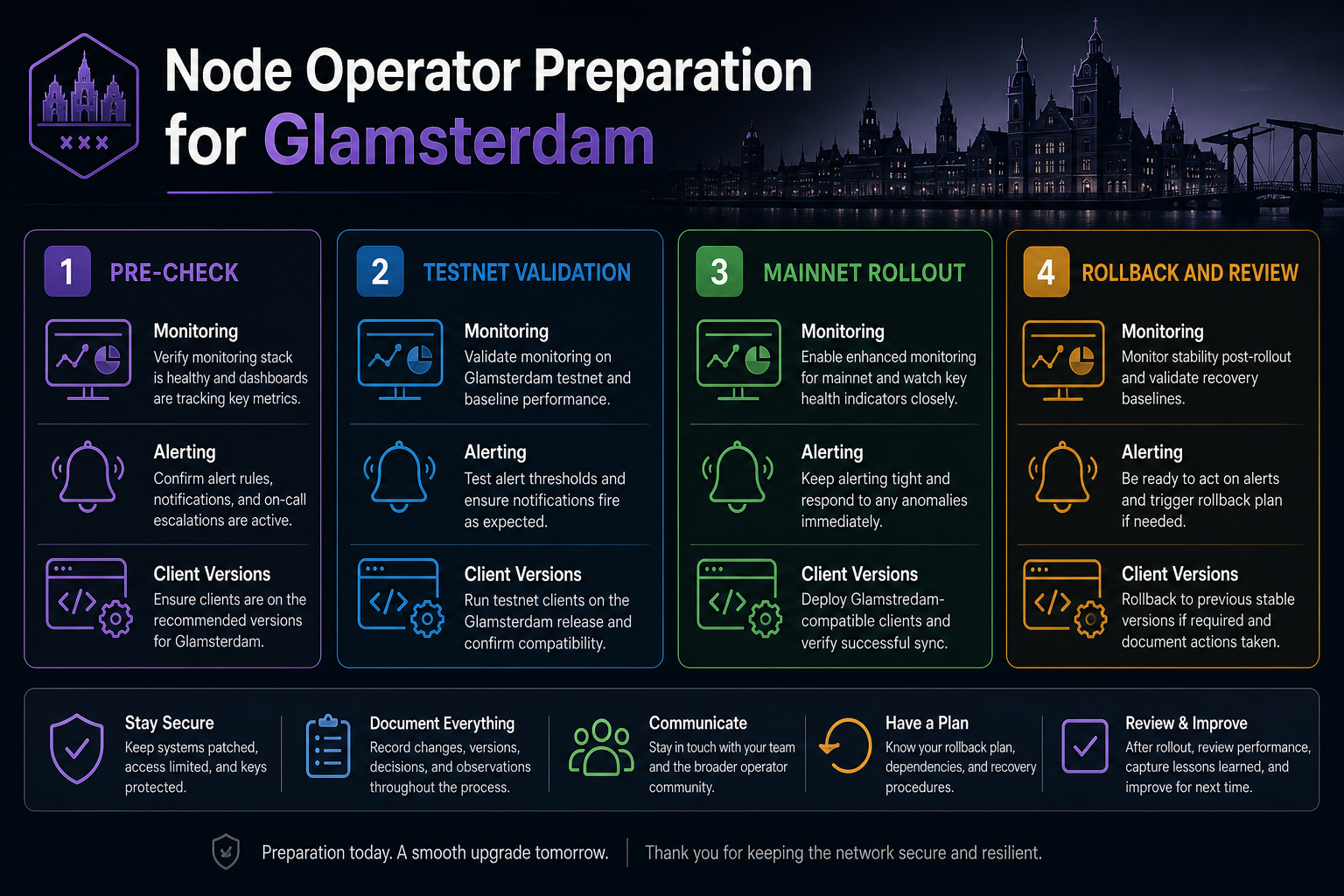 Figure 1. Node operator upgrade checklist: rehearsal, gray-scale, formal switch, and rollback loop.
Testnet validation must go beyond "node starts successfully." It should cover block sync stability, transaction propagation, validation log anomaly rates, resource usage changes, and key interface response percentiles. Only quantifiable metrics can support mainnet launch decisions.
Maintain baseline comparisons: historical metrics from identical configurations before the upgrade. Without a baseline, post-upgrade fluctuations are hard to attribute to mechanism changes or environmental noise. If ePBS or BAL mechanisms are involved, closely monitor build latency, access list processing, and conflict rollback logs.
| Validation Item |
Minimum Requirement |
Recommended Supplement |
| Sync stability |
No abnormal forks for 24 hours |
Cross-client comparison |
| Interface latency |
P95 does not worsen persistently |
Percentiles by interface |
| Resource usage |
No abnormal CPU/memory spikes |
Disk IO hotspot analysis |
| Validation logs |
Exception rate below threshold |
Layered statistics by process |
These are the minimum standards for testnet acceptance. If they are not met, mainnet gray-scale rollout should not proceed.
Which key metrics should be monitored during the mainnet upgrade window?
Monitoring should focus on three groups: consensus/block production, execution/resources, and service/user side. Consensus and block production track proposal anomalies, reorgs, and finality cadence; execution and resources monitor CPU, memory, disk IO, and state access hotspots; service side watches RPC error rates, latency, and business success rates.
Alert strategies must be tiered. Minor issues trigger observation, persistent issues trigger load reduction or traffic rerouting, and severe issues trigger rollback. This prevents both neglect and overreaction. With ePBS, set specific thresholds for build latency and proposal consistency, separate from generic block production times.
What is the process for rollback and emergency response when anomalies occur?
Rollback plans must detail trigger conditions, rollback procedures, data consistency checks, recovery order, and external communication templates. On-the-fly decisions during emergencies risk causing further failures.
Rollback is a risk control measure, not an upgrade failure. Communicate externally that this protects consistency and service availability, while documenting evidence for later review and potential relaunch. After rollback, retain logs and metric snapshots for at least one full cycle for analysis by client and ecosystem teams.
What are the preparation priorities for validators vs. infrastructure service providers?
Validators focus on consensus stability, signature security, and yield-risk balance. Infrastructure providers prioritize availability SLA, multi-tenant isolation, and traffic management. Both require upgrades, but acceptance criteria and emergency priorities differ.
Teams should build role-specific checklists, not use a single template for all node types. Validators should monitor how workflow changes affect yield structure, while service providers must include tenant notifications, traffic rerouting, and SLA reporting in their upgrade process.
How to review and optimize future upgrades?
Reviews should cover plan deviations, event timelines, threshold effectiveness, and collaboration efficiency. Turn review findings into actionable improvements—adjust thresholds, add scripts, and refine duty processes.
Upgrades build organizational capability. The more thorough the review, the fewer unknowns next time. Include timestamps, metric comparisons, and decision logs in reports so future teams can leverage experience instead of repeating mistakes.
Summary
For node operators, the essence of the Glamsterdam upgrade is "turning mechanism changes into operational discipline." Clear inventories, layered gray-scale, metric-driven monitoring, and executable rollback form the minimum closed loop for a controlled upgrade. The more systematic the preparation, the more manageable the upgrade volatility.
FAQ
What is the most crucial step before a node upgrade?
Building a complete checklist and defining abort conditions. Without abort criteria, anomalies cannot be promptly mitigated.
Why isn't successful node startup enough for testnet validation?
Startup alone does not guarantee stable execution. You must verify sync behavior, resource fluctuations, interface latency, and anomaly rates to assess mainnet risks.
Should you troubleshoot or rollback first when anomalies arise?
It depends on severity and duration. If severe threshold is triggered, rollback to protect service, then conduct deep troubleshooting.
Can validators and RPC service providers share upgrade strategies?
Not entirely. Their focus differs: validators emphasize consensus stability, providers focus on availability and latency. Differentiated strategies are needed.
Does roadmap adjustment mean preparation can pause?
No. Continue mechanism tracking and testnet validation. Timelines may shift with test data, but client maturity and monitoring system development must persist.
How should node teams coordinate with DApp teams?
Establish joint upgrade windows and regular sync mechanisms. Align exception semantics and response priorities to prevent cross-layer misdiagnosis.