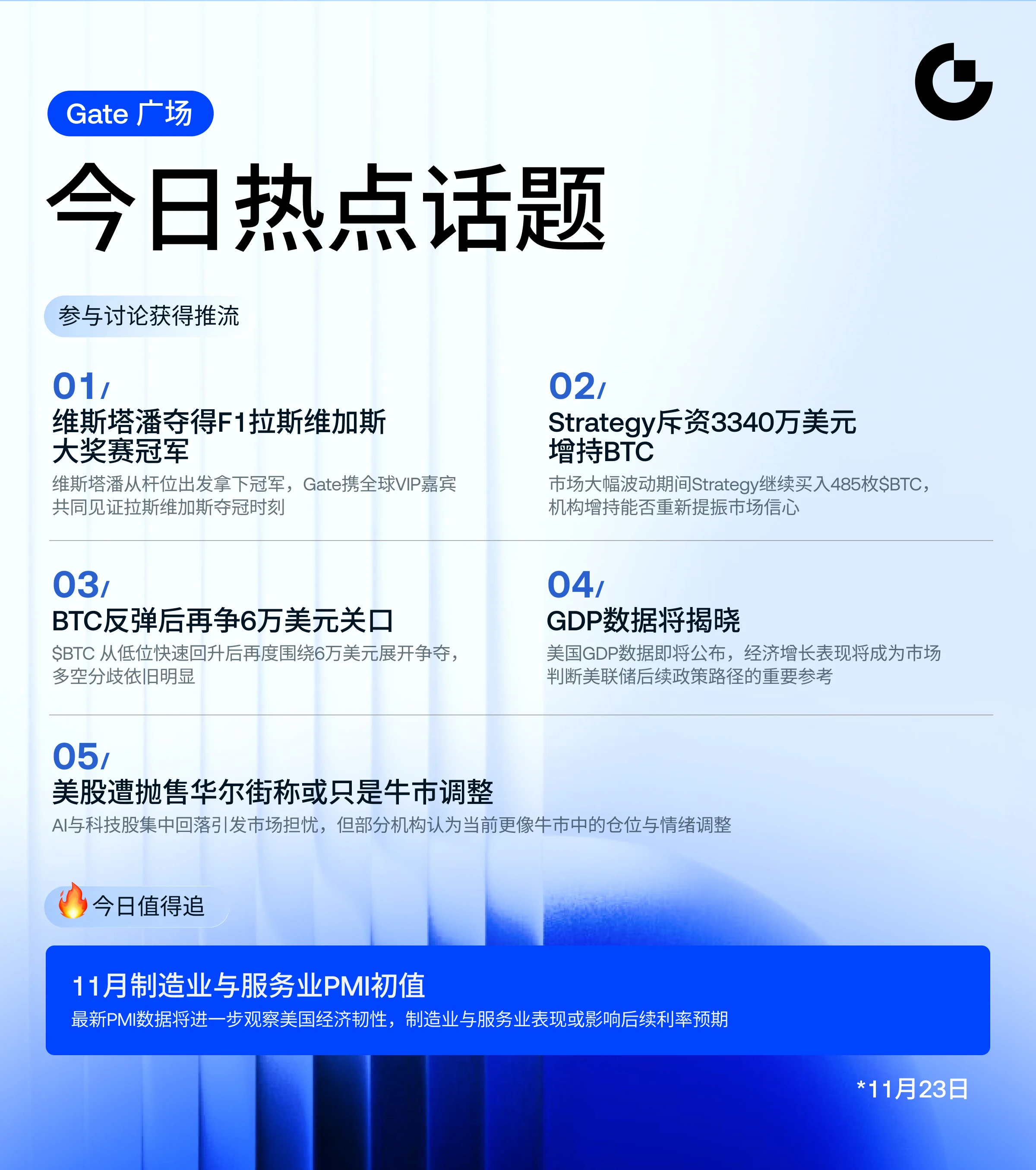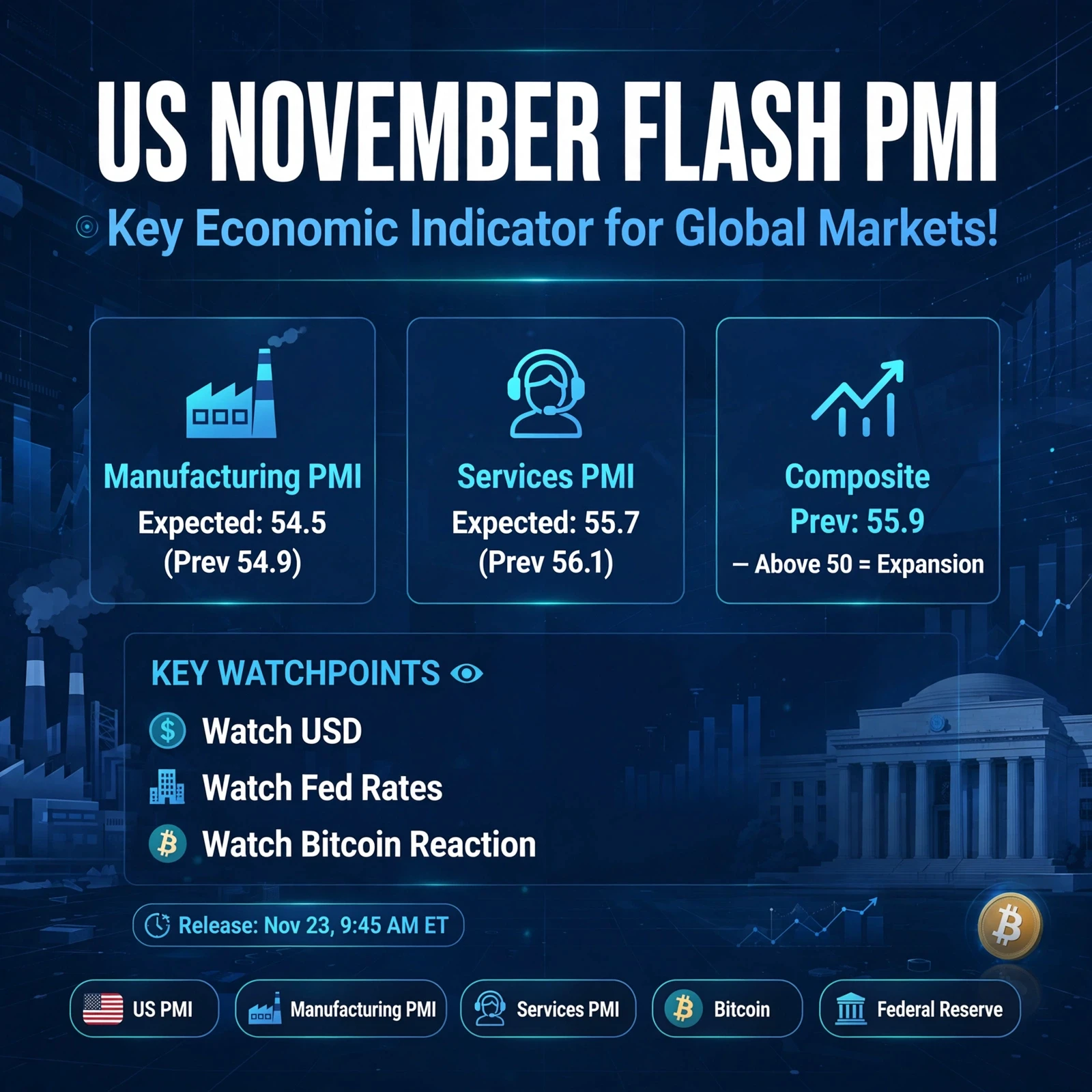












#11月制造业与服务业PMI初值 Manufacturing and services performance will affect market views on the future interest rate path, but PMIs usually do not determine the rate path on their own. They mainly affect assessments of the resilience of the U.S. economy, which in turn change bets on the Fed’s pace of rate hikes.
November flash PMI data will not be released until 22:45 today (November 23); no data is available yet.
What to watch in manufacturing and services
· Manufacturing: It carries less weight, but components such as new orders and prices paid can provide an early indication of whether high interest rates are starting to weigh on businesses. In September, the S&P Manufacturing PMI rose from 53.9 to 57.0, and the market quickly raised its rate-hike expectations.
· Services: It accounts for more than half of the U.S. economy and is more closely tied to consumer spending. A significant weakening would be seen as a sign of economic cooling and less room for rate hikes; if it remains in expansion, the market will continue betting on “higher for longer.”
Three things to watch to see whether rate expectations will change
· How far it deviates from expectations: Small fluctuations have a limited impact; only a major beat or miss against market expectations will drive repricing.
· Price components: If input prices in the PMI also rise, the market may worry about “strong growth and sticky inflation,” strengthening rate-hike expectations instead.
· Whether a trend is forming: A single month’s flash reading is only a clue; it should also be considered alongside ISM, retail sales, employment, and core PCE.
The market is currently more focused on October core PCE, due out on November 25, as it is directly tied to the inflation target.