Square
Following
Hot
News
Notifications
Profile
Share your thoughts
placeholder
Article
🔥 What are we discussing today? Trending topics on Gate Square have been updated!

🔹 #Epic Sell-Off in U.S. Stocks
Tech stocks are facing a wave of heavy selling. Will this correction continue?
🔹 #October Nonfarm Payrolls in Focus
The nonfarm payrolls report is due tonight. Will it trigger a market rebound or further losses?
🔹 #Crypto Market Under Pressure
$BTC and $ETH are following global risk assets lower. Is now the time to buy the dip or keep waiting?

Quality content can receive a traffic boost + featured recommendations.
💰 Got a take? Join the discussion:
https://www.gate.com/post
GateSquare
🔥 What are we discussing today? Trending topics on Gate Square have been updated!

🔹 #Epic Sell-Off in U.S. Stocks
Tech stocks are facing a wave of heavy selling. Will this correction continue?
🔹 #October Nonfarm Payrolls in Focus
The nonfarm payrolls report is due tonight. Will it trigger a market rebound or further losses?
🔹 #Crypto Market Under Pressure
$BTC and $ETH are following global risk assets lower. Is now the time to buy the dip or keep waiting?

Quality content can receive a traffic boost + featured recommendations.
💰 Got a take? Join the discussion:
https://www.gate.com/post/topic
repost-content-media
BTC-0.67%
ETH-1.26%
#CryptoMarketUnderPressure #ShareWeekly

Crypto Market Under Pressure: The Battle Between Sellers, Buyers, and Market Confidence

The cryptocurrency market is facing a challenging phase, with selling pressure spreading across Bitcoin, Ethereum, and major altcoins. The important question is not simply why prices are falling, but why buyers are struggling to defend important levels while sellers continue to dominate market activity. In my view, this weakness reflects a combination of profit-taking, declining confidence, leveraged liquidations, macroeconomic uncertainty, and cautious capital all
CryptoChampion
#CryptoMarketUnderPressure #ShareWeekly

Crypto Market Under Pressure: The Battle Between Sellers, Buyers, and Market Confidence

The cryptocurrency market is facing a challenging phase, with selling pressure spreading across Bitcoin, Ethereum, and major altcoins. The important question is not simply why prices are falling, but why buyers are struggling to defend important levels while sellers continue to dominate market activity. In my view, this weakness reflects a combination of profit-taking, declining confidence, leveraged liquidations, macroeconomic uncertainty, and cautious capital allocation.

1. Bitcoin Is Setting the Direction for the Entire Market

Bitcoin remains the leading indicator of overall crypto market sentiment. When BTC loses important support levels, traders usually become more defensive across the entire market.

Consider a scenario in which Bitcoin declines from $80,000 to $76,000, representing a 5% correction. Ethereum could experience a decline of approximately 6–8%, while smaller altcoins might lose 10–15%, depending on their liquidity and market demand.

This difference matters because altcoins generally have higher volatility. When Bitcoin weakens, investors often reduce exposure to smaller assets first and move toward more liquid cryptocurrencies or stablecoins.

2. Profit-Taking Is Increasing Available Supply

Another major factor is the willingness of investors to secure profits or reduce losses. Some long-term holders may decide that recent gains are sufficient, while short-term traders may close positions as soon as prices break important support zones.

This creates additional selling pressure in the spot market.

Selling does not necessarily mean that investors have lost confidence in cryptocurrency permanently. In many cases, it represents portfolio rebalancing and responsible risk management. However, when thousands of participants make similar decisions, their combined activity can overwhelm available buying demand.

3. Fear Is Changing Investor Behavior

Market psychology plays a major role during corrections. When prices are rising, investors are often comfortable buying dips. But when the market continues making lower highs and lower lows, confidence starts disappearing.

Fear and uncertainty can encourage traders to close positions earlier than planned. Meanwhile, potential buyers may postpone entries because they expect better prices.

Macroeconomic uncertainty, interest-rate expectations, regulatory developments, and unexpected economic data can make this situation worse.

The result is a market where sellers are active but buyers prefer to remain on the sidelines.

4. Leveraged Liquidations Can Accelerate the Decline

Leverage is another important reason why crypto corrections sometimes become unusually aggressive.

Traders using borrowed capital can face automatic liquidation when prices move against their positions. For example, if Bitcoin falls toward $76,000 and a large number of leveraged long positions have liquidation levels nearby, forced selling can accelerate the downward movement.

This creates a chain reaction:

- Bitcoin declines and leveraged positions become vulnerable.
- Exchanges automatically close positions that cannot maintain sufficient margin.
- Forced selling adds more pressure to the market.
- Additional support levels break, triggering further liquidations.

Open interest and funding rates are useful indicators for understanding this process. Falling open interest during a sharp correction can suggest that excessive leverage is being removed from the market.

5. Capital Is Becoming More Defensive

When uncertainty increases, investors frequently move capital away from volatile assets.

Some may prefer cash, stablecoins, government bonds, or gold instead of maintaining large cryptocurrency positions.

Stablecoin exchange reserves and inflows can help identify whether investors are preparing to enter the market or simply waiting for better conditions.

However, stablecoin inflows alone do not guarantee buying activity. Actual spot volume and sustained demand are also important.

6. Why Are Altcoins Falling Harder Than Bitcoin?

Altcoins generally have thinner liquidity and more concentrated trading activity than Bitcoin.

During periods of uncertainty, investors often sell smaller tokens first because they carry greater volatility and additional project-specific risks.

There are also other sources of supply, including token unlocks, early investor distributions, and miner selling in proof-of-work networks.

For example, if a token releases 5–10% of its circulating supply into an already weak market, that additional supply can create considerable pressure unless demand increases.

This explains why some altcoins experience much deeper corrections even when Bitcoin's decline appears relatively moderate.

7. What Could Bring Buyers Back?

A sustainable recovery requires more than one green candle.

I would watch several indicators:

- Bitcoin holding its important support zones instead of repeatedly breaking lower.
- Increasing spot buying volume and sustained demand.
- Selling volume declining while prices stabilize.
- Funding rates returning toward neutral levels.
- Open interest rebuilding gradually without excessive leverage.
- Exchange outflows and accumulation activity indicating stronger holding behavior.
- Bitcoin dominance stabilizing before broader altcoin participation improves.

These signals would provide stronger evidence that the market is recovering rather than experiencing another temporary bounce.

8. How Long Could This Weakness Continue?

There is no fixed timeline for a cryptocurrency market bottom. A correction can last several days or extend over multiple weeks, depending on liquidity, macroeconomic conditions, investor confidence, and demand.

If Bitcoin successfully establishes a base and buyers gradually absorb available supply, market conditions could improve.

However, if BTC continues making lower highs, spot demand remains weak, and altcoins repeatedly lose support, selling pressure could continue for longer.

That is why predicting an exact bottom is less useful than monitoring confirmed market behavior.

My Trading Perspective and Risk Management

In this environment, I prefer confirmation over aggressive predictions. I would avoid chasing sudden recoveries or opening oversized leveraged positions simply because prices appear cheaper.

My approach is to identify support and resistance, wait for a confirmed breakout and retest, and manage exposure according to the risk involved.

I consider 1–2% account risk per trade a more disciplined approach than risking a large portion of capital on a single market direction.

Dollar-cost averaging can also help investors spread entries over time, although it cannot eliminate downside risk.

Final Thoughts

The current crypto weakness is not the result of one single factor. Profit-taking, Bitcoin's direction, declining confidence, liquidations, defensive capital rotation, miner selling, and token unlocks can all contribute to the same negative cycle.

The key question is when genuine demand will return.

For now, I believe patience, liquidity management, and disciplined risk control are more important than trying to predict every short-term price movement. A stronger recovery will become more convincing when Bitcoin stabilizes, selling pressure declines, and spot buyers demonstrate consistent demand.

The next major opportunity may come not from guessing the bottom, but from recognizing the moment when market conditions genuinely begin to change.

This is my market perspective, not financial advice.

#WCTCS9 #weeklyshare @Gate_Square #GateSquareTradingChallenge
BTC-0.67%
ETH-1.26%
TOKEN-0.16%
XAUUSD-0.45%
  • 1
Trenches
ZIG
Z
bade
b
ZIG
0x8c...1145
Market Cap
$.
Change
.
24h Vol
$.
Holders
.
STONK
S
bade
b
STONK
6GmA...UNgx
Market Cap
$.
Change
.
24h Vol
$.
Holders
.
IDOL
I
bade
b
IDOL
0x3b...ab07
Market Cap
$
Change
.
24h Vol
$.
Holders
.
BTC
B
bade
b
BTC
C5xp...pump
Market Cap
$.
Change
.
24h Vol
$.
Holders
.
scamsem
s
bade
b
scamsem
41Wp...pump
Market Cap
$.
Change
.
24h Vol
$.
Holders
.
That was fast.
Midnight, Charles Hoskinson's privacy chain, took nearly 7 months to reach 1M transactions after its March launch.
The next 500,000 took ~10 days. It passed 1.5M on November 5.
@MidnightNtwrk @IOHK_Charles
NIGHT-3.10%
Kidly send me followers red packet arrange a time 60 minut in my live streaming i am starting the
live-cover
LIVE43
$ZEC Current price: 1257.41, down 4.61% over 24H. The 1H trend is weak, with RSI at 21.48 (oversold), price below EMA20 at 1278.53, and a volume ratio of 0.71. The 4H trend is weak, with RSI at 53.59 and price below EMA20 at 1283.92. To the upside, price needs to hold above resistance at 1364.08; a break below support at 1236.65 would weaken the structure. In the review, focus on whether price holds above 1364.08 and reclaims 1236.65 after losing it. Oversold conditions indicate only the potential for a rebound, not that the decline has stopped. The setup is invalidated if there is no volume o
post-image
ZEC+1.16%
$KOR BB is still drilling down, getting ready to add another zero to the price?
post-image
$ENA Current price 0.1577, with the overhead Bollinger middle band and MA20 overlapping to cap price at 0.1608–0.1665; the lower Bollinger band at 0.1552 is the last line of defense. Price is hugging the lower band, and MA5 has fallen below MA20; the bearish structure remains intact.
The funding picture is more concerning: price is down 4.19% over 24h, yet the funding rate is +0.0050%, meaning longs are still paying to hold positions. This shows dip buyers have not given up. This “price down, positive funding” combination is often a precursor to longs being slowly bled out, rather than a bott
post-image
ENA+8.04%
CYBER-5.40%
Good morning, $DOGE family! 🤝🐶
Gm C X 🫡📈
Happy weekend, legends! 🍂✌️☀️
Dogecoin to the moon! 🚀🌑
post-image
DOGE-0.22%
Join $ARX on the long side. Buy range: 0.2106 - 0.2153 Take-profit 1: 0.2249 Take-profit 2: 0.2345 Risk level: 0.2022 RSI is oversold, strongly signaling an imminent rebound; catch the falling knife at support to target a quick mean reversion. Trade this chart here. Tracking
‍$IDOL and $ZEC market movements.
post-image
ARX-2.47%
IDOL-6.71%
ZEC+1.16%
If you have no power or money but marry a beautiful wife,
then maybe this outcome was destined from the start.
Getting married is one thing; keeping her is another.
post-image
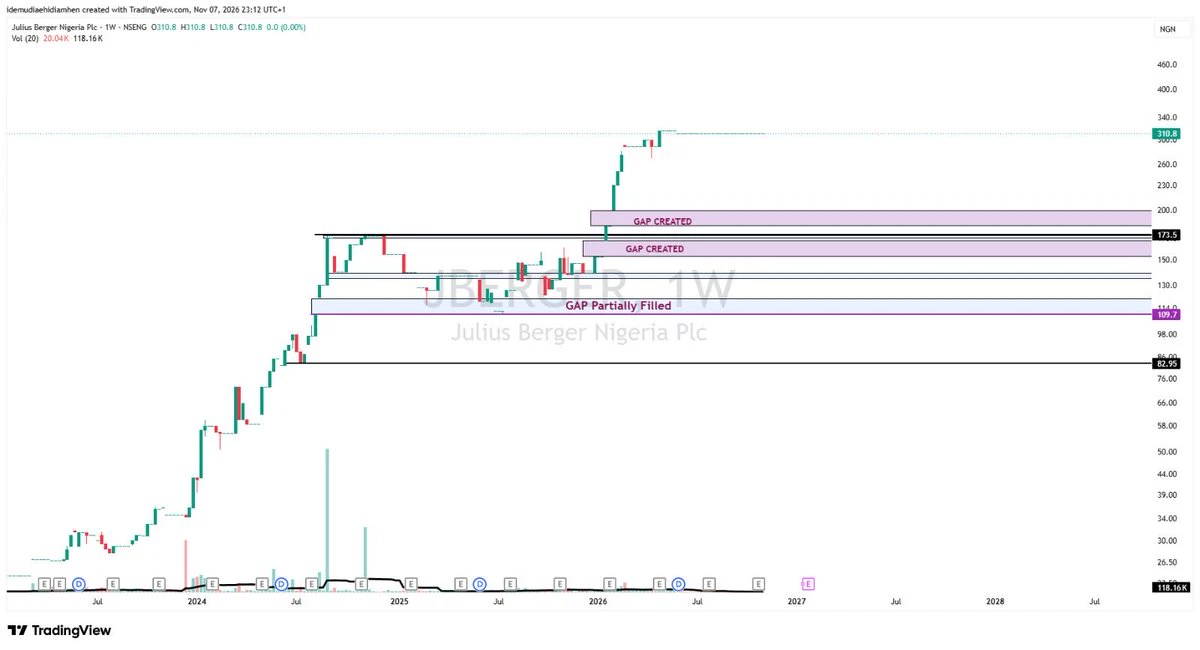
JBERGER
High time JBERGER undergoes some corrections.
Time to start paying attention to our former NAGASHEKU stock.
Hit an ATH of N315/share.
The only region I am watching is the gap of N183-N199.6 created in January 2026 which led to the ATH.
If I do not see that correction then I will not play this
#NFA
post-image
#CLARITYActCouldBeDelayedUntil2028 #ShareWeekly

CLARITY Act Uncertainty: Is Crypto Regulation Entering a New Phase, or Is the Industry Facing Another Two Years of Waiting?

The cryptocurrency industry has spent years asking regulators and lawmakers for one thing: clear rules. Investors, exchanges, blockchain developers, and institutional financial companies all need to understand which regulations apply to their activities. However, the latest political developments in the United States suggest that the wait for comprehensive crypto legislation could become longer than expected.

The possibi
CryptoChampion
#CLARITYActCouldBeDelayedUntil2028 #ShareWeekly

CLARITY Act Uncertainty: Is Crypto Regulation Entering a New Phase, or Is the Industry Facing Another Two Years of Waiting?

The cryptocurrency industry has spent years asking regulators and lawmakers for one thing: clear rules. Investors, exchanges, blockchain developers, and institutional financial companies all need to understand which regulations apply to their activities. However, the latest political developments in the United States suggest that the wait for comprehensive crypto legislation could become longer than expected.

The possibility that the CLARITY Act could be delayed until 2028 has introduced another layer of uncertainty into the digital asset market. But I believe investors should look beyond the headlines. A delay in one major legislative proposal does not automatically mean that the entire crypto industry will stop developing. In fact, regulatory progress may increasingly come through existing laws, agency decisions, court rulings, and individual financial-sector initiatives.

1. Why the CLARITY Act Matters to the Crypto Industry

The main purpose of the CLARITY Act is to establish a clearer regulatory boundary between digital assets classified as securities and those treated as commodities.

This distinction is extremely important because different regulatory authorities have different responsibilities. Uncertainty over jurisdiction can create additional compliance costs, discourage innovation, and make it difficult for crypto companies to introduce new products in the United States.

The bill passed the House of Representatives in July 2025 by 294 votes to 134, demonstrating considerable bipartisan support. However, its progress in the Senate has encountered significant political and policy disagreements.

The September 15, 2026 Senate vote reportedly failed to secure the 60 votes needed to advance, with 49 votes in favor and 50 against. Two major concerns were particularly important: ethical restrictions preventing public officials from personally benefiting from crypto-related investments and the potential impact of stablecoin yields on traditional banking deposits.

These disagreements demonstrate that crypto regulation is no longer simply a technical discussion. It has become part of a wider debate about financial stability, political accountability, and the future structure of the banking system.

2. Political Changes Could Extend the Waiting Period

The midterm election results have created additional uncertainty around the bill's future. With Democrats taking control of both chambers of Congress, the political environment surrounding crypto legislation could become considerably more challenging.

Several lawmakers who have expressed concerns about the proposed framework may gain influential committee positions. This could make negotiations more complicated and reduce the likelihood of quick legislative progress.

If the CLARITY Act remains stalled, 2028 could become a realistic political window for another serious attempt.

However, I would not interpret this possibility as a permanent rejection of crypto regulation. Political priorities can change, negotiations can produce compromises, and market developments can create pressure for lawmakers to revisit unresolved issues.

3. Why Bitcoin Did Not Experience a Major Market Collapse

One interesting development was the market's reaction to the political uncertainty.

Bitcoin reportedly declined to approximately $75,618 during election night before recovering toward the $78,000 region. This recovery suggests that investors had already considered the possibility of a difficult legislative outcome.

However, the market was not completely unaffected. Approximately $288 million in leveraged long positions were reportedly liquidated within 24 hours.

This is an important signal. It shows that even when long-term investors remain confident in the broader crypto market, excessive leverage can create significant short-term pressure.

My view is that traders should pay attention to spot demand, trading volume, funding rates, and liquidation levels rather than making decisions based entirely on political headlines.

4. Stablecoins Could Become the Biggest Regulatory Beneficiaries

While the CLARITY Act faces uncertainty, stablecoin regulation has a separate path forward through the GENIUS Act.

Its framework focuses on payment stablecoins, reserve requirements, and issuer responsibilities. Requiring appropriate liquid reserves can improve transparency and strengthen confidence in stablecoin operations.

This development could be particularly important for USDC and the wider stablecoin ecosystem.

Stablecoins are becoming essential infrastructure for crypto exchanges, international payments, digital settlements, and decentralized finance. Clearer rules could encourage traditional financial institutions to explore these services with greater confidence.

However, the debate surrounding stablecoin yields remains important. Banks are concerned that attractive returns on stablecoin products could encourage customers to move deposits away from traditional institutions.

This conflict between financial innovation and traditional banking interests will likely remain a major regulatory discussion.

5. Tokenization May Continue Without the CLARITY Act

Another sector worth watching is real-world asset tokenization.

The tokenization of stocks, bonds, funds, and other financial instruments could gradually connect traditional markets with blockchain infrastructure.

Institutions such as the Depository Trust & Clearing Corporation (DTCC) are working on tokenization-related infrastructure, demonstrating that financial-market modernization is not dependent on a single congressional bill.

For me, this is one of the most important developments in the current environment.

Even if comprehensive crypto legislation takes longer, financial institutions can continue developing compliant products under existing regulatory frameworks and applicable permissions.

This creates opportunities for blockchain networks, custody providers, exchanges, settlement platforms, and infrastructure developers.

6. What Should Crypto Investors Watch Next?

I believe the next phase of the market will require greater attention to regulatory developments rather than simply waiting for one legislative announcement.

Some important indicators include:

- Bitcoin (BTC): Institutional demand, ETF flows, liquidity, and reactions to macroeconomic developments.
- Ethereum (ETH): Tokenization activity, institutional adoption, and growth in blockchain settlement.
- Solana (SOL): Network activity, stablecoin expansion, and the development of tokenized financial products.
- GateToken (GT): Ecosystem development, exchange activity, platform adoption, and broader market sentiment.
- USDC: Regulatory compliance, reserve transparency, and adoption in payment and settlement infrastructure.

These assets have different risk profiles, and regulatory progress does not guarantee that their market prices will increase.

My Final Perspective

I do not see a potential CLARITY Act delay as the end of crypto's institutional adoption story. Instead, it could mark a transition from expecting one comprehensive legislative solution toward a more gradual regulatory environment shaped by individual agencies, existing laws, and financial institutions.

The short-term outlook may remain volatile, particularly for leveraged traders. However, stablecoins, tokenized securities, and blockchain-based settlement systems could continue developing even without immediate progress in Congress.

The most important question is no longer simply when the CLARITY Act will pass. It is whether the crypto industry can continue building reliable financial infrastructure while lawmakers debate the rules.

My strategy would be to avoid emotional decisions, control leverage, monitor regulatory developments, and focus on projects demonstrating real adoption rather than relying entirely on political expectations.

This is my market perspective, not financial advice.

#WCTCS9 #weeklyshare @Gate_Square #GateSquareTradingChallenge
  • 1
MARKET OVER VIEW
live-cover
LIVE72
$MET Strong bullish momentum, bulls target $0.3500…‼️Entry: $0.3230 – $0.3290Take profit 1: $0.338…||…Take profit 2: $0.348…||…Take profit 3: $0.360Stop loss: $0.3130
post-image
MET-0.33%
#StockTalkSeason #ShareWeekly

Stock Talk Season: Beyond the Price Chart – How I Identify a Stock With Real Investment Potential

In today's financial markets, finding a stock worth buying requires much more than following trending tickers, watching daily price movements, or copying popular investor opinions. A company may experience a strong rally and attract thousands of new investors, but that does not necessarily mean its business is becoming more valuable.

My approach is to look beyond short-term market excitement and understand the fundamentals, future growth opportunities, financial s
CryptoChampion
#StockTalkSeason #ShareWeekly

Stock Talk Season: Beyond the Price Chart – How I Identify a Stock With Real Investment Potential

In today's financial markets, finding a stock worth buying requires much more than following trending tickers, watching daily price movements, or copying popular investor opinions. A company may experience a strong rally and attract thousands of new investors, but that does not necessarily mean its business is becoming more valuable.

My approach is to look beyond short-term market excitement and understand the fundamentals, future growth opportunities, financial strength, competitive position, and risks behind every investment opportunity.

Here are the factors I believe deserve serious attention before making a stock investment decision.

1. Understand the Business Before Buying Its Shares

The first thing I consider is whether I understand how a company actually makes money. What products or services does it offer? Who are its customers? Does it have a sustainable business model?

A company with a recognizable brand, strong customer relationships, and a clear competitive advantage may have better long-term potential than a business whose popularity depends mainly on market speculation.

I also examine whether its industry is expanding or facing structural challenges.

2. Look for Sustainable Earnings Growth

Revenue growth can attract investors, but earnings growth tells us more about how effectively a company converts sales into profitability.

I pay attention to quarterly and annual earnings, operating expenses, profit margins, and management's future guidance.

For example, if revenue increases by 20% but operating costs rise even faster, the company's financial position may not be improving as much as the headline numbers suggest.

Consistent earnings growth supported by genuine demand is a stronger signal than temporary improvements.

3. Cash Flow and Debt Should Never Be Ignored

One important lesson in investing is that reported profits and available cash are not always the same thing.

Free cash flow helps investors understand whether a business generates sufficient cash after maintaining and expanding its operations.

I also examine the balance sheet, outstanding debt, interest expenses, and available liquidity.

A company with manageable debt and healthy cash reserves may have more flexibility during economic uncertainty, rising interest rates, or periods of weaker demand.

4. Evaluate Future Opportunities, Not Just Past Performance

Stock prices reflect expectations about the future. Therefore, historical financial performance is only one part of the investment decision.

I look at upcoming product launches, technological developments, international expansion, industry demand, and potential changes in consumer behavior.

For instance, artificial intelligence, semiconductor manufacturing, cloud computing, and automation are creating opportunities across several industries. However, not every company associated with these trends will become a long-term winner.

The important question is whether a company can turn an emerging opportunity into sustainable revenue and profits.

5. Valuation Determines Whether the Price Makes Sense

A fundamentally strong company can still be an expensive investment.

I compare its price-to-earnings ratio, price-to-sales ratio, earnings growth, and free cash flow with competitors and historical valuations.

I also consider how much future growth investors are already expecting.

When expectations become unrealistic, even positive earnings results may trigger a sell-off because the market was anticipating something even better.

For me, a reasonable entry price matters just as much as identifying a quality business.

6. Watch Market Sentiment and Technical Signals

Fundamental analysis helps identify what to buy, while technical analysis can help determine when to consider an entry.

I monitor important support and resistance levels, trading volume, moving averages, and momentum.

A breakout supported by strong volume can indicate improving demand, but I prefer waiting for confirmation rather than chasing a sudden price spike.

I also avoid treating every market correction as a buying opportunity. Sometimes falling prices reflect genuine deterioration in business fundamentals.

7. Recognize Warning Signs Before They Become Bigger Problems

There are several situations that make me reconsider an investment:

- Continuous earnings deterioration despite optimistic management statements.
- Increasing debt and weakening cash flow.
- Losing market share to stronger competitors.
- Frequent reductions in financial guidance.
- Excessive valuation compared with realistic growth expectations.
- Heavy dependence on a single product or customer.
- Unusual accounting practices or declining financial transparency.

Risk management is not about predicting every market movement. It is about avoiding situations where one incorrect decision can significantly damage a portfolio.

My Final Perspective

I believe successful stock investing is less about finding the next trending ticker and more about developing a disciplined decision-making process.

My preference is to identify companies with sustainable competitive advantages, consistent earnings, strong cash generation, manageable debt, and realistic valuations. I would rather wait for a convincing opportunity than enter a position simply because everyone else is buying.

Every investment should have a clear thesis, an expected time horizon, and a defined understanding of what could change that outlook. Diversification and position sizing are equally important because even the strongest investment thesis can turn out to be wrong.

Let's discuss:

When you evaluate a stock, what gets your attention first: strong earnings growth, an attractive valuation, future industry potential, or technical confirmation?

And what is the biggest red flag that makes you reject an otherwise attractive company?

This is my market perspective, not financial advice.

#Gate股票畅聊季 #WCTCS9 @Gate_Square #GateSquareTradingChallenge
  • 1
several rugs today from what CT believed as legit teams both on Solana and Robinhood chain
good onchain tokens seeing capitulation
max extraction season doing its thing
one of my favorite quotes from CT comes from Cobie:
"You act too quickly when you are trying to grow capital, and you act too slowly when you are trying to protect capital"
post-image
SOL-0.77%
  • 1
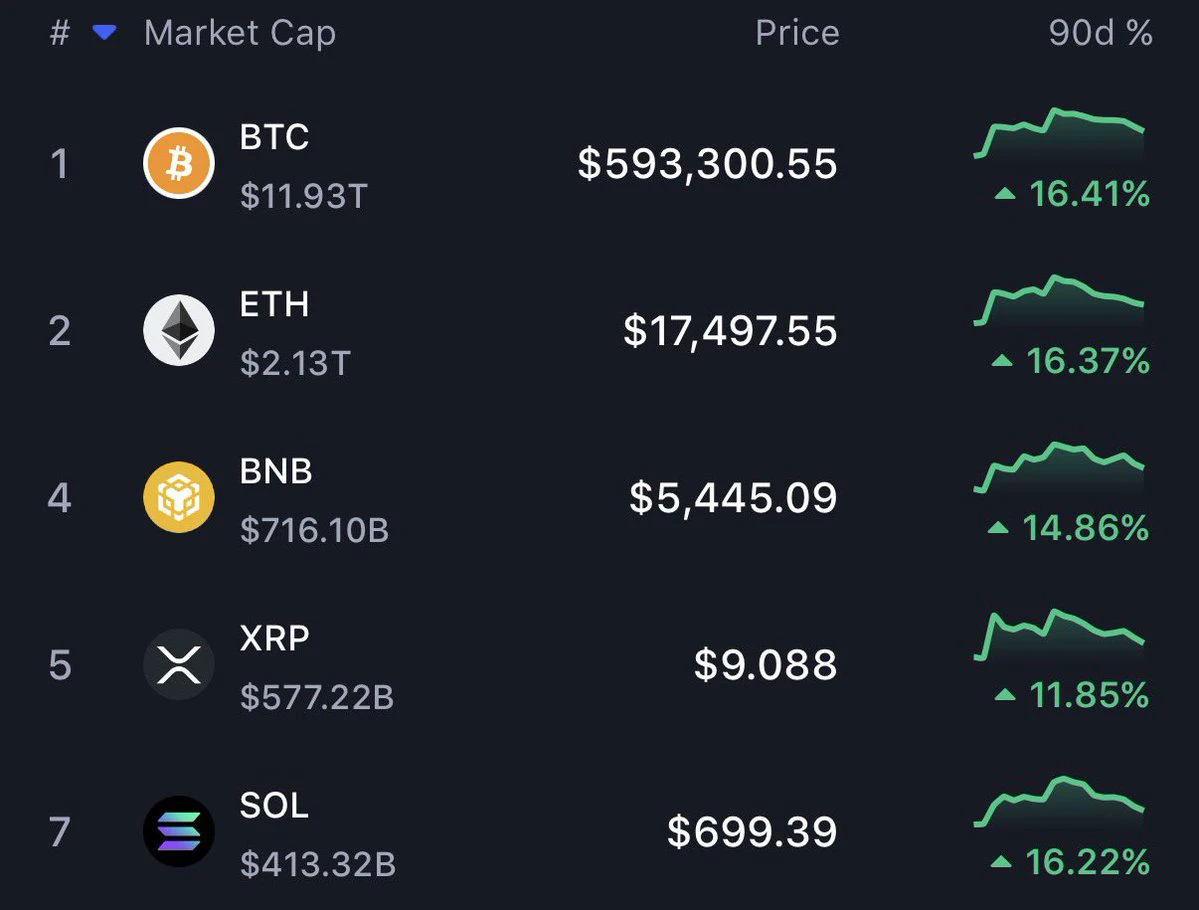
pov: crypto prices after republicans win in 2028
post-image
Load More

Join 40 M users in our growing community

⚡️ Join 40 M users in the crypto craze discussion

💬 Engage with your favorite top creators

👍 See what interests you

Trending Topics

USAIStocksHitHard

21.64k Views3.68k Discussing

U.S. stocks sold off sharply on Thursday, November 5 (UTC). The Nasdaq closed down around 5.5%, entering correction territory, while the Philadelphia Semiconductor Index plunged roughly 12%, with chip stocks including $NVDA and $AMD posting steep losses. Beyond profit-taking, investors are growing concerned about the pace of AI data center construction, capital spending, and future returns on investment. The key question now is whether the AI sector’s lofty growth expectations need to be repriced. Where do you think the next opportunities will emerge: chip stocks, tech giants, or other sectors?

USNonfarmPayrolls

36.29k Views4.35k Discussing

StakeOnLaunchpoolToShare450KVLX

10.87k Views834 Discussing

View More