










Square
Following
Hot
News
Notifications
Profile
Share your thoughts
placeholder
Article
🚀 $AIN Bullish rebound setup: AIN is attempting a strong rebound after holding the 0.09641 demand zone. Despite a sharp recent pullback, buyers have re-entered, pushing the price higher. Long rebound plan: Entry: 0.14482; Stop-loss: 0.09500; Take-profit 1: 0.16500; Take-profit 2: 0.19740; Take-profit 3: 0.22580. Invalidation: a break below 0.09500. The price is bouncing from recent lows, but the overall bearish structure has not fully reversed. If it successfully reclaims 0.16000, buying momentum may strengthen, pushing the price toward 0.17740 and higher. Let's go! $AIN
post-image
AIN+3.85%
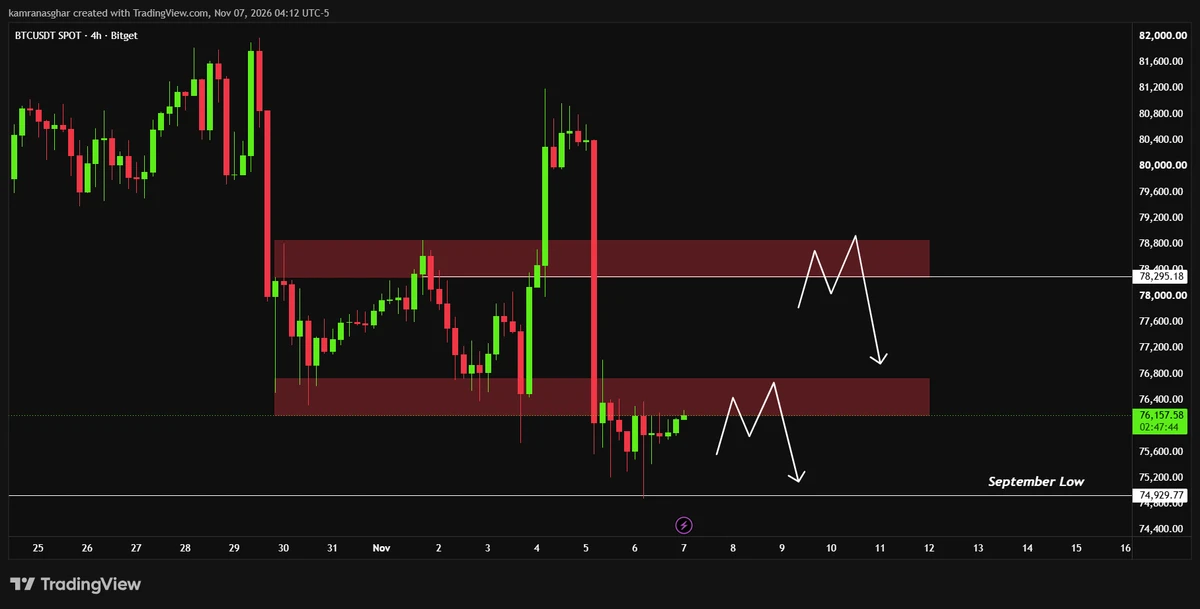
Market structure on bitcoin:native stays bearish unless we push back above $81.1k.
Key levels on my radar for potential shorts:
• $76.2k–$76.6k (retesting current breakdown)
• $78.6k (upper supply zone)
Breakout chasers setting late shorts could trigger a quick relief bounce, but the main magnet remains the unswept September low at $74.9k.
If we breakdown further, looking at $71k–$72k for the next bounce setup.
post-image
BTC-0.67%
Trenches
ZIG
Z
bade
b
ZIG
0x8c...1145
Market Cap
$.
Change
.
24h Vol
$.
Holders
.
BTC
B
bade
b
BTC
C5xp...pump
Market Cap
$.
Change
.
24h Vol
$.
Holders
.
Diamond
D
bade
b
Diamond
5VCE...pump
Market Cap
$.
Change
.
24h Vol
$.
Holders
.
STONK
S
bade
b
STONK
6GmA...UNgx
Market Cap
$.
Change
.
24h Vol
$.
Holders
.
DOGE
D
bade
b
DOGE
DoGE...fm7R
Market Cap
$.
Change
.
24h Vol
$.
Holders
.
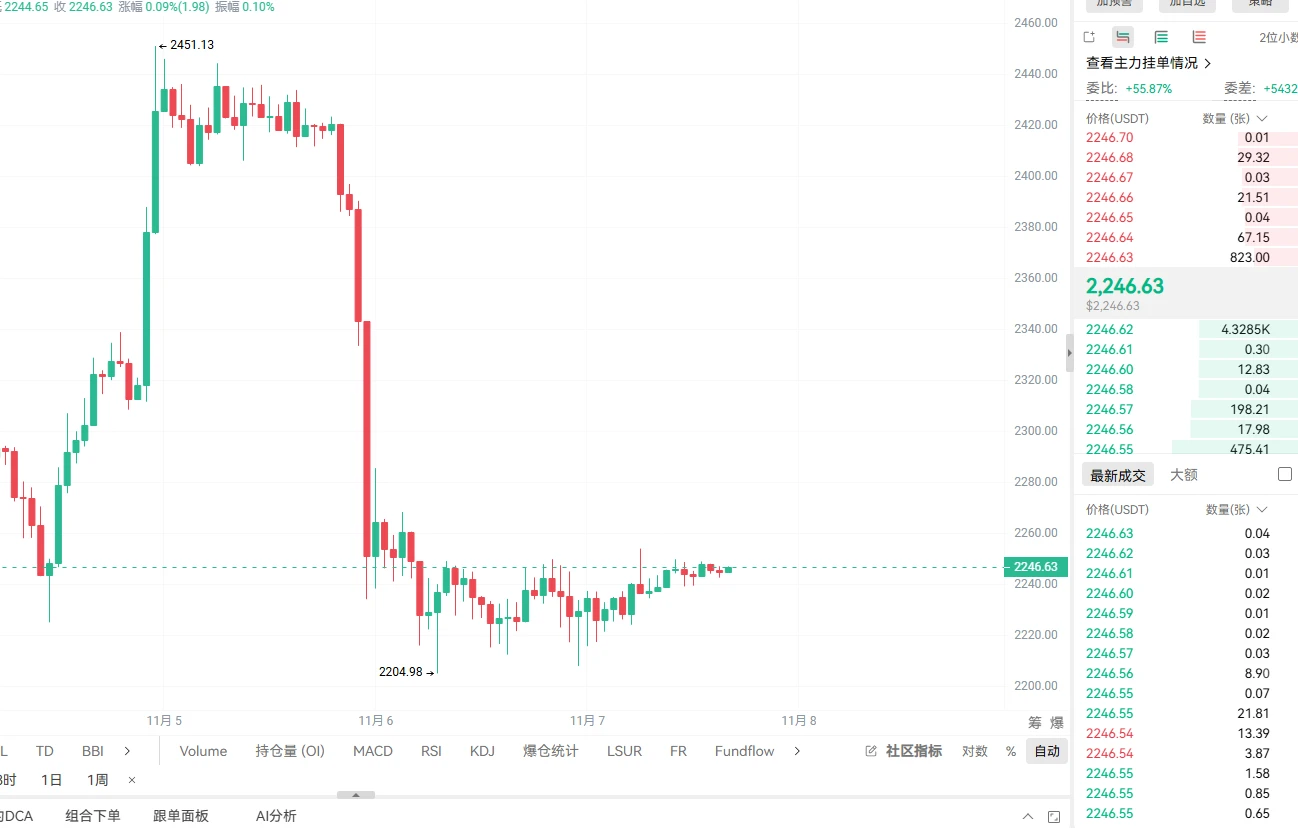
Add to the ETH long at the current price of 2245, stop-loss 2190, targets 2320/2400
After ETH dumped to 2208, today's low only reached 2215, and the low hasn't been broken again. BTC is up 0.4% today, while ETH is up 1%, finally not lagging behind.
Half of the previous position was already closed at 2350, with profits in the bag. At this level, Dachao is adding another long.
Set the stop-loss at 2190, below the 2208 wick from the day before yesterday. If it breaks again, it means the bottom didn't hold, so accept it and exit.
First watch 2320; before the dump the day before yesterday, it was h
post-image
ETH-1.26%
BTC-0.67%
Why does a larger position make it easier to lose money even when the market moves in the right direction?
In cryptocurrency trading, many people believe that as long as they have correctly read the market, they should make their position as large as possible. After all, with the same price movement, a larger position means more profit.
But reality is often much harsher: sometimes, even when you correctly predict the market’s direction, an oversized position forces you to exit before the market really takes off.
Why does this happen?
First, the larger your position, the more sensitive your acc
post-image
Good Morning winners, the plays are out there just gotta find them in a harder market 🫡
post-image
Zec market update
live-cover
LIVE2,943
How to Find Support and Resistance Levels: Practical Ways to Identify Key BTC Buying and Selling Zones
In BTC trading, many people study candlestick charts every day but often run into the same question: At what price might resistance appear? At what price might support emerge?
In fact, support and resistance levels are essential tools in technical analysis.
First, look at historical highs and lows. If BTC has repeatedly stopped falling and rebounded in a certain price area, that area may form support. Conversely, if the price has repeatedly pulled back after rising to a certain level, that ar
post-image
BTC-0.67%
Why Do Altcoins Rise Faster but Fall More Sharply?
Many crypto investors have experienced this:
When a bull market arrives, BTC rises 10%, while some altcoins can climb 30% or even 50%. Watching other coins surge quickly, it’s easy to feel that simply buying altcoins can bring higher returns than Bitcoin.
But when the market reverses, things can be very different.
Why do altcoins often rise faster and fall harder?
First, altcoins generally have less market depth than Bitcoin. When large amounts of capital flow in, the limited sell orders can be quickly absorbed, causing prices to rise rapidly.
post-image
BTC-0.67%
How to Use RSI and MACD? The 3 Mistakes Beginners Make Most Often
In crypto trading, many people study RSI and MACD every day, hoping to use technical indicators to find the best entry points for BTC's rise or fall.
But oddly, the more indicators some people watch, the more money they seem to lose.
What's going wrong?
First, many beginners treat overbought and oversold RSI readings as direct buy or sell signals. An RSI above 70 doesn't mean the price will immediately fall; below 30 doesn't mean the market will definitely rebound. In a strong trend, RSI can remain in overbought or oversold terr
post-image
BTC-0.67%
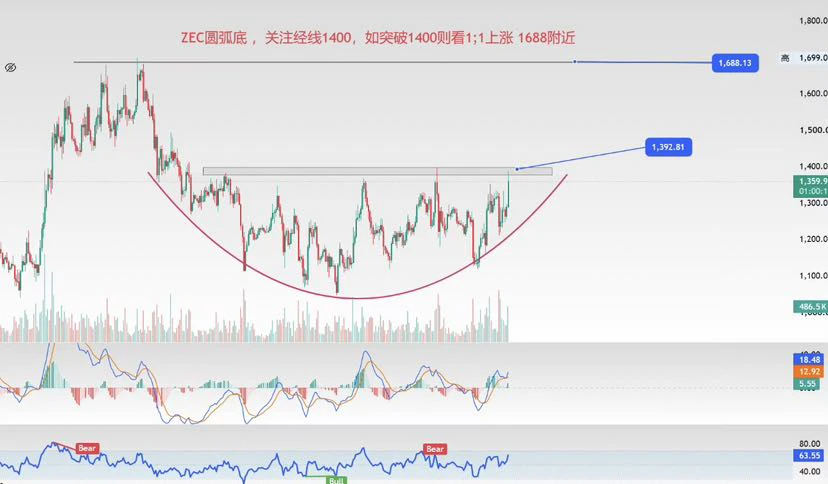
ZEC, long-term investors may want to take a look.
post-image
ZEC+1.16%
From 81,196 down to 74,888—a $6,308 drop. For anyone long with 10x leverage, that drop was enough to liquidate you twice.

The structure is laid out here, one level at a time:

Downside: 74,888 is the low of this move. Below that is the daily MA200 at 73,200, the last major-cycle threshold. A break below it would mean a genuine change in trend.

Upside: The daily MA100 at 77,200 is the first hurdle; above that, 77,500–78,000 is a double resistance zone formed by the 4H MA20 and MA50. Until price reclaims 77,200, any bounce is just a bounce.

Moving averages: The daily MA5, MA10, MA20, and MA50
post-image
BTC-0.65%
Check out this liquidity provider 🥃
post-image
#美股AI板块遭遇重挫 #每周来晒 The latest drop in US AI stocks was a deleveraging stampede, but the AI trade has entered a deeper correction. Next, cash-flow-stable tech giants look more attractive, while chip stocks need to wait for valuations and return expectations to be repriced.

Why it’s more than just deleveraging
The trigger was policy: Democrats won both chambers, raising market concerns that data center approvals and power-use regulation will tighten.
AI investment returns are being reassessed: five cloud providers spent $556.9 billion on capital expenditures in the first nine months, exceeding
post-image
ThisIsTranslateContent:
#美股AI板块遭遇重挫 #每周来晒 This latest sell-off in U.S. AI stocks was a deleveraging-driven rout, but the AI trade has entered a deeper correction. From here, tech giants with stable cash flows look more attractive, while chip stocks need to be repriced based on valuations and expected returns.

Why it’s about more than deleveraging
The trigger was political: Democrats won both chambers, raising market concerns about tighter data center permitting and power-use regulations.
AI investment returns are being reassessed: Five cloud providers spent $556.9 billion on capital expenditures in the first nine months, exceeding their operating cash flow.
Positions were too crowded: Funds were all-in on AI infrastructure, and when the catalyst changed, concentrated liquidations by quantitative funds amplified the losses. How chip stocks, tech giants, and defensive sectors compare
Chip stocks: They fell the hardest, with the Philadelphia Semiconductor Index down 12.25% in one day, wiping out NVIDIA’s year-to-date gains. Demand has not peaked, but valuations need to come down first.
Tech giants: Microsoft fell much less because its free cash flow remains positive. Companies like this are better able to withstand rising financing costs.
Defensive sectors: Utilities and consumer staples fell the least, while funds also flowed into U.S. Treasuries and gold. But all eleven S&P 500 sectors fell this time, so defensive assets can only lose less and are unlikely to rise against the trend.

When to consider chip stocks
Restrictions on data center construction have not actually taken effect.
Cloud providers’ capital expenditures continue to grow and can be converted into profits.
The Philadelphia Semiconductor Index’s valuation is no longer being pushed lower, with its forward P/E now down to around 13x. For now, favor giants with strong cash flows like Microsoft; chip stocks may be worth considering once they stabilize.

repost-content-media
MSFT-0.95%
  • 3
Both longs and shorts are being liquidated at the same time—what exactly is happening in the market?
In crypto futures trading, one phenomenon confuses many people: if the market is clearly rising, why are some traders still getting liquidated? Even stranger, sometimes the price surges rapidly and then suddenly falls, resulting in mass liquidations on both sides.
What exactly is behind this?
First, understand that liquidations do not happen in only one direction. When prices rise rapidly, highly leveraged short sellers may be forcibly closed out due to insufficient margin; if prices then fall
post-image
Layout: Bitcoin, Ethereum, Dogecoin
live-cover
LIVE1,176
  • 1
#晒出我的持仓收益 Feels like bro is about to make a big move.
post-image
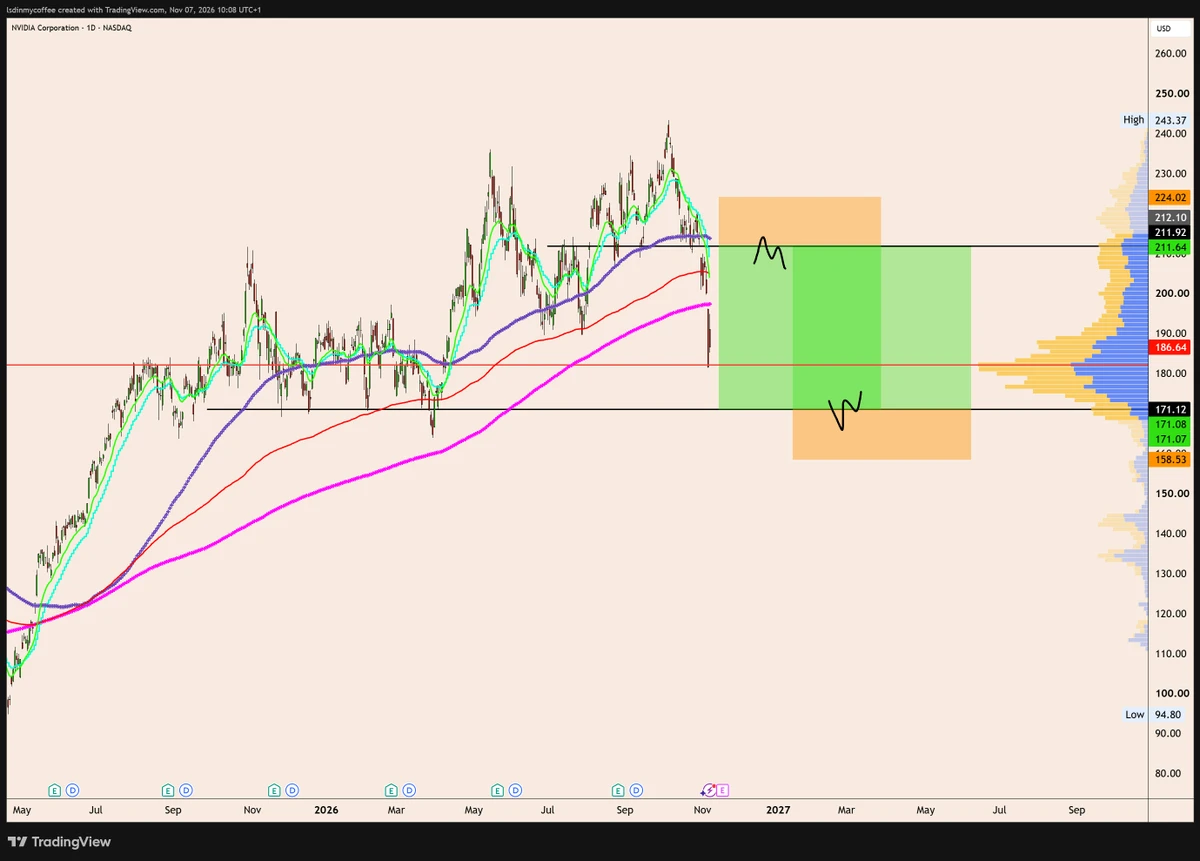
$NVDA
High volatility from earnings lately. No FOMC in Nov, so NVDA earnings is the next big volatility event for this month
Unless there's a major surprise, earnings data don't matter much, game theory / how the market is positioned matters more
Whatever setup comes first!
post-image
NVDA+2.80%
280,000 is just enough to max out an average family's finances🥹🥹
post-image
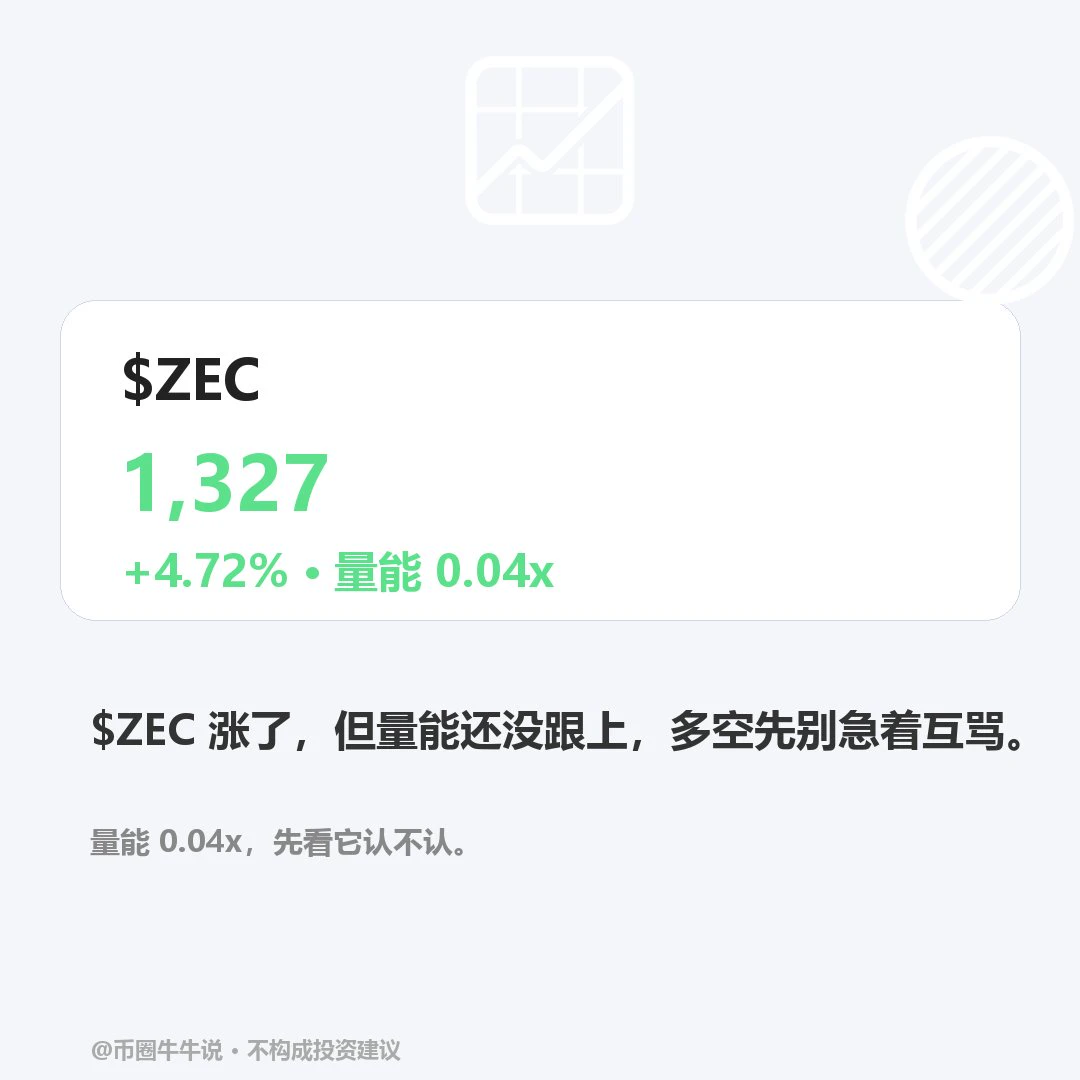
$ZEC Currently at 1326.86, up 4.72% over 24H, with a range of 1256.95–1387.89. The 1H outlook is bullish (RSI 44.51, price above EMA20 at 1323.74); the 4H outlook is bullish (RSI 52.37, price above EMA20 at 1295.63), with a volume ratio of 0.04. A sustained hold above resistance at 1387.89 could signal continuation, while a break below support at 1257.03 would weaken the short-term outlook. In the review, verify that 1387.89 holds and that 1257.03 is reclaimed. With volume at only 0.04x, a single move across a level needs confirmation from market participation; failure to reclaim would invalid
post-image
ZEC+1.16%
#ShareWeekly #SEC #CFTC #WCTCS9
SEC and CFTC: Shaping the Future of Crypto Regulation
Introduction
Regulation continues to play a major role in shaping the future of cryptocurrency and financial markets. Two important institutions in the United States, the Securities and Exchange Commission (SEC) and the Commodity Futures Trading Commission (CFTC), are increasingly important in discussions about digital assets, investor protection, and market transparency.
As cryptocurrency adoption grows, the relationship between regulatory clarity and innovation has become one of the most important topics f
BTC-0.67%
Load More

Join 40 M users in our growing community

⚡️ Join 40 M users in the crypto craze discussion

💬 Engage with your favorite top creators

👍 See what interests you

Trending Topics

USAIStocksHitHard

16.92k Views3.65k Discussing

U.S. stocks sold off sharply on Thursday, November 5 (UTC). The Nasdaq closed down around 5.5%, entering correction territory, while the Philadelphia Semiconductor Index plunged roughly 12%, with chip stocks including $NVDA and $AMD posting steep losses. Beyond profit-taking, investors are growing concerned about the pace of AI data center construction, capital spending, and future returns on investment. The key question now is whether the AI sector’s lofty growth expectations need to be repriced. Where do you think the next opportunities will emerge: chip stocks, tech giants, or other sectors?

USNonfarmPayrolls

25.21k Views4.28k Discussing

StakeOnLaunchpoolToShare450KVLX

3.76k Views786 Discussing

View More