


Square
Following
Hot
News
Notifications
Profile
Share your thoughts
placeholder
Article
#GateOctoberTransparencyReport #ShareWeekly
Gate’s October Transparency Report stands as another powerful demonstration of how the platform continues to set the standard for security, growth, and genuine innovation in the global digital finance space. The numbers speak with clarity and strength. Total reserves climbed to an impressive $8.688 billion, representing a solid 5.7 percent increase from the prior reporting period. Against customer net assets of $7.332 billion, the overall reserve ratio reached 118.49 percent, improving from the previous 117.26 percent and remaining comfortably above
BTC-0.67%
ETH-1.26%
USD1+0.00%
GUSD+0.00%
USDC+0.01%
Nothing in the world belongs to you,
Only your body is your own,
Live well and be kind to yourself.
post-image
Trenches
mihao
m
bade
b
mihao
4Cxj...pump
Market Cap
$.
Change
.
24h Vol
$.
Holders
.
IDOL
I
bade
b
IDOL
0x3b...ab07
Market Cap
$.
Change
.
24h Vol
$.
Holders
.
FOOD
F
bade
b
FOOD
FTu5...pump
Market Cap
$.
Change
.
24h Vol
$.
Holders
.
AGT
A
bade
b
AGT
0x5d...e274
Market Cap
$.
Change
.
24h Vol
$.
Holders
.
NIO
N
bade
b
NIO
7SL2...pump
Market Cap
$.
Change
.
24h Vol
$.
Holders
.
Saturday, November 14.

May God's love be with us this morning and be our strength throughout the day. May He bless our paths, our projects, and every person who is part of our story. May we have the energy to carry out our plans, patience when faced with the unexpected, and faith to keep going. Have an excellent morning and a Saturday full of blessings! ✨
$XRP
XRP-1.15%
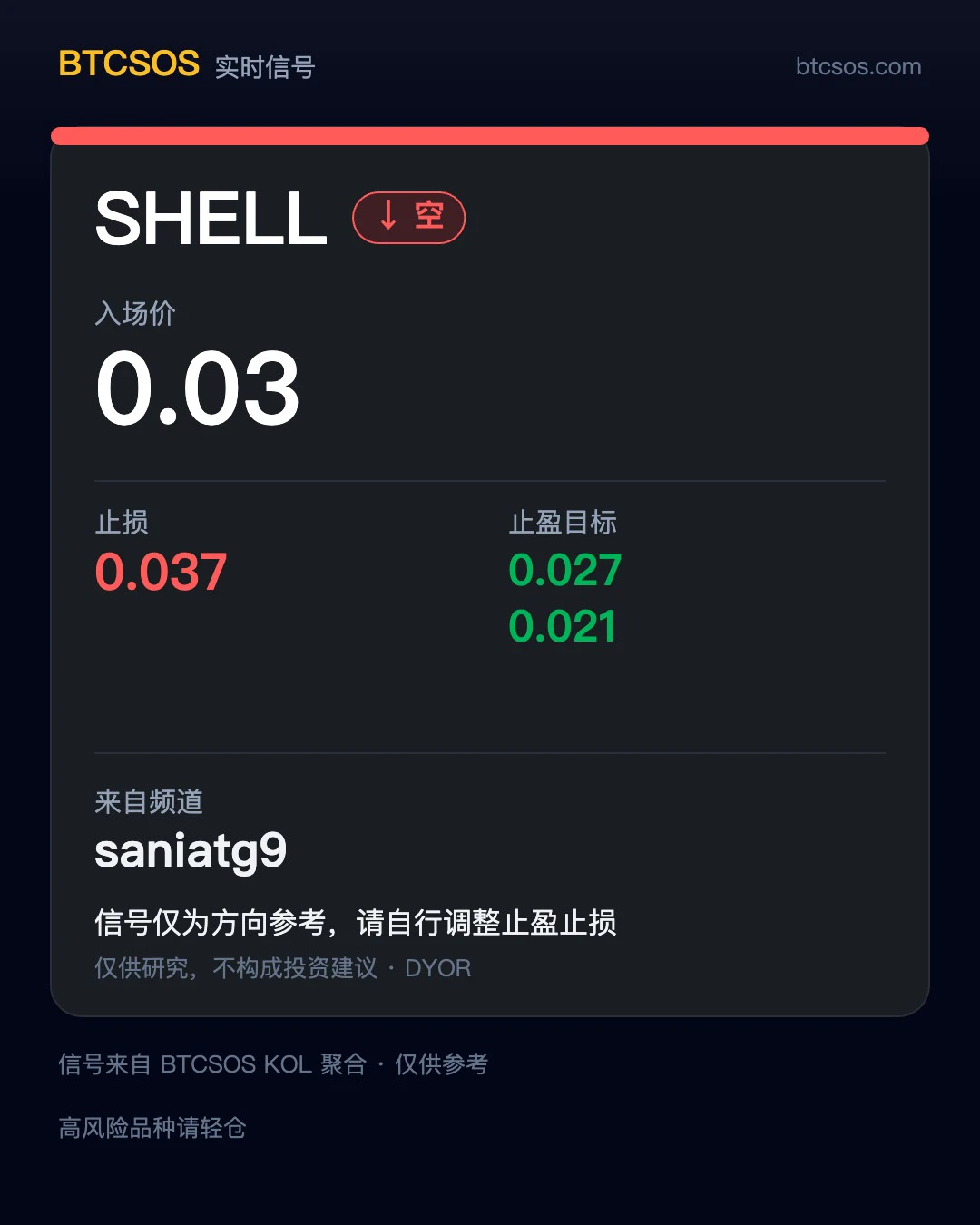
📡 Signal Card | Reposted from KOL channel saniatg9
Asset: $SHELL Short entry: 0.03 Target: 0.027 / 0.021 Stop loss: 0.037 Time: Not specified
Speaking of which, I reposted saniatg9's $ZEC trade earlier today, and now here's another 😂
I just repost it as is; all 5 key details are above. Whether you understand it, follow it, and how large a position you take are up to you. I don't control the market; you control your wallet. 💊
Shared as a personal record, not investment advice. #特斯拉与SpaceX合并谈判取得进展,最快12月宣布 SPCX -3.33% xSPCX -3.28%
post-image
SHELL-2.16%
ZEC+1.16%
TSLA-1.86%
SPCX+0.78%
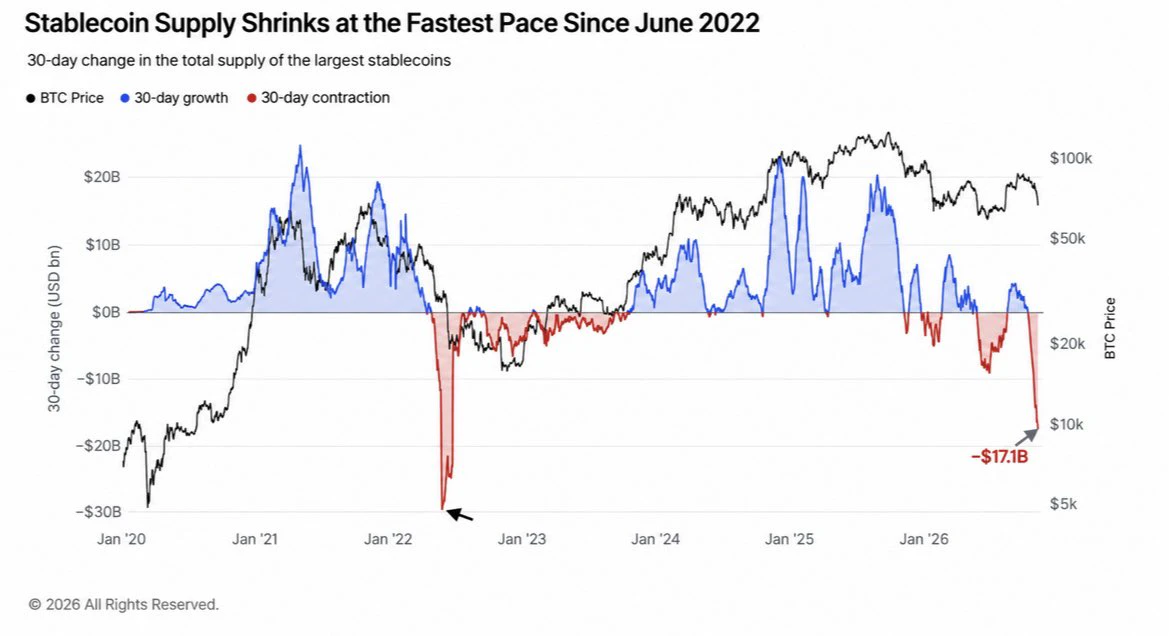
💵 Stablecoin supply drops $17 BILLION in one month, marking its steepest decline since 2022! ⚠️
🐻Liquidity is leaving crypto, weakening buying power for $BTC and altcoins. ₿🔻
post-image
BTC-0.67%
#Gate直通IPO第三期Anthropic Is Anthropic’s $1 trillion market cap worth it?

A $1.4 trillion market cap isn’t outrageous, but it’s only justifiable with difficulty. It’s based on rapidly growing revenue, not profits already earned at this scale.

Why it has some support
· Revenue is growing rapidly: Annualized revenue was about $81 billion at the end of October, up about 47% quarter over quarter in Q3.
· The revenue multiple isn’t high: $1.4 trillion divided by annualized revenue is about 17x, compared with about 60x for SpaceX.
· Strong institutional demand: The IPO was about six times oversubscri
post-image
ThisIsTranslateContent:
#Gate直通IPO第三期Anthropic Is Anthropic’s $1.4 trillion market cap worth it?
A $1.4 trillion market cap isn’t exactly outrageous, but it’s only justifiable on a stretch. It’s supported by fast revenue growth, not profits already earned at that scale.
Why it has some support
· Revenue is growing rapidly: Annualized revenue was about $81 billion at the end of October, up about 47% quarter over quarter in Q3.
· The revenue multiple isn’t high: $1.4 trillion divided by annualized revenue is about 17x, compared with about 60x for SpaceX.
· Institutional demand is strong: The IPO was about six times oversubscribed, with most shares bought by large institutions.
· Higher than its May private valuation: Its post-money valuation in May was about $965 billion; on a fully diluted basis, it rose about 46% in six months.
Where the case falls short
· Growth has slowed significantly: Quarter-over-quarter growth was about 144% in Q2, falling to about 47% in Q3[5].
· Compute bills are largely locked in: Purchase and lease commitments total about $895.4 billion, most of which must be paid “whether used or not.”
· Revenue could shrink at any time: 80% of revenue is usage-based, so customers can use less; compute costs, however, are contractually committed in advance.
· Profits are not yet stable: Q3 operating loss was $567 million, and the full-year net loss is about $23.3 billion.
· Shareholders have no say: The public will never hold majority voting rights, so the valuation deserves a governance discount.
What the market thinks
· Morningstar: Considers it undervalued, with a fair value of about $1.7 trillion, though its reasonable range spans from $500 billion to $3 trillion.
· HSBC: Considers around $1 trillion a more comfortable valuation.
· Huxiu: After discounting for profitability, revenue attribution, and voting rights, values it at $1.11 trillion–$1.48 trillion.
So, for $1.4 trillion to hold up, revenue must continue growing rapidly and gradually spread out the compute bills. If growth slows significantly, the valuation could easily be revised downward.

repost-content-media
SPCX-0.63%
  • 3
Whales Moves in Sync!
live-cover
LIVE1,974
#黄仁勋辞职 #每周来晒 Old Huang passes the baton—does NVIDIA still dare to bet on tomorrow?

People often say the world keeps turning without anyone. It does keep turning, but it matters how. In politics, that saying usually proves true. Look at presidents and prime ministers: they change so often you can't even remember their names, and none seems much better than another. But industry is different. The head of an outstanding company needs the nerve to stake everything on the future. That's "entrepreneurial spirit."
Jensen Huang is a tough character who has this spirit in his bones. That's why there's
post-image
ThisIsTranslateContent:
#黄仁勋辞职 #每周来晒 Old Huang hands over the reins: Will Nvidia still dare to bet on tomorrow?
People often say the world keeps turning no matter who leaves. It does keep turning, but how it turns matters. In politics, this saying usually holds true. Presidents and prime ministers come and go so often you can barely remember their names, and none seems much better than the others. But industry is different: the heads of outstanding companies need the nerve to stake their fortunes on the future. That's the "entrepreneurial spirit."
Jensen Huang is a tough character who has that spirit in his bones. That's why there's a saying online: once Huang hands over the reins, Nvidia will sooner or later become mediocre. It's not that he's without precedent or peer; it's just incredibly hard to find another person like him. At least within Nvidia, there are no signs of one yet.
Some people push back by citing Apple: Jobs has been gone for years, and Apple is still doing just fine, with its stock hitting record highs time and again.
By the time Jobs left, Apple was already a finely tuned money-printing machine that had been running for more than a decade. The iPhone had fixed the definition of a smartphone, the iOS ecosystem had become a closed loop, the App Store collected its 30% toll year after year, and Cook had whipped the supply chain into shape.
What he left Cook was a product kingdom that could run on autopilot—there was no need to bet on tomorrow every day; as long as the wheel wasn't turned the wrong way, momentum could keep it going for years. The Cook era was essentially about "protecting the legacy and selling phones well." Add a Dynamic Island or switch to a titanium frame now and then, and consumers would still line up to pay. When Cook hands over to Ternus, what he passes on is still a closed-loop ecosystem: consumers care about the brand and their habits, not who the CEO is.
Nvidia is nothing like that. What Huang leaves behind isn't a self-driving car, but a game of Texas Hold'em where every move requires a decision and every hand raises the stakes. GPU iterations have been compressed to around two years, rivals are closing in at every turn, TSMC capacity must be secured, HBM locked down, export controls navigated, and custom requirements from cloud providers met. B2B customers have no sentimentality: if performance slips a notch today, tomorrow's orders are gone. In this situation, the new CEO's job isn't to "hold the line" but to "bet"—on architecture, capacity commitments, and geopolitical maneuvering.
Huang spent 33 years betting on CUDA, betting on the AI computing-power wave, and betting on securing TSMC CoWoS capacity. If his successor is a career executive skilled at balancing the books, they'll most likely turn "daring to bet" into "playing it safe": the short-term financial reports may look fine, but in the long run Nvidia will retreat from rule-maker to rule-follower.
The succession challenges at Apple and Nvidia aren't even in the same league. One is about holding on to an empire; the other is about opening up new worlds—and people who open up new worlds can't be picked from HR's candidate pool.
Let's not be too categorical.
The power of momentum shouldn't be underestimated either.
The real variable is strategic boldness at the top. At many past life-or-death moments, Huang made the call himself: daring to pour huge sums into a new architecture, daring to lock in priority TSMC capacity in advance, and daring to work the political and industry circles to tightly bind GPUs to the AI wave.
One lucky hit is luck; repeatedly catching the wave is skill. That kind of decisiveness is hard to replicate inside the company. A conservative successor can keep the business going; the hard part is developing the guts to make big bets and redefine the field. Preserving what exists is easy; pioneering is hard.
How can we tell whether Nvidia is sliding toward mediocrity? Three visible signposts.
1. The boldness of capital expenditure.
Huang's boldest move was to sign long-term capacity commitments before the market caught on—CoWoS, HBM, advanced packaging, all bets placed two or three years ahead. If his successor starts "flexibly reallocating capital expenditure," postponing non-urgent capacity, and replacing major capacity commitments with on-demand purchases, translated, that means: they no longer dare to bet. A CEO focused on preserving the status quo will always first think about optimizing cash flow, not capturing the future.
2. Are there still "projects no one else understands" in the architecture roadmap?
Huang spent more than a decade nurturing CUDA despite shareholders' criticism. If the R&D roadmap becomes increasingly "explainable" and increasingly tailored to current customer tastes, that should actually raise concerns—no one is betting on obscure fields that nobody understands anymore. When a genuine frontier breakthrough is approved, someone will inevitably say, "This maniac is burning money again."
3. How it weathers the next darkest hour.
When the crypto mining boom faded, revenue plunged, and the data center business had yet to take off. Each time, Huang proactively pivoted instead of waiting for the market to provide an answer. When the next downturn comes, will the successor raise the stakes against the tide or passively retrench? Will they nurture long-term projects or cut "non-core" areas to protect profits? That reaction will determine whether Nvidia is driving manually or sliding downhill.
These three signposts boil down to one question: is it still "betting on tomorrow," or has it switched to "calculating what's right in front of it"?
As long as it is willing to pour money into Capex, nurture obscure fields, and bet against the tide during downturns, Nvidia is not yet mediocre. Conversely, the three signposts don't carry equal weight: Capex is the baseline, obscure fields are the backbone, and betting against the tide is the ultimate test.
If the first two are gone, it means management no longer has any offensive line in motion, and the computing-power machine is beginning to degenerate from "defining the field" to "following the field."
So the conclusion isn't "it will collapse as soon as he leaves," but that there are two possible paths: on the momentum of CUDA, Nvidia's core business can remain stable for many years; but continuing to stand at the forefront of the technology wave and consistently surprise the market will be a lot harder.
In short, a gradual slide into mediocrity is a possibility that cannot be ignored.
What Jobs left Apple was a self-sustaining product kingdom. What Huang leaves Nvidia is a high-stakes game still running at full speed, with decisions required at every turn. No matter how deep the moat, it cannot withstand a long-term absence at the top of a leader willing to bet. Nvidia's most valuable asset isn't its chips; it's the person willing to stake everything on the unknown. That kind of person doesn't show up in financial reports or KPIs, but without him, Nvidia's stock-price ceiling will be a lot lower.
Change the dealer and the game goes on. But with the top poker player gone, who will still dare to go all in?$NVDA
repost-content-media
AAPL+0.41%
TSM-1.70%
NVDA-1.92%
  • 2
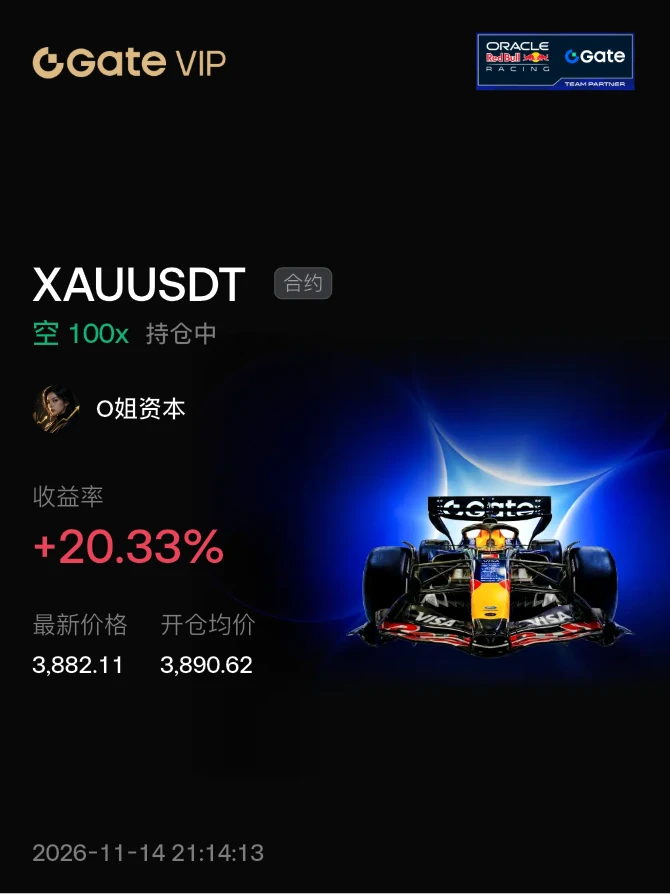
#晒出我的持仓收益 The gold position I opened last night, XAUUSDT, is such a poser—the most pretentious short instrument, a short on the monthly timeframe, acting bullish every day,
post-image
XAU+0.38%
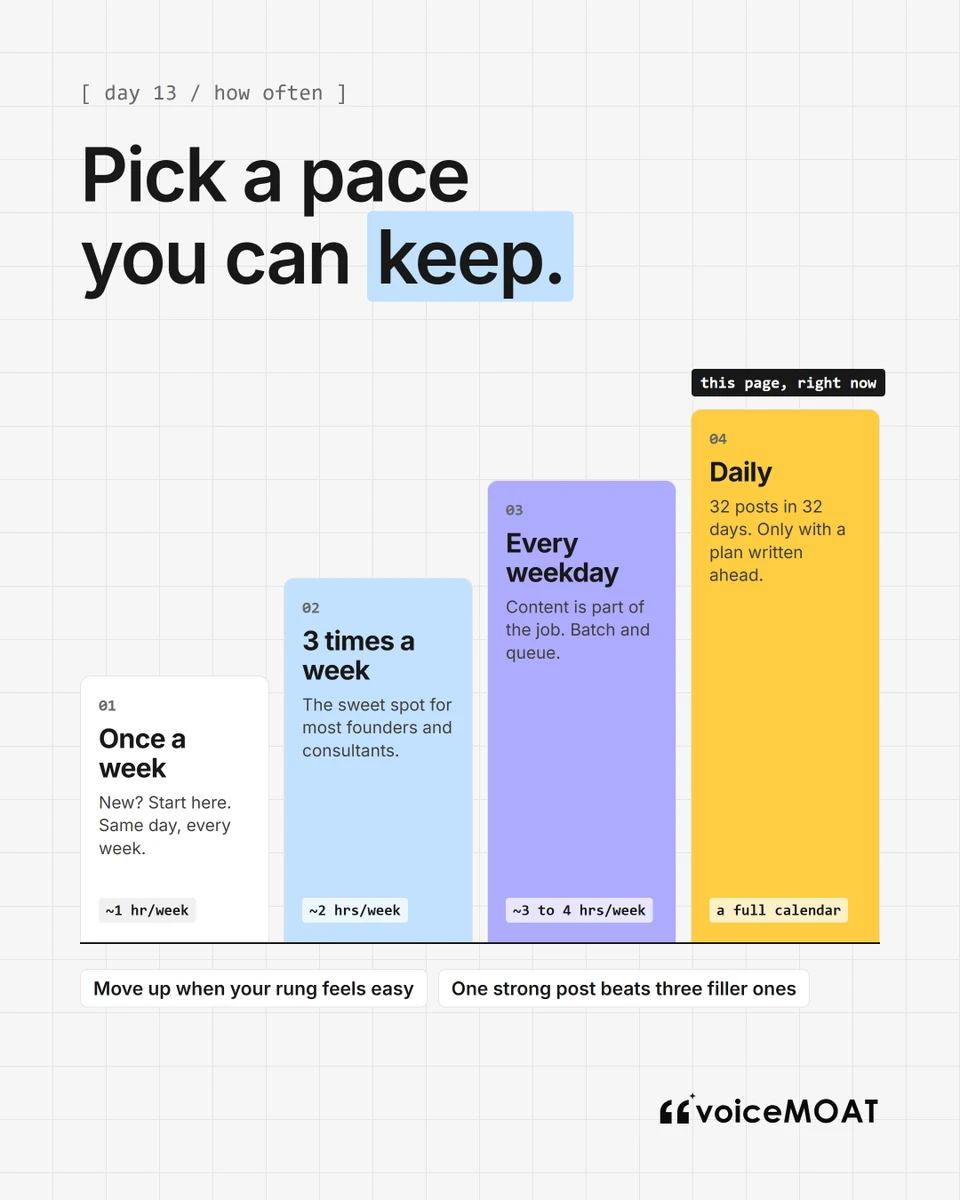
How often should you post on LinkedIn?
The honest answer: as often as you can keep doing it for 90 days.
Look at the creators people follow most and you'll see everything. Some post several times a day. Some post twice a week. Both grow.
What they have in common isn't the number. It's that the number doesn't change.
A ladder to pick from:
1. Once a week
New? Start here. One good post, same day every week.
Roughly 1 hour a week.
2. 3 times a week
The sweet spot for most founders and consultants. Enough to stay in the feed, not so much that quality drops.
Roughly 2 hours a week, in one sitting.
post-image
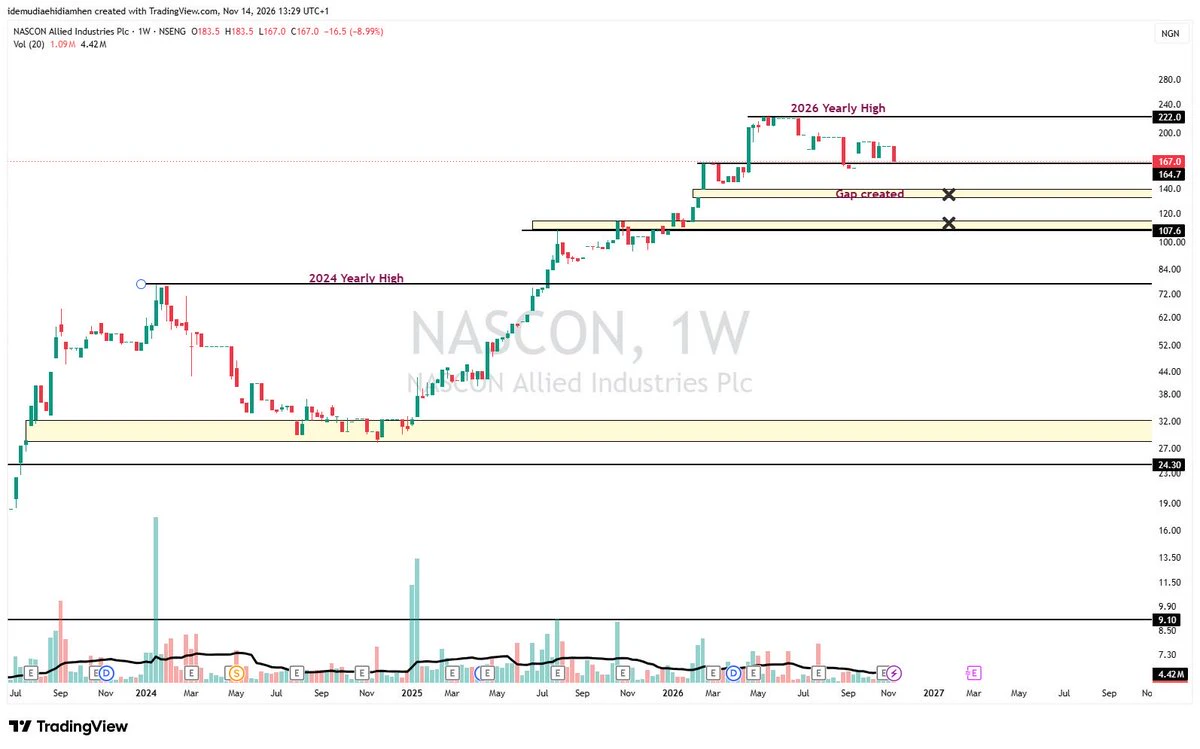
NASCON
The Bulls must not lose the N164.7/share support zone, or I am looking at two regions:
1. The gap closure of N132-N140 per share, which happened in February 2026.
and
2. The demand zone of N108.7-N114.5 per share, which I doubt we might play, but it is the market, and we are open to any form of possibilities
#NFA
post-image
📡 Signal Card Express | Source channel: saniatg9
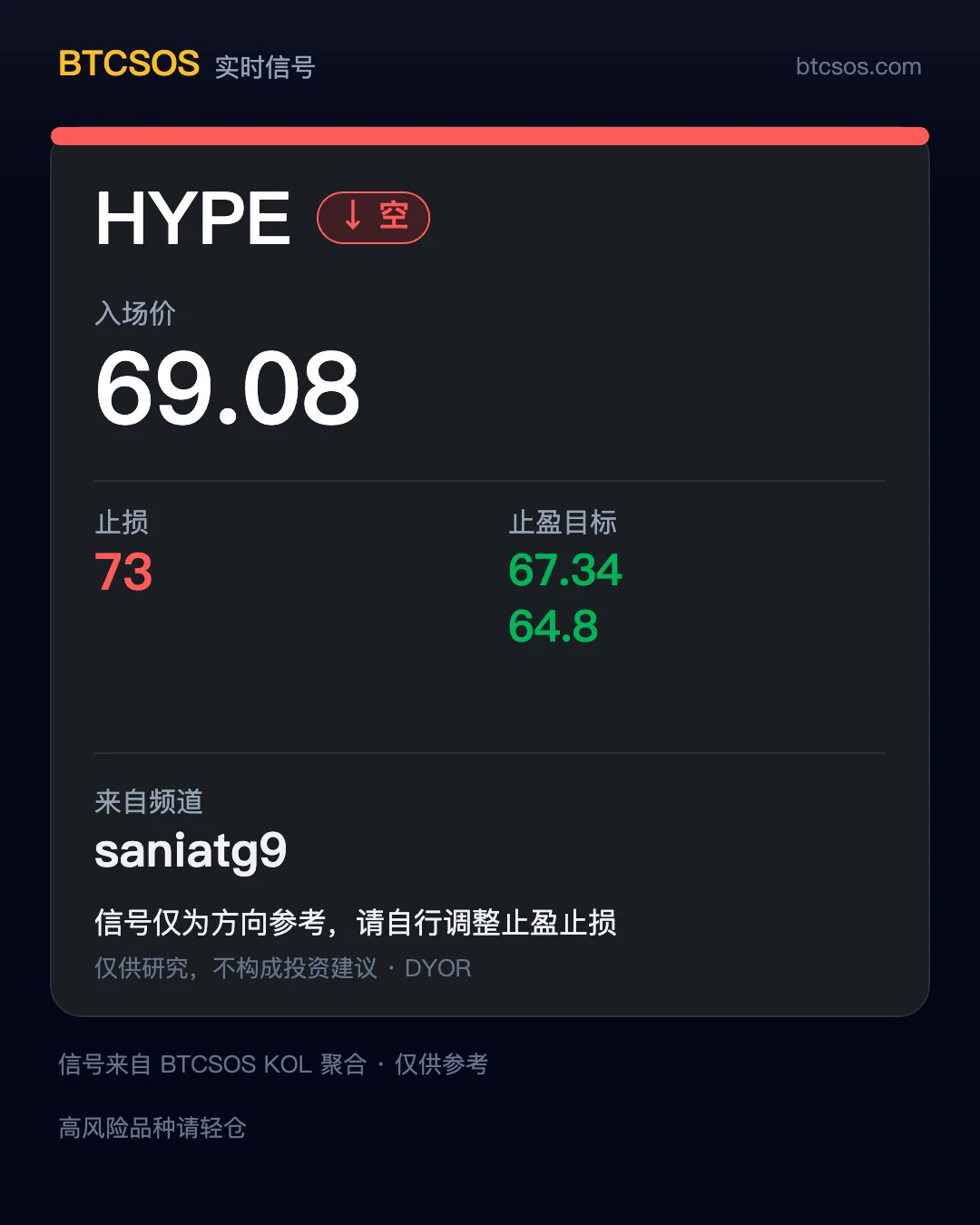
Asset: $HYPE Short entry: 69.08 Target: 67.34 / 64.8 Stop-loss: 73
Speaking of which, on 11-14 sis just reposted this person's $ZEC trade, and here it is again—quite productive 😂
As usual, sis just reposts the signals; we won't make up anything the original signal doesn't say. Whether to follow and how much to allocate is up to you. You can look to others for market views, but your wallet should follow your own judgment.
For personal record-sharing only; not investment advice. #Trump downplays the need for an agreement with Iran, Strait of H
post-image
HYPE+0.33%
ZEC+1.16%
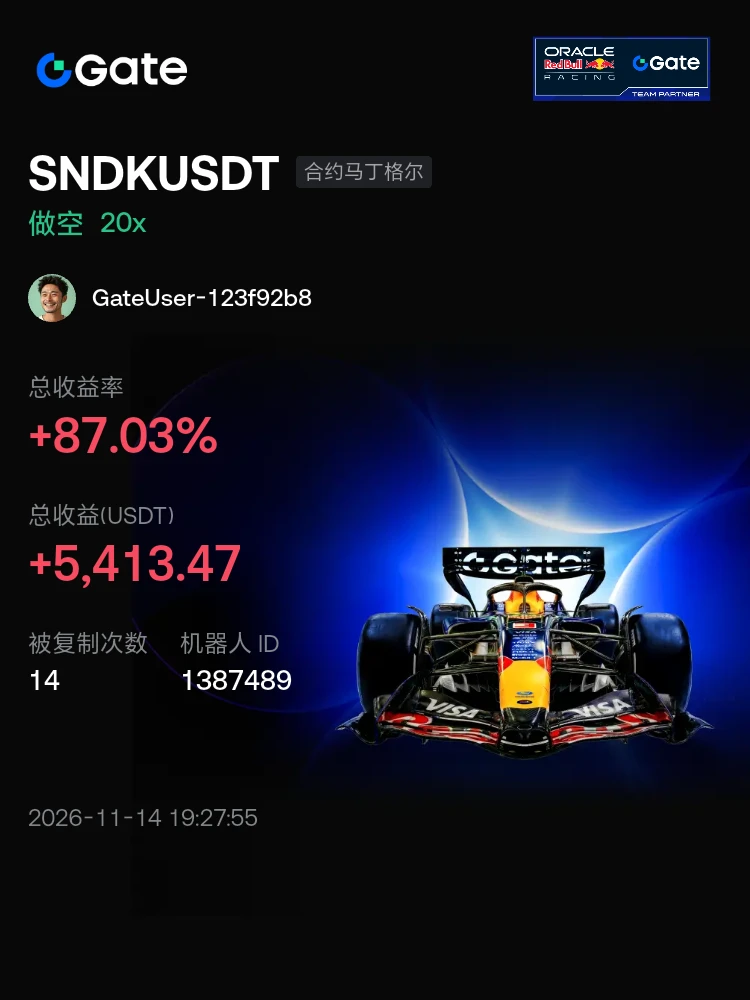
#交易机器人 I'm using a SNDKUSDT contract Martingale bot on Gate—join me in copy trading
post-image
$BTW I bet it won't rebound to 0.75 tomorrow. If I'm wrong, I'll livestream myself washing my hair upside down. I just cut my losses and got out: entered at 0.72, bailed at 0.64, a solid -11%. Look at the data: down 23% in 24h, low of 0.6316, and 73M in trading volume as it got hammered on heavy volume—this isn't a shakeout, it's panic selling. My mistake: I got greedy and didn't take profit at 0.95 that day, fantasizing it would break 1. Lesson: if it breaks the previous low on heavy volume, get out. Don't fall in love with the candlesticks. Trade plan: don't buy the dip now; wait for it to s
BTW-7.42%
  • 6
  • 2
Nixon Turned the Dollar Into Paper—Why Bitcoin Is Safer Than Gold #bitcoin #trading #crypto #indicators #cryptocurrency
Description:
One decree from Nixon, and the dollar became mere paper 💵 What should you buy today: gold or Bitcoin?
post-image
BTC-0.67%
Oh no!
A massive U.S. oil tanker hits a sightseeing boat near shore, causing it to capsize
Passengers jump into the water to save themselves
I'm quite something—I turned 1.5U into over 200U, and now, staring at the 100U left in my account, I'm lost in thought…$AKE
post-image
AKE+6.07%
btc update
live-cover
LIVE1,879
Call me crazy, but I think $ETH is just here:
ETH-1.26%
Load More

Join 40 M users in our growing community

⚡️ Join 40 M users in the crypto craze discussion

💬 Engage with your favorite top creators

👍 See what interests you

Trending Topics

GateIPOAccessAnthropic

312.3K Views2.8K Discussing

Gate IPO Access Phase 3 features Anthropic (ANT), with USDT subscription interest starting from 100 USDT. Successful allocations will be delivered as real shares to Gate Stock Accounts. Indicative price: $70–$78/share Subscription: Nov 12–17 (UTC+8) Allocation is not guaranteed. Please manage risk accordingly.

Dr.HanOxfordUnionSpeech

147.8K Views606 Discussing

USOctoberPPIBelowExpectations

463.7K Views1.5K Discussing

View More