Square
Following
Hot
News
Notifications
Profile
Share your thoughts
placeholder
Article
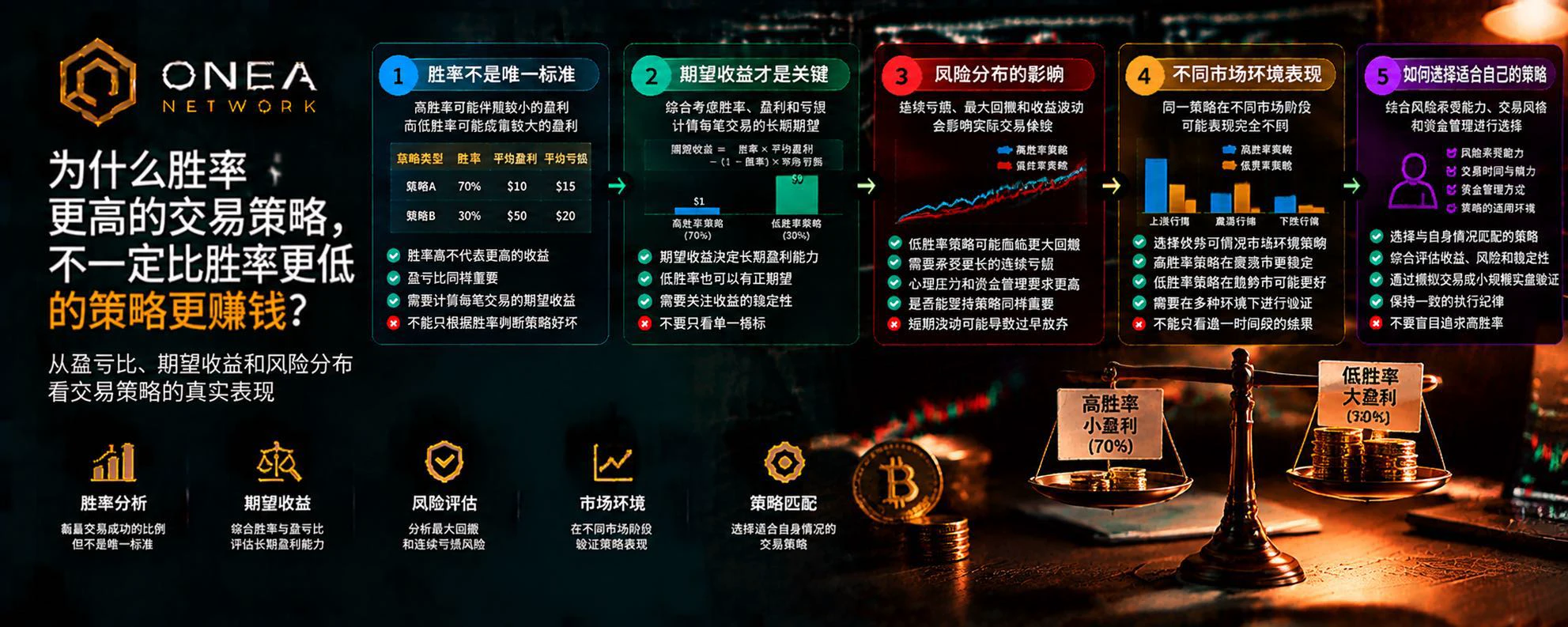
Why Doesn't a Higher-Win-Rate Trading Strategy Necessarily Make More Money Than a Lower-Win-Rate Strategy?

Many traders have an intuition: the higher the win rate, the stronger the trading ability, and the more money they should make.

But in real trading, this judgment is often wrong.

Some strategies win seven out of ten trades, yet the account keeps shrinking; others win only three or four out of ten trades, but may perform better over the long term.

Why?

Because long-term trading performance is determined not only by the win rate, but also by average profits, average losses, trading cos
post-image
Why can backtest performance be great while real trading turns out completely different?

A trading strategy performing well on historical data does not mean it will achieve the same results in future markets.

Backtesting can help us evaluate trading rules, but it relies on historical data, model assumptions, and execution conditions. When these conditions differ from those in real markets, backtest returns may not be reproducible.

What factors are worth paying attention to?

1️⃣ Data quality determines how reliable a backtest is

Historical data may contain gaps, abnormal prices, or timesta
post-image
Trenches
mihao
m
bade
b
mihao
4Cxj...pump
Market Cap
$.
Change
.
24h Vol
$.
Holders
.
AGT
A
bade
b
AGT
0x5d...e274
Market Cap
$.
Change
.
24h Vol
$.
Holders
.
PIEVERSE
P
bade
b
PIEVERSE
0x0e...25a9
Market Cap
$.
Change
.
24h Vol
$.
Holders
.
HOLD
H
bade
b
HOLD
4iJ7...pump
Market Cap
$.
Change
.
24h Vol
$.
Holders
.
X
X
bade
b
X
9VZe...pump
Market Cap
$.
Change
.
24h Vol
$.
Holders
.
That startled me—I thought the place was haunted.
post-image
Wallet Security Guide: What Details Really Matter from Creation to Everyday Use?

In the Web3 world, many people spend time researching tokens and looking for projects, but tend to overlook a more fundamental question:

If something goes wrong with your wallet, are you able to protect your assets?

Wallet security is not just about keeping your seed phrase safe. Wallet type, device security, contract approvals, phishing, and everyday operating habits can all affect the security of digital assets.

Effective wallet security does not depend on a single feature, but on building a complete set of
post-image
Guys, this ARIA thing—Big Chao is seriously impressed.

In mid-October, it was only 0.036. Now it’s at 0.24, more than 6x in less than a month, and it’s up another 20% today.
We’ve shorted this coin twice. The first time, we shorted at 0.078 and made a profit. The second time, we saw it had risen way too much and shorted again, but it got pumped straight through our stop-loss.

At the time, we even checked the on-chain data because we thought the market maker was pumping it and it would eventually come crashing down.
But they don’t play by the rules—they just kept pushing it up, past 0.1, 0.15
ARIA+22.03%
MSFT-2.15%
  • 2
Why can a trading strategy perform excellently in historical backtests yet gradually fail in real markets?

A beautiful return curve does not necessarily mean a reliable trading strategy.

In the cryptocurrency market, many traders use historical data to test entry signals, take-profit and stop-loss levels, and position-sizing parameters. But once a strategy is deployed in the market, its win rate may fall, drawdowns may grow, or it may even lose money over the long term.

So where does the problem lie?

I. Historical data is not the same as future markets

Backtesting can only show how a stra
post-image
A truly seasoned trader is not someone who gets it right every time, but someone who has a set of rules to control losses even when they get it wrong.

After entering the cryptocurrency market, many people keep looking for more accurate indicators, better entry signals, and higher win rates.

But one question is often overlooked:

If your judgments are wrong several times in a row, can your account withstand it?

A complete trading risk management system should include more than just stop-losses. It should cover the entire process, from trade planning to execution and review.

Step 1: Define y
post-image
CRYPTO MARKET UPDATES
live-cover
LIVE2,039
Why can some people follow the same trading signals consistently over the long term, while others keep changing their plans at critical moments?

Many traders are not lacking indicators or trading strategies.

They know where to enter, where to place a stop-loss, and how to manage position size.

But once they actually enter the market, everything changes.

When they are in profit, they worry about giving it back and close their positions early.

When they are losing, they refuse to admit their judgment was wrong and widen their stop-loss without authorization.

When the market rises, they fea
post-image
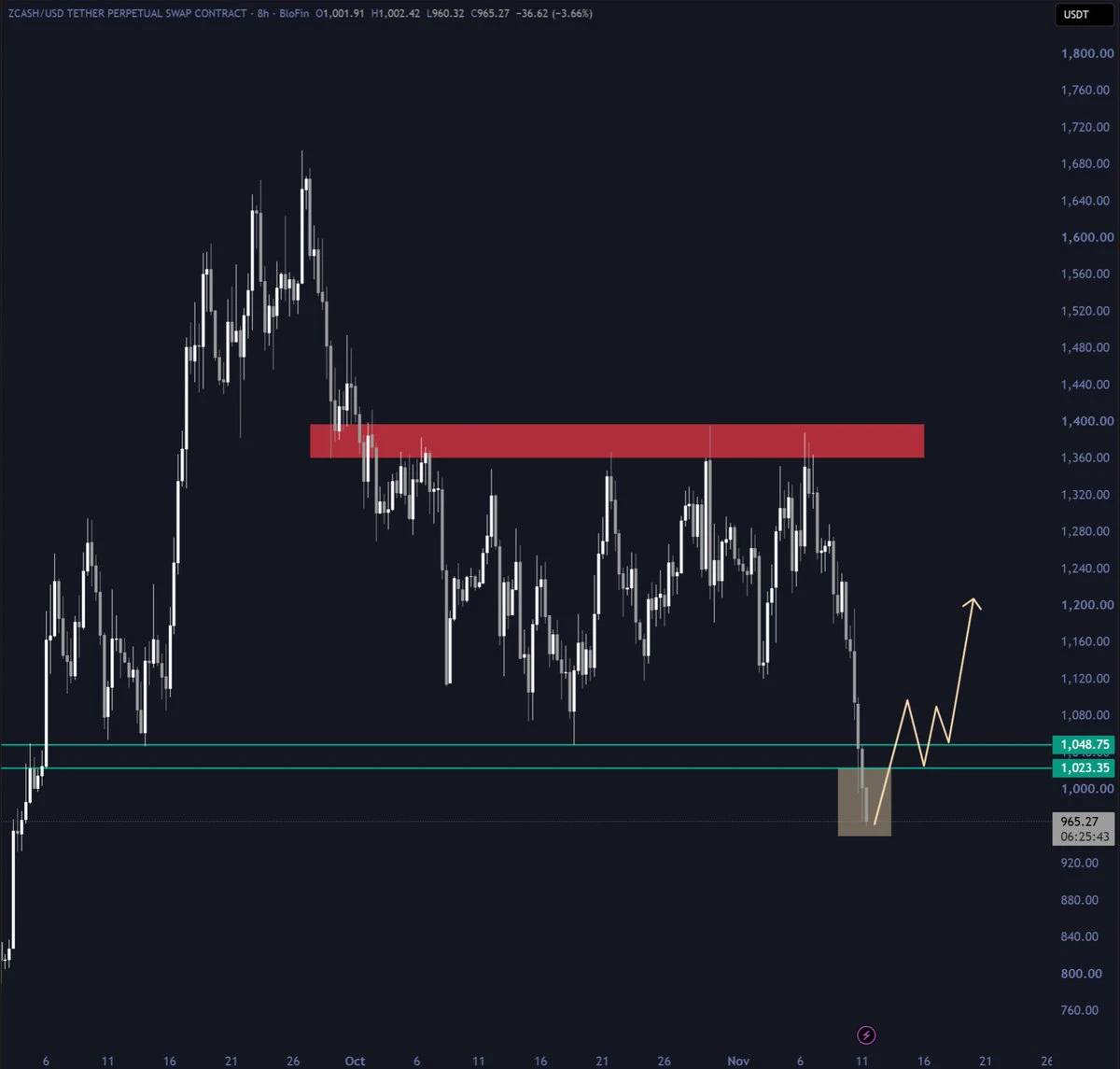
$ZEC dropped below $1,000 as expected
Now, it's time for a bounce
post-image
ZEC+1.16%
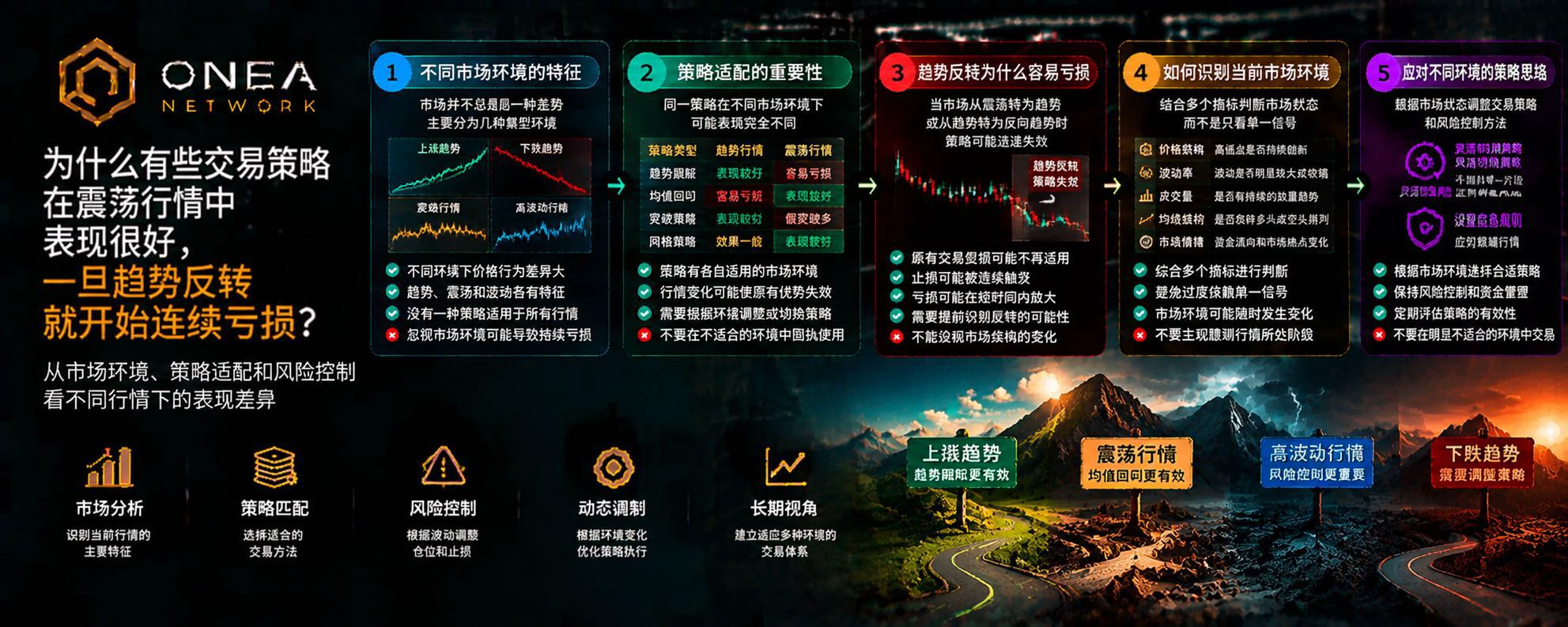
Why do some trading strategies perform well in sideways markets, but start suffering consecutive losses once the trend reverses?

Have you ever encountered this situation?

A strategy performed well over the past few months. The backtest curve was smooth, and the win rate looked impressive.

But one day, the market began to change.

The buy signals that had previously worked started failing one after another, stop-losses became more frequent, and the account drawdown continued to widen.

You start doubting the indicators, adjusting parameters, and even considering replacing the strategy entire
post-image
[NEW STREAMER] BTC MARKET UPDATE
live-cover
LIVE1,219
Yesterday, the monthly CPI came in hotter than expected.
Headline rose 0.4% on the month against the 0.3% the market expected, and core came in at 0.3% against 0.2%.
I believe the market reaction is also muted, considering the yearly data wasn’t released due to the 2025 government shutdown.
So it could’ve been much worse, considering the last PPI spiked to a 4-year high.
The odds of a hike at the December meeting have now jumped to around 87%.
In fact, the debate is no longer hike or hold, but hike once or more, as there’s a 12% chance of a 50 bps hike.
Not looking good for $BTC , as higher rat
BTC-0.67%
$CLO I chased in too aggressively at 0.044. It’s now at 0.0351, and I’m sitting on a 20% unrealized loss. I’ll show my position before I say anything.
Two days ago, 24h volume had just climbed above 6M, and the price surged to 0.0457. I saw the order book stacked with buy orders and was afraid of missing out, so I jumped in at 0.044 with 30% of my position. Then last night, volume dropped to 4.9M, and the price slid all the way to 0.0345, down 19.73% over 24h, completely shattering my faith in that bullish candle. My mindset while holding was textbook: at 0.041 I wanted to add, at 0.038 I want
  • 5
  • 2
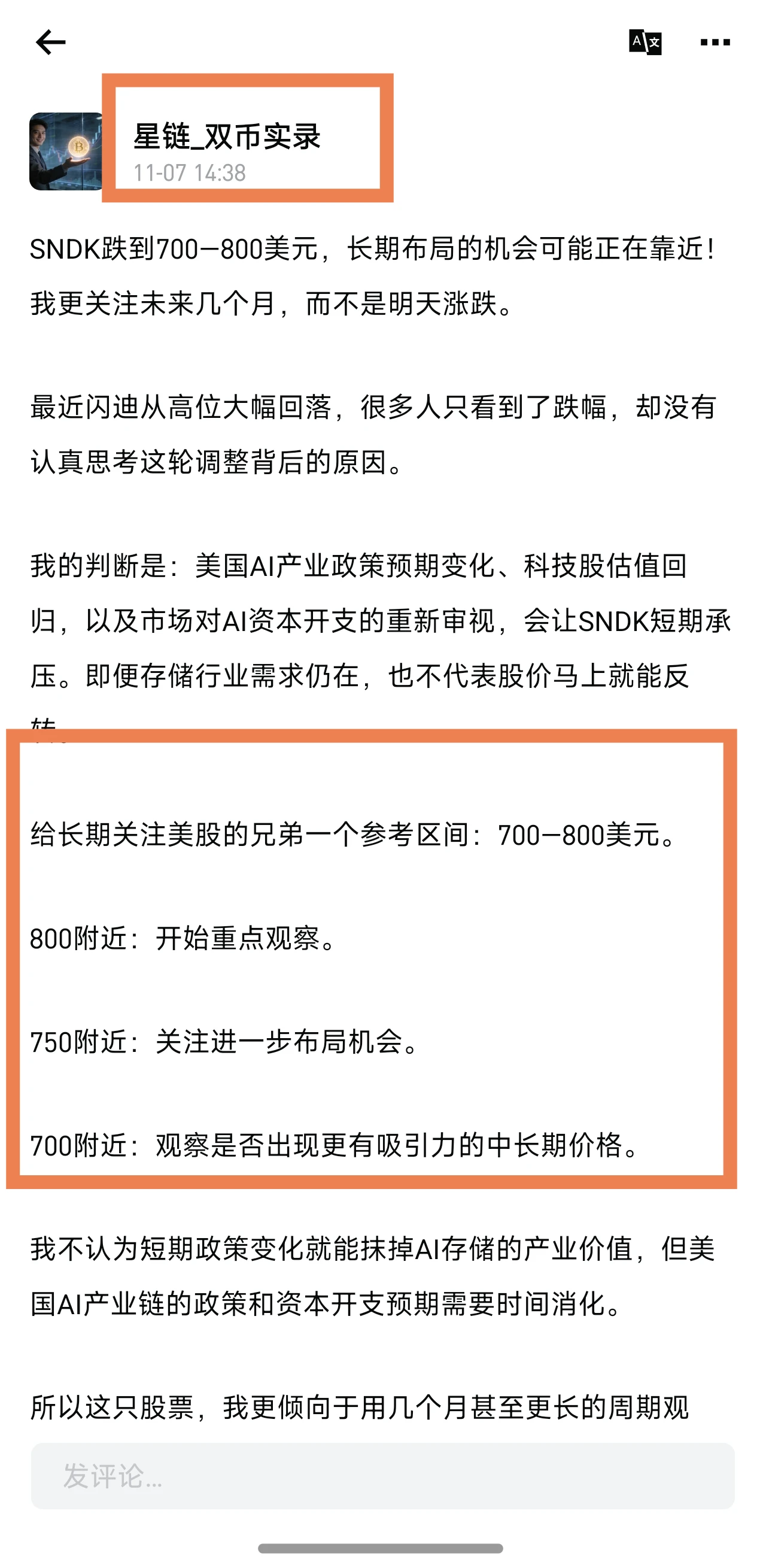
SNDK and SK Hynix continue to rise, and the bullish view around 800 remains unchanged.

The reasoning behind being bullish on Sandisk around 800 was actually simple: after the previous correction, the price had gradually returned to a relatively normal range, so chasing the decline further offered poor risk-reward.

Over the past two days, South Korean markets have started buying storage-related stocks in force again, and SNDK and SK Hynix have continued to strengthen.

This rally is still ongoing. My previous view has not changed for now, with a near-term target still around 1000.

But one th
post-image
BTC-0.65%
ETH-1.23%
In BTC trading, many people see a long upper wick on a candlestick and assume the price is about to fall. But does a long upper wick really mean a trend reversal?

Not necessarily.

A long upper wick usually indicates that the price encountered selling pressure as it rose. Buyers tried to push the price higher, but faced selling at higher levels, and the price eventually pulled back from its peak.

There are three key aspects to consider when assessing a long upper wick.

First, where it appears. If a long upper wick appears near a significant previous resistance level, it may indicate strong
post-image
BTC-0.67%
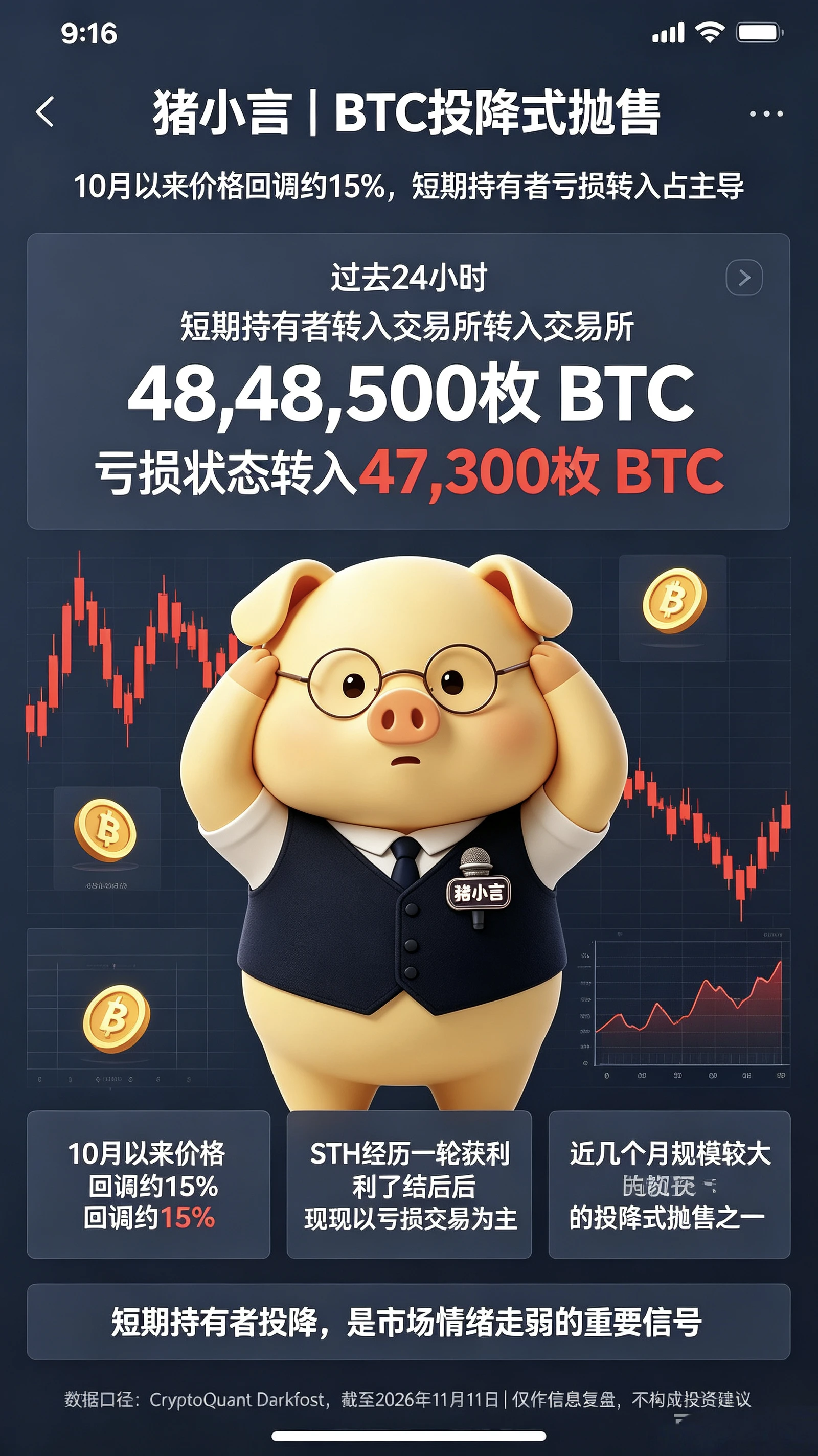
Pig Xiaoyan On-Chain Analysis | BTC Short-Term Holders See Capitulation Selling
The latest on-chain data from CryptoQuant shows that BTC has been in a sustained distribution phase since October, with its price retreating about 15%. The market has shifted from early profit-taking to a phase of sentiment-driven selling at a loss.
Over the past 24 hours, short-term holders transferred 48,500 BTC to exchanges, of which as many as 47,300 were transferred at a loss, accounting for over 97%. This is one of the larger waves of capitulation selling in recent months.
In general, concentrated loss sellin
post-image
BTC-0.67%
Load More

Join 40 M users in our growing community

⚡️ Join 40 M users in the crypto craze discussion

💬 Engage with your favorite top creators

👍 See what interests you

Trending Topics

GateGlobalComplianceExpansion

16.7k Views364 Discussing

Gate continues to expand its global compliance footprint, now covering 81 regulated jurisdictions across Europe, North America, Asia, and Oceania. From MiCA and U.S. state-level MTLs to Japan’s FSA, Dubai, and Australia-related regulatory approvals, global exchanges are entering a new stage of compliance competition. Do you think regulatory strength will become as important as products and liquidity for exchanges in the future?

USOctoberCPIBeatsExpectations

88.29k Views2.66k Discussing

AnthropicIPOValuationCouldReach1.4T

12.71k Views1.61k Discussing

View More