

Square
Following
Hot
News
Profile
Share your thoughts
placeholder
Article
#ETH One prophecy came true: ETH precisely pulled back to around 2400.
post-image
ETH-2.69%
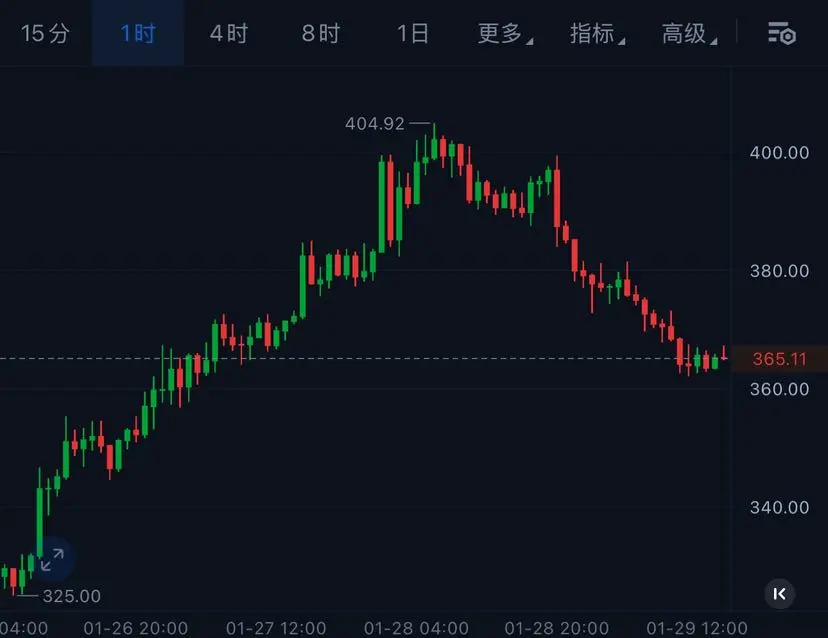
$NEAR The most concerning thing is not whether the price rises or falls, but that after the price moved for a while, participation failed to keep up.
This time, I’m not looking at the gainers and losers list, only the levels. The current price is 4.76, about 9.64% above the 1-hour support at 4.301 and about 17.54% below the resistance at 5.595.
My criteria are simple: only a breakout above 5.595 followed by continuation would count as follow-through from higher levels; a break below 4.301 invalidates the original assessment. The 1-hour and 4-hour outlooks are both weak, with RSI at 40 and 41,
post-image
MARKET PREDICTION
live-cover
LIVE1,524
☀️ GM! The market is a bit bumpy—have you fastened your seatbelt? 🎢
The market could shift gears at any moment. Is your trading plan keeping up?
📌 Today's featured topic: Facing market volatility, what is your “seatbelt”?
🛡️ How do you manage your positions?
👀 What risk signals are you watching most closely right now?
📝 Have you made any trades recently that are worth reviewing?
Seize opportunities, but manage risks too.
Come to Gate Square to share your trading strategies and reviews. High-quality content may receive featured recommendations and additional traffic support.
👇 Share your
post-image
GateSquare
☀️ GM! The market is a bit bumpy—have you fastened your seatbelt? 🎢
The market could shift gears at any moment. Is your trading plan keeping up?
📌 Today's featured topic: Facing market volatility, what is your “seatbelt”?
🛡️ How do you manage your positions?
👀 What risk signals are you watching most closely right now?
📝 Have you made any trades recently that are worth reviewing?
Seize opportunities, but manage risks too.
Come to Gate Square to share your trading strategies and reviews. High-quality content may receive featured recommendations and additional traffic support.
👇 Share your trading ideas:
https://www.gate.com/post.
repost-content-media
#美联储9月纪要偏鹰 #每周来晒 Fed's September Meeting Minutes Send Important Signal: “Insurance Rate Hikes” Are Making a Comeback!
The key change revealed in the Fed's September meeting minutes is not simply a “more hawkish” stance, but the return of risk-management thinking to policy decisions. Barclays believes the minutes show that the Fed is beginning to place greater emphasis on guarding against inflation risks in advance. Some officials believed further tightening remained necessary under the baseline scenario, while others viewed additional rate hikes as “insurance” against the risk of demand exceed
post-image
ThisIsTranslateContent:
#美联储9月纪要偏鹰 #每周来晒 The Fed’s September Minutes Send an Important Signal: “Insurance Rate Hikes” Are Making a Comeback!
The key change revealed in the Fed’s September meeting minutes is not merely a “more hawkish” stance, but the return of risk-management thinking to policymaking. Barclays believes the minutes show that the Fed is beginning to place greater emphasis on proactively guarding against inflation risks. Some officials believed further tightening remained necessary under the baseline scenario, while others viewed additional rate hikes as “insurance” against the risk of stronger-than-expected demand or renewed supply-side shocks. At the September meeting, the Fed raised the federal funds target range by 25 basis points to 3.75%-4.00%, with all participants supporting the decision; most officials believed that one more rate hike before year-end “could be appropriate.” The Committee also emphasized that subsequent policy would depend on economic data and the balance of risks. Goldman Sachs believes the minutes show a strong consensus among officials in favor of further tightening, but that “insurance rate hikes” do not mean future action has been determined, with whether to continue raising rates ultimately depending on inflation and economic data. The two institutions have broadly similar views on the near-term path: no move in October and one more rate hike in December. Their main difference is that Goldman Sachs believes the FOMC may ultimately conclude that no further tightening is necessary as the data change, while Barclays expects rates to remain unchanged for most of 2027 after a December hike.
I “Insurance Rate Hikes” Return: Risk Management Becomes the Policy Logic Again
The minutes show that many participants supported a higher policy-rate path, mainly for risk-management reasons. If demand remains stronger than expected or the supply side is hit by another shock, raising rates in advance could reduce the risk of inflation remaining above target for an extended period. However, some officials believed that further rate hikes were necessary under their baseline scenario, rather than merely serving to guard against potential risks. This distinction determines the flexibility of subsequent policy: if rate hikes are primarily a risk-management measure, the Fed can stop tightening once inflation data improve and the balance of risks changes; if further hikes are necessary under the baseline forecast, it means rates still have room to rise. Barclays believes this is the exact opposite of the logic during the previous rate-cutting cycle. At that time, the Fed believed downside employment risks outweighed upside inflation risks, allowing it to cut rates preemptively; now the balance of risks has tilted back toward inflation, and policy is once again leaving room in advance for a potential inflation rebound.
II Hawkish Bias Clear, but December Still Depends on the Data.
The hawkish judgments in the minutes mainly stemmed from inflation. All participants believed inflation remained elevated and that progress in reducing it had been insufficient in recent months; nearly all officials saw inflation risks as tilted to the upside, with some believing those risks had increased further. At the same time, risks in the labor market were viewed as “broadly balanced” and were no longer considered a major obstacle to further policy tightening. Several officials also believed that the policy rate before the hike was “not restrictive or only mildly restrictive,” while several others raised their estimates of the neutral rate. However, the minutes repeatedly emphasized that policy would “depend on the incoming data.” Goldman Sachs expects another 25-basis-point hike in December, but believes that as more data are released, the Fed will ultimately “likely conclude that further tightening is unnecessary.”
III AI Investment Becomes a New Inflation Variable
Another notable change in these minutes is that AI investment was explicitly identified as a potential source of inflation for the first time. Several officials pointed out that as the effects of AI infrastructure construction gradually emerge and the impact of tariffs gradually fades, core goods inflation could remain elevated; some officials warned that the AI construction boom could push aggregate demand above aggregate supply, creating new inflationary pressure. At the same time, some of the pressure on PCE inflation may simply reflect temporary distortions caused by statistical methodology. A few participants noted that software and asset-management fees had made significant contributions to recent PCE data, and that this impact was expected to fade as the U.S. Bureau of Economic Analysis (BEA) adjusted its statistical methods. According to a Barclays report, Fed staff expected at the September meeting that the BEA revision would lower year-over-year PCE and core PCE growth by approximately 0.2 percentage points, but the actual revision was about twice as large as expected, bringing year-over-year core PCE growth down to 3.0%, with the three-month annualized rate close to 2%. This means that the inflation backdrop at the September meeting was in fact more severe than indicated by the latest data: AI investment could generate genuine demand-driven inflationary pressure, while software and asset-management fees included a degree of statistical distortion. The revision to the latter weakened part of the basis for supporting further rate hikes at the time.
IV Economic Outlook Improves, Leaving Room for a Policy Shift
Fed staff raised their inflation forecasts for 2026 through 2028, expecting the effects of tariffs, geopolitics, and AI-related factors to gradually fade, with inflation eventually returning to the 2% target in 2029, though risks remained tilted to the upside. At the same time, the economic and employment outlook improved. Staff expected real GDP to rebound in the second half of this year and remain above potential growth through 2028; the unemployment rate was expected to remain below its long-run level through 2029. Goldman Sachs noted that some officials attributed the rise in long-term U.S. Treasury yields to a stronger economy, increased expectations of AI-related borrowing, and geopolitical factors, while most officials believed overall financial conditions remained supportive of economic growth. Barclays maintained its baseline expectation of a 25-basis-point hike in December, but believed that the inflation revisions, recent weakness in economic data, and a slowdown in labor supply could ultimately lead the Fed to abandon further rate hikes. Therefore, the current policy path is becoming clearer: the Fed is once again adopting a risk-management approach to rate hikes, but whether this “insurance” is actually needed still depends on subsequent data. If inflation continues to cool, the need for a December hike will diminish; if AI investment drives continued demand expansion and inflation comes under renewed pressure, the case for further tightening will strengthen.
repost-content-media
GS-0.60%
  • 3
18% plunge followed by short-cycle funds bucking the trend to buy the dip! A pullback of $SOL to 109 could trigger short liquidations
Direction: Long (oversold rebound)
Entry range: 109.0–110.0
Take-profit target: 113.0–116.0
Personal view: SOL plunged from 123.77 to 105.61, down more than 14%. Short-cycle funds flowed back against the trend—1h inflows exceeded $20.07 million, while 8h inflows exceeded $114 million, clearly showing dip-buying funds entering the market; short liquidations are concentrated around 112–116, and once the oversold rebound is triggered, it could easily spark a short
post-image
SOL-4.33%
#每周来晒 #美联储9月纪要偏鹰
Probability of an October Rate Hike
A Federal Reserve rate hike at the upcoming October 27–28 meeting is unlikely.
Although the September meeting minutes showed unanimous agreement on raising the federal funds rate to 3.75%–4.00% and left open the possibility of further tightening before year-end, several factors favor a pause in October:
Stale Sentiment in September Minutes: The September meeting took place prior to key labor market and price data. Sub-30,000 job additions in September (+29,000) and cooler wage growth signaled cooling economic momentum.
Lagged Tran
post-image
BTC-0.29%
MU-4.83%
NVDA-2.86%
NDAQ+0.51%
🚨 Starknet considers transitioning from Layer 2 to Layer 1 due to AI and quantum computing
• Starknet is seriously considering changing its operating model instead of remaining an Ethereum Layer 2.
• The next goal: building a network capable of resisting attacks from quantum computers.
🎯 Target deadline: 2027.
If realized, this would be a major shift in Starknet’s development strategy. 👀
post-image
STRK+35.07%
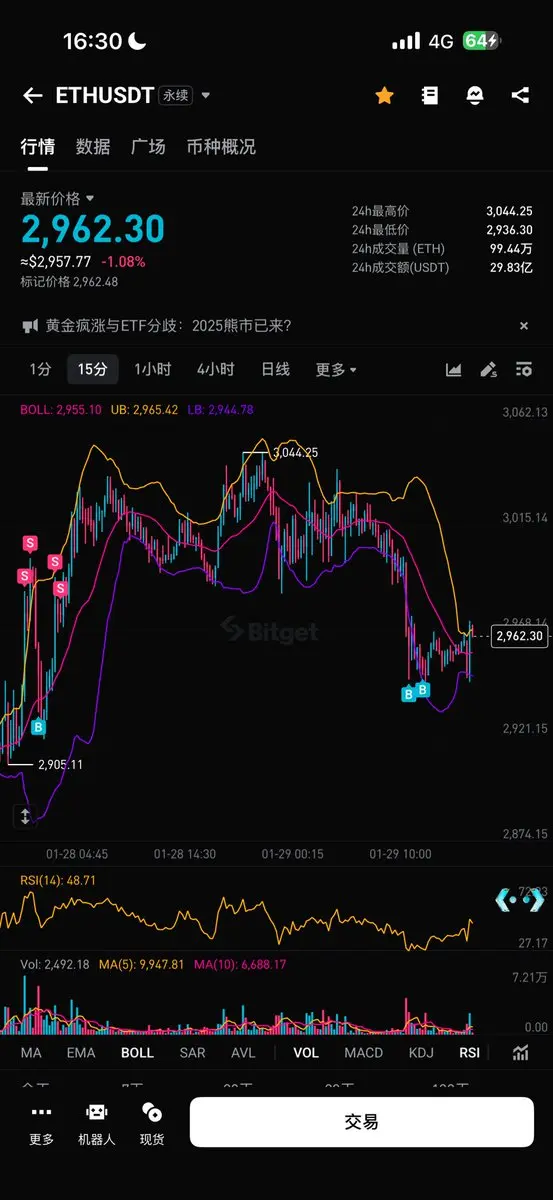
That ETH long from yesterday afternoon hit its stop-loss last night. Today’s update will likewise start with the stop-loss, then cover the rebound in the early hours.
Yesterday’s ETH long hit its stop-loss last night.
The long was opened around 2565 yesterday, with defense at 2542. The afternoon high reached 2574, just over 10 points short of the 2585 target, so it was missed. At 7:30 p.m., price broke below 2542, so we exited as planned, losing a little over 20 points.
BTC then continued plunging, reaching a low of 2409 at 2 a.m.
After rising from 2409, it surged directly to 2475 within three
post-image
BTC-0.29%
ETH-2.69%
Tong Ge’s 10.9 ETH strategy
Enter a short around $ETH 2480-2510, stop-loss at 2530, first target 2430, second target 2400.
Current price: 2480. The short entry at 2535 given last night dropped as low as 2403, so those who followed the setup enjoyed a comfortable profit. ETH fell from 2725 all the way down, dropping more than 300 points, with almost no decent rebound in between.
Now it has bounced from 2403 back to 2480, an 80-point rebound. It looks lively, but this is only a recovery after being oversold, not a trend reversal. It moves when BTC moves, but softens first when BTC pauses; it has
post-image
ETH-2.75%
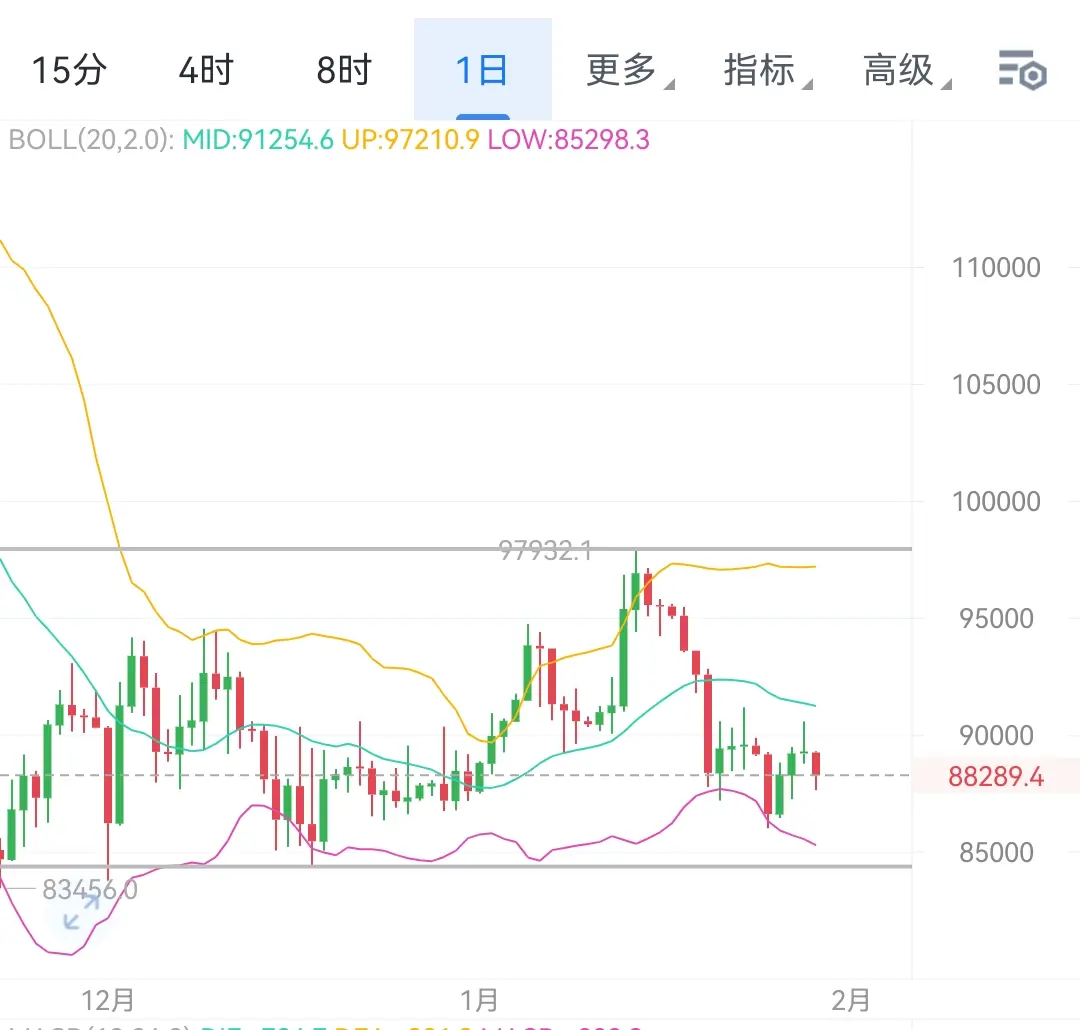
After retreating to the $81,000 level, Bitcoin recovered and settled around $82,000. The daily decline narrowed to 1.54%. However, the market remains focused on the $81,000 mark; this is precisely where buyers and sellers are squaring off.
The $81,000–$81,500 range is an area where buy orders have concentrated in recent days, with buyers increasing their positions there. Analysts identify the $81,119 level as support, while pointing to the $86,500–$86,750 range as resistance. In other words, $81,000 is not an arbitrary level; it is the floor that has held firm in recent weeks.
So, why did it d
post-image
User_any
#BTCPullsBackTo81000 Yo, so check it. Bitcoin slid under $82K for the first time in three weeks, and nah, it ain't one thing that did it. Three things hit at once, straight up.
First off, the Fed. Them September minutes dropped October 7, and all nineteen of 'em backed that quarter-point hike to 3.75–4.00%. Most said yeah, another one by year-end probably makes sense. But here's the thing — the market ain't buying it for October. Odds sitting at like 17% for October, but December? Around 70%. And that matters, 'cause when rates stay high, holding stuff that don't pay you nothing gets expensive. 10-year yield hanging near 5.3%, 30-year near 5.67%. That's decades-high type energy.
Second thing — Iran. Word is the White House told the Pentagon to get strike options ready, but nothing popping off before the midterms. Strait of Hormuz still a mess. Brent at $101.53, WTI at $89.39. Expensive oil means inflation ain't going nowhere, and that keeps the Fed chilling on the sidelines.
Third thing, and this the one that really hurt — leverage. Around $709 to $769 million in positions got liquidated in 24 hours. Longs took $647 to $685 million of that. Bitcoin longs alone, $172 million. Roughly 140,000 accounts got smoked. Open interest dropped 3.27% down to about $52.57 billion. That ain't people changing their minds — that's forced selling, plain and simple.
Institutional money? Mixed bag. US spot Bitcoin ETFs pulled in $118.86 million last session, total assets near $110.68 billion. But Ether ETFs? Lost $202 million same day. Them two ain't moving together no more.
Supply side — government wallets moved 12,267 BTC, 'bout $1.01 billion, to fresh addresses. No exchange deposit, so looks more like reshuffling than dumping.
Chart-wise, Bitcoin ran from $83,299 down to $80,397 before settling near $82,063. The $80,500 to $81,500 zone? That's where last month's highs sat, and that's what everybody watching. Hold there, we cool. Break it, and now we asking if the forced selling is done.
Next real test? October CPI and PPI. That's gonna tell us if inflation really cooling or if this pressure still building.
This ain't investment advice, just keeping it real.
$BTC ‌
BTC-0.29%
  • 4
  • 1
AI blowup + Middle East powder keg! Is the $1.9 billion net outflow just an illusion? $BTC $80,000 defense battle has begun—retail traders, don’t get shaken out!
Markets are always born in despair and grow amid doubt overnight
The market is on edge! Concerns over U.S. AI earnings have resurfaced (OpenAI revenue fell short of expectations), with tech stocks weighing on the Nasdaq. In the Middle East, U.S. aircraft carriers are massing, but Trump has postponed a strike, while Iran is not leaving the negotiating table. BTC is currently at $81,862, with its 24h decline narrowing to 1.81% as panic
post-image
BTC-0.29%
ETH-2.69%
ZEC-5.75%
#FedSeptemberMinutesLeanHawkish The Fed’s Inflation Battle Is Far From Over
Introduction: A New Warning for Global Markets
The latest Federal Reserve meeting minutes have delivered an important message to investors: the fight against inflation is not finished, and another interest rate hike may still be on the table in 2026.
Released on October 7, the minutes from the September 15–16 FOMC meeting reveal that most policymakers considered another rate increase likely to be appropriate before the end of the year. The message is hawkish because officials remain concerned that inflation could sta
post-image
  • 4
[New Streamer] Market Prediction
live-cover
LIVE1,765
In the rapidly changing Web3 industry, I increasingly believe:
True competitiveness is not how many people you know or how many events you attend, but how many trends you can understand and how many correct judgments you can make.
Stay curious, stay independent, and stay committed to the long term.
Rather than rushing to become someone riding the wave, I would rather become someone who understands the cycles.
#Web3 #Token2049 .
post-image
$LYN Whale addresses continue accumulating, and holding concentration hits a new high! Retail FOMO sentiment is heating up—how far can this move go?#Gate.io 🔥 #每周来晒
The U.S. government deposited 17,733 $BTC ($1.48B) and 750 $WBTC ($62M) into #CoinbasePrime over the past 3 days.
During this period, the price of $BTC dropped 6.9%.
post-image
BTC-0.29%
WBTC-0.59%
$AMP The most unusual point today: 24h rose +22.68%, yet the funding rate failed to match the enthusiasm normally seen from longs, suggesting this move is being driven more by short covering than by new longs actively adding positions. The price is currently 0.000714, holding above MA5 (0.0007088) and MA20 (0.00065895); the MACD histogram at +3.641e-06 remains bullish, RSI at 57.8 has not entered overbought territory, and the Bollinger upper band at 0.000793048 is the first resistance for this move; the amplitude over 30 candles is approximately 42.44%, so the risk of wick-outs is not low, and
post-image
AMP+19.68%
SKL+13.26%
The Fear & Greed Index reads 59, in the greed zone but not yet at extreme levels, indicating that market risk appetite remains intact, while the willingness to chase highs is beginning to moderate; $GTC is currently at 0.20247, up 11.16% in 24h, with a trading volume of 10.1M USDT. MA5=0.20293 has crossed above MA20=0.187747, RSI=59.6 is not overbought, and the MACD histogram at +0.001507 remains bullish. The Bollinger upper band is 0.215656 and the lower band is 0.159838. The amplitude over 30 candlesticks is 26.76%, forming a high-level consolidation structure after a volume-backed rise. If
post-image
STRK+35.07%
ATOM+6.80%
Load More

Join 40 M users in our growing community

⚡️ Join 40 M users in the crypto craze discussion

💬 Engage with your favorite top creators

👍 See what interests you

Trending Topics

Gate Money Officially Launches

3.49k Views12.91k Discussing

Gate officially launches Gate Money, a global integrated financial services app that brings digital assets, fiat, stocks, ETFs, gold, bank accounts, and payments into one Gate App. Users can manage assets, invest, send and receive funds, convert currencies, and make payments — all from a single account. Which use case are you most excited about? [👉 Learn more](https://www.gate.com/announcements/article/102094)

BTC Pulls Back to 81000

25.4k Views35.66k Discussing

AIStocksFallALABDropsOver9%

24.57k Views544 Discussing

View More