Square
Following
Hot
News
Notifications
Profile
Share your thoughts
placeholder
Article
Why Can Prices Still Fall When the Order Book Shows a Large Number of Buy Orders?

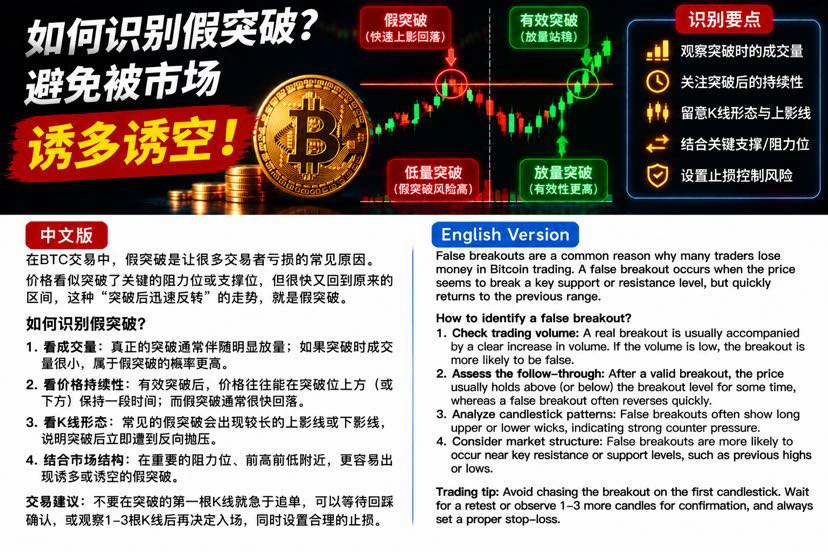
In cryptocurrency trading, many people watch the order book and try to judge market direction based on buy and sell orders. When a large number of buy orders appear on the screen, some traders assume there is strong support below and that the price should not fall easily.

But reality is often more complicated. A large number of buy orders does not mean the price will necessarily rise; a large number of sell orders does not mean it will inevitably fall.

First, placed orders are not the same as executed trades.
post-image
Trenches
mihao
m
bade
b
mihao
4Cxj...pump
Market Cap
$.
Change
.
24h Vol
$.
Holders
.
AGT
A
bade
b
AGT
0x5d...e274
Market Cap
$.
Change
.
24h Vol
$.
Holders
.
FOOD
F
bade
b
FOOD
FTu5...pump
Market Cap
$.
Change
.
24h Vol
$.
Holders
.
IDOL
I
bade
b
IDOL
0x3b...ab07
Market Cap
$.
Change
.
24h Vol
$.
Holders
.
AI
A
bade
b
AI
2T56...pump
Market Cap
$.
Change
.
24h Vol
$.
Holders
.
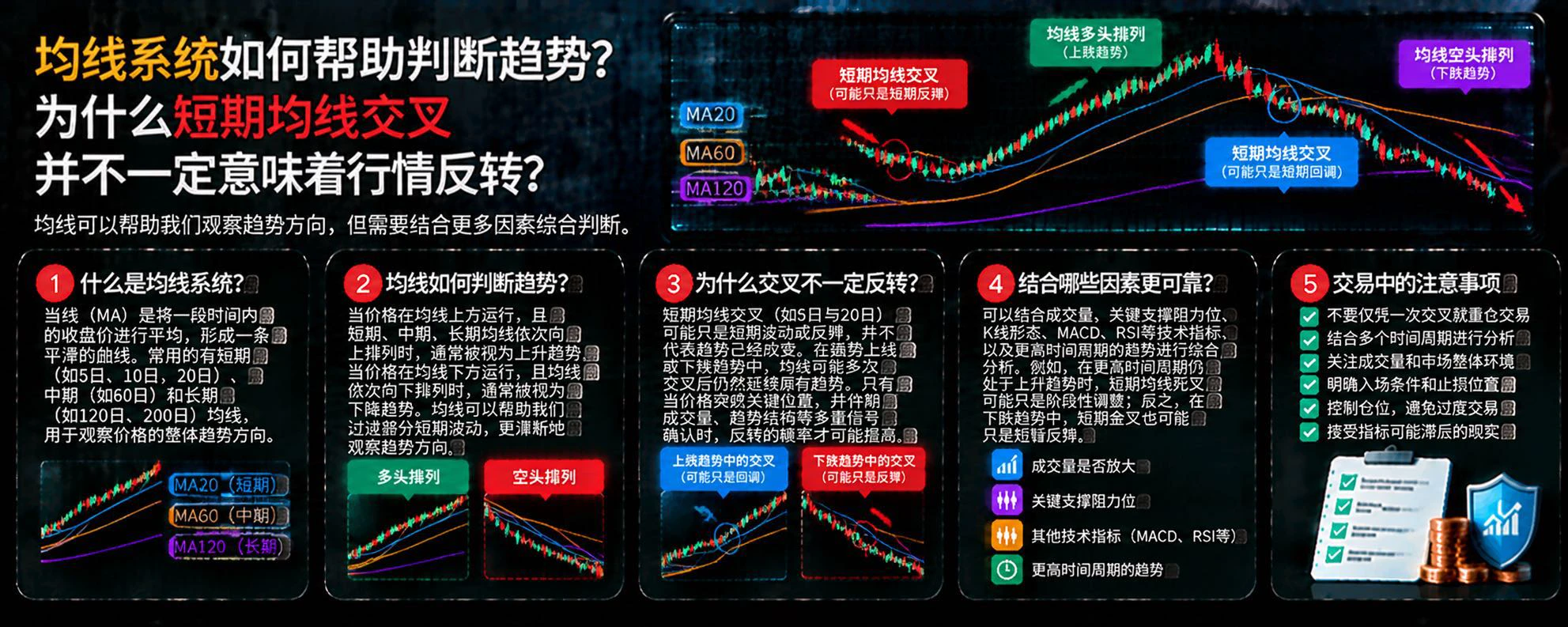
In cryptocurrency trading, many people watch BTC candlestick charts every day but don't know how to tell whether the market is currently in an uptrend or a downtrend. In fact, there is a very common technical indicator that can help us see the market's direction more clearly: the Moving Average, or MA.

So, what do MA20, MA50, and MA200 represent?

First, the MA20 short-term moving average. It reflects recent price movements and is relatively sensitive to short-term market conditions. When BTC trades consistently above the MA20 and the average slopes upward, it usually indicates relative short
post-image
BTC-0.67%
$AGT Down 29.6% in a day, crashing from 0.0868 to 0.0461 and now at 0.0505—I've seen this kind of crash too many times. The opportunities that can really make money are often hidden in the second wave of panic.
First, my position: I bought a tiny 5% starter position around 0.052 this morning. I'm currently down about 3%, with a stop-loss at 0.0458 (below today's low). I'll hold as long as it stays above that level. This small loss barely registers against my overall position because I entered in stages instead of going all in.
Full trading plan:
Entry rationale: 24-hour trading volume is 324 m
  • 1
$HANA BOOM🤑🤑 The market is starting to surge strongly. TP1 has been filled. Guys, quickly check whether the funds have arrived!🙈💸$AKE $DODOX
post-image
DODOX
DODOXDODOX
Pump.Fun
MC:$3.17KHolders:86
6.67%
HANA-3.22%
AKE+6.07%
Many people have experienced this: when a bull market arrives, BTC rises 10%, while some altcoins can gain 30% or even more. But when the market starts falling and BTC pulls back 10%, some altcoins may drop 30% or even more.

Why does this happen?

First, the difference in market capitalization is a key reason. Compared with BTC, many altcoins have smaller market caps and relatively limited market depth, so even modest inflows or outflows can cause more pronounced price swings.

Second, altcoins are more sensitive to market sentiment. When prices are rising, investors are willing to take on mo
post-image
BTC-0.67%
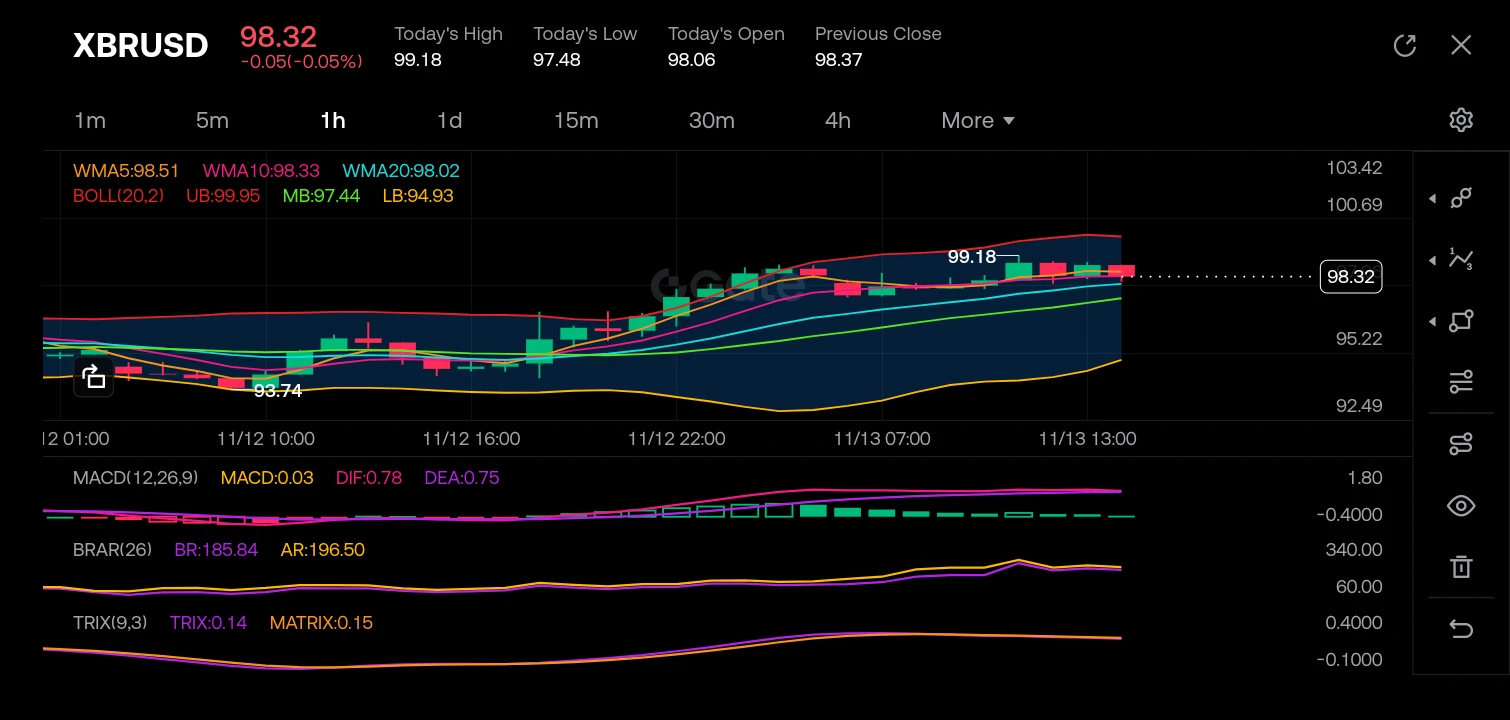
$XBRUSD
Looking at the XBRUSD (Brent Crude) 1-hour chart, the market structure has clearly shifted from a bearish downtrend to a bullish reversal structure. Price successfully bottomed out at 93.74 and has since established a series of higher highs and higher lows. The K-line analysis shows strong bullish momentum, with the price action currently riding above the WMA5 (98.51), WMA10 (98.33), and WMA20 (98.02), while the Bollinger Bands have expanded upward, confirming the volatility and trend direction. The MACD is well into positive territory (DIF 0.78, DEA 0.75), though the histogram is fla
post-image
XBRUSD+0.00%
  • 1
  • 2
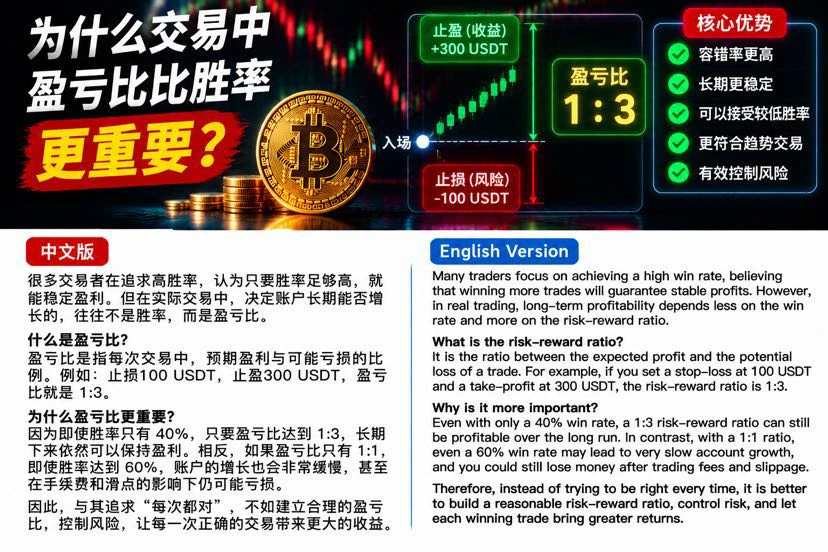
Why Can a Trading Strategy With a High Win Rate Still Lose Money in the End?

In cryptocurrency trading, many people pay particular attention to the win rate. Winning eight out of ten consecutive trades looks quite impressive. But if the account is still losing money overall, the problem may not be the win rate, but the amount gained and lost on each trade.

Suppose a trader makes 10 trades, 8 of which are profitable, earning 10 USDT each; the other 2 lose 50 USDT each.

The 8 winning trades bring in 80 USDT, while the 2 losing trades result in a loss of 100 USDT. Even without considering fees
post-image
What Is Volume-Price Divergence? How Can You Spot a Trend Reversal Early?

In cryptocurrency trading, many people watch candlestick charts every day and assume that an uptrend will continue when they see prices repeatedly making new highs.

But sometimes, a warning sign has already appeared: prices are still rising, while trading volume and technical indicators are starting to weaken.

This is what traders often refer to as volume-price divergence.

What Is Volume-Price Divergence?

Simply put, it is a mismatch between price movements and trading volume or momentum indicators.

For example, in
post-image
BTC-0.67%
Longs and shorts are being liquidated at the same time—what exactly is happening in the market?

In crypto futures trading, there is a phenomenon that confuses many people: when the market is clearly rising, why are some traders still getting liquidated? More puzzlingly, sometimes prices surge rapidly and then suddenly fall, resulting in large numbers of both long and short positions being liquidated.

What exactly causes this?

First, liquidations do not happen in just one direction. When prices rise rapidly, highly leveraged shorts may be forcibly closed because of insufficient margin. If pr
post-image
$BTC $SPCX Day 3 of simulated copy trading with Aoying, and today's returns hit a new high of 40%. Currently holding a BTC long position and a Big Rocket short position
post-image
BTC-0.65%
SPCX+0.20%
Why might holding multiple correlated cryptocurrencies still fail to truly diversify risk?

In cryptocurrency trading, some people hold BTC, ETH, and other altcoins at the same time to reduce risk. They believe that as long as they hold enough different coins, other assets may offset losses if one of them falls.

But there is an easily overlooked problem: holding multiple different coins does not mean you have truly diversified your risk. If these assets are highly correlated under market stress, they may all fall at the same time.

First, why might different coins fall together?

Many assets
post-image
BTC-0.67%
ETH-1.26%
How Should You Adjust Your Trading Mindset After Consecutive Losses?

In cryptocurrency trading, consecutive losses are when many traders are most likely to lose confidence.

After the first loss, you may think you simply misread the market; after the second, you start doubting your strategy; when the losses reach three, five, or even more in a row, some people start rushing to win back what they lost.

And this is often where the real danger begins.

Why do consecutive losses easily trap traders in a vicious cycle?

First, losses affect your judgment. When you are eager to recover your losses
post-image
Why Can Trading More Frequently Make Your Account Shrink Faster?

In the cryptocurrency market, many traders watch candlestick charts every day, afraid of missing any rise or fall. Whenever prices move, they want to enter the market; after making a small profit, they look for the next opportunity, and after a loss, they rush to trade again.

They may seem diligent, yet their accounts can shrink without them even realizing it.

The problem is that more trades do not necessarily mean more opportunities to profit.

First, trading costs keep accumulating. Every buy and sell may incur fees, and the
post-image
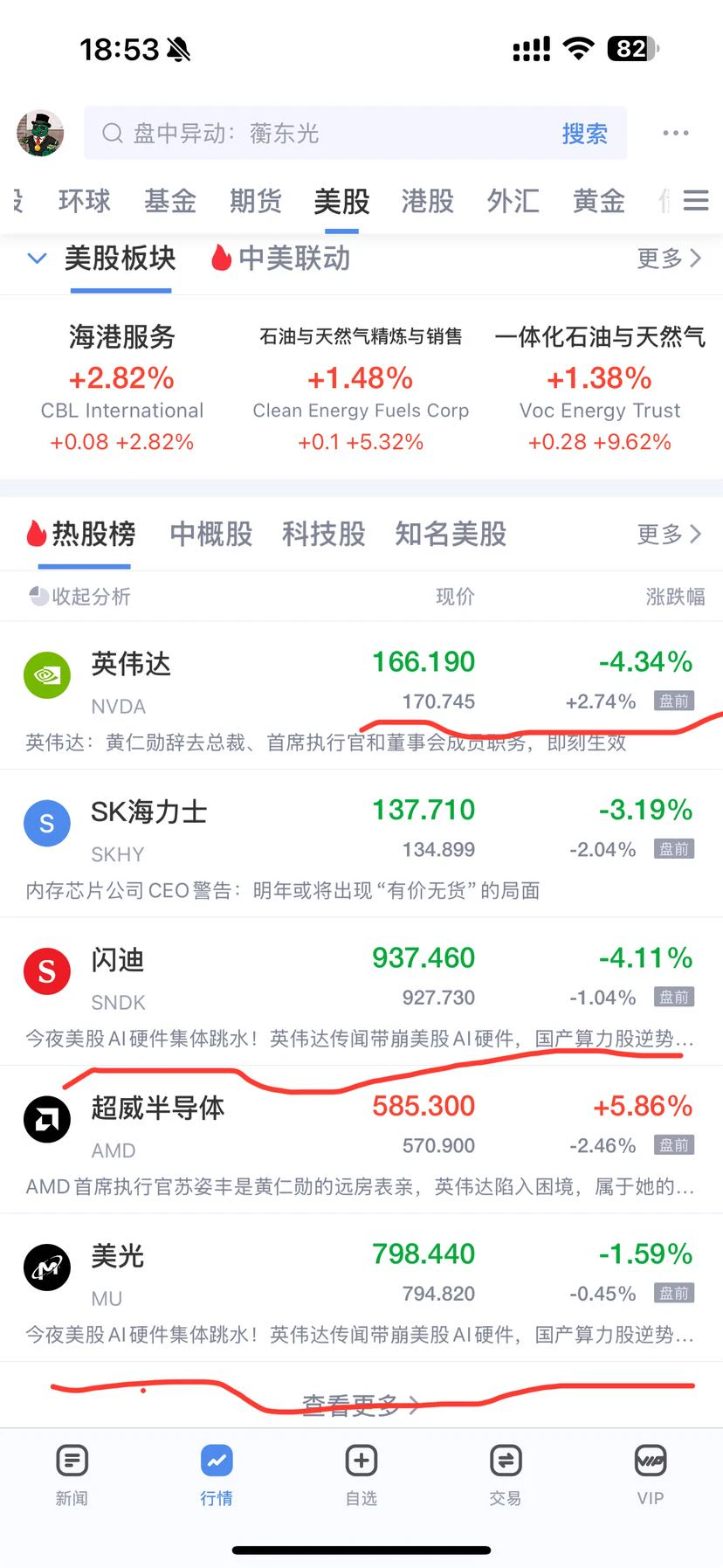
Can Nvidia hold onto its gains at the open? Only if Nvidia stabilizes and US stocks stay in the green can they drive Bitcoin higher in a rebound.

Yesterday, Nvidia dragged the entire AI sector down at the open, and Bitcoin followed. Developments during the opening session triggered concentrated selling. Bulls stayed on the sidelines, and prices quickly broke lower. By the close, the most panic-inducing bearish news had been exhausted; everyone who was going to sell had sold, and dip-buyers stepped in. Nvidia opened lower and closed higher.

AMD, which took in funds flowing out of Nvidia yeste
post-image
NVDA-4.49%
Why Can the Order Book Look Deep, Yet Liquidity Suddenly Disappear When You Place an Order?

In crypto markets, you may sometimes see a large number of buy orders stacked in the order book and assume there is strong support below. But when prices start falling rapidly, those buy orders can quickly dwindle, and a market that looked stable can suddenly become fragile.

Why does this happen?

First, orders can be canceled at any time.

The order book shows currently visible limit orders, not completed trades. Traders can modify or cancel orders as market conditions change. So large orders only in
post-image
#JensenHuangResigns

Jensen Huang Resigns from NVIDIA: The Man Behind the AI Revolution Is Gone, What Happens Next?

Yesterday Was Business as Usual. Today, Everything Has Changed.

For years, Jensen Huang was more than just NVIDIA's CEO. He was the face of the company's rise, the leader behind its AI strategy, and one of the most influential figures in the global technology industry.

NVIDIA became a central force in the artificial intelligence boom under his leadership. Its graphics processors became essential tools for training AI models, building data centres, and powering the next genera
post-image
NVDA-0.35%
🔹Buy the Dip or Sell the Rally on Nvidia? Tom Lee Calls for Buying the Dip, While Michael Burry War
live-cover
LIVE1,596
In crypto contract trading, there is a very harsh fact: many accounts are not wiped out by a single bad judgment, but because traders refuse to cut their losses even when they are already in the red.

Why is using a stop-loss so important?

First, it limits the risk of each trade. The market is always uncertain, and no matter how thorough your analysis is, you can never guarantee that every trade will be correct. Setting a stop-loss in advance can limit the damage a mistake does to your account.

Second, it prevents small losses from turning into big ones. When traders see the price moving aga
post-image
What does it mean when price falls, trading volume increases, and OI rises at the same time?

In the crypto derivatives market, if prices keep falling while trading volume increases and open interest (OI) also rises, many traders will immediately conclude that bears are dominating the market and the decline may continue.

This interpretation has some value, but it should not be treated as a definitive trading signal. The combination of these three indicators needs to be understood in the context of market structure and actual trading activity.

First, what does a price decline mean?

A price d
post-image
Load More

Join 40 M users in our growing community

⚡️ Join 40 M users in the crypto craze discussion

💬 Engage with your favorite top creators

👍 See what interests you

Trending Topics

JensenHuangResigns

516.7K Views8.1K Discussing

Jensen Huang has resigned as NVIDIA CEO and stepped down from the board. CFO Colette Kress will serve as interim CEO while NVIDIA considers internal and external successors. $NVDA fell more than 10% in premarket trading following the announcement. With one of AI’s most influential leaders stepping aside, markets are now reassessing NVIDIA’s leadership stability, AI strategy, and long-term valuation.

GateIPOAccessAnthropic

280.8K Views2.6K Discussing

Dr.HanOxfordUnionSpeech

144.6K Views457 Discussing

View More