Square
Following
Hot
News
Notifications
Profile
Share your thoughts
placeholder
Article
How can a trading strategy perform well in historical backtests yet gradually fail in real markets?

A beautiful return curve does not necessarily mean a trading strategy is reliable.

In the cryptocurrency market, many traders use historical data to test entry signals, take-profit and stop-loss settings, and position parameters. But once a strategy is deployed in the market, its win rate may fall, drawdowns may widen, or it may even lose money over the long term.

What exactly goes wrong?

I. Historical data is not the same as future markets

Backtesting can only show how a strategy performed
post-image
Why Doesn’t an Increase in the Number of Trades Necessarily Lead to More Profit?

Many traders have had this experience:

When the market is quiet, they feel there are no opportunities; when volatility picks up, they worry about missing out.

So they open their trading app more and more often and enter trades more frequently. Their account activity looks busy, but their returns ultimately show little improvement.

Sometimes, the more trades they make, the greater their losses.

The question is: Are you capturing more valid opportunities, or just creating more trades?

The number of trades refl
post-image
Trenches
mihao
m
bade
b
mihao
4Cxj...pump
Market Cap
$.
Change
.
24h Vol
$.
Holders
.

AGT
A
bade
b
AGT
0x5d...e274
Market Cap
$.
Change
.
24h Vol
$.
Holders
.
PIEVERSE
P
bade
b
PIEVERSE
0x0e...25a9
Market Cap
$.
Change
.
24h Vol
$.
Holders
.
HOLD
H
bade
b
HOLD
4iJ7...pump
Market Cap
$.
Change
.
24h Vol
$.
Holders
.
X
X
bade
b
X
9VZe...pump
Market Cap
$.
Change
.
24h Vol
$.
Holders
.
What is the complete process for a BTC futures trade, from opening to closing a position?

Many traders new to the BTC futures market go long when they see prices rising and short when they see prices falling. But what truly determines the outcome of a trade is not just getting the direction right, but whether you have a complete execution process from before opening a position through to closing it.

Step 1: Analyze the market trend. Before opening a position, first observe whether BTC is currently rising, falling, or moving sideways. Assess the market environment by looking at price structur
post-image
BTC-0.65%
#AnthropicIPOValuationCouldReach1.4T

🚀 Anthropic’s IPO Could Reach a Massive $1.4 Trillion Valuation

Anthropic, the company behind the Claude AI ecosystem, is preparing for one of the biggest AI-related public offerings ever — and its potential valuation is putting the entire artificial-intelligence sector back in the spotlight.

According to its latest IPO filing, Anthropic plans to offer 825 million Class A shares at an expected price range of $70 to $78 per share. At the top of that range, the company could reach an estimated $1.404 trillion fully diluted valuation.

💰 A Record-Scale AI
post-image
GOOGL-0.25%
NVDA-5.47%
AMD+1.27%
MSFT-2.15%
AVGO+3.86%
FeaturedImagine using the returns from your Nvidia (NVDA) stock holdings to buy your first Americano of the morning? That’s the ultimate immersive experience brought to you by Gate Money!

At the just-concluded private dinner at the London Gate Gala, @Dr. Han’s remarks left a deep impression on everyone. Gate is evolving from a single trading platform into a global financial super app covering cash, U.S. stocks, gold, and crypto assets.

Dr. Han once again emphasized the foundations of Gate’s development: compliance and security. Gate entities now have compliance cov
post-image
NVDA-5.47%
GLDX-0.40%
PAXG+0.37%
  • 1
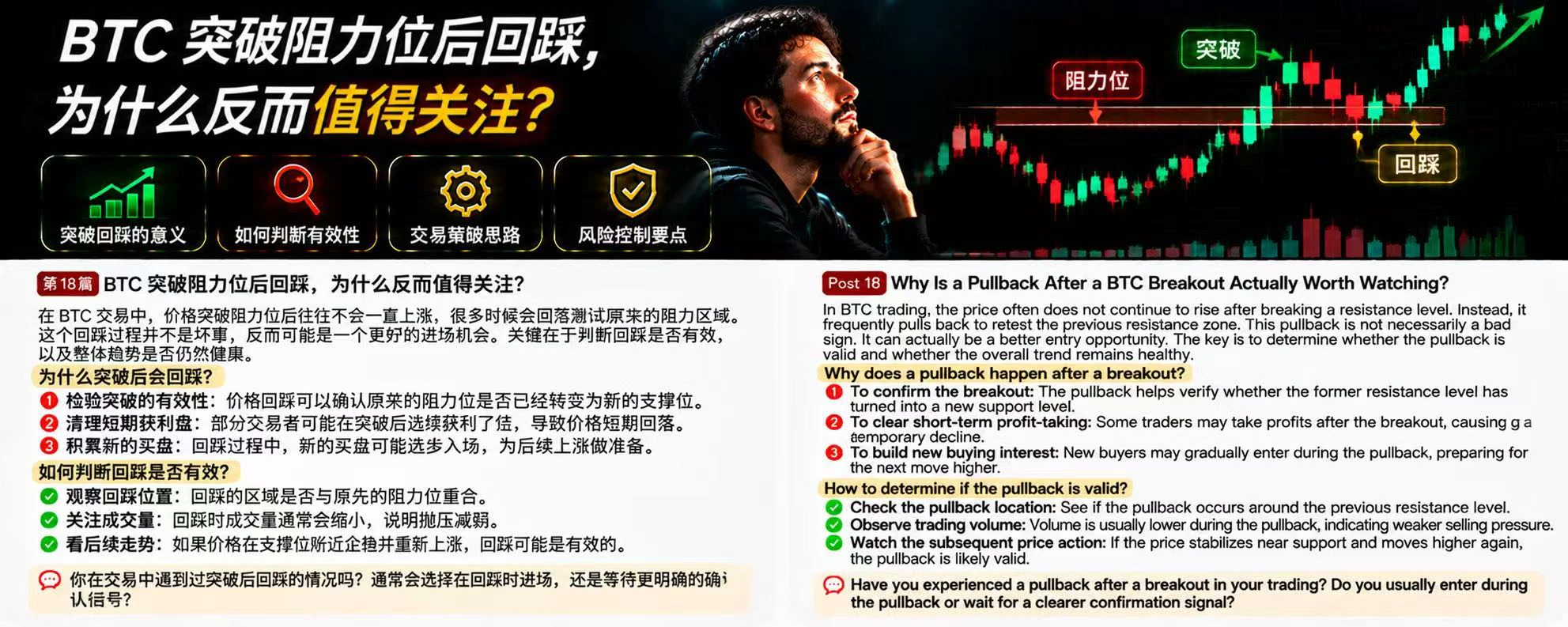
In BTC trading, many people see the price break through a key resistance level and immediately chase the rally, worried they’ll miss the upside. But experienced traders often watch for another important signal after a breakout: a retest.

Why is a retest after a breakout worth watching?

First, it can confirm whether the breakout is valid. After the original resistance level is broken, it may turn into new support. If the price pulls back to this area but does not break decisively below it, the market may be reaffirming its role as support.

Second, it can absorb short-term profit-taking. Afte
post-image
Wallets are not safes: Private keys, seed phrases, and addresses—which ones control your assets?

In the cryptocurrency world, many people have wallets, but may not truly understand how they work.

Some think assets are stored in wallets; some believe that as long as they remember their wallet address, they can recover their assets; others treat private keys and seed phrases as the same thing.

These understandings may seem similar, but in reality, there are key differences.

To understand wallets, first distinguish between three concepts: addresses, private keys, and seed phrases.

I. What ex
post-image
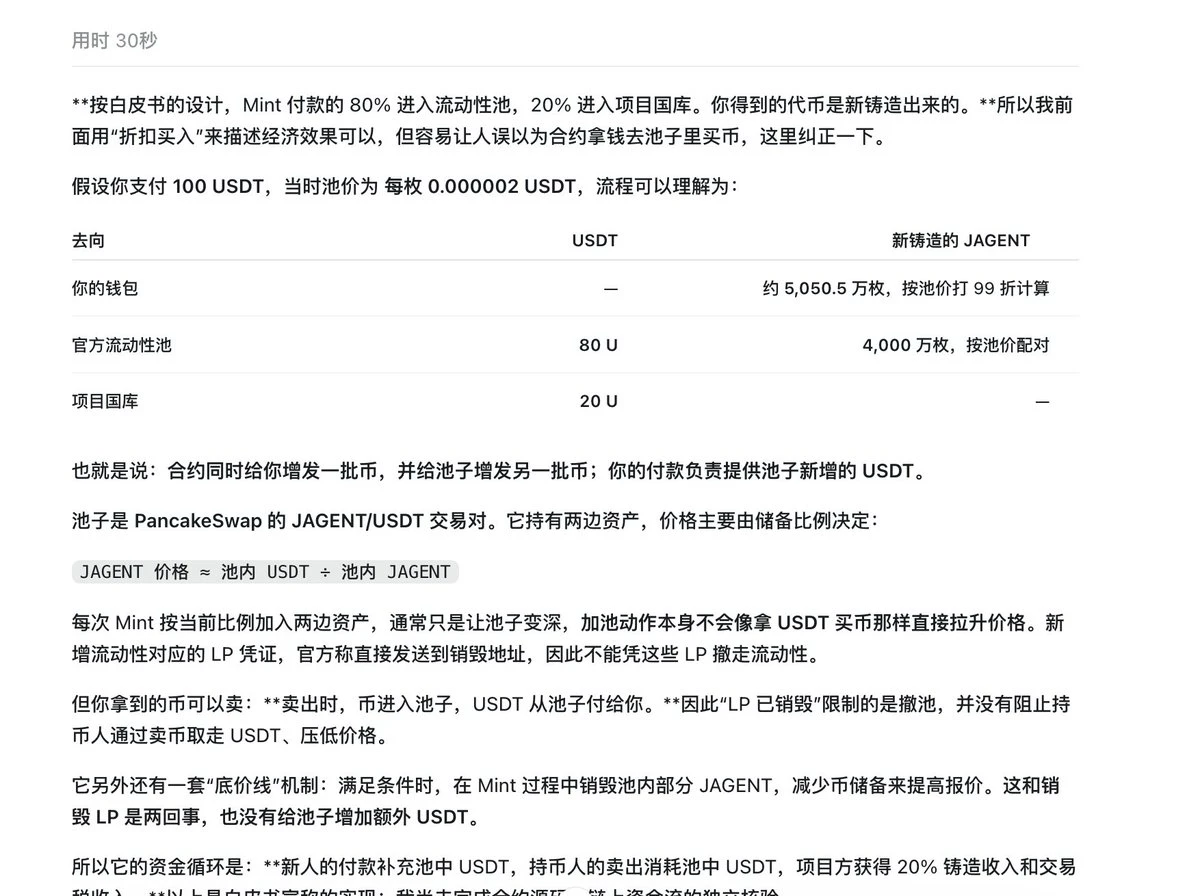
Suddenly, a bunch of people are shilling this jager and sending all kinds of invites. They say the pool is huge, but after reading the white paper, it seems like this will be hard to play.
Referrals are guaranteed profit. Filling it up now costs nearly 40U, and most of the rewards go to the referrer. The token has a 1% buy/sell tax.
The mint price is 1% below the current market price. 80%mint of the funds are used to add an equivalent amount to the v2 pool, and you receive an equivalent amount of tokens at market price. 20% is taken by the project treasury.
Here’s the problem: the mint price i
post-image
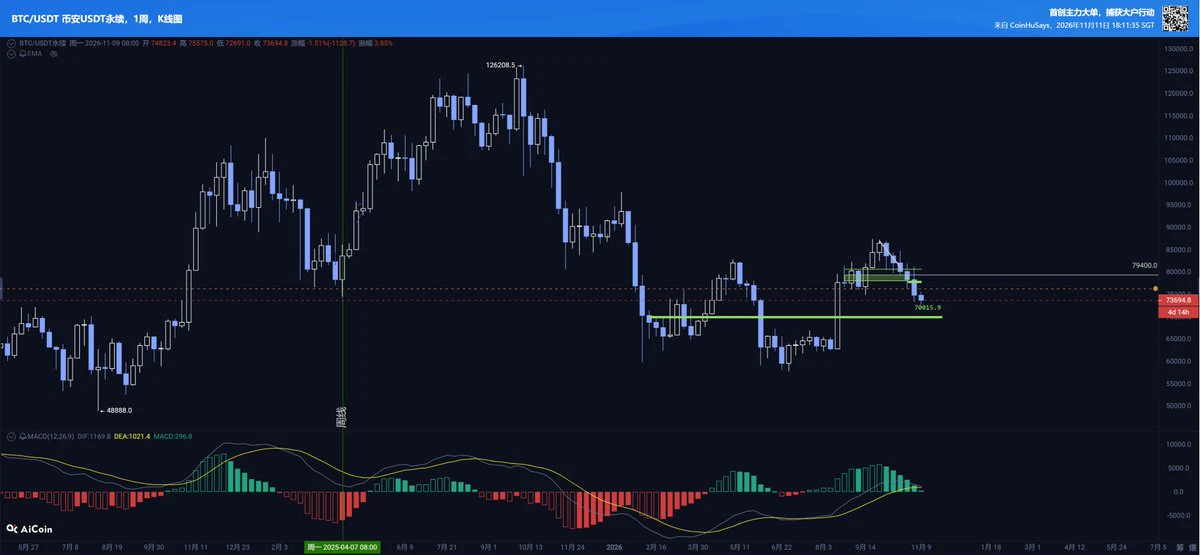
BTC is currently down for six consecutive weekly candles.
U.S. stocks have now stabilized, rising yesterday evening and again in tonight’s overnight session, especially AI hardware stocks, which carry significant weight.
However, U.S. stocks related to crypto are still falling, possibly due to concerns about Democrats taking power and pessimism about Trump’s crypto policies, compounded by worries early this morning that MicroStrategy could be removed from an index. They have yet to stabilize.
The next level to watch is a stabilization above 7000. #BTC
post-image
BTC-0.67%
MSTR-3.72%
When BTC Pulls Back, How Can You Tell Whether It’s a Normal Correction or a Trend Reversal?

In BTC trading, one of the most common mistakes people make is treating every drop as a trend reversal. As soon as the price pulls back, they rush to close their positions or even open short positions. But sometimes the market is simply undergoing a normal correction during an uptrend, after which the price strengthens again.

So, how can you distinguish a normal pullback from a genuine trend reversal?

First, observe the structure of highs and lows. In a healthy uptrend, the price usually forms progre
post-image
BTC-0.67%
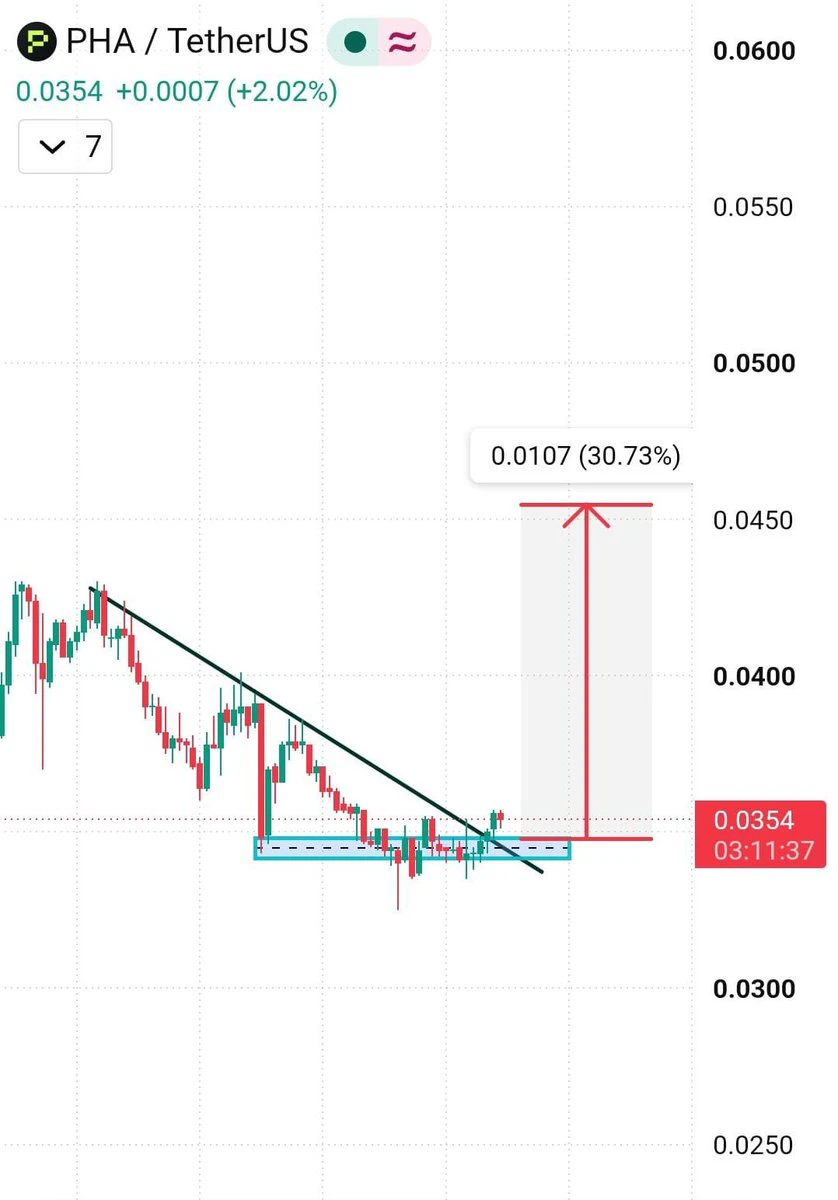
$PHA will Blast Today
Holding very Good
Best Chart in whole market
30-50% Soon
post-image
PHA+5.36%
hype market updates
live-cover
LIVE1,875
Why Aren't Limit Orders Necessarily Cheaper Than Market Orders?

Many traders believe that limit orders let them control the execution price, while market orders are prone to slippage, so limit orders must always be more cost-effective.

But in real-world trading, there is a frequently overlooked issue:

A better price does not necessarily mean a better overall trading outcome.

To determine whether an order type is suitable, you need to consider not only the execution price, but also the probability of execution, the cost of waiting, and the cost of missing a trading opportunity.

I. The Bigg
post-image
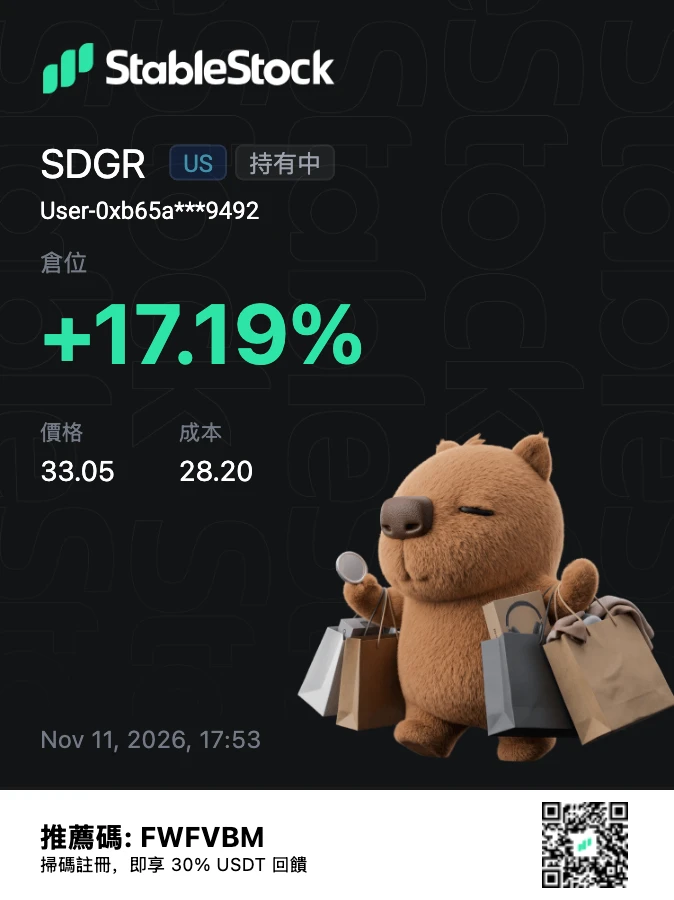
My holdings consist of semiconductor stocks I'm deeply underwater on and pharmaceutical stocks
I only know the healthcare sector thanks to Tea Master’s earlier $SDGR beginner’s guide to tracking and analysis
Too bad he’s gone into seclusion to train
Keep a close eye on @mdzzi and get them to unlock the locked post
post-image
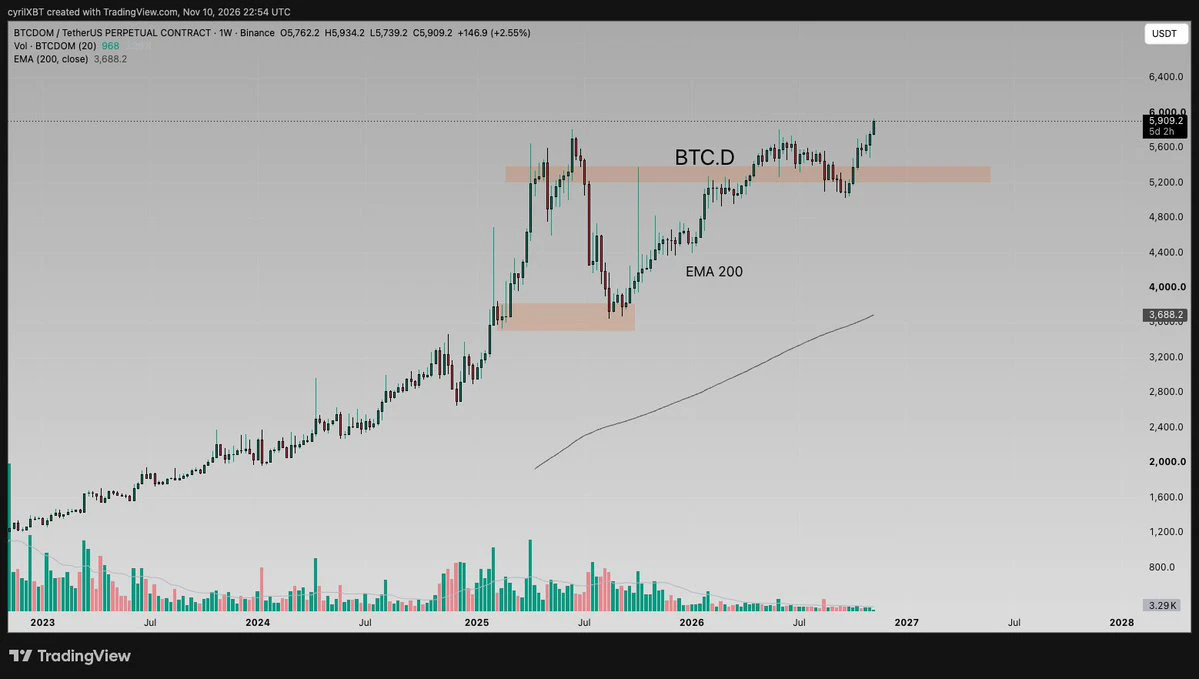
$BTC is down 2% today.
But its dominance just climbed above 60%.
That tells you everything about this market.
When BTC drops and its share of the market still goes up, it means altcoins are falling even harder.
The numbers:
BTC dominance: around 60.5%
ETH dominance: 10.3%, down from 10.6% a week ago
Altcoin Season Index: 38
A month ago that index was at 63.
Altseason didn't arrive.
It went backwards.
Meanwhile the total crypto market cap is around $2.49T.
It was over $3T just five weeks ago.
So where's the money going?
Out of altcoins.
Into Bitcoin.
Or out of crypto completely.
Until BTC.D sta
post-image
BTC-0.67%
ETH-1.26%
Why can the same token symbol correspond to completely different assets?

In Web3, many people look at a token’s name and symbol first when searching for it. But one easily overlooked fact is that the same name does not mean the same contract, and the same symbol does not mean the asset has the same risks and liquidity.

There are several key reasons behind this.

1️⃣ The same token can exist on different blockchains

Take USDT, for example. It can be transferred and used across different networks. Token versions on different networks may have different contract addresses and usage conditions.
post-image
How to Build a Trading Cost Accounting Sheet and See Your Real Profit?

Many traders review their trades every day, but may be missing one key question:

Your account looks profitable, but how much is actually left after all costs?

Without complete trading records, you may know which trades made money, but not what is steadily eroding your profits.

Today, we’re sharing a trading cost accounting method you can put into practice right away.

I. Record Every Trade

We recommend creating an Excel spreadsheet and recording at least the following information:

* Trade date and trading pair
* Entry
post-image
Many traders’ first reaction after losing money in their account is to make it back as quickly as possible. But there’s a very important mathematical point that is often overlooked: the percentage loss and the percentage gain needed to break even are not symmetrical.

Suppose your account originally had 1000 USDT.

If you lose 10%, your account is left with just 900 USDT. To get back to 1000 USDT from 900 USDT, you need to gain 100 USDT, which means a rise of about 11.11%, not 10%.

If you lose 20%, your account is left with 800 USDT, and you need a 25% gain to break even.

If you lose 30%, yo
post-image
Why can actual losses still exceed expectations even when a stop-loss is set?

Many traders believe that as long as they set a stop-loss, they have already controlled their risk.

But once they enter the market, they may find that the stop-loss was triggered, yet the account loss was greater than expected.

This is especially worth watching in the cryptocurrency market during sharp volatility, declining liquidity, or rapid contract liquidations.

The issue is:

A stop-loss is a risk management tool, but it does not mean you are guaranteed to execute at the preset price.

I. Different types of
post-image
Load More

Join 40 M users in our growing community

⚡️ Join 40 M users in the crypto craze discussion

💬 Engage with your favorite top creators

👍 See what interests you

Trending Topics

GateGlobalComplianceExpansion

16.7k Views364 Discussing

Gate continues to expand its global compliance footprint, now covering 81 regulated jurisdictions across Europe, North America, Asia, and Oceania. From MiCA and U.S. state-level MTLs to Japan’s FSA, Dubai, and Australia-related regulatory approvals, global exchanges are entering a new stage of compliance competition. Do you think regulatory strength will become as important as products and liquidity for exchanges in the future?

USOctoberCPIBeatsExpectations

88.29k Views2.66k Discussing

AnthropicIPOValuationCouldReach1.4T

12.71k Views1.61k Discussing

View More