Square
Following
Hot
News
Notifications
Profile
Share your thoughts
placeholder
Article
Why can account returns differ so much when prices barely change?

In cryptocurrency trading, many people focus on how much BTC has risen or fallen, but overlook a more important question:

With the same price movement, why do some people make more, some make less, and others lose money outright?

The answer lies not only in market movements, but also in leverage, position size, and trading costs.

Let's use a simple example to understand this.

Suppose your trading account has 1,000 USDT.

Scenario 1: Using 2x leverage

You use 1,000 USDT as margin to open a position worth 2,000 USDT.

If the
post-image
BTC-0.65%
Those Pokémon cards everyone has been crying over pulling lately have now been turned into on-chain cards redeemable for physical ones, and @Collector_Crypt, the project behind them, has officially been listed for spot trading on Coinbase.....
Its native ticker is CARDS, but its trading ticker on Coinbase is CARD—just in case you buy the wrong coin!!!
We used to worry about not pulling a rare card; now we worry about buying the wrong ticker. The scope of exams just keeps getting bigger as we grow up😑Can life stop being so exhausting all the time?
post-image
Trenches
ZIG
Z
bade
b
ZIG
0x8c...1145
Market Cap
$.
Change
.
24h Vol
$.
Holders
.
BTC
B
bade
b
BTC
C5xp...pump
Market Cap
$.
Change
.
24h Vol
$.
Holders
.
GM
G
bade
b
GM
0x13...7777
Market Cap
$.
Change
.
24h Vol
$.
Holders
.
Diamond
D
bade
b
Diamond
5VCE...pump
Market Cap
$.
Change
.
24h Vol
$.
Holders
.
STONK
S
bade
b
STONK
6GmA...UNgx
Market Cap
$.
Change
.
24h Vol
$.
Holders
.
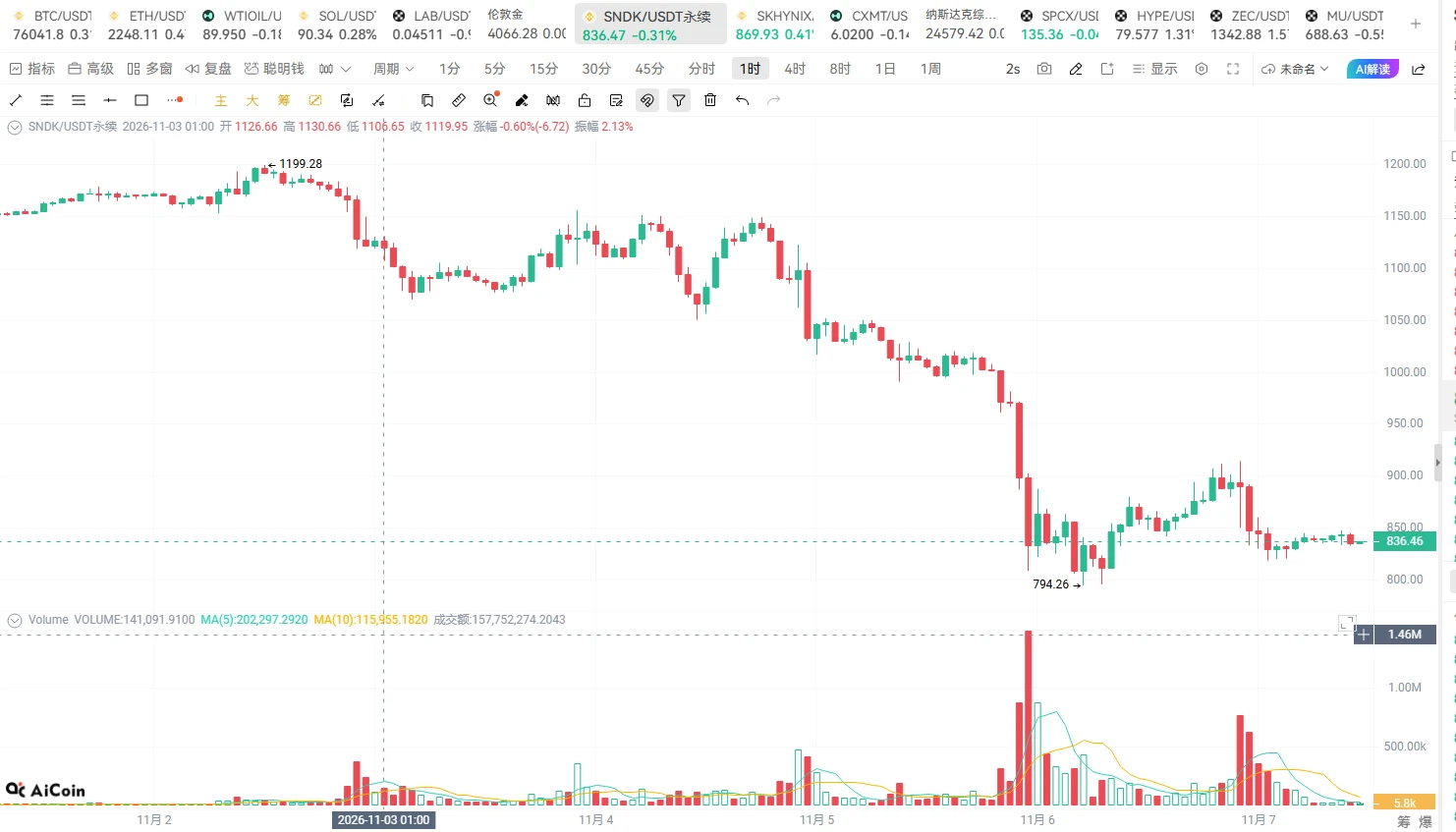
With this SNDK move, I kept a close eye on risk in advance—directional judgment and timing are what show real skill!

Over the past few days, while the market is still debating whether to buy the dip, I’ve been more focused on whether the trend has truly reversed. I don’t blindly go long during a decline, and I’m not quick to declare a reversal when a rebound hasn’t held above key resistance.

It fell from around 1200 to 794, rebounded to around 900, then got pushed back down. It’s currently moving sideways around 836.

Here are a few levels to watch closely:

830—810: Short-term support. A br
post-image
SNDK-0.18%
SKHYNIX+1.41%
BTC-0.65%
ITHome reports that “Ranger Rumble,” a mobile arena shooter based on Sony PlayStation’s “Ratchet & Clank” IP, has officially been discontinued. Its final update is now live, it will be removed from app stores on November 21, 2026, and its servers will shut down on May 1, 2027. The company says this will not affect other “Ratchet & Clank” games or PlayStation services.

A mobile game has barely launched before its countdown begins, leaving players with only a short window to experience it. At least the company has clearly laid out the delisting and shutdown schedule, so players won’t have to gu
post-image
SONY-1.99%
BTC-0.67%
🔥 Crypto and stock market volatility intensifies | Try grid trading at zero cost, exclusive benefits for new users
💰 Sign up to receive 10 USDT in bot trial funds, and trade for a chance to win prizes
🎯 The more you invest, the more prize draw entries you get:
✅ ≥150 USDT: +1 entry
✅ ≥5,000 USDT: +3 entries
✅ ≥50,000 USDT: +10 entries
🔥 Use Gate Futures Grid to trade $ETH and seize opportunities from volatility in popular assets
👇https://gate.onelink.me/7pdk/c5577810cff05c9b
BotsOfficial
🔥 Crypto and stock market volatility intensifies | Try grid trading at zero cost, exclusive benefits for new users
💰 Sign up to receive 10 USDT in bot trial funds, and trade for a chance to win prizes
🎯 The more you invest, the more prize draw entries you get:
✅ ≥150 USDT: +1 entry
✅ ≥5,000 USDT: +3 entries
✅ ≥50,000 USDT: +10 entries
🔥 Use Gate Futures Grid to trade $ETH and seize opportunities from volatility in popular assets
👇https://gate.onelink.me/7pdk/c5577810cff05c9b
repost-content-media
ETH-1.23%
“Digital gold” crumbles in the face of rate hikes; what really killed BTC was the unraveling of the AI narrative

Many say BTC fell because Friday’s nonfarm payrolls came in above expectations, stoking rate hike expectations. The timeline doesn’t add up.

On Thursday night, BTC plunged from $81,000 to $75,500, with its biggest 24-hour drop nearing 6%. Liquidations across the market topped $1 billion, and 88% of liquidated positions were longs.

The nonfarm payrolls report hadn’t even come out, and rate hike expectations hadn’t surged to 77% yet.

So who did it?

On Thursday, the Nasdaq 100 fel
post-image
BTC-0.67%
ETH-1.26%
SNDK-0.18%
MU+4.71%
  • 1
🇵🇾 Paraguay in turmoil, USDT once again becomes a safe haven
Ueno, Paraguay’s largest digital bank, collapsed after a scandal involving excessive loans to companies linked to relatives. The case triggered a political crisis, with the central bank governor resigning and the president facing impeachment.
• 3 million customers cannot access their accounts, and their deposits are trapped. Many have been forced to sell crypto to cover payroll and living expenses.
• Others have turned to USDT to preserve value. On the P2P market, USDT has at times traded around 13% above its usual price.
• The gua
post-image
A Brief Analysis of BTC’s Short-Term Trend Based on Dow Theory, Chan Theory, Wave Theory, Volume-Price Relationships, Order Flow, and Price Action (Strategy Recommendations)
Comprehensive Assessment
Dow Theory confirms that the break below 75,000 has accelerated the bearish trend
Chan Theory: every stroke makes a new low, a purely bearish structure
Wave Theory: the fifth subwave of wave C is extending, with a target of 72,000-74,000
Volume-price relationship: -$4.716 billion/$34.9 billion = epic bull-trap distribution
Order flow: extreme oversold conditions + technical buying
Price action: a t
BTC-0.67%
Layout: Bitcoin, Ethereum, Dogecoin
live-cover
LIVE1,599
  • 1
How can you tell whether a Web3 project is actually building, rather than just constantly publishing roadmaps?

In the Web3 industry, we often see grand visions, polished roadmaps, and constantly updated plans for the future.

But there is a question worth serious thought:

If a project keeps talking about the future but rarely shows verifiable progress, how should we assess how it is developing?

A roadmap tells you what a project plans to do; actual delivery helps you judge what it has accomplished.

You can assess a Web3 project in the following five ways.

1️⃣ See whether its goals are spe
post-image
🌈 #GateLiveStreamingInspiration -November 7
Go live with the following topics now to receive extra official support and promotional exposure!Today's Topic Recommendations:
🔹 The final rule allowing alternative investments such as crypto assets to be included in 401(k) retirement plans has been submitted to the White House for review.
🔹 High prices continue to erode purchasing power, and US consumer confidence remains weak.
🔹 OpenAI CFO: Data center investments will not change due to the midterm elections.
🔹 The US Democratic Party's AI regulatory "offensive" revealed: plans for intensive
post-image
COIN-1.56%
BTC-0.67%
INDEX+0.00%
  • 18
  • 7
$POL has recorded notable long liquidations around $0.09142, highlighting downside pressure and potential weakness among leveraged buyers. The key level to watch is whether price can reclaim the liquidation area or continues making lower highs. Failure to recover resistance could leave the market vulnerable to another bearish leg.
Support: $0.0880 – $0.0910
Resistance: $0.0940 – $0.0970
Next Target: $0.1000 – $0.1040
If sellers maintain control and support breaks, further downside liquidity could become the next focus. A strong reclaim of resistance would weaken the bearish outlook.
Let's go
post-image
POL-0.19%
#美股史诗级抛售 【ETF Alert】ETF: As of November 6, net outflows totaled $8.9 million (partial data), with cumulative outflows of $364.5 million over the past 3 days and outflows for 2 consecutive days, indicating a bearish bias. ① Market: BTC at $76041.9, down 0.08% over 24 hours, with a funding rate of +0.0081% (Beijing time 10:05); despite net outflows, the price has not fallen, suggesting the bearish impact has faded and bears have yet to exert pressure; ② Macro: The DXY at 102.28 (+0.72%) and the 10-year US Treasury yield at 4.859% (+2bp) rose in tandem, weighing on risk assets; WTI crude at 90.34
BTC-0.31%
Why Can Tokens Still Be Misidentified Even When Their Names and Symbols Are the Same?

In the Web3 world, many people start by looking at a token’s name, symbol, and icon when searching for it.

When they see a familiar name, they assume they have found the right asset; when a familiar token symbol appears in their wallet, they assume they have received the genuine token.

But this information alone cannot prove an asset’s identity.

Token names and symbols can be duplicated, and icons can be imitated. To verify an asset’s identity, you need to check the blockchain network, contract address, a
post-image
What Is the Liquidation Price? How Do Maintenance Margin, Unrealized Losses, and Forced Liquidation Relate?
In crypto futures trading, many people focus only on changes in profit and loss after opening a position, overlooking a key question: At what price could the position be forcibly liquidated? Understanding the liquidation price helps traders assess risk in advance and avoid losing control of their positions due to insufficient margin.
First, what is the liquidation price?
The liquidation price is the price level at which a position may trigger forced liquidation under specific margin rule
post-image
Weekend Trading
live-cover
LIVE675
#美股史诗级抛售 #每周来晒 #Gate股票畅聊季 How should we view the sharp drop in U.S. stocks?

On November 5, U.S. time, the S&P 500, Nasdaq, and Dow Jones fell 4.4%, 5.5%, and 3.4%, respectively, each posting its biggest single-day decline since the tariff shock in April 2025. AI-linked stocks led the losses: the Nasdaq 100 fell more than 6%, and the Philadelphia Semiconductor Index plunged about 12%, both marking their biggest single-day declines since March 2020.
How should we view the sharp drop in U.S. stocks and what comes next? Here are some brief thoughts:

I. Characteristics of this sell-off: sharp los
  • 2
The pullback long positions I repeatedly flagged yesterday rallied after several dips, with decent overall upside. Weekend volatility has been relatively low, so manage the range carefully. The multiple entries should have worked out pretty well overall. #美股史诗级抛售 #10月非农数据聚焦
  • 5
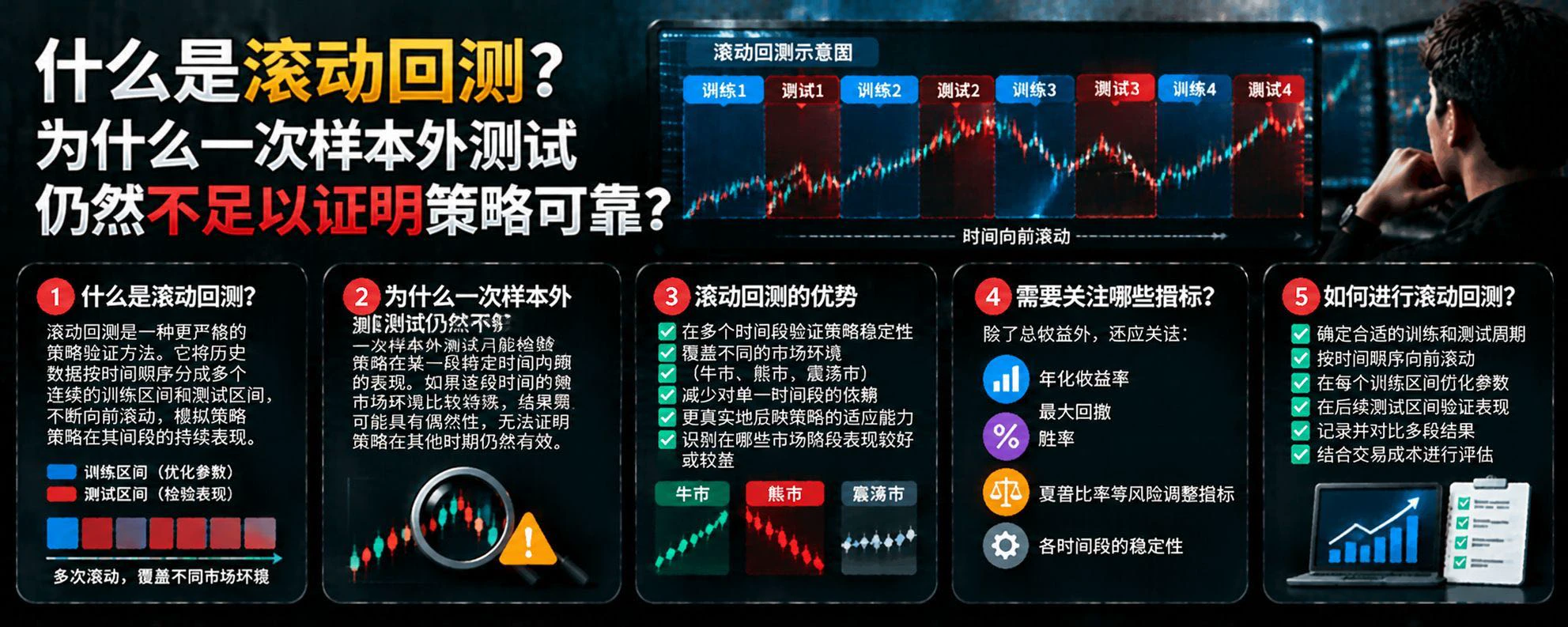
What Is Walk-Forward Backtesting? Why Might a Fixed Segment of Historical Data Fail to Adapt to the Ever-Changing Crypto Market?
In the cryptocurrency market, a strategy may perform exceptionally well during a bull market over the past two years, yet suffer frequent losses in the choppy market that follows.
This does not necessarily mean the strategy has no value at all; rather, market conditions may have changed. If a trading strategy is developed and tested using only a fixed segment of historical data, it may not adequately reflect its ability to adapt across different periods.
One method w
post-image
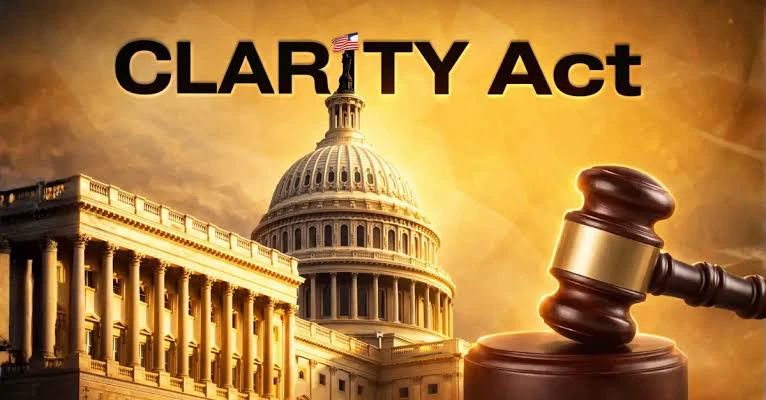
#CLARITYActCouldBeDelayedUntil2028
🏛️ The Legislative Gridlock: Why the CLARITY Act is Shelved Until 2028

The policy outlook for the United States digital asset ecosystem has completely shifted following the November 3, 2026, midterm election results. With the Democratic Party securing control of both houses of Congress, the highly anticipated Clarity for Digital Assets Act (CLARITY Act) has hit a massive political wall. Institutional analysts and policy experts now confirm that the comprehensive market-structure bill, designed to establish definitive operational boundaries for crypto, is f
Falcon_Official
#CLARITYActCouldBeDelayedUntil2028 #CLARITYAct The CLARITY Act Just Ran Out of Calendar: Why 2028 Is No Longer a Stretch
The bill that was supposed to give crypto a federal rulebook has now lost its easiest path. Democrats swept both chambers of Congress in the 2026 midterms, the Senate cloture vote failed 49 to 50 in September, and the current Congress ends on 3 January 2027. Analysts at TD Cowen say the bill could slip by as much as two years, and prediction markets now price passage before 2028 at roughly one in four.

What happened and what the numbers say

The House passed the Digital Asset Market Clarity Act, H.R. 3633, in July 2025 by 294 votes to 134. In the Senate, progress stalled. On 15 September 2026, a cloture vote failed 49 to 50, well short of the 60 votes needed to open debate. Any bill that does not pass before the current Congress ends must be reintroduced in the next one. The timing matters because a new Congress resets the calendar, the committees and the negotiating positions.

Why a Democratic majority changes the calculation

The September defeat was driven by Democratic objections, and those objections will shape the next round. Democrats have pressed for stronger safeguards on illicit finance, consumer protection and ethics, including conflicts involving elected officials. A Democratic-controlled Congress now decides which bills get hearings and in what order. The Senate majority alone does not revive the bill, because every procedural step still needs 60 votes.

What the markets are pricing

Prediction markets have moved sharply. Kalshi priced a roughly 6% chance of passage before 1 January 2027 when the midterm results came in. Traders priced about 15% for passage before 1 July 2027, 19% before 1 October 2027, and 26% before 1 January 2028. Polymarket had already cut its year-end odds to about 6.5% after the September vote. Those numbers are market-implied probabilities, not forecasts, and they can move quickly.

What analysts say about 2027

TD Cowen's Jaret Seiberg wrote that the election "sours the political environment for crypto." NEAR Foundation's legal chief expects negotiations to move into 2027, with tougher ethics provisions likely. Senator Kirsten Gillibrand, a Democrat who has backed crypto legislation, could serve as a bridge in talks, though the election does not signal support for any particular version.

Bitcoin is not the only exposed asset

Analysts draw a distinction between Bitcoin and the rest of the market. Bitcoin may be less exposed to market-structure rules than exchanges, token issuers and DeFi protocols, which face more direct rules on registration, custody and activity. A delay keeps that uncertainty alive, which can weigh on the sector even if Bitcoin itself holds up.

The stablecoin piece is already moving

Not every part of crypto regulation is stalled. The GENIUS stablecoin framework is scheduled to take effect on 18 January 2027, and SEC rulemaking continues. That means a delay in the broader market-structure bill does not mean a regulatory vacuum, though it does mean the most important questions about token classification and venue oversight remain open.

What could change the timeline

Three developments would matter. A bipartisan deal that addresses Democratic ethics and illicit-finance concerns would reopen the path. A lame-duck session before 3 January 2027 would be a last chance for the current bill, though the September vote suggests that window is narrow. Any revised bill in the new Congress would start over, with fresh committee work and new vote counts.

My read

The most likely outcome is that the CLARITY Act slips into 2027 at best, and that a final law arrives later than the industry hoped. The timing is less important than the content. Democratic priorities on ethics, consumer protection and illicit finance will shape what eventually passes, and that could mean tougher rules for DeFi front ends and developers than the current draft contemplates.

For investors, the practical implication is that regulatory clarity is unlikely to arrive as a single catalyst. It will come gradually through agency rules, enforcement choices and whatever legislation survives the next negotiation. Position for that slower path rather than waiting for one decisive vote.

What to watch

Watch the first hearings in the new Congress, any bipartisan text that addresses ethics and illicit finance, the GENIUS framework's launch in January, and prediction-market pricing for 2027 and 2028. Those signals will say more about the timeline than any single statement.

Where do you think the CLARITY Act lands, and does a 2028 timeline change how you position for crypto regulation? Share your view below.
This is market and policy education, not investment advice. Legislative timelines are uncertain, and prediction-market prices move quickly and reflect trader sentiment rather than confirmed outcomes.
#ShareWeekly
#WCTCS9
repost-content-media
KALSHI+0.00%
CRCL-2.30%
COIN-1.56%
BTC-0.67%
ETH-1.26%
  • 2
Load More

Join 40 M users in our growing community

⚡️ Join 40 M users in the crypto craze discussion

💬 Engage with your favorite top creators

👍 See what interests you

Trending Topics

USAIStocksHitHard

13.32k Views3.62k Discussing

U.S. stocks sold off sharply on Thursday, November 5 (UTC). The Nasdaq closed down around 5.5%, entering correction territory, while the Philadelphia Semiconductor Index plunged roughly 12%, with chip stocks including $NVDA and $AMD posting steep losses. Beyond profit-taking, investors are growing concerned about the pace of AI data center construction, capital spending, and future returns on investment. The key question now is whether the AI sector’s lofty growth expectations need to be repriced. Where do you think the next opportunities will emerge: chip stocks, tech giants, or other sectors?

USNonfarmPayrolls

21.05k Views4.22k Discussing

StakeOnLaunchpoolToShare450KVLX

827 Views741 Discussing

View More