












#半导体存储股大涨 #WCTCS9 #作手分析
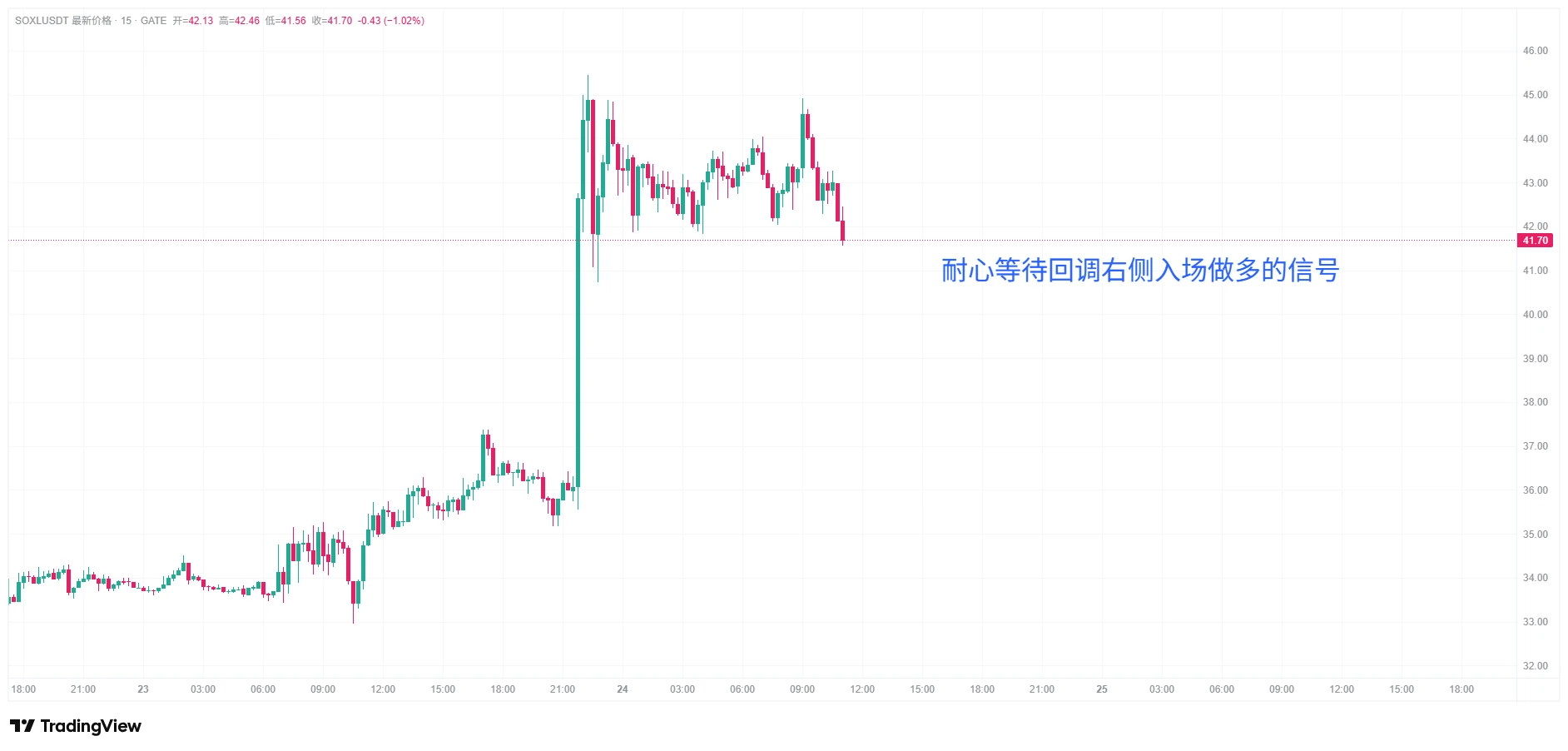
🔥 Semiconductor stocks surge 14%! Downward momentum is starting to fade. Trader’s view: An oversold recovery is underway—patiently wait for a pullback to go long!
Trading watchlist: $NVDA $AMD $MU $INTC
On November 23, U.S. semiconductor stocks rallied across the board!
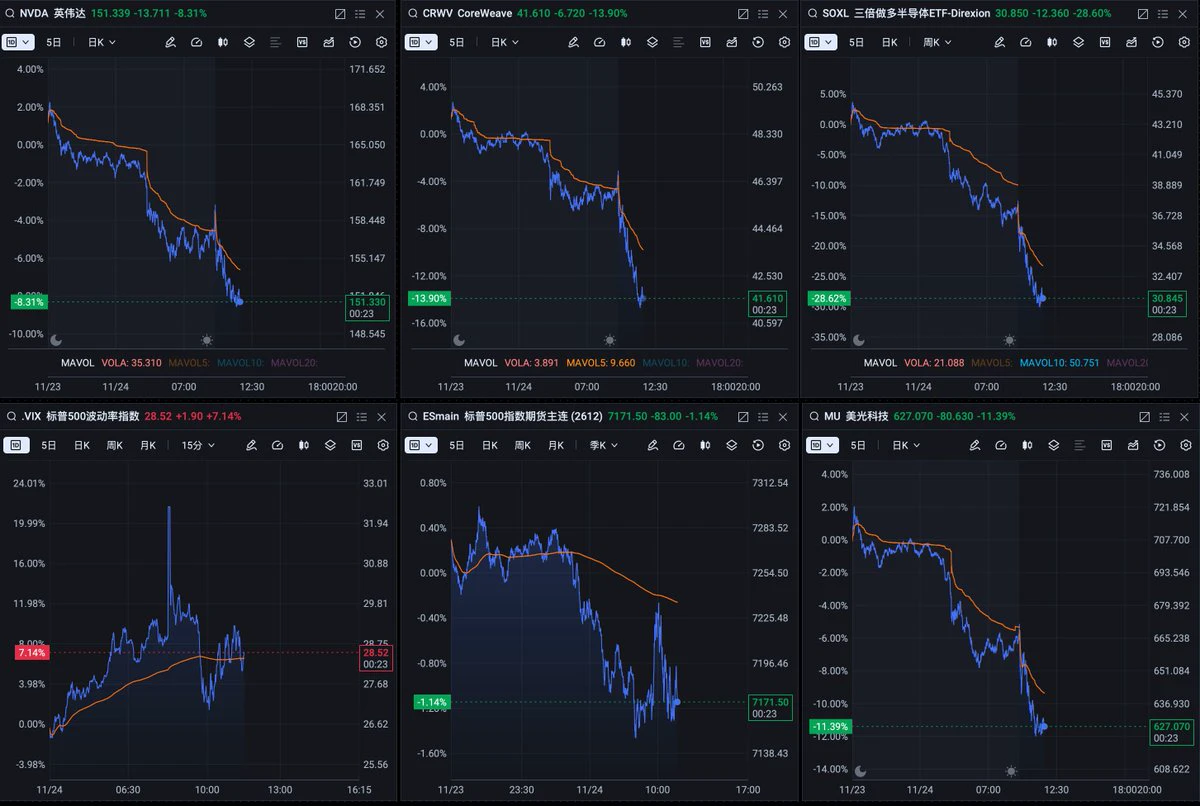
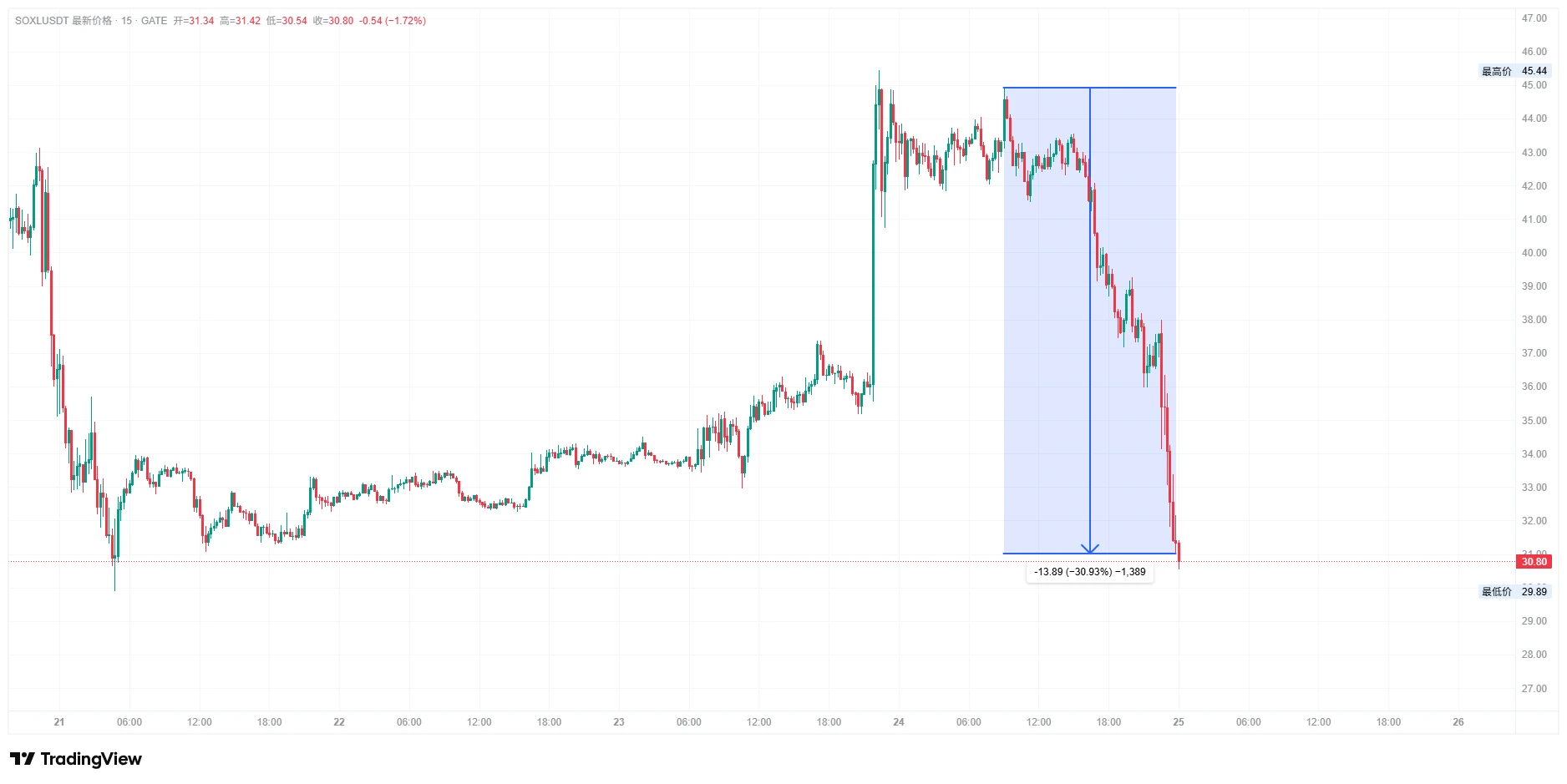
The Philadelphia Semiconductor Index (SOX) surged 14.03% in a single day, its biggest daily gain since April 2025. $NVDA rose 31.48%, $MU rose 19.04%, while $WDC and $STX each gained over 13%.
Jensen Huang’s return to NVIDIA became an important catalyst for this rebound, as AI tech stocks recovered across the board.
But here’s the question: Was this rally an oversold rebound, or the start of a new primary uptrend?
I. Trader’s view: An oversold recovery is currently more likely
Historical data shows that SOX’s highest close was 14634.72 points on June 22. By November 20, it had fallen to 8408.59 points, a cumulative drawdown of about 42.5%.
After months of correction, concerns over AI capital expenditure, valuations, interest rates, and the NVDA management event were released all at once. After such a steep decline, a sudden positive catalyst triggering a concentrated recovery is not surprising.
But short-term market panic does not mean the long-term value of high-quality tech companies has disappeared.
II. Technical structure: Downward momentum is fading, and the one-way decline has been broken
Previously, the semiconductor sector continued to weaken, with limited rebounds and prices repeatedly probing lower.
This 14% surge clearly broke the short-term pattern of consecutive declines. Bulls have begun a strong counterattack, sending a positive signal.
But note: A single strong bullish candle can change the short-term downward rhythm, but it cannot confirm that the medium-term trend has reversed.
Next, watch three signals closely: ① Whether a pullback can hold key support near the 21-day and 55-day moving averages; ② Whether a higher low can form, and whether price holds above the retest after breaking through previous resistance; ③ Whether trading volume and bullish momentum can persist on the next advance.
Only as these conditions are gradually confirmed is an oversold recovery more likely to evolve into a new uptrend.
III. Trader’s trading plan: Don’t chase the rally; wait for a pullback to go long
We remain bullish on the long-term development of the AI and semiconductor industries, with a focus on $NVDA, $AMD, $MU, and $INTC.
But after a one-day surge, the risk of chasing highs has clearly increased.
The strategy is clear: Don’t chase the first big bullish candle! Patiently wait for a pullback or sideways consolidation, and watch key support. If the retest holds and another right-side long signal appears, then consider entering in the direction of the trend.
If the rebound is followed by a renewed break below the key structural low, the recovery thesis will need to be reassessed.
Finally, the trader believes the market has sent positive signals, but truly good trading opportunities come not from chasing a surge, but from waiting for an entry point with controlled risk.
Macro sets the direction; structure determines the entry. Let the market provide the answer, rather than trying to predict it.
What do you think comes next for the semiconductor sector?
A. A new primary uptrend begins
B. The oversold recovery continues
C. Rally fades and prices test lows again
D. Wait for a confirmed pullback before going long
(Personal technical analysis and trading views, for discussion only; not investment advice.)