












#美股AI概念股普跌 The AI industry is still growing, but the market is starting to discount expectations of “unlimited investment.”
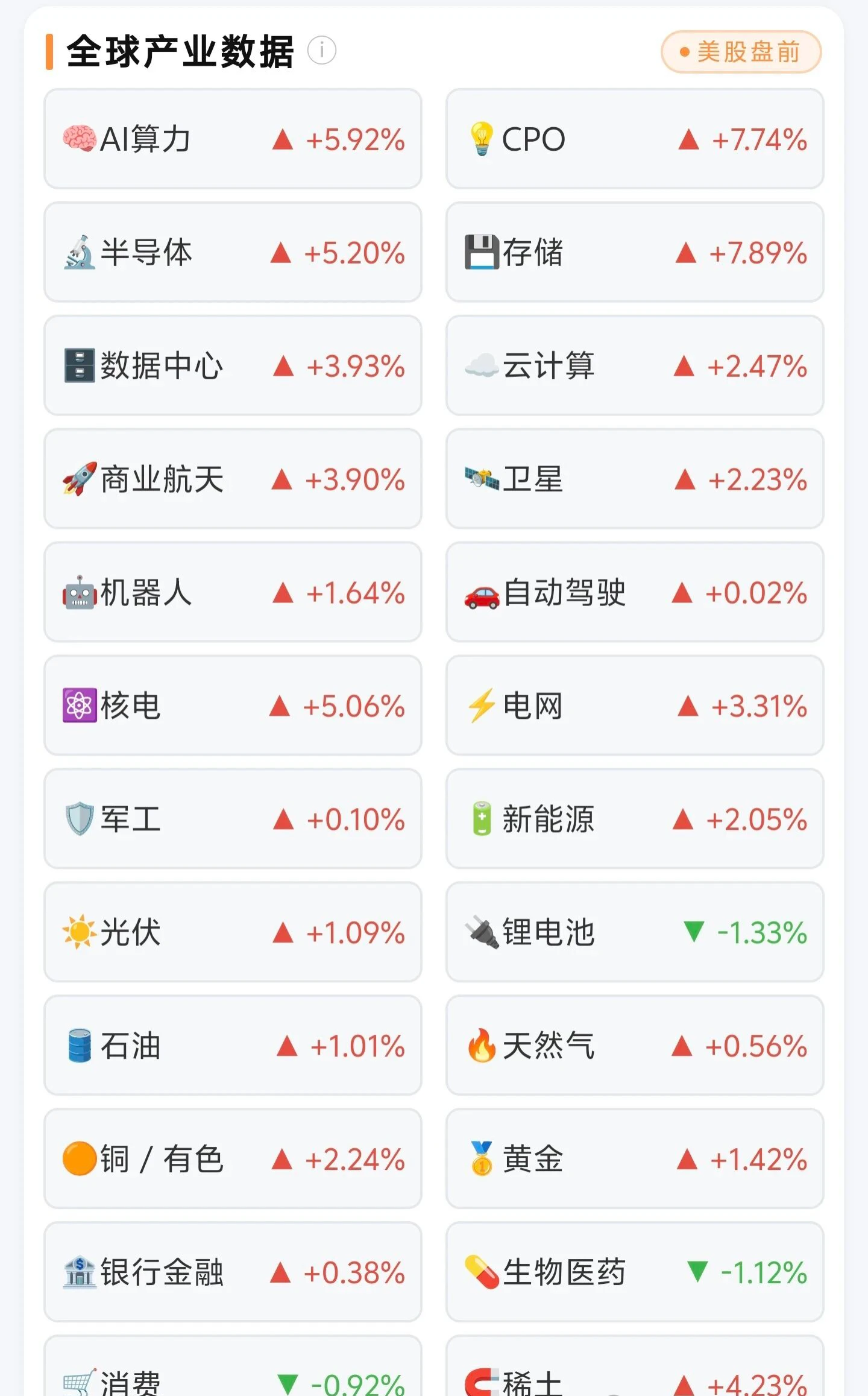
On November 5, the Nasdaq fell 5.52%, and the Philadelphia Semiconductor Index fell 12.25%. Chip stocks fell the hardest, while cloud providers like Microsoft and Amazon saw much smaller declines. This shows that investors are reassessing companies, not that AI demand has suddenly disappeared.
Why did the market fall this time?
Policy expectations shifted: After the midterm elections, data center approvals and AI regulation may tighten.
Returns are being questioned: Free cash flow at Google, Meta, and others has turned negative, putting the problems of heavy investment and slow returns in the spotlight.
Interest rates are weighing on valuations: Rising Treasury yields are hitting high-valuation tech stocks first.
Crowded trades are unwinding: Leveraged ETFs and quantitative funds cut positions in unison, amplifying the declines.
What signs suggest the trade is really cooling?
Earnings expectations have not been significantly revised down; stock price declines are mainly driven by P/E multiple contraction, indicating that valuations are being repriced.
Companies with higher capital expenditures have fallen harder, as the market starts scrutinizing returns on investment.
Pure-play concept stocks and highly leveraged computing-power rental companies face more pronounced shakeout pressure.
Bernstein believes the long-term thesis remains intact, but a full recovery will take time.
Looking ahead, markets will remain volatile in the short term. For the market to truly enter a cooling phase, watch whether data center construction actually slows, cloud providers cut spending, and AI revenue continues to materialize. For now, this looks more like a shift from “telling stories” to “checking results,” not a bubble bursting like in 2000. #WCTCS9