
Share your thoughts
placeholder
Article
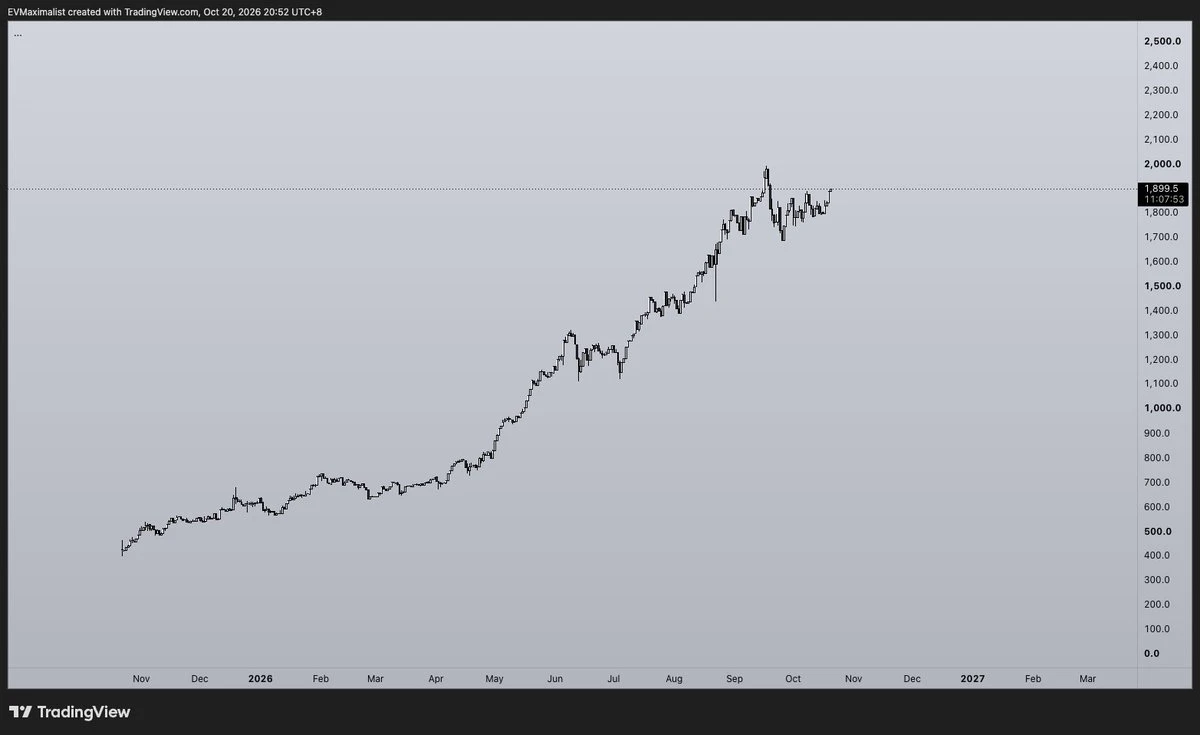
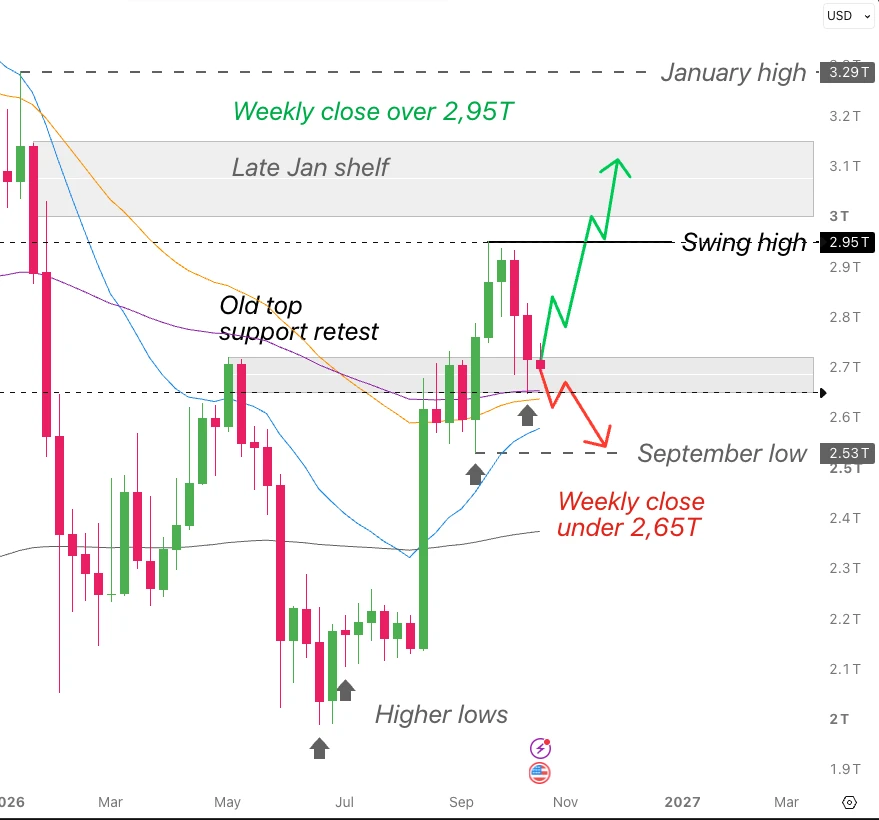
So the Kairos monthly window forecasted the region for the monthly low..
While most of you waited for the 4 year cycle 😅
post-image
5-Minute Scalping: Why I Choose Not to Trade It?
Many people think the 5-minute timeframe makes money fast, but today I want to make it clear: I don't touch the 5-minute timeframe.
Why? BTC is currently moving sideways in a narrow range of 78,000-79,000, with low volatility and shrinking trading volume. In this environment, the 5-minute timeframe is basically noise—neither rises nor falls have any follow-through; it's purely a coin toss.
The core of event contracts is judging the price direction, but TWAP is smoother over 5 minutes, making it difficult for an extreme single candle to change th
ETH-0.42%
$MU /USDT is about to break range in a direction nobody expects.

$MU /USDT - SHORT

Trade Plan:
Entry: 1033.36 – 1038.18
SL: 1058.89
TP1: 1018.43
TP2: 1006.87
TP3: 989.53

Why this setup?
Why now? The 4h trend is range, but the 1h price at 1034.99 sits above the entry zone of 1033.36 to 1038.18, and the 15m RSI at 73.83 signals short-term exhaustion. The 1h ATR of 9.632742 shows enough volatility to push from the entry reference of 1035.77 toward TP1 at 1018.43 and TP2 at 1006.87. Invalidation at 1006.23 is the hard line that would flip the entire setup.

Debate:
Are we hitting TP2 or get
MU-0.20%
generational bottom
$bitcat
post-image
🚨 VIP SIGNAL: $VVV /USDT (SPOT & FUTURES) 🚨
Pair: $VVV /USDT
Direction: LONG 🟢
Trade Details:
Entry Zone: 24.5000 - 25.8000
Leverage: 3x - 5x
Targets:
🎯 Target 1: 27.5000
🎯 Target 2: 29.3000
🎯 Target 3: 31.5000
🎯 Target 4: 34.0000
Stop Loss:
❌ 22.8000
$VVV ‌#GateGloballyLaunchesStockEventContracts
post-image
VVV+9.84%
  • 8
  • 1
The cold hard reality about XRP..
post-image
XRP-0.42%
Wintermute received 2.5M $LAPTOP from the Laptop Token team and is now dumping it on-chain.
So far, Wintermute has sold 466,255 $LAPTOP ($2.08M) at an average price of $4.47.
3% APY isn't high? But you have to calculate the “opportunity cost”
Some may say: 3% APY is no better than providing liquidity on-chain or buying some U.S. Treasuries, which offer higher yields.
But the issue is that the USDT in your account was never intended for earning yield.
What is it for? It is there to wait for opportunities. When Bitcoin drops to a support level, you need to buy; when your futures margin is insufficient, you need to top it up; when you spot a good altcoin opportunity, you need to jump in. In all these scenarios, the funds must be in your trading account and available a
BTC-0.45%
USDC0.00%
Everyone is about to get proven wrong on $H /USDT right now.

$H /USDT - SHORT

Trade Plan:
Entry: 0.08027 – 0.08090
SL: 0.08361
TP1: 0.07832
TP2: 0.07681
TP3: 0.07454

Why this setup?
Why now? The daily trend is bearish with a 95 percent confidence, and the 1h price sits at 0.08058, which means the short bias is already in play on the higher timeframe. The 15m RSI reading of 54.19 shows the asset is not yet overbought, leaving room for further downside rather than a bounce. The 1h ATR of 0.00126 tells us the hourly volatility is small enough that a clean move toward TP1 at 0.07832 is reali
H-1.21%
I originally just wanted to grab a free breakfast, but the market ended up making dumplings for me for half a year.
When I opened the chart this morning, $SKHYNIX had finished its pullback and was holding firm. I stared at that level for a few seconds, and the funds were clearly sneaking in. When this kind of setup appears, not giving it a try would be doing myself a disservice. Entry price: 1235.91. No hesitation.
The price is now at 1427.2, with floating profit of +1103.94%. The rhythm of this move feels great—really great. Who understands the feeling of waking up to your account surprising
post-image
SKHYNIX+2.27%
BNB-1.92%
ETH-0.42%
➟ @solana is becoming x402’s machine-payment home.
> 37M+ x402 transactions.
> 20K+ buyers & sellers.
> ~70% of monthly x402 volume.
In one 7-day stretch, @BlockRunAI settled 5.4M agentic payments through @PayAINetwork, including 3.3M USDC transfers.
That scale matters because most x402 payments are tiny.
Agents are paying per request for inference, APIs, search and data thousands of times a day.
The stack around that flow is also filling out:
Settlement @PayAINetwork / @corbits_dev / @Figment_io
Paid data & services @BlockRunAI / @syra_agent / @coing ecko
Discovery @xona_agent / @x402scan
Ide
post-image
SOL-1.24%
USDC0.00%
$xauusd still looking for buy setups, I'm patience to see price mitigate FVG, then continue buy.
post-image
#ETH ETH May Use Stablecoins to Pay Gas, Weakening ETH Demand?
A post on X recently spread rapidly, claiming that Ethereum’s next major upgrade will allow users to pay Gas directly with stablecoins instead of ETH. After seeing the news, many traders immediately formed two extreme views. Some believe ETH’s underlying value has collapsed: with Gas no longer tied to ETH, ETH has lost its core demand. Others see it as extremely bullish, believing Ethereum can capture a massive stablecoin user base.
Market data does not lie. The latest DefiLlama data shows that Solana’s weekly DEX spot trading volu
post-image
ThisIsTranslateContent:
#ETH ETH may use stablecoins to pay Gas, weakening ETH demand?
A post on X recently spread rapidly, claiming that Ethereum's next major upgrade will allow users to pay Gas directly with stablecoins instead of ETH. After seeing the news, many traders immediately formed two extreme views. Some believe ETH's underlying value is collapsing: with Gas no longer tied to ETH, ETH will lose its core demand. Others see it as extremely bullish, believing Ethereum can attract a massive stablecoin user base.
Market data does not lie. The latest DefiLlama data shows that Solana's weekly DEX spot trading volume is $11.49 billion, compared with just $7.62 billion for Ethereum. Solana's spot trading volume has already surpassed that of the Ethereum mainnet. After the meme coin market boom, new retail users, projects, and capital have continued moving to Solana, BNB Chain, and Base.
ETH's market capitalization has stagnated for a long time, while the foundation continues selling ETH at market highs, amplifying selling pressure each time. Everyone must now face one question: competition among public chains has entered a phase of fighting over existing market share. The BNB, Solana, and Base ecosystems continue to grow rapidly, and users are becoming accustomed to low-cost, fast-confirmation, low-barrier on-chain interactions. Ethereum mainnet fees are high, the operational barrier is complex, upgrades take a long time to implement, and the foundation frequently reduces its ETH holdings.
Is Ethereum's launch of stablecoin Gas payments a means of self-rescue, or a forced compromise of its underlying rules? Will ETH gradually lose the value logic of a native token? Is Ethereum truly the underlying infrastructure of the sector, or an aging public chain being left behind by the times? Based on the latest on-chain data and proposal information, this article breaks down all the facts and lists the benefits and risks, without providing any investment advice.
I. Breaking Down the Truth: Paying Gas with Stablecoins Is Not an Underlying Reform, but Merely a Surface-Level Payment-on-Behalf Function
The information circulating online contains serious misunderstandings. Ethereum community member Leo Lanza corrected the misinformation within an hour of the post gaining traction.
The EIP-8141 proposal, also known as Frame Transactions, is planned for inclusion in the 2027 Hegotá upgrade, and its authors include Vitalik.
There is only one core fact: protocol-level settlement will still be forced to use ETH, and the underlying layer will not accept stablecoins such as USDC as Gas. The stablecoin payment users see is a third-party contract advance-payment model enabled by account abstraction. A wallet or service provider first advances ETH to the network, while the user pays the provider in USDC to settle the transaction. Underlying accounting, fee burning, and staking security mechanisms all remain unchanged. Based on this technical fact, the benefits of this upgrade can be summarized as follows, all of which are objective and achievable changes.
1 Lowering the barrier for new users. Many users' wallets contain only stablecoins, and having to buy a small amount of ETH for a single transfer is the biggest obstacle to usage. After the upgrade, users will not need to hold ETH and can complete on-chain operations using only stablecoins, activating a large amount of dormant stablecoin capital.
2 Narrowing the user-experience gap between Ethereum and emerging public chains.
Solana and BNB Chain users only need the native coin to complete all operations, without the barrier of preparing additional assets. This upgrade addresses a long-standing pain point that Ethereum has been criticized for.
3 It will not undermine ETH's underlying value model. Network security relies on ETH staking, and the Gas-burning mechanism remains unchanged. Increased on-chain activity will generate more Gas consumption and indirectly increase demand for ETH.
4 Meeting the needs of institutional users. Institutions hold large amounts of stablecoins and are unwilling to hold additional ETH as a reserve for fees. Stablecoin-funded Gas payments make it easier for institutional capital to conduct business directly on the Ethereum mainnet, expanding Ethereum's institutional customer base. The benefits have clear limits. EIP-8141 is still only a draft, is not scheduled to launch until 2027, and has no substantive short-term implementation. Any short-term market movement is merely sentiment-driven speculation.
II. Cross-Chain Comparison: Emerging Public Chains Are Taking Traffic, and Ethereum Mainnet Is Losing the Retail Market
The latest on-chain transaction data shows that differentiation among public chains has become entrenched.
Solana: Weekly DEX trading volume is higher than that of Ethereum mainnet, with meme trading and high-frequency retail trading almost entirely concentrated on this chain. Transaction confirmations are fast and fees are extremely low, making it suitable for short-term speculation. Daily active addresses continue to rise, and new projects prioritize deployment on Solana. The ecosystem loop is simple: the more on-chain trading there is, the higher SOL consumption and demand become, making the token's value logic clear.
BNB Chain: Relying on exchange traffic, it has enormous daily transaction counts, while small transfers, high-risk token projects, and retail trading volumes remain stable over the long term. It has a large user base and a low learning cost. BNB is tied to exchange revenue and public-chain Gas burning, providing clear value support.
Base: An Ethereum Layer 2 launched by Coinb. L2Beat data shows that Base holds the largest share of Ethereum Layer 2 TVL, and many compliant projects and new stablecoin projects prioritize deployment on Base. Transactions are completed on Layer 2 and rely on Ethereum's underlying security, but the vast majority of transaction traffic is diverted directly and no longer passes through Ethereum mainnet.
Ethereum mainnet: Its TVL remains the industry leader, but the proportion of mainnet transactions continues to decline, with 94% of Ethereum ecosystem transactions having already moved to Layer 2 networks. The mainnet increasingly carries large-value DeFi, RWA, and institutional assets. Retail traffic, meme activity, and new projects no longer prioritize the mainnet.
All emerging public chains follow the same rule: users must use the chain's native token to pay Gas, and the hotter the ecosystem, the stronger the demand for its native token. Ethereum is the only leading public chain planning to allow third parties to pay Gas on behalf of users with stablecoins. This is the root of the market's doubts. Other public chains are strengthening the value capture of their native tokens, while Ethereum is reducing the necessity for users to hold ETH.
III. The Core Question: Why Has Ethereum Chosen This Path? Is It Unable to Survive?
The answer is that Ethereum is not unable to survive. It has actively chosen a sector positioning completely different from Solana and BNB, but this choice comes with significant costs.
Solana, BNB, and Base aim to capture retail traffic, meme activity, and short-term trading, using native tokens to capture transaction value and pursuing short-term ecosystem heat. Ethereum's positioning is as the underlying infrastructure of the industry. The core metrics for infrastructure are not short-term meme popularity, but security, asset-carrying capacity, and institutional compatibility. Ethereum carries the industry's largest amounts of stablecoins, RWA assets, and large-value DeFi capital, while Layer 2 networks across the industry all depend on Ethereum's underlying security. Its core revenue does not come from small retail Gas fees, but from underlying asset custody and security services. If Ethereum follows emerging public chains into the meme sector, it has no advantage. Its underlying architecture cannot match Solana's low-cost, high-frequency trading.
Competing from a differentiated position is the only choice. Stablecoin Gas payments are intended to lower the barrier to using infrastructure, attract institutions and ordinary users, and expand the scale of underlying assets, rather than compete for short-term crypto speculators. However, Ethereum has unavoidable internal flaws, which are also the fundamental reason market confidence continues to weaken. On-chain records show that from July to October 2025, the foundation sold a cumulative 21,000 ETH over three months. In March 2026, the foundation sold another 5,000 ETH over the counter. The foundation explained that the sales were used to pay operating expenses. But when the market is weak, the foundation's continued reduction of ETH holdings at relatively high prices directly amplifies selling pressure and continuously erodes community consensus. Ethereum's upgrade schedule has been repeatedly delayed over the long term. From the Merge to sharding and scaling, the implementation cycles for many technical plans have continued to lengthen, repeatedly disappointing market expectations. The foundation lacks governance transparency, and ordinary community members have no say in major decisions. These internal issues exert stronger downward pressure on ETH's price than competition from external public chains.
IV. Objective Risk Review: All Participants Need to Pay Attention
This article does not provide any investment advice. Everything below is an objective risk analysis.
The benefit realization cycle is too long.
The EIP-8141 proposal is scheduled to launch in 2027, and the proposal could still be modified, delayed, or even canceled. Any short-term market rise is merely news-driven and lacks fundamental support. After the excitement fades, the market will return to its original trend. The foundation's selling risk will persist over the long term. The foundation's treasury holds a large amount of ETH and requires funds each year to maintain development, so continued selling remains possible in the future. Whenever the market stages a small rebound, the foundation's token sales will create selling pressure.
Layer 2 networks continue to divert value from the mainnet.
Trading volume on Layer 2 networks such as Base continues to expand, with the vast majority of transactions completed on Layer 2 and mainnet Gas revenue showing sluggish growth. The total amount of on-chain assets is growing, but ETH's efficiency in capturing value is declining, creating a situation in which the ecosystem prospers while ETH does not rise.
Competitors continue to capture market share.
The meme ecosystems and retail user bases of Solana and BNB will continue to expand. A new generation of public chains is iterating faster and offering better product experiences, and will continue diverting project teams and retail capital. Ethereum will find it difficult to reclaim the retail trading market.
This upgrade cannot solve the core weaknesses.
Stablecoin-funded Gas payments only address the entry barrier for users; they cannot resolve the core problems of mainnet fee volatility, slow scaling, and weak value capture. They can improve the user experience but cannot reverse the problem of value decoupling.
Systemic regulatory risks in the industry.
Global regulatory policies for crypto assets remain uncertain. All public chains and tokens will be affected by macro liquidity and policy changes, and Ethereum is no exception.
V. Conclusion: Ethereum Has Not Been Abandoned by the Times, but It Must Accept the Reality of Sector Stratification
Considering on-chain data, proposal information, and cross-chain comparisons, the conclusion is clear.
Ethereum is not unable to survive, nor has it been abandoned by the times. However, the public-chain sector has become stratified, and Ethereum is no longer an all-purpose public chain. Solana, BNB, and Base handle retail trading, meme activity, and high-frequency small-value transactions. Ethereum mainnet handles underlying security, large-value assets, institutional finance, RWA, and DeFi infrastructure. The two sides are not engaged in entirely zero-sum competition; their sector positioning is completely separate.
The upgrade enabling stablecoin Gas payments is not an abandonment of ETH's underlying position, but an inclusive improvement to infrastructure that lowers the barrier for institutions and ordinary users. Underlying Gas settlement remains locked to ETH, and ETH staking, burning, and the security foundation will not change.
Ethereum's greatest risk is not external competitors, but internal governance. The foundation's continued token sales, opaque governance, and delayed technical upgrades are steadily undermining market confidence.
The key to Ethereum's future is not a short-term price surge, but two things.
First, whether the foundation adjusts the pace of ETH treasury sales and improves governance transparency.
Second, whether the EIP series of upgrades can be implemented as planned, and whether the value-recapture mechanisms of Layer 2 networks can be optimized. If internal governance issues cannot be improved, ETH's long-term upside will remain constrained even if its underlying infrastructure position remains unchanged. If governance and scaling are implemented successfully, Ethereum can retain its leading position in underlying infrastructure and maintain long-term value.
The public-chain industry has said goodbye to the era of a single leader, and the coexistence of multiple public chains will be the norm in the future. Do not evaluate ETH and other public chains by a single standard. Do not make trading decisions based solely on a single upgrade announcement, as all technical benefits carry uncertainty regarding implementation.$ETH
repost-content-media
ETH-0.43%
SOL-1.24%
MEME-4.98%
BNB-1.91%
USDC0.00%
#GateMeme 🔥 Gate Meme: Where Meme Culture Meets Crypto Trading! 🚀
The meme coin market is moving faster than ever, and traders are constantly looking for the next token that can capture attention, build a strong community, and create major market momentum. Gate Meme brings this fast-moving world of meme culture and crypto trading together in one exciting ecosystem.
🐸 Why Meme Coins Matter
Meme coins are no longer just internet jokes. They have become a major part of crypto culture, driven by community engagement, viral trends, social media momentum, and strong market participation. A simple
post-image
MEME-4.98%
TOKEN-0.54%
🔥Unnoticed, the ding subscription has reached 4 years; the year's lowest 5.5gt half-price offer ends tonight‼️ Both longs and shorts profited this month‼️ Click 平guo👇
————————————————
🎉https://www.gate.com/zh/profile/A clear spring flows beneath the stones
————————————————
🔥 Last week 62800/1865 +76500/2355 long, 82250/2565, earned over 1 million
🔥 Friday 81500/2530 short 77600/2435, gains banked
🔥 Reversed to long at 77600/2440 yesterday, today 79400/2520, floating profit 🀄️
🔥 SanDisk 1820 short 1420 gains banked/1440 long 1820, doubled the account by 800,000
————————————————
#苹果发布会
  • 10
Insiders are watching $BZ /USDT closely as a range-bound setup hides a potential trap.

$BZ /USDT - SHORT

Trade Plan:
Entry: 99.4 – 99.6
SL: 101.1
TP1: 98.3
TP2: 97.5
TP3: 96.3

Why this setup?
Why now? The daily trend is range-bound, which often precedes a sharp directional move once a breakout level is tested. The 1h ATR of 0.512779 shows enough volatility to make a short setup viable for meaningful gains. The 15m RSI at 54.23 suggests mild bullish exhaustion, not a strong continuation signal. The entry zone at 99.5 aligns perfectly with the current 1h price, giving a clean trigger. The
BZ+2.38%
Many people trade like this: when prices rise, they always feel they can keep pushing higher and cannot bear to take profits; once the market pulls back, they panic, cannot withstand the pressure, and cut their positions right at the low.
Bitcoin pulled back to 77600 in the early hours before rising into a V-shaped rebound, reaching as high as 79476. It swung nearly 1800 points back and forth over the day. The chart looks very strong in the short term, but the price has repeatedly met resistance and pulled back at the top of the range, so the upside is actually limited. It will be difficult to
BTC-0.46%
ETH-0.42%
When you reach a certain age, you want to try some weird things.
post-image
  • 1
  • 1
[Apple Event/AAPL]🔹Apples launch event is almost here! What upgr
live-cover
LIVE2,630
Load More

Join 40 M users in our growing community

⚡️ Join 40 M users in the crypto craze discussion

💬 Engage with your favorite top creators

👍 See what interests you

View More