





Square
Following
Hot
News
Notifications
Profile
Share your thoughts
placeholder
Article
What Is Wallet Authorization, and Why Should You Check and Revoke It Regularly?

In the Web3 world, connecting a wallet, using a DApp, and trading tokens are all common activities.

But many users may overlook one detail: when you click Confirm, what exactly are you authorizing?

An action that seems routine may allow a smart contract to access or use specific assets. If you don’t understand the scope of the authorization, or fail to check previously granted permissions over time, you could put your assets at risk.

1. What Is Wallet Authorization?

Simply put, wallet authorization means allow
post-image
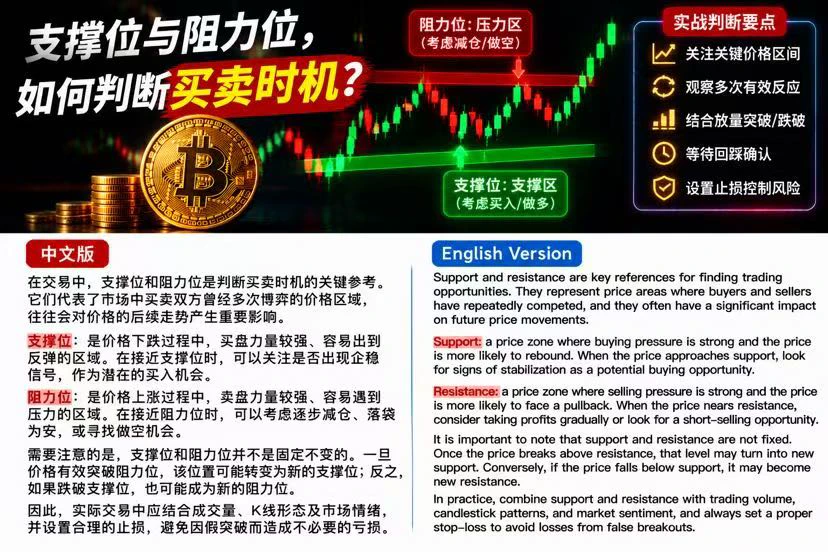
In cryptocurrency trading, many people watch BTC price movements every day, but they often don't realize that what really matters are a few key price zones: support and resistance.

What is support?

Simply put, support is an area where buying pressure may gradually increase as the price falls. When BTC approaches an important price range and rebounds several times, it suggests there may be strong buying demand in that area.

What is resistance?

Resistance is the opposite: an area where selling pressure may increase as the price rises. If BTC rises to a certain level several times but consist
post-image
BTC-0.67%
Trenches
mihao
m
bade
b
mihao
4Cxj...pump
Market Cap
$.
Change
.
24h Vol
$.
Holders
.
HOLD
H
bade
b
HOLD
4iJ7...pump
Market Cap
$.
Change
.
24h Vol
$.
Holders
.
X
X
bade
b
X
9VZe...pump
Market Cap
$.
Change
.
24h Vol
$.
Holders
.
PIEVERSE
P
bade
b
PIEVERSE
0x0e...25a9
Market Cap
$.
Change
.
24h Vol
$.
Holders
.
DacityCoin
D
bade
b
DacityCoin
DKYc...pump
Market Cap
$.
Change
.
24h Vol
$.
Holders
.
#美国10月CPI全面超预期 When data and price conflict, I trust price first, but only use it to size my position

If PPI continues to come in above expectations and BTC does not break below its previous low, I will trust price more. But there is one condition: I only use price to decide whether I can act now; direction and potential upside or downside still depend on macro.

I. First, understand the marginal information in this CPI report

The market has already priced in an 88.5% probability of a 25-basis-point rate hike in December, while the probability of a 50-basis-point hike is only 11.5%; by Janua
BTC-0.65%
XAU+0.38%
NAS100-0.07%
AI prediction accuracy is 80%—so why are you still losing money?
In crypto trading, many people see an AI model give an 80% probability of a price increase and assume it’s a trade with a high chance of success.
But one easily overlooked issue is that getting more predictions right doesn’t necessarily mean you’ll end up making money.
Suppose you make 10 trades, get 8 of them right, and earn $100 on each; the other 2 are wrong, and you lose $500 on each. You end up with $800 in profits but $1,000 in losses, so your account is still down $200.
This is a mathematical issue that is often overlooked
post-image
Why can failing to set a stop-loss cause a major drawdown in your account from a single mistake?

In cryptocurrency trading, many people know how important stop-losses are, but when faced with losses, they often make the opposite decision.

When prices fall, they tell themselves to wait a little longer; when the market keeps falling, they think a rebound is just around the corner; by the time their losses grow larger, they have long since abandoned their original trading plan.

The problem is this: making a wrong call on a trade is not what’s truly frightening. What’s truly dangerous is failin
post-image
Many people have experienced this: when a bull market arrives, BTC rises 10%, while some altcoins can rise 30% or even more. But when the market starts to fall and BTC pulls back 10%, some altcoins may plunge 30% or even more.

Why does this happen?

First, differences in market capitalization are an important reason. Compared with BTC, many altcoins have smaller market caps and relatively limited market depth, so even a small amount of capital flowing in or out can cause more pronounced price swings.

Second, altcoins are more sensitive to market sentiment. When prices are rising, investors a
post-image
BTC-0.67%
Trying to keep up with you is like dealing with either wind or rain.
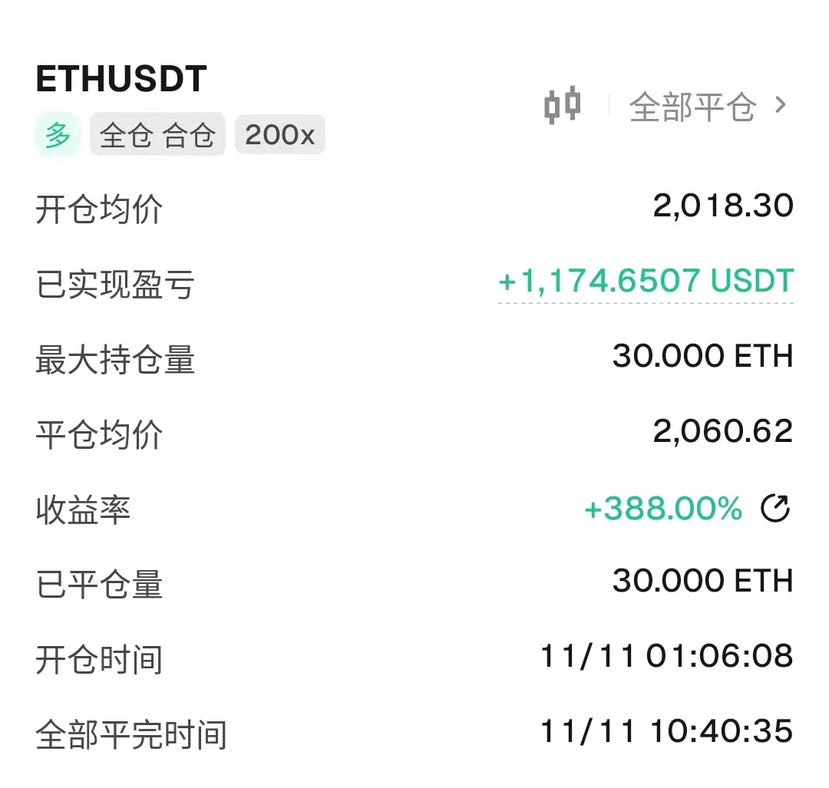
$ETH Same approach as before: take profit at 2070, stop loss at 2000.
This trade booked 1k coins, with a return of 502.54%.
#Gate全球合规版图扩展
AChenBit
When prices rise, look at the upside; when they fall, look at the duration.
ETH long liquidation prices are clustered around 1880, which is quite dangerous.
Cut losses promptly when needed, or they will only keep mounting.
[Position Opening Details]:
$ETH After closing the short position last night, I signaled an entry into a long position. There was actually an element of gambling involved. In the evening, a high-volume wick broke down to 2026.11, then rebounded to 2095.89 before retesting the lows at 2003.57. The second test fell below the previous low, but the price held above the 2000 level, where support is fairly strong, making another breakdown less likely. Also, after a sharp market drop, a technical recovery, pullback, or consolidation is needed. All things considered, the long position carries relatively low risk, with a stop-loss at 1990 and a take-profit at 2060.
#Gate全球合规版图扩展 $BTC
#美国10月CPI全面超预期
#Anthropic推进IPO估值最高1.4万亿美元
repost-content-media
ETH-1.23%
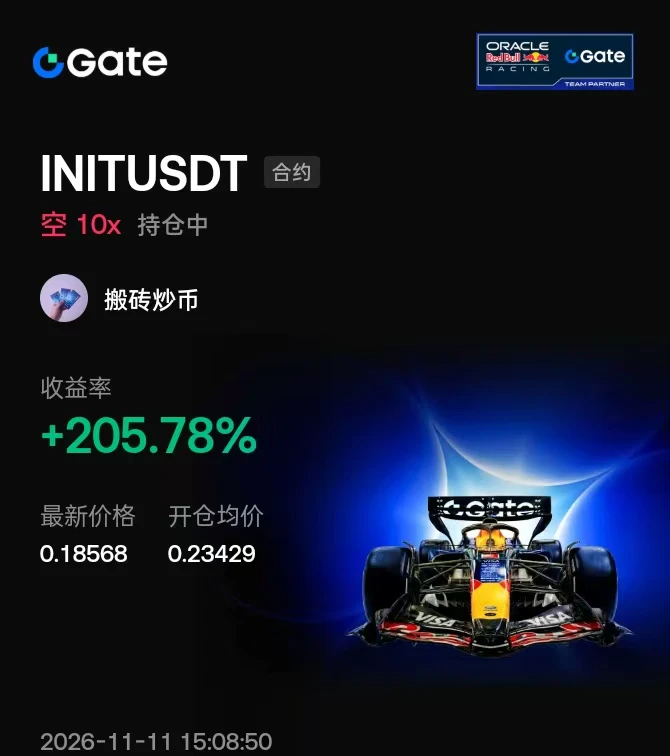
$INIT This run could reach 0.15
post-image
INIT-2.53%
  • 1
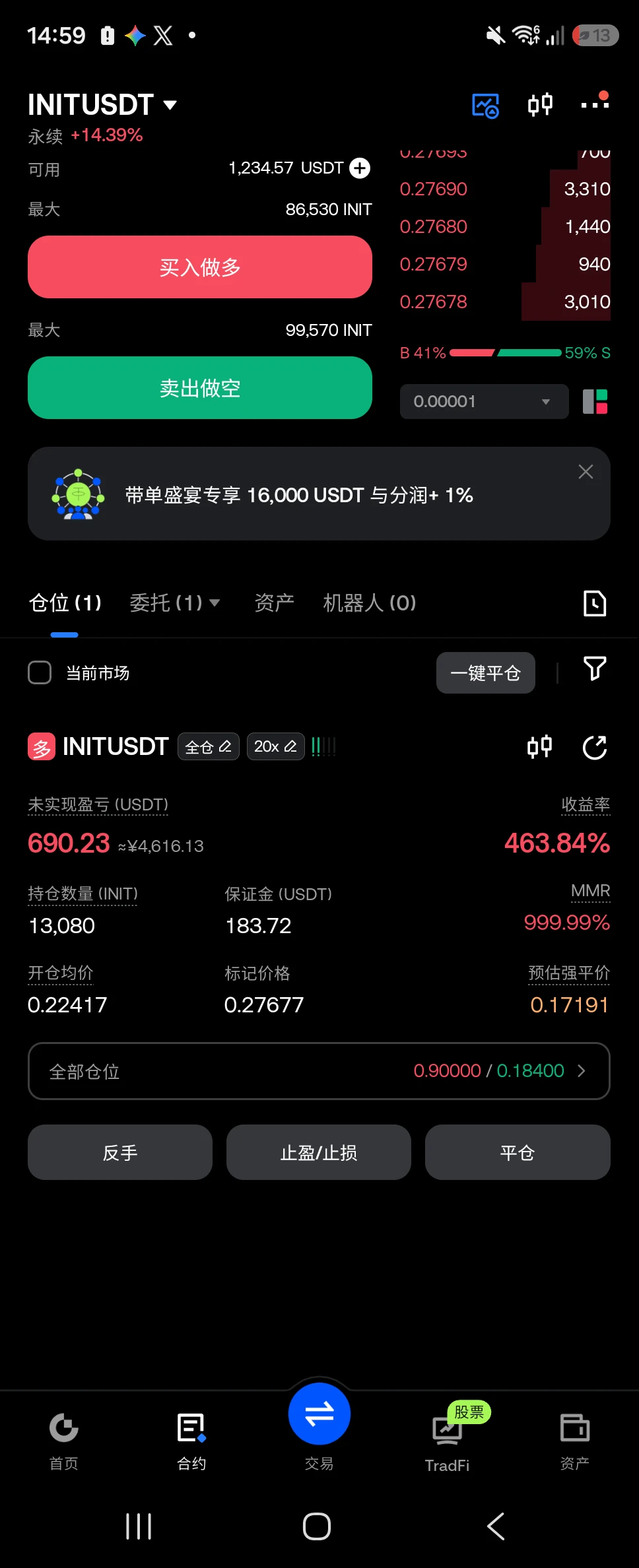
$INIT Fuck, moving the stop-loss is fucking useless; all the profits are gone, fuck
post-image
INIT-2.53%
Why might adding more technical indicators actually make trading decisions more complicated?

When traders first start studying technical analysis, they often go through a phase:

Moving averages aren’t enough, so they add RSI; RSI isn’t enough, so they add MACD; worried that their trend assessment might be inaccurate, they add Bollinger Bands, trading volume, and other indicators.

The chart gets richer, and the analysis looks more professional, but do trading results actually improve as a result?

Not necessarily.

Adding indicators increases the amount of information, but not necessarily th
post-image
Why is it that even with a well-crafted trading plan, execution still tends to go off track in real trading?

Many traders don’t lack a plan.

Entry conditions, stop-loss levels, take-profit targets, and position sizes have all been set in advance.

But once they enter the market, things change: when prices rise, they worry about missing an opportunity; when prices fall, they’re reluctant to stop out; after consecutive losses, they rush to recover; and after consecutive wins, they become overconfident.

In the end, they’re no longer following the original trading plan, but a different set of r
post-image
🔹Ethereum On-Chain Signatures Carry Hidden Risks! One phishing approval costs a user $300,000. How
live-cover
LIVE2,719
Many traders have had this experience: they correctly predict whether BTC will rise or fall, but end up making no money—or even losing money.

The problem may not be your directional call, but the entire trading process.

First, entering too early. You see the price start to rise and rush to chase it; you see the price fall and can't resist shorting early. The market hasn't truly confirmed its direction, but you've already taken on risk.

Second, not letting profits run. The market has just started moving as expected, and as soon as your account shows a small profit, you worry about giving it
post-image
BTC-0.67%
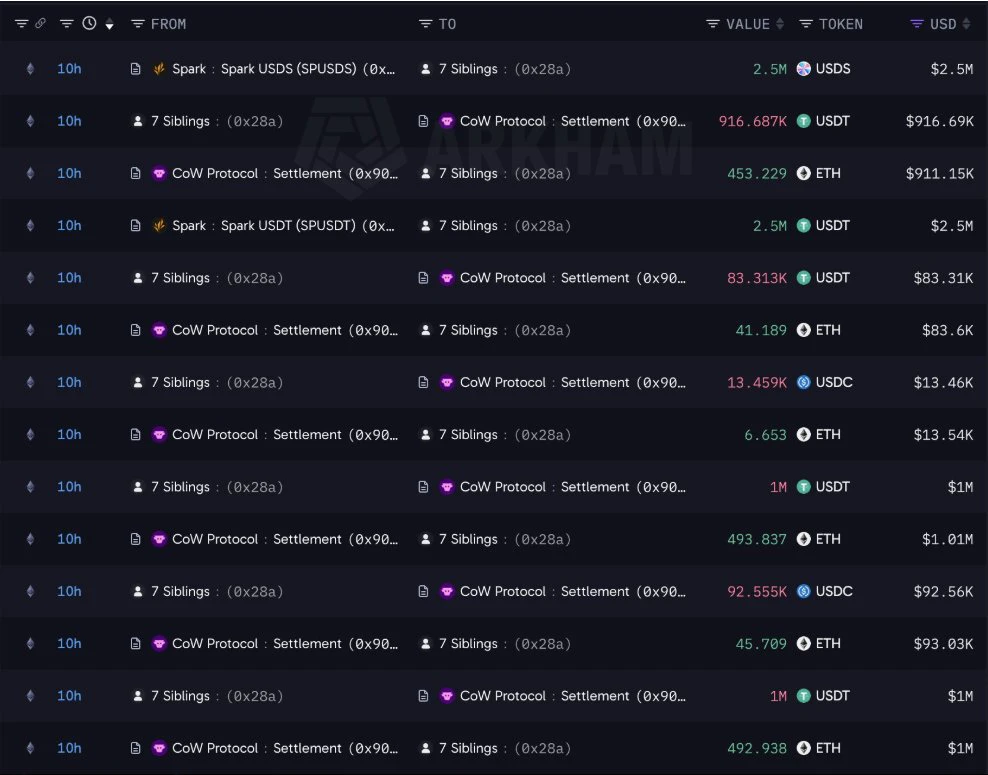
🐋 WHALE WATCH : 7 Siblings spent $22M on 10792 $ETH at an average price of $2038 ten hours ago.
They buy ETH dips during market crashes. They just did it again.
post-image
ETH-1.26%
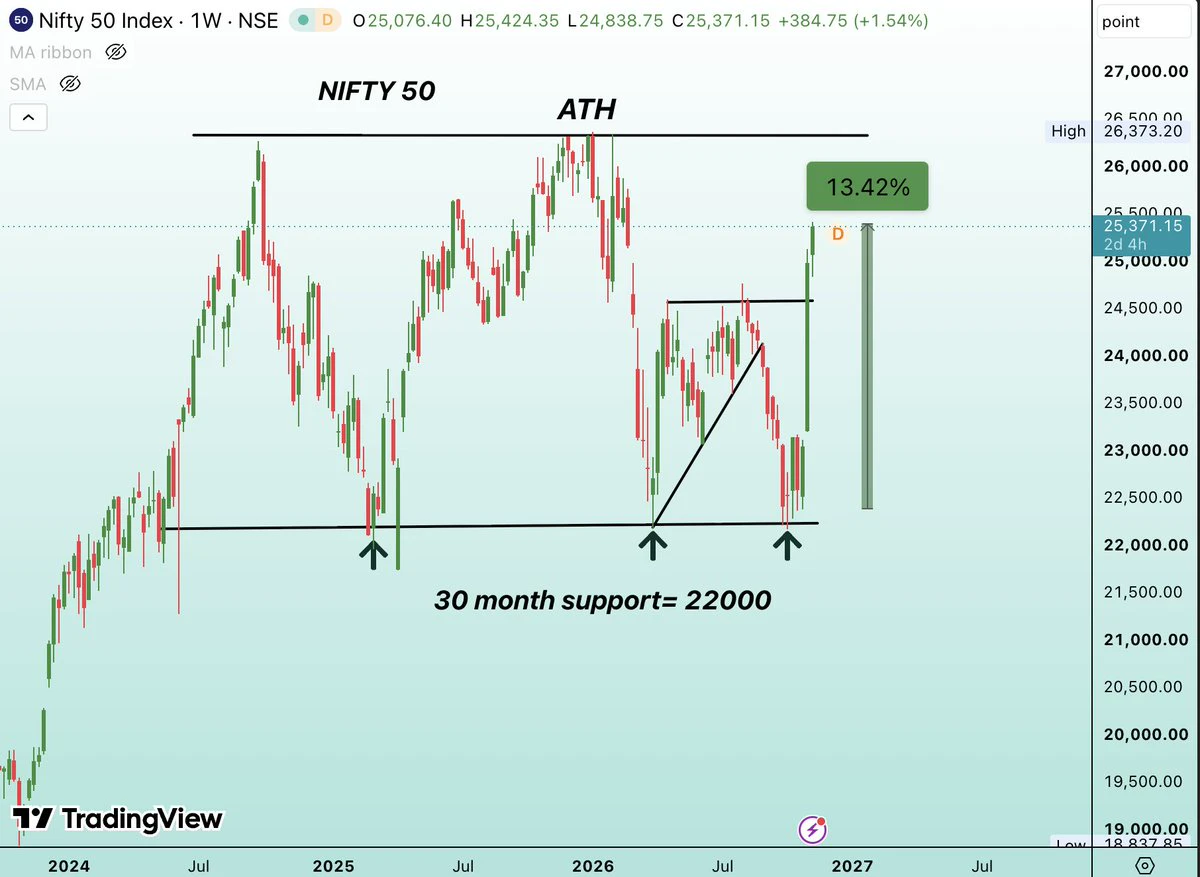
Nifty 50 did nothing for 2 years. In the last 3 weeks it’s up 13% and is now just 4% from all-time highs.
This is not financial advice. #DYOR
post-image
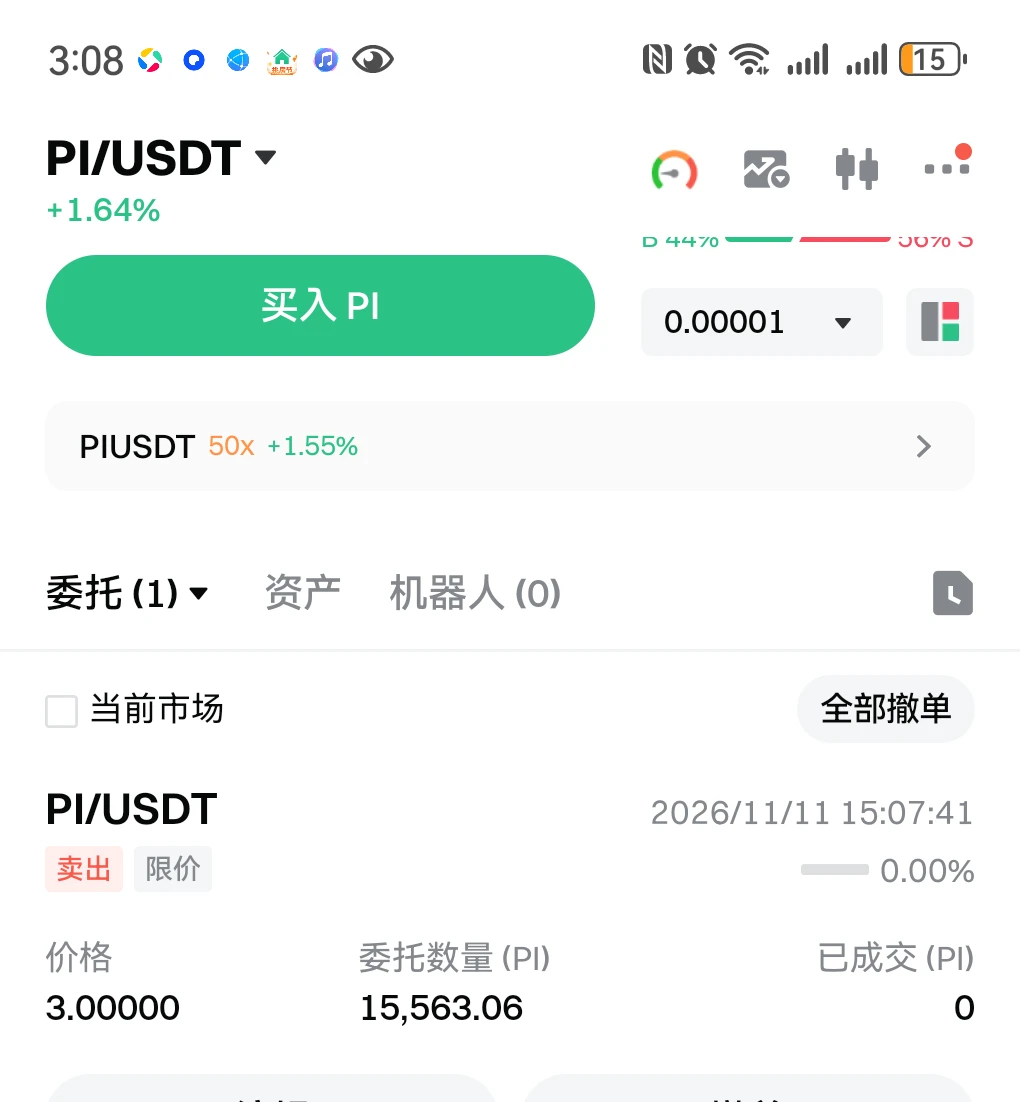
$PI List it for 3u—asking to break even isn't too much, right?
post-image
PI-0.60%
  • 2
Many people see Bitcoin plunge and immediately think of buying the dip. But what is truly dangerous is often not failing to buy at the lowest point, but rushing to put all your funds in before the market has stopped falling.

So, how can you tell whether the market is really nearing a bottom?

First, watch the downward momentum. If the price continues to make new lows but falls noticeably more slowly, selling pressure may be easing. Second, watch key support levels. If the price tests the same area repeatedly without falling much further, there may be some buying support there.

Third, watch t
post-image
BTC-0.67%
#美股财报季 #Gate股票畅聊季 #WCTCS9 #每周来晒
Anthropic at $1.4 trillion—can we participate?
Anthropic's fundraising and IPO plans are set, with an offering price of up to $78 and a fully diluted valuation of up to $1.4 trillion. This isn't just one company's IPO; it's the pricing anchor for the AI capital cycle. If it holds up, the valuation framework for the entire AI sector can hold up, and those waiting in line can still go public. Of course, what retail investors care about most is whether $78 is too high and whether we can participate.
I. Is it expensive? Three numbers are all you need
First, the pr
post-image
NAS100+1.08%
US500+0.44%
BTC | ETH | Gold | Crude Oil
live-cover
LIVE3,634
GM Fam
Start with a positive mindset and end with a WIN.
post-image
Load More

Join 40 M users in our growing community

⚡️ Join 40 M users in the crypto craze discussion

💬 Engage with your favorite top creators

👍 See what interests you

Trending Topics

GateGlobalComplianceExpansion

14.88k Views336 Discussing

Gate continues to expand its global compliance footprint, now covering 81 regulated jurisdictions across Europe, North America, Asia, and Oceania. From MiCA and U.S. state-level MTLs to Japan’s FSA, Dubai, and Australia-related regulatory approvals, global exchanges are entering a new stage of compliance competition. Do you think regulatory strength will become as important as products and liquidity for exchanges in the future?

USOctoberCPIBeatsExpectations

84.53k Views2.59k Discussing

AnthropicIPOValuationCouldReach1.4T

11.3k Views1.59k Discussing

View More