Share crypto content and earn up to 60% commissions through content mining.
placeholder
gatefun
Can 5 Treasury yields really crush stocks? Josh Brown says long-term rate risks are overstated, can
gate liveLIVE
2,543
live-coin
  • Reward
  • 2
  • Repost
  • Share
MamonTrader:
To The Moon 🌕
View More
#我的七夕交易分享 Global tech is falling across the board, but storage is taking the hardest hit: AI conviction weakening, or a cyclical pullback?
On August 18, Nasdaq futures fell 1.23%, while SanDisk and Western Digital dropped more than 6%—is this AI-driven storage boom “still on the way,” or already nearing its end?
U.S. stocks were awash in red premarket on August 18. Nasdaq futures fell 1.23%, and S&P 500 futures fell 0.54%. But the real eye-catcher was memory chips—SanDisk and Western Digital dropped more than 6%, SK hynix, Micron, and Marvell all fell more than 5%, while optical communication
SNDK-9.07%
View Original
post-image
ThisIsTranslateContent:
#我的七夕交易分享 Global tech is falling across the board, but memory is taking the hardest hit: Is faith in AI wavering, or is this just a cyclical pullback?
On August 18, Nasdaq futures fell 1.23%, while SanDisk and Western Digital dropped more than 6%—is this AI-driven memory boom still “on the way,” or already nearing its end?
On August 18, U.S. stocks were broadly in the red before the opening bell. Nasdaq futures fell 1.23%, and S&P 500 futures fell 0.54%. But the real eyesore was memory chips—SanDisk and Western Digital fell more than 6%, SK hynix, Micron, and Marvell all dropped more than 5%, and even optical communications names Lumentum and Coherent followed with declines of more than 6%.
Many people are asking: Global tech is falling across the board, so why is memory getting hit the hardest? Today, we’ll break down the logic and discuss what to expect next.
There are three layers to consider: The first is the macro story, which you probably already know; the second is memory’s own “exclusive negative catalysts,” which is the key; and the third is what to expect going forward.
I. The macro layer: All tech stocks are taking a beating
Tensions in the Middle East have escalated, the navigation agreement for the Strait of Hormuz has yet to materialize, and oil prices have been pushed higher. When oil rises, inflation expectations rebound; as inflation expectations recover, the 10-year U.S. Treasury yield has climbed to 4.75%, reaching a multi-year high.
When interest rates rise, high-valuation growth stocks that rely on “discounting future cash flows” suffer the most. Funds therefore rotate from growth into defense, putting tech stocks under collective pressure. This explains “why tech stocks are falling together,” but not “why memory is falling twice as hard as the Nasdaq.” To answer that, we need to look at the second layer.
II. Four memory-specific negative catalysts: This is the real reason for the sharp drop① Wavering faith in AI—the real incremental catalyst is hereA detail in today’s news: DoubleLine Capital’s Gundlach warned that the more than $500 billion AI infrastructure financing package being promoted by Nvidia and Wall Street could very likely signal that the AI frenzy has peaked; “The Big Short” investor Burry has also repeatedly warned of excessive AI investment, saying these chips will be obsolete in a few years. Memory—especially HBM, or high-bandwidth memory—has been the strongest-performing segment of this AI rally. As faith in AI weakens, the most crowded trades are unwound first, and memory is the first to take the hit. This is not a genuine collapse in fundamentals; the positioning is simply too crowded.
② A post-earnings selloff—expectation gaps hurt more than the resultsSanDisk’s latest quarterly revenue surged 372% year over year, while Western Digital’s rose 44%; the figures looked excellent. Yet both stocks plunged after hours. There was only one reason: The guidance for the next quarter failed to meet the market’s already sky-high expectations. Even more importantly, SanDisk had risen more than 460% this year and Western Digital about 200%, so the optimistic expectations that could be reflected had already been fully priced in. Once the results landed, profit-taking was concentrated. This is what is known as an “earnings selloff.”
③ Rising rate-hike expectations—high valuations take another hitThe 10-year U.S. Treasury yield has surged to 4.75%, and the market has begun to fear rate hikes—there are reports that Fed Chair Waller is already prepared to initiate hikes as soon as inflation data rebounds. For high-valuation growth stocks already under pressure from high rates, this is a second blow. As a high-beta sector, memory is reacting even more sharply.
④ Internal cyclical disagreement—worries about “capacity expansion leading to oversupply”Memory is a classic cyclical industry: demand surges → prices rise → capacity expands → supply exceeds demand → prices fall. The market is now fiercely divided. Citi believes inventories remain low, the supply-demand sufficiency rate has fallen from 70% to 50%, and enterprise AI demand can absorb weak consumer demand, so it remains optimistic; the opposing camp believes the industry is transitioning from “capacity expansion” toward “oversupply.” This disagreement alone is enough to send stock prices sharply up and down.
III. Expectations going forward: Short-term volatility, medium-term focus on three things
In the short term: Volatility will only get worse. As long as the question of whether “AI financing has reached its limit” remains unresolved, memory’s high-beta characteristics will continue to amplify both gains and losses. If Treasury yields fall or either oil prices or tensions in the Middle East ease even slightly, there could be a technical rebound; but a true reversal will require concerns over AI financing to be disproved, or major companies to validate the story with tangible capital spending.
In the medium term: The market is split into two camps.
The optimists, including Citi, say inventories are low and enterprise AI demand is only just getting started, so the cycle is not over; the cautious camp says the capacity expansion cycle has peaked and prices are set to fall.
To really distinguish between the two, watching three indicators is enough: HBM price trends, major manufacturers’ guidance for the next quarter, and whether AI capital spending is actually being implemented.
In summary, this looks more like “the rally went too far and needs to catch its breath + expectations need to be reset” than “AI is over.” As a cyclical stock, memory is about watching for the bottom rather than the ceiling; but as the most crowded AI trade right now, it will still be driven by unwinding pressure in the short term.$SNDK
repost-content-media
  • Reward
  • 5
  • Repost
  • Share
KatyPaty:
To The Moon 🌕
View More
market updates today
gate liveLIVE
1,837
live-coin
  • Reward
  • Comment
  • Repost
  • Share
On August 18, Ripple announced that Jeonbuk Bank had become the first regional bank in South Korea to deploy Ripple Payments.
On the same day, XRP fell below $1.
Good news and a bad price happened at the same time.
This is not a coincidence. This is the market voting with its feet.
First, the “obvious bullish news”—it certainly looks good.
Founded in 1969, Jeonbuk Bank is a subsidiary of JB Financial Group and the leading lending institution in its province.
What is it going to do? Replace SWIFT with Ripple Payments.
Previously, cross-border remittances via SWIFT took days. Now, Ripple Payment
BTC0.29%
ETH1.30%
XRP1.12%
SNDK-9.07%
MU-6.96%
View Original
post-image
  • Reward
  • Comment
  • Repost
  • Share
$OUST $AAOI $NBIS $MU
pre market
OUST-10.60%
AAOI-15.06%
NBIS-7.59%
MU-6.96%
post-image
  • Reward
  • Comment
  • Repost
  • Share
It would be very exciting if $SOL formed such a cup.
#solana # crypto
SOL2.02%
View Original
post-image
  • Reward
  • Comment
  • Repost
  • Share
#GateDebutsMOUTAIAnd9OtherA-Shares
#Gate首发上线茅台等10只A股 Gate.io officially launched perpetual contracts for 10 A-share stocks, including Kweichow Moutai, on August 18, 2026, marking another deep integration between cryptocurrency exchanges and traditional stock markets.
Core Product Features
The launch does not involve A-share spot trading, but rather USDT-settled perpetual contracts supporting long and short positions with 1–20x leverage. This is fundamentally different from Gate’s previously launched “gStocks” tokenized spot service, which is anchored 1:1 to real stocks—the current launch invo
MOUTAI-1.39%
YANGTZE-0.71%
HYGON-10.01%
BEIGENE1.23%
BIWIN-8.75%
post-image
FatYa888
#Gate首发上线茅台等10只A股 Gate.io officially launched perpetual contracts for 10 A-share stocks, including Kweichow Moutai, on August 18, 2026, marking another deep integration between cryptocurrency exchanges and traditional stock markets.
Core Product Features
The launch does not involve A-share spot trading, but rather USDT-settled perpetual contracts supporting long and short positions with 1–20x leverage. This is fundamentally different from Gate’s previously launched “gStocks” tokenized spot service, which is anchored 1:1 to real stocks—the current launch involves high-risk leveraged derivatives suitable for short-term trading and hedging.
Ten Assets Cover Diverse Industries
The initial list includes Kweichow Moutai, China Shenhua, Yangtze Power, Hygon Information, Midea Group, BeiGene, Hengrui Pharmaceuticals, Biwin Storage, Demingli, and Taiji Industry. This combination spans multiple sectors, including consumer goods, energy, hydropower, semiconductors, home appliances, and biopharmaceuticals, forming a representative cross-section of China’s economy. Kweichow Moutai is the most talked-about of them all—with revenue of ¥90.7 billion and net profit of ¥44.5 billion in the first half of 2026, the “king of A-shares” comes with exceptionally high market recognition.
Strategic Significance and Impact
1. Lowering the barrier to traditional asset allocation. In the past, crypto users needed to open securities accounts, exchange currencies, and complete other cumbersome procedures to allocate funds to A-shares. Now, they can participate directly with USDT, effectively building a “pedestrian overpass” between the crypto world and traditional capital markets.
2. Driving a shift in asset allocation logic. Gate has already launched Hong Kong stock trading, and its expansion into A-shares means the platform is evolving from a single entry point for crypto asset trading into a comprehensive global asset trading platform. If A-shares, Hong Kong stocks, and U.S. stocks eventually share a unified entry point, investors may shift their focus from “which market to buy” to “which assets to buy.”
3. Providing a new hedging tool. International investors can express their views on Chinese assets by going long or short leading A-share companies, filling the gap in offshore-market tools for hedging A-share risks.
Risk Warning
Highly leveraged contracts carry substantial risks, and under 20x leverage, even small price fluctuations can result in liquidation. Investors must clearly understand that trading convenience does not mean the underlying asset is undervalued, and “being listed on Gate” is absolutely not a reason to buy. Derivatives trading and value investing are two different things and should not be confused.
This launch is a milestone in the integration of the crypto world and traditional finance, but opportunities and risks coexist, making rational participation the best approach.
  • Reward
  • Comment
  • Repost
  • Share
$BTC ‌ ETFs LOSE $390M IN WEEK – LARGEST REDEMPTION SINCE EARLY JULY HITS SENTIMENT
US spot Bitcoin ETFs recorded roughly $390 million in outflows between August 10-14 – the largest weekly redemption since early July.
The daily breakdown:
· Monday: $145 million left
· Wednesday: $61 million left
· Thursday: $131 million left
· Friday: $58 million left
· Tuesday: Just $5 million of net inflows
The problem: ETFs had only ONE positive session last week. Even with good CPI data, Bitcoin failed to rally.
Wintermute's warning: "Lower rate-hike expectations would normally improve the case for risk a
BTC0.30%
post-image
  • Reward
  • 8
  • Repost
  • Share
SentimentGuru:
Daily outflows of tens of millions aren’t particularly large, but continuous outflows affect sentiment, and retail investors can easily follow suit.
View More
Something is brewing in the hood..
$STOCKIMPALER is here, the community is watching, and the flip is just getting started.
You know what time it is.
#FLIPHOOD @TheStockImpaler
FLIP1.37%
post-image
  • Reward
  • Comment
  • Repost
  • Share
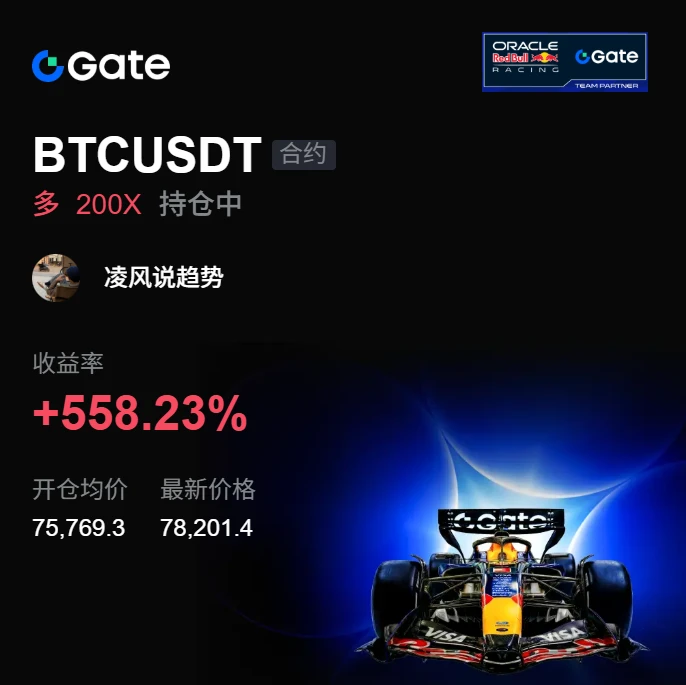
$BTC Over 200x long, opened at 63066, current price 64325.5, unrealized profit +347.32%.
Following Zhe, this trade performed normally. The Red Bull co-branded one on the Gate platform—I’m an old user, and the liquidity is decent.
I’ve been trading futures for several years, and my mindset is much steadier now. Although the return looks high, I keep my position size tightly controlled and am just here to have fun.
200x leverage on BTC is simply an amplifier; used well, it makes a good thing better. I’ve already moved the stop-loss above the entry price on this trade, so I can’t lose no matter w
BTC0.30%
ACE17.92%
View Original
post-image
  • Reward
  • Comment
  • Repost
  • Share
Fear and greed index is at 46/100.
Which typically is really good for CT. But if yall notice, there has been no crazy pumps, no altcoin presale launches, no typical momentum in charts, but index holds at 46?
Sounds sus for me.
Watch out.
post-image
  • Reward
  • Comment
  • Repost
  • Share
$BTC ‌USDT — 15M Setup 📊
Bias: Neutral → Slightly Bullish
LONG Setup 📈
Entry: 64,300–64,380
TP1: 64,550
TP2: 64,850
TP3: 65,050
SL: 64,080
Confirmation: A 15M candle close above 64,400–64,550 would strengthen the bullish setup. Price is holding above MA5/MA10, but MA30 at 64,381 is immediate resistance.
SHORT Setup 📉
If BTC gets rejected around 64,400–64,550 and loses 64,200:
Entry: 64,180–64,250
TP1: 64,050
TP2: 63,950
SL: 64,500
Key level: 64,550 — clean breakout can open the way toward 64.8K–65K; rejection keeps BTC range-bound.
#GateEventPointsSystemLaunched #btc
BTC0.29%
post-image
  • Reward
  • 2
  • Repost
  • Share
ReboundHunter:
This 15-minute long position looks good, but 64,550 is indeed a key resistance level. If it fails to break through, it will likely continue to consolidate.
View More
bulls are fucked
$btc
BTC0.29%
post-image
  • Reward
  • Comment
  • Repost
  • Share
Most people enter crypto looking for the next 100x.
The ones who stay realize the real opportunity is much bigger.
Crypto isn’t just creating new investments.
It’s redefining how value is owned, transferred, and coordinated across the world.
Every cycle brings new narratives.
But the underlying trend remains the same:
A more open.
More transparent.
More programmable financial system.
Don’t just chase the next narrative.
Understand the direction the industry is moving.
That’s where conviction is built.
post-image
  • Reward
  • Comment
  • Repost
  • Share
JUST IN: YMTC completes pre-IPO guidance, set for A-share listing as China’s next major memory chip IPO. If confirmed, could signal another step in China’s semiconductor self-reliance push. $TYA? (ticker on YMTC pending)
post-image
  • Reward
  • Comment
  • Repost
  • Share
I won't gamble anymore.
When I searched it, they all had their fingers chopped off.
It happens to be CZ's four fingers.
Feels pretty meme-worthy.
0xe8890b3df77e3a80663689e82ff23fd2e5087777
View Original
post-image
  • Reward
  • Comment
  • Repost
  • Share
Gate Contract Stock Zone First Launch: $ACCELINK (Accelink Technology), $PUYA (Puran Semiconductor), $HUAGONGTECH (HGTECH), and 6 other contracts, for a total of 9 contracts
🔹 Trading pairs: $ACCELINK / $USDT, $PUYA / $USDT, $HUAGONGTECH / $USDT , and 6 other trading pairs, for a total of 9 trading pairs
🔹 Trading time: August 19, 2026, 14:00 (UTC+8)
🔹 Supports 1–20x leverage
Trade $ACCELINK: https://www.gate.com/zh/futures/USDT/ACCELINK_USDT
Trade $PUYA: https://www.gate.com/zh/futures/USDT/PUYA_USDT
Trade $HUAGONGTECH: https://www.gate.com/zh/futures/USDT/HUAGONGTECH_USDT
Mo
ACCELINK11.01%
PUYA1.47%
post-image
post-image
  • Reward
  • 4
  • Repost
  • Share
SharkStopLoss:
Chip stocks are all available as perpetual contracts now—exciting.
View More
#OpenAIQ2Revenue67BAsLossesWiden
#OpenAIQ2Revenue67BAsLossesWiden 🤖📊
OpenAI has delivered a mixed financial picture for Q2 2026: revenue reached $6.7 billion, but operating losses widened significantly as the cost of building and running advanced AI systems continues to climb. The figures were reported by The Wall Street Journal based on information from people familiar with the company’s results.
💰 Revenue Is Growing — But So Are Losses
OpenAI’s Q2 revenue increased from $5.7 billion in Q1 to $6.7 billion in Q2, representing approximately 18% quarter-over-quarter growth.
However, operatin
post-image
BeautifulDay
#OpenAIQ2Revenue67BAsLossesWiden
#OpenAIQ2Revenue67BAsLossesWiden 🤖📊
OpenAI has delivered a mixed financial picture for Q2 2026: revenue reached $6.7 billion, but operating losses widened significantly as the cost of building and running advanced AI systems continues to climb. The figures were reported by The Wall Street Journal based on information from people familiar with the company’s results.
💰 Revenue Is Growing — But So Are Losses
OpenAI’s Q2 revenue increased from $5.7 billion in Q1 to $6.7 billion in Q2, representing approximately 18% quarter-over-quarter growth.
However, operating losses including stock-based compensation jumped from $9.3 billion to $12.3 billion during the same period. That means expenses are growing substantially faster than revenue.
This creates one of the biggest questions surrounding the AI industry:
How much can companies spend today to build the AI infrastructure of tomorrow?
🧠 The AI Race Is Becoming a Financial Race
OpenAI continues to invest enormous amounts in computing power, research, model development and infrastructure.
The economics of frontier AI are different from traditional software businesses. Training increasingly capable models and serving millions of users requires huge amounts of computing resources.
That creates a fascinating paradox:
🚀 More users → more revenue
⚡ Better models → stronger demand
🖥️ More AI usage → dramatically higher computing costs
💰 Higher costs → greater pressure to improve margins
OpenAI therefore needs to scale revenue much faster while controlling the cost of delivering AI.
🥊 Anthropic Changes the Conversation
The numbers are particularly interesting because of OpenAI’s competition with Anthropic.
According to the same reporting, Anthropic’s Q2 revenue reached approximately $11.6 billion, nearly double its previous quarter, while the company achieved a modest operating profit. Claude Code has been a major driver of that growth.
That doesn't mean OpenAI has suddenly lost its leadership position—but it does show that the AI race is becoming significantly more competitive.
📈 What Investors Should Watch
The next phase of the AI boom may not simply be about who has the best model.
The bigger question could be:
Who can turn massive AI demand into sustainable profits?
Investors will be watching:
• Revenue growth
• Enterprise adoption
• AI subscription growth
• Computing costs
• Infrastructure spending
• Operating margins
• Competition from Anthropic and other AI companies
• Progress toward long-term profitability
🔥 The Bigger Picture
OpenAI generating $6.7 billion in quarterly revenue is still an extraordinary achievement for an AI company.
But the $12.3 billion operating loss highlights the enormous capital requirements behind the current AI revolution.
The AI industry has entered a new stage where technological leadership alone may not be enough.
The winners could ultimately be the companies that can combine breakthrough AI with sustainable economics.
The AI race isn't slowing down.
It's getting more expensive—and much more competitive. 🤖🔥
  • Reward
  • 7
  • Repost
  • Share
LiquidityProviderX:
My first reaction when I saw this news was: The capital threshold in the AI industry has become so high that only the giants can play. OpenAI has Microsoft backing it, Anthropic has Amazon and Google, and in the end, it’s a showdown among the Wall Street giants. Ordinary people like us can only watch the spectacle.
View More
Sandisk Analysis for August 19
Sandisk rose approximately 9.2% today, forming the early shape of a “hammer” candlestick with a long lower shadow. After the short-term bearish pressure was released, the bulls showed resistance around 1565. However, the rebound moved just above the Bollinger Band middle line at 1598.89 and approached the descending resistance line from today’s high of 1724.70. The market is currently at a point of contention between “short covering” and “new short entries.”
· Strong resistance above: 1700 - 1724.70 (round-number level + today’s high). If the rebound reaches this
SNDK-9.07%
View Original
post-image
  • Reward
  • 1
  • Repost
  • Share
ChenXiaodao:
The news has pretty much been priced in. Now we can only wait for a pullback or chase in at 1700.
Load More

Join 40 M users in our growing community

⚡️ Join 40 M users in the crypto craze discussion
💬 Engage with your favorite top creators
👍 See what interests you
  • Pinned