
Square
Following
Hot
News
Profile
Share your thoughts
placeholder
Article
Michael Saylor’s ParaFi talk shows how Bitcoin could move beyond treasury reserves into credit markets.
Using $BTC as digital capital opens new financial opportunities, but sharp price drops raise one serious question.
Who absorbs losses when collateral loses value?
post-image
BTC+0.13%
Trenches
AGT
A
bade
b
AGT
0x5d...e274
Market Cap
$.
Change
.
24h Vol
$.
Holders
.
CNPY
C
bade
b
CNPY
0xc6...ddd2
Market Cap
$.
Change
.
24h Vol
$.
Holders
.
Q
Q
bade
b
Q
0xc0...0589
Market Cap
$.
Change
.
24h Vol
$.
Holders
.
Gato
G
bade
b
Gato
55A3...pump
Market Cap
$.
Change
.
24h Vol
$.
Holders
.
DOPE
D
bade
b
DOPE
0xf9...8899
Market Cap
$.
Change
.
24h Vol
$.
Holders
.
$AGT BOOM😨 It’s flying up again, damn. LONG was doing great, then turned around and went SHORT. Nothing to do but keep grinding; the rewards will come soon😎😎
SHORT SHORT SHORT🔥🔥AGT congabeo$BT $MAGMA
CPIWatch
post-image
MAGMA+2.85%
  • 1
#GateBTCAndETHFuturesVolumeRanksTop3
Gate BTC and ETH Futures Trading Volume: Can the Momentum Continue?
In my view, the momentum Gate is seeing in the derivatives market could persist; however, sustainable growth depends on whether this increased trading activity is driven by lasting demand rather than mere short-term speculation.
The reported figures are encouraging: with BTC and ETH in an uptrend, Gate ranks among the top three exchanges globally for futures trading volume in both assets, with BTC futures volume reaching approximately $7.18 billion over a 24-hour period.
Nevertheless, high
BTC+0.13%
ETH-0.51%
GT-2.52%
XTIUSD+2.67%
TSLA-2.17%
  • 8
#每周来晒 #美国9月PPI大超预期 The week after the double inflation beat: what the market actually did
Two hot inflation reports landed in two days, and the verdict is in. Stocks fell, bonds steadied, the Fed odds cooled and Bitcoin held its ground. Here is the final scorecard as of Sunday, October 18, followed by an if-then framework for next week.
What the data said
September CPI rose 3.7% against 3.6% expected, and producer prices rose 1.3% on the month and 6.3% on the year. The surprise sat in the details, since core PPI rose 0.7% against a 0.3% forecast.
How each market responded
US stocks: tech took
BTC+0.13%
MU-5.66%
AMD-5.98%
DOW+0.96%
GLD-0.16%
#美股存储板块跌幅扩大
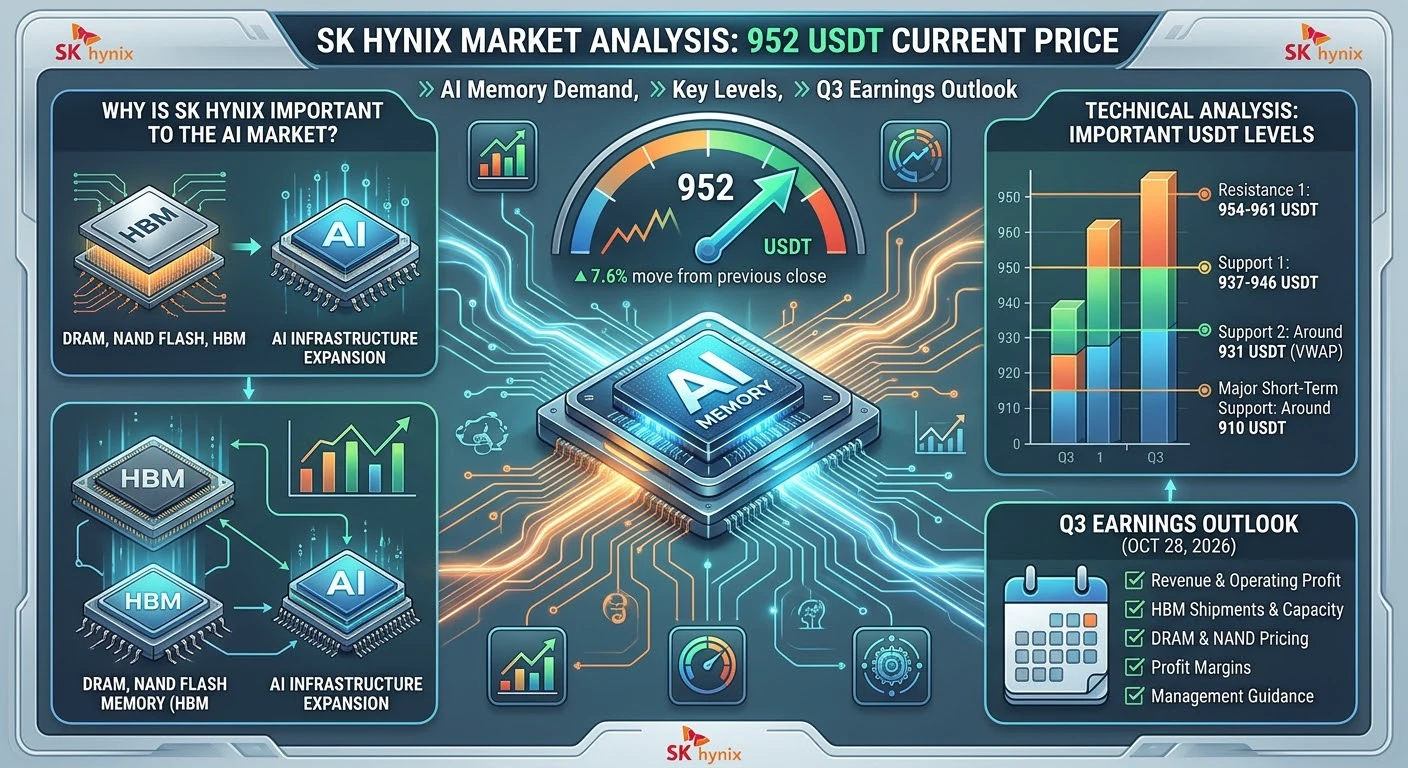
The core question is whether this represents a healthy correction following a rally driven by artificial intelligence (AI), or the beginning of a deeper repricing process within the storage sector. Rather than buying simply because prices have fallen, it would be more prudent to focus on earnings expectations, memory pricing, and whether each company can maintain its profit margins.
My perspectives on storage sector stocks:
* Micron (MU): Monitor demand for DRAM and HBM, memory growth linked to AI, and gross profit margin forecasts. Strong AI demand could bolster earnings, though
post-image
ybaser
#美股存储板块跌幅扩大
The core question is whether this represents a healthy correction following a rally driven by artificial intelligence (AI), or the beginning of a deeper repricing process within the storage sector. Rather than buying simply because prices have fallen, it would be more prudent to focus on earnings expectations, memory pricing, and whether each company can maintain its profit margins.
My perspectives on storage sector stocks:
* Micron (MU): Monitor demand for DRAM and HBM, memory growth linked to AI, and gross profit margin forecasts. Strong AI demand could bolster earnings, though these expectations may already be priced into the stock.
* SanDisk (SNDK): Focus on NAND flash pricing, demand for enterprise SSDs, and the sustainability of any earnings recovery. NAND supply and price cycles can make this stock particularly volatile.
* Western Digital (WDC): Evaluate "nearline" (high-capacity/accessible) HDD demand from AI data centers, cloud computing expenditures, and free cash flow. The factors influencing HDD demand differ from those affecting NAND and DRAM.
* Seagate (STX): As data center storage requirements grow, keep an eye on demand for high-capacity drives, pricing power, and profit margins.
* Track NAND market conditions, enterprise SSD adoption rates, and the company's valuation relative to earnings expectations.
What signs might justify rebuilding a position? I would look at the following three points:
* Stabilization of fundamental indicators: A halt in the deterioration of memory and NAND prices, company forecasts, and earnings estimates.
* Confirmation through price action: Stocks forming higher lows and reclaiming key moving averages, accompanied by stronger trading volume.
* Attractive valuation: Expected earnings growth that justifies the current price, even under less optimistic scenarios.
A decline in a stock price is not, by itself, a buy signal. If earnings estimates are falling faster than the stock price, the valuation may not have actually become cheaper.
Rather than buying the entire storage sector indiscriminately, I prefer to differentiate between individual companies. While AI demand serves as a long-term tailwind, memory, NAND flash, and hard disk drives each have their own unique supply cycles, competitive pressures, and profit margins.
An important distinction: A pullback driven by profit-taking is fundamentally different from one caused by weak forward guidance or falling memory prices. The latter scenario warrants a much more cautious approach. Which of these stocks—MU, SNDK, WDC, or STX—are you following most closely? I can help you compare their valuations, earnings outlooks, technical levels, and the potential factors that could support a recovery.
$MU ‌$SNDK ‌$WDC ‌$STX ‌
repost-content-media
MU-5.66%
SNDK-6.90%
  • 9
  • 1
The morning sunlight shines on the flower’s center,
making it especially radiant.
May your mood bloom like a flower
🐷🐷🐷🐷
post-image
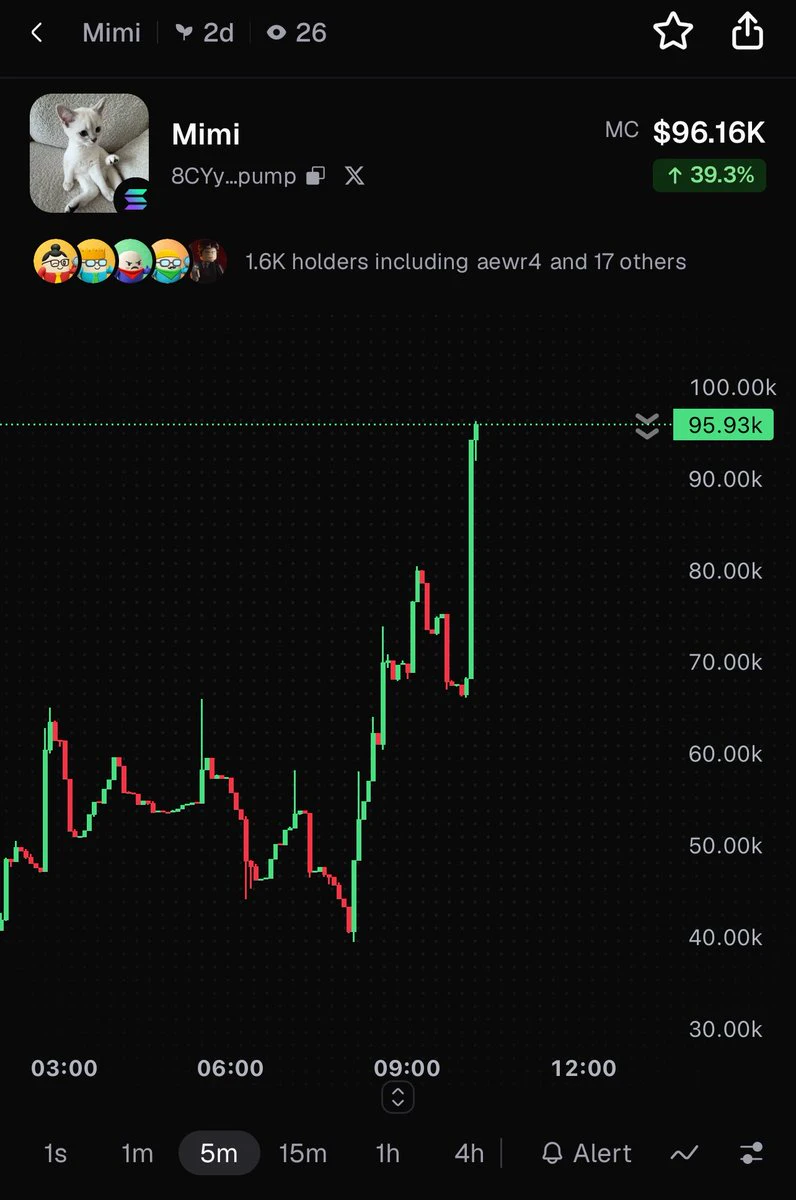
solana:9KDhovVA2kdjngkFooqEn5FoKkuZeDMYiQtVk7Lbm9up pumping
It was stuck under $100k so gave it boost $300 usd and cut size along the way up . This will go to $1 million +
9KDhovVA2kdjngkFooqEn5FoKkuZeDMYiQtVk7Lbm9up
#crypto
post-image
SOL-0.75%
Good morning from Thailand!!!
post-image
$HYPE The bulls are all at the peak; the bears keep shorting and loving every minute of it
post-image
HYPE-1.35%
🌈 Gate Live Livestreaming Inspiration - October 18
Trending Topics:
🔹 Vitalik compares BTC mining and AI inference costs: electricity accounts for nearly half the cost of the former, while the latter relies more on capital expenditure for computing power
🔹 Arthur Hayes: The so-called quantum threat to crypto is “nonsense”; users only need to pay attention to wallet management
🔹 A new angle on AI anti-fraud: get scammed on purpose to gather intelligence on scammers for regulators to crack down on them
🔹 Iranian armed forces open fire to intercept vessels making “unauthorized” passages thro
post-image
BTC+0.13%
  • 9
  • 3
Good morning, $DOGE fam! 🤝🐕
Gm C X ☕️🌎
Happy weekend! ✌️🌦🍂
Dogecoin to the moon! 🚀🌑
post-image
DOGE-1.06%
BTC down 0.62% in 24 hours, $31.89 million dumped in the final hour
Gate spot BTC/USDT is currently quoted at 81285.5 USDT, down 0.62% over 24 hours, with a high of 81818.4 and a low of 80817.0. That 0.62% is almost negligible on the daily chart, but the final hourly candle was different: it opened at 81647.1, plunged to a low of 80817.0, and closed at 81124.9, with 31.89 million USDT in single-hour trading volume—more than three times the previous hour’s roughly 8.71 million.
What concerns me more is whether this drop was backed by volume. Looking at the latest 48 hourly candles, the volume p
post-image
BTC+0.13%
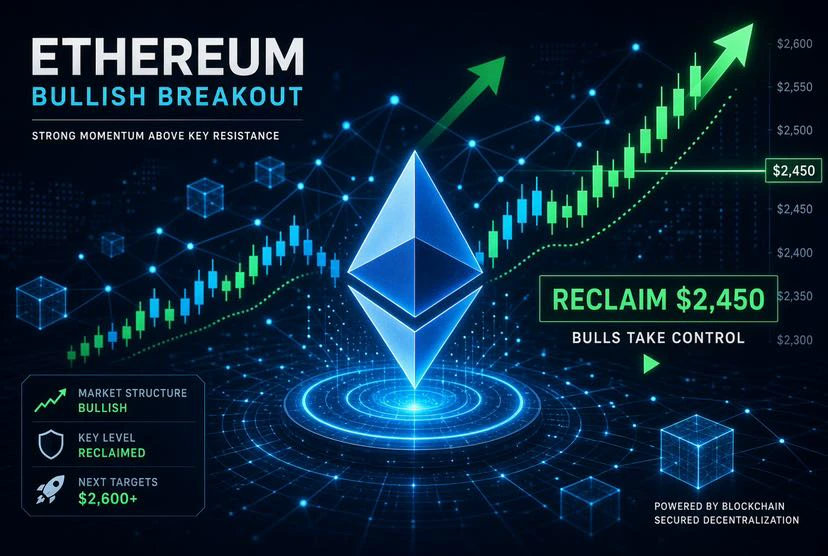
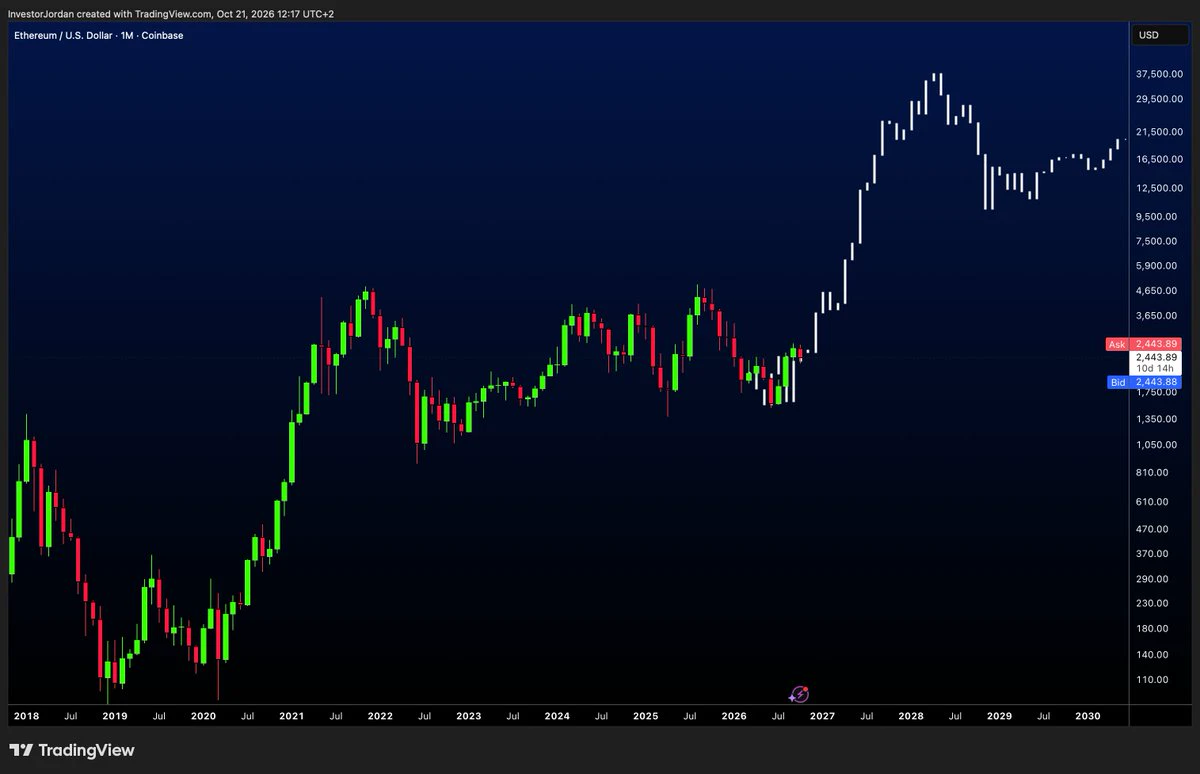
ETH's daily candle closed like this. For today's intraday short-term trading, consider shorting on a rebound at higher levels. For reference: enter in the 2420-2440 range if price rebounds, with stop losses at 2442 and 2458; targets are 2391-2361. You can take profits in batches, setting aside one portion each at 2391 and 2361. If price continues to break down, the next target is 2315.
post-image
ETH-0.49%
Who opened your crypto wallet before it reached your hands?
The hackers didn't need to break Ledger's security when they could just get to the wallets before their owners.
Quick Take
⚠️ Personal market analysis only. NFA — manage risk and DYOR.
Educational content, not investment advice or a recommendation to buy, sell, deposit, or withdraw any asset. No paid promotion or referral/affiliate links.
post-image
Bitcoin fell below $81,000,and Ethereum fell below $2,400.
live-cover
LIVE2,476
🔥 $ENSO
is facing strong bearish pressure after breaking below a key support level! The price has fallen more than 7% in the past 24 hours, and consecutive red candles indicate strong selling momentum. If sellers continue to dominate and the current support level gives way, ENSO may continue to fall toward lower targets. 📉Take profit: 0.2181Stop loss: 0.8137Short $ENSO 👇
post-image
ENSO-6.05%
Sunday morning—time for a cup of coffee to wake you up!
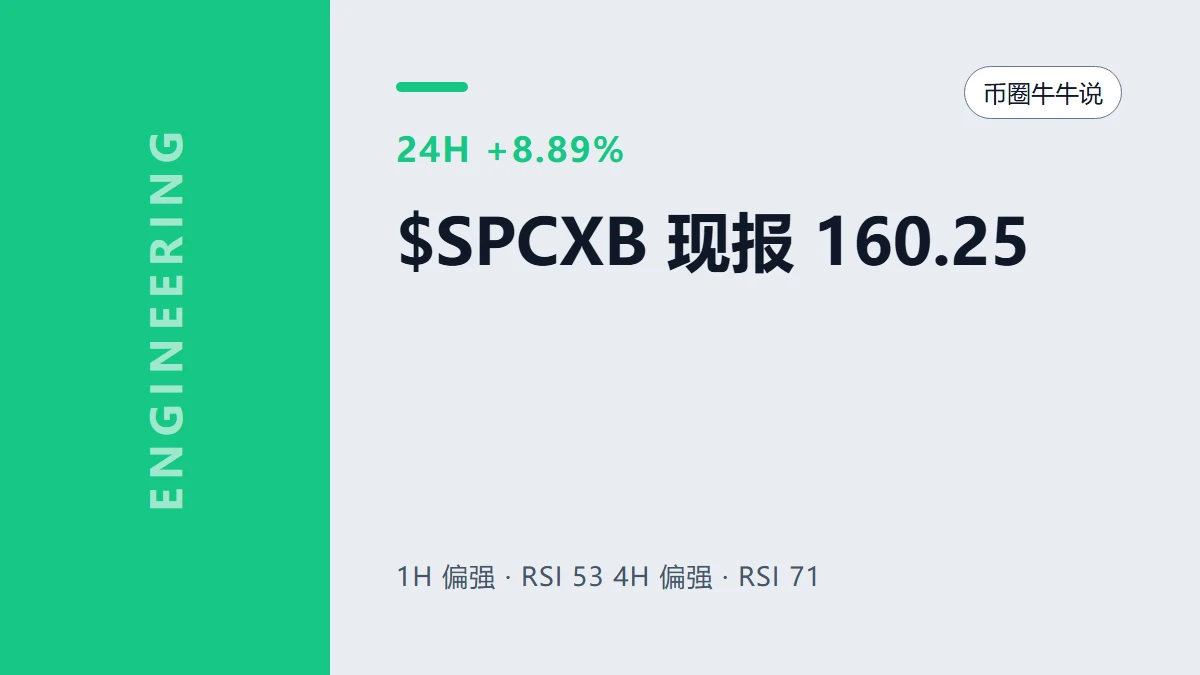
SpaceX’s first full quarterly earnings report is about to be released. What the market really cares about isn’t how fast revenue is growing, but when its AI investments will start translating into profits.
Second-quarter revenue rose 92% year over year to $7.81 billion, but the company still posted a net loss of $541 million. The market expects third-quarter revenue of around $12.86 billion, with Starlink growth, AI revenue, and massive capital expenditures set to be key areas of focus.
My take: beating revenue expectations is just the fi
post-image
SPCX-1.74%
#每周来晒 #美国9月PPI大超预期 #沃什IMF讲话 Brent crude has surged past $110. U.S. stocks and Bitcoin should be on alert ahead of November 3
What happens if oil prices keep rising, AI stocks begin to correct, and U.S. inflation refuses to come down?
Any one of these factors on its own may not trigger a major sell-off. But if they converge around the November 3 U.S. midterm elections, the market could face a difficult stress test.
01 The real trouble is oil pushing inflation higher again
Brent crude has broken above $110 per barrel. This price warrants caution because crude oil is no ordinary commodity: its
post-image
ThisIsTranslateContent:
#美国9月PPI大超预期 #沃什IMF讲话 Brent crude breaks above $110; U.S. stocks and Bitcoin should be cautious before November 3
What happens if oil prices keep rising, AI stocks start correcting, and U.S. inflation remains stubbornly high?
Each of these factors alone may not necessarily trigger a major sell-off. But if they converge around the November 3 U.S. midterm elections, the market could face a challenging stress test.
01 The real problem is oil pushing inflation higher again
Brent crude has broken above $110 per barrel. This price warrants caution because crude oil is not an ordinary commodity: its effects ripple throughout the economy through transportation, production, chemicals and consumer spending.
More importantly, U.S. CPI rose 3.7% year over year in September, while gasoline prices jumped 9.1% month over month. The simultaneous rebound in inflation and rise in energy prices have prompted markets to reconsider whether the Federal Reserve needs to maintain its restrictive policy. Here lies a key tension. If oil prices spike briefly and then fall, markets may quickly absorb the negative impact; but if geopolitical conflicts persist and oil prices remain elevated, inflation could prove more persistent than expected.
This would make the Fed's choices more difficult: cutting rates could prolong inflationary pressures, while keeping rates high could weigh on the economy and asset valuations. So what concerns us more than oil rising 3.6% on any given day is whether high oil prices will change market expectations for interest rates over the coming months.
02 AI valuations and high interest rates could reinforce each other
AI has been one of the most important drivers of the latest U.S. stock market rally. The market has been willing to assign high valuations to companies involved in chips, cloud computing and data centers because investors believe their revenue and profits will continue to grow.
But two questions need answering now: How much return will AI investment actually generate? If financing costs keep rising, are those returns still worth today's stock prices?
Reuters reported on October 15 that confidence in further gains for U.S. stocks depends heavily on strong earnings from large technology companies. Meanwhile, rising oil prices and Treasury yields are also putting pressure on high-valuation assets. This means that even if the AI industry's long-term direction remains unchanged, stock prices could first go through a valuation contraction. If technology companies report better-than-expected results, the market could still recover; if earnings disappoint while interest rates rise, the correction may be more than a short-term swing in sentiment.
03 Could the November 3 midterm elections become a black swan?
The election itself is not necessarily a black swan; the real risk to watch for is a gap between the election outcome and market expectations.
The U.S. midterm elections will determine control of Congress. Different outcomes could affect fiscal policy, tariffs, AI regulation and the progress of cryptocurrency legislation. For the crypto industry in particular, the pace of digital asset regulatory policy is worth watching.
But changes in congressional seats do not mean all U.S. policies will change immediately. The executive branch still has considerable policy tools at its disposal, and the specific impact will also depend on subsequent legislation and implementation.
What could truly catch markets off guard is a scenario in which investors expect the election to bring policy moderation, but the result instead creates greater policy uncertainty; or in which energy prices keep rising, increasing pressure on the government over inflation and the cost of living. If markets have already bet on a particular election outcome and the result fails to meet expectations, crowded positions could be unwound all at once.
04 What could happen to Bitcoin?
In the short term, Bitcoin should not simply be treated as a safe-haven asset. If oil prices continue to rise, inflation rebounds and the Fed sends a more hawkish signal, both technology stocks and crypto markets could come under pressure.
Bitcoin also faces an additional risk: liquidations of leveraged positions could amplify a decline. Conversely, if geopolitical tensions ease, oil prices fall and markets confirm that the Fed will not tighten policy further, risk assets could rebound quickly.
So, over the coming weeks, focus on four indicators: Brent crude prices, U.S. two-year Treasury yields, U.S. technology companies' earnings performance, and Bitcoin ETF flows and changes in futures-market leverage. These are more useful than simply guessing the outcome of a particular election.
05 How should you respond?
Volatility risks in U.S. stocks and crypto markets may rise for a while, but that does not mean a bear market is inevitable. If oil prices fall, yields stabilize and companies deliver on earnings, the market could still recover; if oil prices stay high, rate expectations continue to rise and AI earnings fall short of expectations, the market could face a deeper correction.
For investors, keep some cash on hand, manage leverage, and don't rush to buy the dip after a single decline or easily dismiss the value of long-term assets when markets panic.
The real risk to watch for is not any single negative factor, but several risks that could otherwise be absorbed separately happening at the same time. Treat the period before November 3 as an event window that warrants close attention, not as a predetermined market turning point. Going forward, watch oil prices, interest rates and earnings. The data will show where the market ultimately goes.
repost-content-media
BZ-0.76%
BTC-0.96%
GAS-2.41%
Most people are focused on a tariff breakthrough. I think the market will drop first. The court has ruled, but the tariff agenda isn’t dead—it’s just lost its easiest path. After doing this for so long, I know position sizing is always more important than calling direction. Let’s compare notes this weekend.
post-image
Load More

Join 40 M users in our growing community

⚡️ Join 40 M users in the crypto craze discussion

💬 Engage with your favorite top creators

👍 See what interests you

Trending Topics

USSeptemberPPIBeatsExpectations

91.35k Views1.93k Discussing

US September PPI came in at 6.3% YoY, well above the 5.3% market expectation, pointing to renewed producer-side inflation pressure. Weekly jobless claims were 199K, broadly in line with forecasts. Could hotter inflation further reduce room for rate cuts, and what does it mean for $BTC, US stocks, and gold?

GateWCTCS9GlobalTradingCompetition

37.87k Views6.7k Discussing

GateBTCAndETHFuturesVolumeRanksTop3

53.8k Views1.82k Discussing

View More