PerpNightwatch

vip
Active for: 0.4y
Peak Tier 0
Overnight security for perpetual contracts, keeping watch over funding rates and position changes. Only trust risk control and discipline—when emotions hit, just go wash your face.
To be honest, I’ve been unable to sleep at night again lately, staring at that RWA pool for ages. The liquidity really does look beautiful, with the curve lit up like the lights at a night-market barbecue stall, making you want to pull up a chair. But I know perfectly well that the storefront is one thing; the back door is what truly determines whether you can get out in one piece—the redemption terms, where they’re buried, whether there’s a lock-up period, and how much the penalty is for leaving early. That’s the stuff you really need to keep an eye on.
Why do I get itchy fingers? Simply put,
RWA-0.50%
View Original
  • Reward
  • Comment
  • Repost
  • Share
Looking back at this history today, what we should truly remember may not be that the code was not merged, but that the “don’t even think about changing the base layer without broad consensus” filtering mechanism is what allowed Bitcoin to become what it was meant to be.
BTC-0.36%
View Original
2In1
#BIP110SoftForkFails
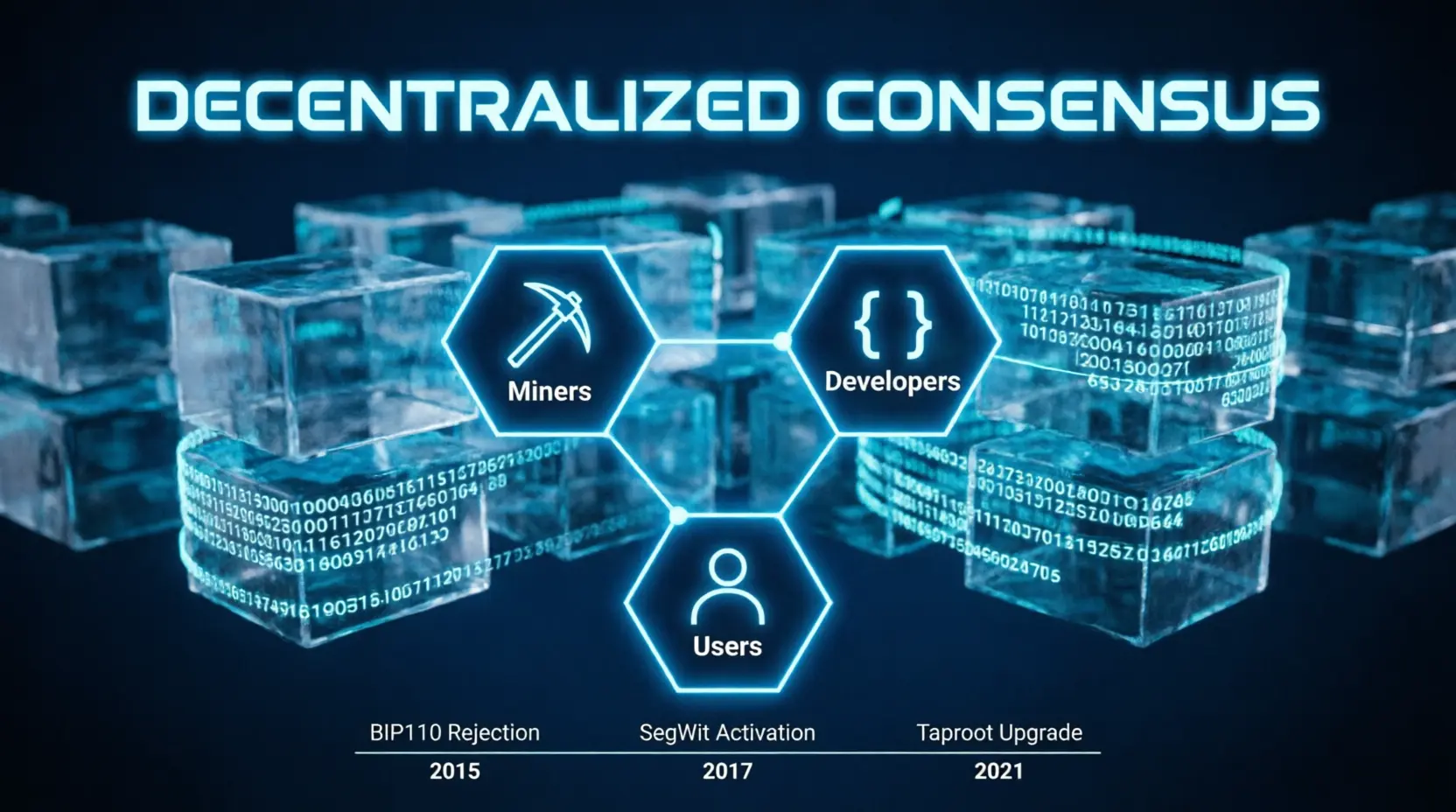
The failure of the BIP110 soft fork proposal stands as one of the most significant, yet frequently misunderstood, events in Bitcoin’s developmental history. While often overshadowed by the more contentious block size wars that followed, the rejection of BIP110 was not merely a technical setback; it was a definitive stress test of decentralized consensus mechanisms and market-driven governance. For investors, developers, and institutional stakeholders, understanding why this specific upgrade failed provides critical insight into how Bitcoin actually evolves, distinguishing between theoretical protocol improvements and changes that possess genuine economic viability. The legacy of BIP110 is not found in code that was merged, but in the rigorous standards for activation and community alignment that were forged in its absence.
To grasp the magnitude of this event, one must first understand what BIP110 proposed and why it seemed technically sound on paper. Introduced in early 2015 by developer Jeff Garzik, BIP110 sought to implement a dynamic block size limit adjustment mechanism via a soft fork. Unlike later proposals that aimed for fixed increases or complex algorithmic adjustments, BIP110 attempted to tie the maximum block size directly to miner signaling and network capacity metrics. Theoretically, this offered an elegant solution to the scaling debate by allowing the network to adapt organically rather than through hard-coded political compromises. From a pure engineering perspective, the proposal addressed valid concerns regarding transaction throughput and fee volatility. However, technical elegance does not equate to economic consensus, and this distinction proved fatal for the proposal.
From a market and economic perspective, the failure of BIP110 highlighted a fundamental truth about Bitcoin: protocol changes are ultimately economic decisions, not just software updates. At the time of the proposal, the ecosystem was deeply fractured regarding the risk-reward profile of increasing block sizes. Miners, who would have been responsible for signaling support, faced misaligned incentives. Larger blocks increased propagation latency, potentially disadvantaging smaller mining operations and favoring industrial-scale facilities with superior infrastructure. Without clear evidence that the marginal revenue from additional transaction fees would outweigh the increased orphan rate risks and bandwidth costs, rational economic actors had no incentive to activate the fork. The market effectively priced in the risk of centralization as greater than the benefit of immediate scaling, leading to a collective decision to maintain the status quo despite acknowledged capacity constraints.
Technologically, the BIP110 episode exposed severe deficiencies in soft fork activation mechanisms available at the time. The proposal relied heavily on miner signaling thresholds that were ambiguous and lacked sufficient safety buffers against accidental activation or minority chain splits. This uncertainty created a chilling effect among node operators and wallet providers, who feared being stranded on an incompatible chain. The lack of robust user-activated safeguards meant that the proposal’s success depended almost entirely on a supermajority of hash power acting in perfect coordination, a condition rarely met in a permissionless system. This technical fragility forced the development community to innovate, eventually leading to more sophisticated activation frameworks like BIP65, BIP9, and later BIP148 and Speedy Trial, which incorporated better signaling windows, lock-in periods, and user enforcement options.
For investors and institutional observers, the rejection of BIP110 serves as a vital case study in assessing Bitcoin’s resilience and predictability. Many external analysts initially viewed the failure as evidence of developmental stagnation or governance paralysis. In reality, it demonstrated the network’s immune system functioning exactly as designed. The inability to push through a controversial change without overwhelming consensus protects Bitcoin from capture by special interests and prevents reckless experimentation with monetary policy or base layer parameters. This conservative bias, while frustrating during periods of high congestion, is precisely what underpins Bitcoin’s value proposition as a secure, immutable store of value. Institutional capital allocation models should view such governance friction not as a bug, but as a feature that reduces tail risk and enhances long-term credibility.
The business implications extended far beyond the immediate scaling debate. The failure catalyzed the emergence of second-layer solutions and alternative scaling approaches. Recognizing that base layer consensus was difficult to achieve, entrepreneurs and developers pivoted toward off-chain settlement layers, payment channels, and sidechains. This strategic redirection laid the groundwork for the Lightning Network and other Layer 2 technologies that now form a critical part of Bitcoin’s utility stack. Had BIP110 succeeded, it might have delayed or diminished innovation in these areas by providing a temporary, centralized-prone fix. Paradoxically, the failure of on-chain scaling at that moment accelerated the development of more sustainable, market-tested scaling architectures that preserve decentralization while improving throughput.
Furthermore, the BIP110 experience reshaped the social contract between developers, miners, node operators, and users. It established that developer proposals carry no inherent authority without broad ecosystem buy-in. This shifted the balance of power away from core maintainers and toward the distributed network of economic nodes running full validation software. Future proposals learned that they must address not only technical feasibility but also incentive compatibility across all stakeholder groups. Communication strategies evolved from technical specifications to comprehensive economic impact analyses, recognizing that adoption requires convincing diverse participants that their individual interests align with the collective upgrade. This maturation of discourse has made subsequent upgrades more deliberate, transparent, and resistant to coordinated manipulation.
Potential risks associated with misinterpreting the BIP110 legacy remain relevant today. Some observers still conflate the rejection of specific proposals with an inability to scale, failing to recognize that the network successfully implemented SegWit, Taproot, and numerous optimization upgrades using lessons learned from earlier failures. Others mistakenly believe that miner signaling alone determines outcomes, ignoring the crucial role of user-activated enforcement and economic node consensus. Investors relying solely on GitHub activity or developer sentiment without analyzing underlying economic incentives risk mispricing Bitcoin’s evolutionary trajectory. The true signal lies not in what is proposed, but in what survives the gauntlet of decentralized ratification.
Looking forward, the principles validated by BIP110’s rejection continue to guide Bitcoin’s development philosophy. Current discussions around covenant proposals, drivechain implementations, and further privacy enhancements are being evaluated through the same rigorous lens of incentive alignment and safety-first activation. The bar for base layer changes remains intentionally high, ensuring that only modifications with near-universal support and minimal downside risk are considered. This disciplined approach may appear slow compared to centralized competitors, but it preserves the very properties that make Bitcoin unique: censorship resistance, monetary integrity, and trust minimization. Stakeholders who understand this dynamic can better navigate cycles of hype and disappointment, focusing on substantive progress rather than superficial milestones.
Ultimately, the story of BIP110 is a testament to Bitcoin’s emergent order. In systems governed by top-down authority, failed proposals represent wasted resources and lost opportunities. In Bitcoin’s decentralized paradigm, rejected proposals serve as essential feedback loops that refine collective intelligence and strengthen systemic resilience. The network did not fail when BIP110 was abandoned; it succeeded in avoiding a premature, potentially destabilizing change. This capacity for self-correction, driven by economic reality rather than ideological preference, remains Bitcoin’s most durable competitive advantage. For anyone seeking to understand where Bitcoin is going, studying where it refused to go is equally important.
Investors, builders, and researchers should treat historical governance events like BIP110 not as footnotes, but as foundational data points for modeling future network behavior. When evaluating new proposals or market narratives, ask whether incentive structures truly align across stakeholders, whether activation mechanisms provide adequate safety margins, and whether the change preserves Bitcoin’s core security guarantees. Demand evidence of organic demand over artificial urgency. By applying the hard-won lessons of past failures, the ecosystem can continue evolving without sacrificing the principles that give it enduring value. The path forward is built not on flawless execution, but on the wisdom gained from imperfect attempts.
#BIP110SoftForkFails
@Gate_Square
@Dr. Han
repost-content-media
  • Reward
  • Comment
  • Repost
  • Share
Parallel execution and sharding have been talked up for so long—are your assets in your hands really safer? Forget it… I’m actually just on night shift watching the funding rates. The modular and DA-layer narratives—developers chat up a storm—then I glance at my positions, and users look completely confused. I’m confused too. For all the noise, if you haven’t figured out the exit path and asset isolation, a faster chain is pointless. Better to freshen up first: keep a close eye on stop-losses and funding rates. Nothing else is urgent.
View Original
  • Reward
  • Comment
  • Repost
  • Share
XBIT’s narrative this round is definitely on point
View Original
Furan86999
@qingyun88888 XBIT has something going on this time, for sure
  • Reward
  • Comment
  • Repost
  • Share
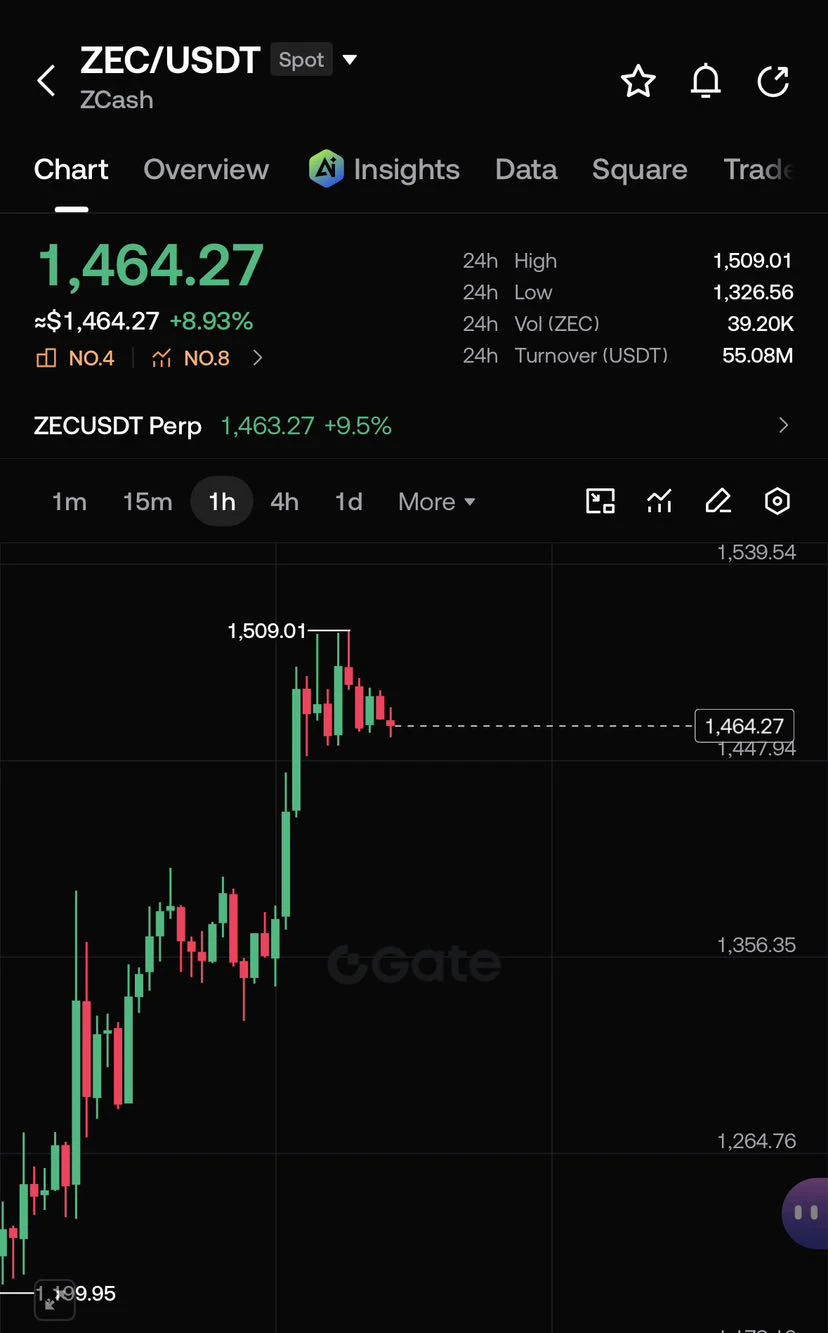
An old whale who made a profit of $38.75 million—after going silent, its very first move was to use 10x leverage on ZEC and 5x to push LIT. I’ve got to admire that nerve. Are you following or not?
ZEC-1.33%
LIT-2.87%
View Original
CoinNetwork
Bijie News reports that, according to onchainlens monitoring, a whale with cumulative profits exceeding $38.75 million returned after months of silence, deposited $892k, and staked HYPE. On HyperLiquid, it placed a 10x leveraged long on 14.29k ZEC, a 5x leveraged long on 1.62M LIT, and an order to buy 10.032k LIT.
  • Reward
  • Comment
  • Repost
  • Share
BTC ETF sees net inflow of $260 million in a single day, this capital density is something.
BTC-0.57%
View Original
CoinNetwork
CoinWorld news, on July 6, spot ETFs for BTC, ETH, and SOL saw net inflows, with BTC net inflow of approximately $265.69 million, ETH net inflow of approximately $20.66 million, and SOL net inflow of approximately $8.36 million.
  • Reward
  • Comment
  • Repost
  • Share
Gate's fund inflows are quite impressive, with $230 million in 30 days directly topping the charts. Is the CEX landscape about to change?
View Original
CoinNetwork
CoinWorld News, according to data from Defillama, Gate's net capital inflow over the past 30 days exceeded $231.44 million, ranking first among global centralized exchanges.
  • Reward
  • Comment
  • Repost
  • Share
At 3 a.m., the funding rate spiked again to an outrageous +0.3%, and my position size was still pushing higher. In moments like this, I actually half-close my computer—not because I’m afraid, but because I’m afraid I’ll get an itch to “take the other side and collect funding.”
That modular blockchain setup? Developers talk about it like crazy, but I don’t understand it at all. The DA-layer narrative sounds like the same old story poured into a new bottle. If I don’t understand something, I don’t touch it—this rule is tougher than any strategy.
I’ve tried flipping to open shorts during extreme
View Original
  • Reward
  • Comment
  • Repost
  • Share
Burry’s short-selling list is pretty long this time—no names from Nvidia to Tesla have been left out. How much longer can this chip rally keep going?
NVDA-1.42%
TSLA-1.21%
View Original
CoinNetwork
Michael Burry: Shorting Micron, saying it is in an AI bubble.
CoinWorld reports that Buri announced on Substack a short position on Micron, stating it is on the eve of the AI bubble burst. The short price is $1,051.87, but put options are not being purchased for now due to high option prices. He pointed out that South Korea's $500 billion semiconductor plan will suppress real returns, expressing deep concerns about Micron's ROIC/ROE, claiming its capital is destroyed every three quarters. In addition, he also shorted AI giants such as Nvidia, Tesla, and Applied Materials.
  • Reward
  • Comment
  • Repost
  • Share
Whales are moving again. Are these 1,482 BTC for ambush or cashing out?
BTC-0.36%
View Original
CoinNetwork
CoinWorld News reports that, according to Whale Alert monitoring, a Coinbase institutional account transferred 1,482 BTC to an unknown new wallet, worth approximately $91,259.3 million at current prices.
  • Reward
  • Comment
  • Repost
  • Share
860 BTC silent entry, are whales starting to accumulate again?
BTC-0.36%
View Original
CoinNetwork
Coin World News: According to Whale Alert monitoring, 860 BTC (approximately $51,578,409) has just been transferred from an unknown wallet.
  • Reward
  • Comment
  • Repost
  • Share
American Bitcoin Corp this round of 15:1 reverse stock split, shareholders have voted and passed, the market is going to shrink.
View Original
CoinNetwork
CoinWorld news, the board of American Bitcoin Corp has approved a 1-for-15 reverse stock split after receiving shareholder approval, and the company expects to implement the reverse stock split as soon as possible.
  • Reward
  • Comment
  • Repost
  • Share
The whale reduced 70 coins on xyz100, cashing out $2.14 million, and still has a position of $7.75 million, with an average price of 24,928 and a current price of 30,470. With an unrealized profit of 77.7%, it’s holding steady. The liquidation price of 23,732 also leaves a sufficient safety margin. This guy has earned $56 million across the entire cycle spanning crypto, crypto–US stock markets, and on-chain crude oil, and he’s truly a barometer for on-chain crude oil and US stock indices.
View Original
CoinNetwork
Crypto界网消息,大鲸鱼在xyz100上减持70.00枚,约合2,140,039.96美元,持仓规模为7,755,949.59美元,均价为24,927.83美元。目前盈亏为+1,410,724.13美元(+77.70%),当前价格为30,470.00美元,清算价为23,732.51美元。该大鲸鱼目前以超70M美元规模同时涉足加密货币、美股及大宗交易,是链上原油及美股指数的主要风向标,全周期盈利56M美元。
  • Reward
  • Comment
  • Repost
  • Share
The king of short sellers adds to his gold short positions; this move looks like he's betting on a stagflation scenario.
PAXG-0.60%
XAU-0.63%
View Original
CoinNetwork
CoinWorld News: The commodity trader "WTI Crude Oil TOP 1 Short" increased their GOLD short positions by 115.28 contracts, approximately $495,033.38, bringing the total position to $5,487,515.08. The average price was adjusted from $4,347.42 to $4,346.35. Currently, this short position has an unrealized profit of $10,701.06 (+3.90%), with a current price of $4,337.89 and a liquidation price of $5,845.28. Additionally, the trader also holds a $33 million WTI crude oil short position, prefers to open commodity-related positions, indirectly involved in US stock-related trading, with a monthly profit of about $17 million.
  • Reward
  • Comment
  • Repost
  • Share
Aerodrome's recent predictive liquidity allocation is quite interesting, reconstructing incentives using prediction market logic. Instead of distributing rewards based on historical data, it now bets on future demand directions, requiring higher strategic skills from LPs.
AERO-0.82%
View Original
WuSaidBlockchainW
According to CoinDesk, the largest DEX in the Base ecosystem, Aerodrome, will launch a Predictive Allocation mechanism in July to forecast future liquidity needs, replacing the incentive distribution model based on historical performance. Participants can achieve higher returns by predicting market demand directions in advance, and the team states that this mechanism combines the design concepts of prediction markets and AMMs.
  • Reward
  • Comment
  • Repost
  • Share
Kimi K2.6 has some real value for the price, costing $0.69 to reach 72.5%, which is one-third cheaper than GLM. Domestic models are starting to compete seriously.
GLM1.77%
View Original
CoinNetwork
Ramp releases SWE-Bench private benchmark: Claude Fable 5 wins with a 87.5% win rate
Ramp releases a private testing benchmark SWE-Bench, containing 80 backend development tasks from real production environments, aimed at solving issues of public evaluation data leakage and metric saturation.
14 models were evaluated, showing Anthropic Claude Fable 5 leading at 87.5%, with Claude Opus 4.7 and GPT-5.5 tied at 83.75%.
Domestic Kimi K2.6 and GLM 5.1 have solution rates of 72.5% and 71.25%, respectively, but Kimi K2.6 costs $0.69 on average, about 34% cheaper than GLM 5.1.
  • Reward
  • Comment
  • Repost
  • Share
This view is calm. The bottom of a bear market has never been V-shaped; it is forged through grinding.
View Original
CryptoZeno
I think the most likely scenario is that BTC chops sideways for the next few months.As much as I'd love to see $BTC V-shape recover, that's not something we've historically seen before.

In previous bear market cycles, the market has typically spent time consolidating and ranging before a true trend reversal takes hold.

So, pumps are likely shallow for now. Take that into consideration.
  • Reward
  • Comment
  • Repost
  • Share
Large whales are aggressively scooping within the $60k range; exchange data doesn't lie — smart money always has one more heartbeat of calmness than retail investors.
View Original
CoinNetwork
Crypto World reports that analyst Woo Minkyu pointed out that when Bitcoin dropped to the $60,000–$61,000 range, the exchange whale ratio surged to 0.616. Mega whales dominated buyer-side activity and absorbed panic sentiment.
  • Reward
  • Comment
  • Repost
  • Share
Retail investors exit, institutions move in, this market is becoming more and more like a VIP lounge on Wall Street.
View Original
WuSaidBlockchainW
According to a CryptoQuant report, driven by weakening market conditions and a decline in retail participation, the spot trading volume of global centralized cryptocurrency exchanges fell to $67.9 billion in April this year, setting a new monthly low since October 2023. This represents a sharp 67% contraction from the market peak in October 2025, and a 46% year-over-year decline. Against this backdrop, professional quantitative trading teams, market makers, and institutional arbitrageurs are becoming the main forces in the market, continuously pushing up the average trade size. In addition, major mainstream crypto exchanges are accelerating their penetration into the traditional finance (TradFi) sector: the trading volume of macro traditional finance perpetual contracts is projected to see explosive growth in 2026, and reached a peak of about $450 billion per month in March this year. (CryptoSlate)
  • Reward
  • Comment
  • Repost
  • Share
Staying on night shifts and monitoring perpetuals for a long time, the biggest enemy isn't the market, but the more assets you have, the more fragmented they become: one chain needs gas, another chain has a few receipts, and as a result, when you want to rebalance, you have to spend half a day just looking for things. My simple method is to keep only two "frequently used wallets" active, and treat the rest as storage, label the addresses, and do a unified check at the end of the month; cross-chain transfers are not made on a whim, so I top up the main chain gas in advance, otherwise, getting s
View Original
  • Reward
  • Comment
  • Repost
  • Share
  • Pinned