Square
Following
Hot
News
Notifications
Profile

Cryptoaymiiii

vip
No content yet
Peak Tier VIP 00.3 Year(s)
18
Following
514
Followers
1.1k
Liked
Crypto Market updates
live-replay-cover
18 views11-11 09:37
00:09:18
Crypto Market updates
live-cover
15 views11-10 15:03
Ended • No Replay
#ShareWeekly #OpenAI #WCTCS9

OpenAI Signals Long-Term Confidence in Data Centers: Why Midterm Elections Won't Change Its Infrastructure Strategy

The artificial intelligence industry is entering a new phase of development, where computing infrastructure is becoming just as important as the AI models themselves. OpenAI's latest position sends a strong message to the technology and investment sectors: its data center investment strategy will not change because of the U.S. midterm elections.

According to OpenAI's CFO, political developments and election cycles will not determine the company's
CryptoChampion
#ShareWeekly #OpenAI #WCTCS9
OpenAI Signals Long-Term Confidence in Data Centers: Why Midterm Elections Won't Change Its Infrastructure Strategy
The artificial intelligence industry is entering a new phase of development, where computing infrastructure is becoming just as important as the AI models themselves. OpenAI's latest position sends a strong message to the technology and investment sectors: its data center investment strategy will not change because of the U.S. midterm elections.
According to OpenAI's CFO, political developments and election cycles will not determine the company's long-term infrastructure investment decisions. This statement highlights how important computing capacity has become for the future of artificial intelligence.
But why is OpenAI maintaining this position, and what does it mean for the broader technology industry?
1. AI Infrastructure Is a Long-Term Priority
Building advanced AI systems requires enormous computing resources. Training large language models, operating AI assistants, processing billions of requests, and developing more advanced reasoning capabilities all depend on powerful data centers.
These facilities require specialized AI chips, high-performance servers, networking equipment, cooling systems, reliable electricity, and sophisticated storage infrastructure.
For OpenAI, expanding computing capacity is not simply an optional business expense. It is a fundamental requirement for supporting future AI development and delivering services at a larger scale.
2. Why Midterm Elections May Not Change Investment Decisions
U.S. midterm elections can influence political priorities, government spending, technology regulations, energy policies, and the broader business environment.
However, large-scale data center projects typically involve long-term planning, substantial capital commitments, infrastructure partnerships, and multi-year construction schedules.
These investments cannot easily be switched on or off depending on short-term political developments.
OpenAI's position suggests that its infrastructure strategy is driven primarily by long-term AI demand, technological competition, and the need for additional computing capacity rather than election-related uncertainty.
3. The Growing Importance of Electricity and Energy
One of the biggest challenges facing the AI industry is electricity availability.
Modern data centers consume substantial amounts of power, particularly facilities designed to operate thousands of advanced AI processors simultaneously.
As AI adoption expands, companies will need more reliable electricity infrastructure, improved cooling technologies, efficient power management, and potentially new energy partnerships.
This creates opportunities across several industries, including renewable energy, nuclear power, electricity transmission, cooling systems, and industrial equipment.
In my view, energy infrastructure could become one of the most important investment themes associated with the long-term AI expansion.
4. Opportunities for Semiconductor and Technology Companies
OpenAI's continued infrastructure commitment could have implications throughout the technology supply chain.
Companies involved in GPU manufacturing, semiconductor equipment, advanced memory, networking, server production, and data center construction may benefit from sustained demand.
The AI economy is no longer limited to software developers and chatbot platforms. It increasingly involves an entire ecosystem of hardware manufacturers, energy providers, cloud computing companies, and infrastructure operators.
However, growing demand does not automatically guarantee higher profits. Investors must also consider construction costs, financing requirements, competition, and the time needed to generate returns.
5. What Does This Mean for Financial Markets?
The AI infrastructure investment cycle could influence both traditional financial markets and the cryptocurrency ecosystem.
Technology stocks may continue attracting attention as investors evaluate long-term AI growth opportunities. At the same time, rising capital expenditure could create concerns about valuations, debt, profitability, and cash flow.
For crypto investors, the connection is indirect but important. AI infrastructure expansion could increase demand for computing technology, energy, and specialized digital infrastructure.
However, AI investment announcements should not automatically be interpreted as bullish signals for Bitcoin or altcoins. Crypto markets remain heavily influenced by liquidity, interest rates, regulation, and investor sentiment.
6. My Personal Market Perspective
I believe OpenAI's statement highlights an important shift in the technology industry. AI is moving beyond experimentation and becoming a major infrastructure-driven business.
The companies capable of securing computing resources, reliable energy, advanced chips, and sustainable financing could have significant advantages in the coming years.
However, I would not chase AI-related stocks simply because investment announcements sound impressive. Actual revenue growth, operating efficiency, and returns on invested capital will matter more than headlines.
Final Thoughts
OpenAI's decision to maintain its data center investment strategy despite the U.S. midterm election cycle reflects the long-term importance of artificial intelligence infrastructure.
The next stage of AI competition will not be determined only by who develops the smartest model. It will also depend on who can build, power, finance, and operate the infrastructure required to support it.
The AI race is becoming an infrastructure race, and the companies investing today may help shape the global technology economy of tomorrow.
#每周来晒 #Gate股票畅聊季 @Gate_Square

BTC-0.67%
#ShareWeekly #BTC #WCTCS9

U.S. Adds 165,000 Jobs in October: A Strong Labor Market Could Reshape the Federal Reserve’s Next Move

The U.S. labor market has delivered a stronger-than-expected performance in October, adding 165,000 nonfarm payroll jobs and significantly exceeding economists' expectations. This unexpected strength sends an important signal about the condition of the world's largest economy and could influence financial markets, Federal Reserve policy decisions, bond yields, the U.S. dollar, and cryptocurrency sentiment.

But the bigger question is not simply how many jobs were
CryptoChampion
#ShareWeekly #BTC #WCTCS9
U.S. Adds 165,000 Jobs in October: A Strong Labor Market Could Reshape the Federal Reserve’s Next Move
The U.S. labor market has delivered a stronger-than-expected performance in October, adding 165,000 nonfarm payroll jobs and significantly exceeding economists' expectations. This unexpected strength sends an important signal about the condition of the world's largest economy and could influence financial markets, Federal Reserve policy decisions, bond yields, the U.S. dollar, and cryptocurrency sentiment.
But the bigger question is not simply how many jobs were created. It is what this employment strength means for inflation, interest rates, and the direction of financial markets heading into the final months of 2026.
1. A Stronger-Than-Expected Employment Report
October's addition of 165,000 nonfarm payroll jobs represents a positive surprise for the U.S. economy. Nonfarm payrolls are one of the most closely watched economic indicators because they measure employment changes across major industries, excluding agricultural workers and certain other categories.
When employment growth exceeds expectations, it generally suggests that businesses are continuing to hire, economic activity remains relatively resilient, and consumer spending may receive continued support from household income.
However, investors should also examine previous-month revisions, average hourly earnings, the unemployment rate, and labor force participation before reaching conclusions about the overall employment picture.
2. What Does This Mean for Federal Reserve Policy?
The employment report could complicate the Federal Reserve's decision-making process.
The Fed has two major objectives: maintaining price stability and supporting maximum employment. When the labor market remains strong, policymakers may have less urgency to reduce interest rates, particularly if inflation remains above their preferred level.
A stronger employment market can therefore increase expectations that interest rates will remain elevated for longer.
This is especially important because markets have recently been evaluating the possibility of a December rate hike. Strong employment figures could reinforce expectations of a more cautious monetary policy approach.
3. Potential Impact on Bitcoin and Cryptocurrency
For cryptocurrency investors, the employment report is another important piece of the macroeconomic puzzle.
Bitcoin and other digital assets are sensitive to changes in liquidity, interest-rate expectations, and overall risk appetite.
If strong employment data pushes Treasury yields and the U.S. dollar higher, risk-sensitive assets could experience additional selling pressure. Bitcoin, Ethereum, and altcoins may face volatility as investors reassess their exposure.
On the other hand, economic resilience can also support broader confidence in financial markets. Therefore, strong jobs data does not automatically mean bearish conditions for cryptocurrencies.
The reaction will depend heavily on how investors interpret the report alongside inflation and Federal Reserve expectations.
4. What Should Stock Market Investors Watch?
A resilient labor market can support corporate revenues through stronger consumer demand. However, higher interest-rate expectations can create valuation pressure, especially for technology and growth companies.
Investors should pay particular attention to Treasury yields, banking stocks, technology shares, and companies that depend heavily on borrowing and future growth expectations.
The relationship between economic growth and monetary policy will remain a major driver of market direction.
5. My Market Perspective
In my view, October's 165,000 payroll increase is an important reminder that the U.S. economy may be more resilient than some market participants expected.
However, I would not make an immediate bullish or bearish decision based on one economic report.
I would focus on three things: upcoming inflation data, the Federal Reserve's communication, and whether employment growth remains consistent in the coming months.
For Bitcoin, I believe liquidity conditions and interest-rate expectations deserve close attention. Traders should avoid chasing sudden price movements and wait for confirmation before taking positions.
Final Thoughts
The October jobs report has strengthened the case for continued economic resilience, but it has also introduced another challenge for investors trying to predict the Fed's next move.
The key question now is whether strong employment can coexist with cooling inflation. That balance could determine the direction of monetary policy and influence the next major move across traditional and cryptocurrency markets.
Strong jobs data is good news for economic confidence, but its impact on financial markets depends on what comes next.
#USJobs #NonFarmPayrolls
BTC-0.67%
ETH-1.26%
#ShareWeekly #401k #WCTCS9

A major development in U.S. financial regulation could open a new chapter for the cryptocurrency industry. The U.S. Department of Labor has submitted its final rule on alternative investments in 401(k) retirement plans to the White House for review, bringing digital assets one step closer to broader acceptance within traditional retirement investment markets.

The rule was submitted to the White House Office of Information and Regulatory Affairs (OIRA) on November 5, 2026. It could make it easier for retirement plan managers to consider cryptocurrencies alongside t
CryptoChampion
#ShareWeekly #401k #WCTCS9
A major development in U.S. financial regulation could open a new chapter for the cryptocurrency industry. The U.S. Department of Labor has submitted its final rule on alternative investments in 401(k) retirement plans to the White House for review, bringing digital assets one step closer to broader acceptance within traditional retirement investment markets.
The rule was submitted to the White House Office of Information and Regulatory Affairs (OIRA) on November 5, 2026. It could make it easier for retirement plan managers to consider cryptocurrencies alongside traditional investments such as stocks and bonds, as well as alternative assets like private equity and real estate.
Why Is This Development Important?
The American 401(k) retirement system represents one of the largest pools of long-term investment capital in the world. Historically, these accounts have primarily focused on conventional financial instruments, including equities, bonds, mutual funds and target-date retirement products.
Allowing alternative investments to become part of the retirement investment landscape could introduce a new source of institutional and long-term capital into the digital asset ecosystem.
For cryptocurrency markets, the significance goes beyond a single regulatory announcement. It represents another potential connection between traditional retirement savings and the expanding digital financial economy.
Understanding the Proposed Regulatory Framework
The rule, titled "Fiduciary Duties in Selecting Designated Investment Alternatives," focuses on clarifying the responsibilities of retirement plan managers when evaluating alternative investment opportunities.
One of its most important elements is a proposed legal safe harbor for plan fiduciaries who follow an appropriate investment evaluation process.
Under the framework previously outlined by the Department of Labor, six major factors would guide investment decisions:
1. Investment Performance: Evaluating historical and expected returns while considering the overall investment objectives.
2. Fees and Expenses: Examining management costs, transaction expenses and other charges that could reduce long-term retirement returns.
3. Liquidity: Determining whether investments can be converted into cash when participants need access to their retirement funds.
4. Valuation: Establishing reliable methods for determining the actual value of investment holdings.
5. Performance Benchmarks: Comparing investment results against suitable market benchmarks to understand relative performance.
6. Investment Complexity: Assessing the structure, risks and operational challenges associated with alternative financial products.
These requirements are important because retirement accounts are designed for long-term financial security rather than short-term speculation.
Does This Mean Bitcoin Will Automatically Enter Every 401(k)?
No. This distinction is particularly important.
The rule does not force employers to offer Bitcoin, Ethereum or any other cryptocurrency in their retirement plans. Instead, it could provide a clearer regulatory framework for fiduciaries who want to evaluate alternative investment opportunities.
Individual employers and retirement plan administrators would retain significant responsibility for determining which investment options are appropriate.
The final regulatory language will also determine how broadly the framework applies.
What Could This Mean for Bitcoin and the Crypto Industry?
The potential implications are significant.
First, greater access to cryptocurrency-related investment products through retirement accounts could expand the pool of potential investors.
Second, the development could strengthen the relationship between traditional financial institutions and digital asset markets.
Third, it could encourage financial service providers to develop more retirement-focused investment products that offer regulated exposure to digital assets.
However, the actual impact will depend on implementation, investor demand, product availability and the risk standards applied by retirement plan managers.
The Risks Should Not Be Ignored
Cryptocurrency remains a volatile asset class. Bitcoin and other digital assets can experience substantial price movements, while liquidity conditions, regulatory developments and market sentiment can change rapidly.
Retirement investors also face unique challenges because losses close to retirement age can have serious long-term consequences.
Therefore, broader access should not be confused with guaranteed returns or reduced investment risk. Diversification, reasonable fees, transparency and appropriate risk management will remain essential.
My Market Perspective
In my view, this development is more important as a long-term institutional adoption signal than as an immediate bullish price catalyst.
The crypto industry has spent years building connections with traditional finance. Spot ETFs, institutional custody, tokenization and clearer regulatory frameworks have already helped bring digital assets closer to conventional investment markets.
Now, the possibility of alternative assets entering 401(k) investment menus could represent another step in that evolution.
The next important milestones will be the completion of White House review, publication of the final regulatory text and the practical decisions made by retirement plan administrators.
I believe the biggest opportunity is not simply whether Bitcoin enters retirement portfolios, but whether digital assets gradually become an established component of diversified financial products.
Final Takeaway: The submission of the 401(k) alternative-investment rule to the White House is a significant regulatory milestone. It does not guarantee immediate crypto access, but it could create a clearer pathway for digital assets to reach one of the world's largest retirement investment markets.
For Bitcoin and the broader crypto industry, this is a development worth watching closely over the coming months.
This is my market perspective, not financial advice.
#每周来晒 #Gate股票畅聊季 @Gate_Square
BTC-0.67%
ETH-1.26%
#ShareWeekly #Fed #WCTCS9

The Fed's December Decision Is Becoming More Complicated: Why Strong Employment Data Could Keep Interest Rates Higher for Longer

The latest U.S. non-farm payrolls data has introduced a significant shift in financial market expectations. Following the employment report, the probability of a Federal Reserve interest rate hike in December climbed to 77.7%, signaling that investors are increasingly concerned about the possibility of tighter monetary policy before the end of 2026.

This development is particularly important because the Federal Reserve is facing a delica
CryptoChampion
#ShareWeekly #Fed #WCTCS9
The Fed's December Decision Is Becoming More Complicated: Why Strong Employment Data Could Keep Interest Rates Higher for Longer
The latest U.S. non-farm payrolls data has introduced a significant shift in financial market expectations. Following the employment report, the probability of a Federal Reserve interest rate hike in December climbed to 77.7%, signaling that investors are increasingly concerned about the possibility of tighter monetary policy before the end of 2026.
This development is particularly important because the Federal Reserve is facing a delicate balancing act: controlling inflation without putting unnecessary pressure on economic growth and employment.
1. Why Did Rate Hike Expectations Increase?
Non-farm payrolls (NFP) measure the number of jobs added or lost across the U.S. economy, excluding agricultural employment, private household workers, and certain other categories.
Employment data is one of the most important indicators used by the Federal Reserve when assessing economic conditions.
When job creation remains strong, unemployment stays relatively controlled, and wage growth continues, it can indicate that the economy has enough strength to sustain consumer spending. However, strong employment can also create additional inflationary pressure through higher wages and demand.
The latest NFP release appears to have encouraged investors to reconsider the possibility of another rate increase, pushing December hike expectations to 77.7%.
2. What Does a 77.7% Probability Actually Mean?
This figure represents market-implied expectations rather than an official Federal Reserve decision.
A probability of 77.7% suggests that financial markets are assigning considerably greater weight to a December rate hike than to alternative outcomes.
However, these expectations can change quickly as new economic information becomes available. Inflation figures, unemployment data, wage growth, consumer spending, and comments from Fed officials will all influence the final outlook.
3. Why Is Inflation Still the Biggest Concern?
The Federal Reserve's primary objective is to maintain price stability while supporting maximum employment.
If employment remains resilient while inflation stays above the Fed's 2% long-term target, policymakers may have less flexibility to reduce borrowing costs.
Higher wages can support household purchasing power, but persistent wage growth can also increase business operating costs. Companies may pass some of those costs to consumers, keeping inflation elevated.
This is why strong employment data is not automatically positive for financial markets.
4. What Could This Mean for Bitcoin and Cryptocurrency?
The potential impact on crypto markets deserves particular attention.
Higher interest rates generally increase the attractiveness of traditional yield-bearing investments, potentially reducing demand for riskier assets such as Bitcoin and altcoins.
A more hawkish Federal Reserve could also strengthen the U.S. dollar and tighten overall financial conditions.
For Bitcoin, the important factors will include:
- Dollar strength and movements in the DXY index.
- U.S. Treasury yields and liquidity conditions.
- Institutional demand and spot Bitcoin ETF flows.
- Leverage, open interest, and liquidation activity.
- Whether Bitcoin can maintain important technical support levels.
However, a rate hike does not automatically mean that Bitcoin must decline. Market positioning, liquidity expectations, and whether the decision is already priced in can significantly influence the reaction.
5. What Should Investors Watch Before December?
The next several economic releases could become decisive.
Investors should closely monitor upcoming CPI and PCE inflation reports, monthly employment figures, average hourly earnings, unemployment rates, retail sales, and Federal Reserve communications.
A combination of persistent inflation and resilient employment could reinforce expectations of tighter monetary policy. Conversely, weakening labor conditions and declining inflation could reduce the probability of another hike.
My Market View
In my opinion, the 77.7% probability is an important warning that markets may be entering a more cautious phase ahead of the December FOMC meeting.
The biggest risk is not simply higher interest rates; it is the possibility that investors have underestimated how long restrictive monetary policy could remain in place.
For crypto traders, this is a period to prioritize confirmation over speculation. Chasing sudden Bitcoin rallies or opening leveraged positions based on a single economic report can create unnecessary risk.
I would rather watch the dollar, Treasury yields, inflation data, and Bitcoin's support and resistance levels before making any directional judgment.
The key question is no longer just whether the Fed will cut rates. It is whether the latest economic strength will force policymakers to tighten monetary conditions again.
December could become a major turning point for both traditional financial markets and the cryptocurrency sector.
This is my market perspective, not financial advice.
#每周来晒 @Gate_Square #GateSquareTradingChallenge
BTC-0.67%
First trade 10 USDT, trade more for up to 100 USDT https://www.gate.com/campaigns/6937?ref=VLARBF1YAG&ref_type=132
CryptoChampion
First trade 10 USDT, trade more for up to 100 USDT https://www.gate.com/campaigns/6937?ref=VLARBF1YAG&ref_type=132
repost-content-media
Trade stocks on margin to receive the corresponding shares and share a $29,000 prize pool https://www.gate.com/campaigns/6844?ref=VLARBF1YAG&ref_type=132
CryptoChampion
Trade stocks on margin to receive the corresponding shares and share a $29,000 prize pool https://www.gate.com/campaigns/6844?ref=VLARBF1YAG&ref_type=132
repost-content-media
Win up to 1,888 USDT in Google Stock Trial Funds https://www.gate.com/campaigns/6916?ref=VLARBF1YAG&ref_type=132
CryptoChampion
Win up to 1,888 USDT in Google Stock Trial Funds https://www.gate.com/campaigns/6916?ref=VLARBF1YAG&ref_type=132
repost-content-media
GOOGL-0.25%
Trade Daily to Win NVDA, Invite Friends for Extra Rewards https://www.gate.com/campaigns/6843?ref=VLARBF1YAG&ref_type=132&utm_cmp=G2NqKyKw
CryptoChampion
Trade Daily to Win NVDA, Invite Friends for Extra Rewards https://www.gate.com/campaigns/6843?ref=VLARBF1YAG&ref_type=132&utm_cmp=G2NqKyKw
repost-content-media
NVDA-5.47%
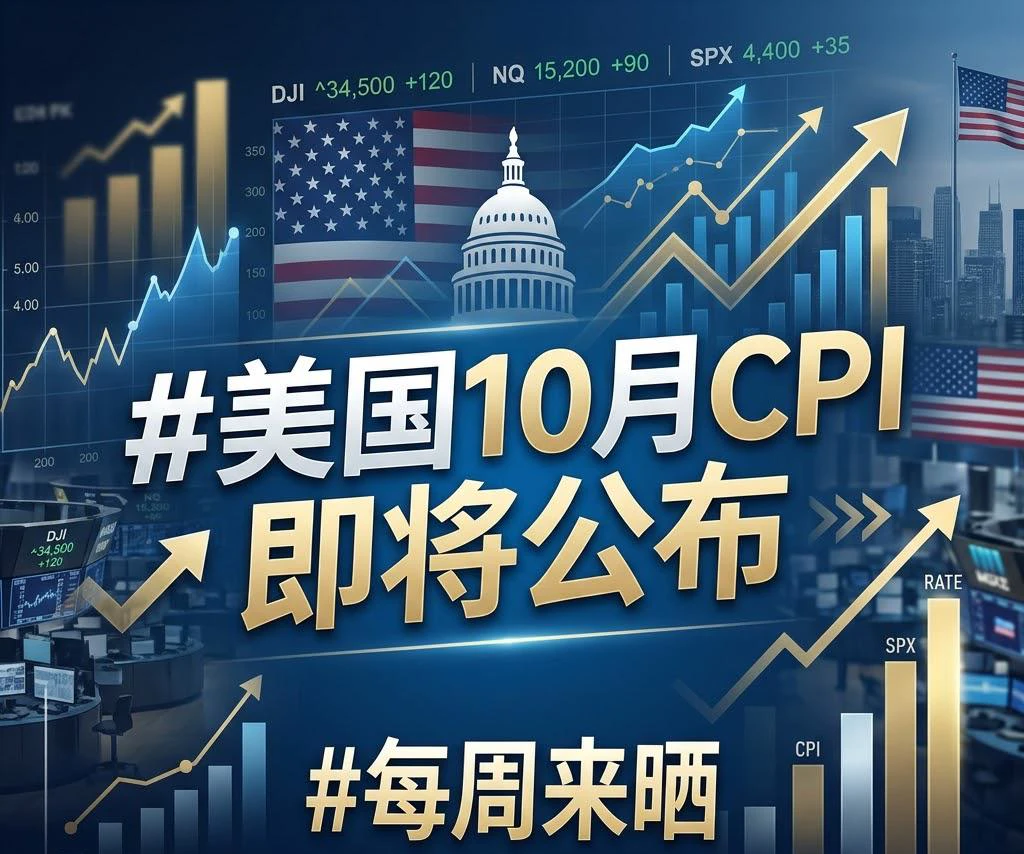
#每周来晒 #美国10月CPI即将公布

The upcoming U.S. Consumer Price Index (CPI) report could become one of the most important macroeconomic events for financial markets. At a time when investors are closely monitoring inflation, interest rates, economic growth and liquidity conditions, even a small difference between expected and actual CPI figures could create significant volatility across traditional and digital assets.

My assessment is that this report should not be viewed simply as another monthly inflation update. It could provide important clues about the Federal Reserve's next policy decision and d
CryptoChampion
#每周来晒 #美国10月CPI即将公布
The upcoming U.S. Consumer Price Index (CPI) report could become one of the most important macroeconomic events for financial markets. At a time when investors are closely monitoring inflation, interest rates, economic growth and liquidity conditions, even a small difference between expected and actual CPI figures could create significant volatility across traditional and digital assets.
My assessment is that this report should not be viewed simply as another monthly inflation update. It could provide important clues about the Federal Reserve's next policy decision and determine whether markets have sufficient confidence to continue recovering or whether another period of selling pressure is approaching.
1. Why the CPI Report Matters More Than Ever
Inflation directly influences the Federal Reserve's monetary policy. When inflation remains elevated, policymakers have less flexibility to reduce interest rates. However, consistent evidence of cooling inflation could strengthen expectations of monetary easing.
The important point is that markets react not only to the inflation number itself but also to how that number compares with expectations.
A higher-than-expected reading could increase concerns about persistent inflation, while a lower-than-expected figure could improve investor confidence and encourage renewed risk-taking.
2. Core CPI Could Reveal the Real Inflation Picture
Headline CPI receives most of the attention, but Core CPI deserves equally close monitoring because it excludes food and energy prices, which can fluctuate significantly.
Investors should also examine shelter inflation, transportation services, healthcare costs and other service-related components.
Shelter inflation is particularly important because housing costs represent a substantial portion of consumer inflation measurements. Official shelter data can respond more slowly than real-time rental market conditions.
This means the headline figure alone may not provide a complete picture of the underlying inflation trend.
3. Three Possible Market Scenarios
There are three major outcomes I would prepare for:
Scenario One: Inflation Comes in Higher Than Expected
A hotter CPI reading could create immediate pressure across risk assets. Treasury yields may rise as investors reduce expectations of near-term interest rate cuts.
The U.S. dollar could strengthen, while technology stocks and cryptocurrencies face additional selling pressure.
For Bitcoin, the first important question would be whether buyers can defend nearby support levels or whether leveraged positions begin facing liquidation pressure.
Scenario Two: Inflation Matches Expectations
An in-line report might initially appear neutral, but the market reaction could still be unpredictable.
If investors have already priced in a particular outcome, the absence of a positive surprise may trigger profit-taking. In this environment, previous positioning, Treasury yields and Federal Reserve expectations could become more important than the headline number.
Scenario Three: Inflation Comes in Lower Than Expected
A cooler CPI reading could provide a positive catalyst for financial markets.
Lower inflation would potentially strengthen expectations of future monetary easing, reduce pressure on bond yields and improve liquidity expectations.
Bitcoin, Ethereum, technology stocks and other risk-sensitive assets could benefit from renewed buying interest.
Gold could also attract attention as investors reassess the dollar, real yields and monetary policy expectations.
4. What Could Happen to Bitcoin and Gold?
Bitcoin remains particularly sensitive to changes in global liquidity and investor risk appetite.
A hotter inflation report could create another challenging environment for BTC, especially if Treasury yields and the dollar move higher together.
On the other hand, a softer reading could support a recovery attempt, although one favorable report would not automatically confirm a sustainable bullish trend.
For gold and tokenized gold assets such as XAUT, the relationship is more complicated. Gold may benefit from uncertainty and safe-haven demand, but rising real yields and a stronger dollar can create short-term resistance.
Therefore, I would monitor both assets independently instead of assuming they must move in opposite directions.
5. My Trading Strategy Ahead of CPI
Personally, I believe preparation is more important than predicting the exact inflation figure.
I would focus on five things:
- Monitor headline CPI and Core CPI against consensus expectations.
- Watch U.S. Treasury yields and dollar strength immediately after publication.
- Identify important BTC support and resistance levels before volatility increases.
- Avoid excessive leverage and unnecessary positions during the announcement.
- Wait for confirmation through price action, trading volume and a successful breakout or retest.
One particularly important risk is a false breakout. Algorithmic trading can create sharp movements in both directions within seconds, potentially triggering stop-losses before the market establishes a clearer trend.
I would rather miss the first move than enter a position without confirmation.
6. The Bigger Economic Picture
The CPI report is only one part of the broader economic outlook. Employment figures, consumer spending, financial conditions, Treasury yields and Federal Reserve communication will also influence market direction.
Investors should avoid interpreting one monthly report as definitive evidence that inflation has been defeated or that another inflationary cycle has begun.
A consistent trend across multiple reports will provide a much stronger foundation for long-term decisions.
My Final View
The next U.S. CPI release could determine the market's short-term direction, but the real opportunity will emerge from understanding how inflation data changes expectations for monetary policy and liquidity.
For Bitcoin, the difference between a temporary relief rally and a sustainable recovery will depend on confirmation from price action and broader financial conditions.
My approach remains simple: protect capital, respect important support and resistance levels, avoid emotional decisions and let the market confirm its direction.
What is your expectation for the upcoming CPI report? Will cooling inflation support a Bitcoin recovery, or could persistent price pressures trigger another risk-off move across global markets?
This is my market perspective, not financial advice.
#Gate股票畅聊季 #WCTCS9 @Gate_Square #GateSquareTradingChallenge
repost-content-media
BTC-0.65%
ETH-1.26%
XAU+0.38%
XAUT+0.30%
I'm trading on Gate, a top-tier exchange with a 13-year track record. Come join me and dive into the hottest events right now! https://www.gate.com/campaigns/site466?ref=VLARBF1YAG&ref_type=132
CryptoChampion
I'm trading on Gate, a top-tier exchange with a 13-year track record. Come join me and dive into the hottest events right now! https://www.gate.com/campaigns/site466?ref=VLARBF1YAG&ref_type=132
repost-content-media
#NvidiaCEOUnderInvestigation #ShareWeekly

NVDA Faces a Leadership Crisis: Is This Market Fear Creating a Buying Opportunity?

NVIDIA is facing a different kind of challenge, and this time the biggest concern is not competition in artificial intelligence, slowing chip demand, or declining profitability. Instead, investors are evaluating the potential consequences of a controversy involving CEO Jensen Huang and the company's corporate governance.

My perspective: NVIDIA's recent weakness should not automatically be interpreted as the beginning of a long-term bearish trend. However, the situati
CryptoChampion
#NvidiaCEOUnderInvestigation #ShareWeekly
NVDA Faces a Leadership Crisis: Is This Market Fear Creating a Buying Opportunity?
NVIDIA is facing a different kind of challenge, and this time the biggest concern is not competition in artificial intelligence, slowing chip demand, or declining profitability. Instead, investors are evaluating the potential consequences of a controversy involving CEO Jensen Huang and the company's corporate governance.
My perspective: NVIDIA's recent weakness should not automatically be interpreted as the beginning of a long-term bearish trend. However, the situation introduces a new layer of uncertainty that investors cannot afford to ignore.
1. Understanding the Controversy
On November 8, 2026, NVIDIA's board announced an independent investigation following media reports that Jensen Huang had allegedly been targeted by a foreign intelligence operation involving Alice Huang, a former executive at Singapore-based Megaspeed.
Separately, Jensen Huang acknowledged an extramarital affair and issued an apology to his family, employees, and colleagues.
These developments have attracted considerable attention because Megaspeed has reportedly been a significant NVIDIA customer, while the allegations raise questions about potential intelligence gathering and sensitive business information.
Importantly, an investigation is not proof of wrongdoing. NVIDIA's board has explicitly stated that it currently has no reason to believe that company secrets or U.S. national security information were compromised. Huang has also agreed to cooperate fully.
2. Why Is the Market Reacting Negatively?
The market is particularly sensitive to uncertainty surrounding influential corporate leaders.
On November 9, NVIDIA shares experienced selling pressure. During after-hours trading, NVDA traded around $180.30, compared with Friday's closing price of $186.64, representing an approximately 3.4% decline.
I believe three factors are contributing to this reaction:
- Leadership uncertainty: Investors are questioning whether the controversy could affect Huang's position and decision-making responsibilities.
- Regulatory exposure: Additional scrutiny from U.S. authorities could create complications for NVIDIA's international business operations.
- Investor confidence: Negative headlines can increase the risk premium investors demand when holding a major technology stock.
The most important concern is that NVIDIA's success is closely associated with Huang's leadership, strategic vision, and relationships across the global technology industry.
3. Three Possible Scenarios for NVDA
Bullish Scenario: Investigation Clears Major Concerns
If the independent investigation finds no evidence of information leaks, misconduct affecting company operations, or national security violations, investor confidence could gradually recover.
Under this scenario, the current weakness may eventually become a temporary sentiment-driven correction.
Neutral Scenario: Extended Uncertainty
If the investigation takes several weeks or months, NVIDIA could experience continued volatility.
Even without evidence of wrongdoing, uncertainty surrounding leadership and regulatory scrutiny could place pressure on its valuation.
Bearish Scenario: Serious Findings Emerge
If investigators uncover compromised information, significant governance failures, or consequences affecting Huang's leadership, the market could reassess NVIDIA's valuation more aggressively.
Such developments could affect institutional confidence, strategic relationships, and long-term expectations.
These scenarios are conditional possibilities, not guaranteed outcomes.
4. Five Indicators Investors Should Monitor
I would focus on the following developments:
1. Independent investigation: Whether credible evidence of compromised information emerges.
2. CEO stability: Whether Huang retains the confidence of NVIDIA's board.
3. Congressional response: Whether U.S. lawmakers increase scrutiny or request additional disclosures.
4. China-related exposure: Whether export restrictions create further uncertainty for international chip sales.
5. Business fundamentals: Whether AI infrastructure investment, data center demand, margins, and earnings expectations remain strong.
5. My Investment Strategy
My outlook is cautious in the short term but not necessarily bearish over the long term.
I would avoid chasing an immediate rebound or aggressively accumulating shares simply because the price has declined.
Instead, I would watch how the stock behaves around important support levels, monitor trading volume, and wait for confirmation that selling pressure is weakening.
More importantly, I would separate temporary reputational damage from genuine deterioration in business fundamentals.
My Conclusion
NVIDIA remains a central player in the global AI infrastructure industry, but even the strongest technology companies are not immune to management-related risks.
The current controversy has created uncertainty, not definitive evidence that NVIDIA's long-term business model is broken.
For me, the next major catalyst is the investigation's outcome. If the findings are reassuring and financial performance remains strong, this correction could eventually present an opportunity.
However, if serious governance or regulatory problems emerge, a lower share price alone will not make NVDA an attractive investment.
This is my market perspective, not financial advice.
#Gate股票畅聊季 #WCTCS9 @Gate_Square #GateSquareTradingChallenge
$NVDA
repost-content-media
NVDA-5.47%
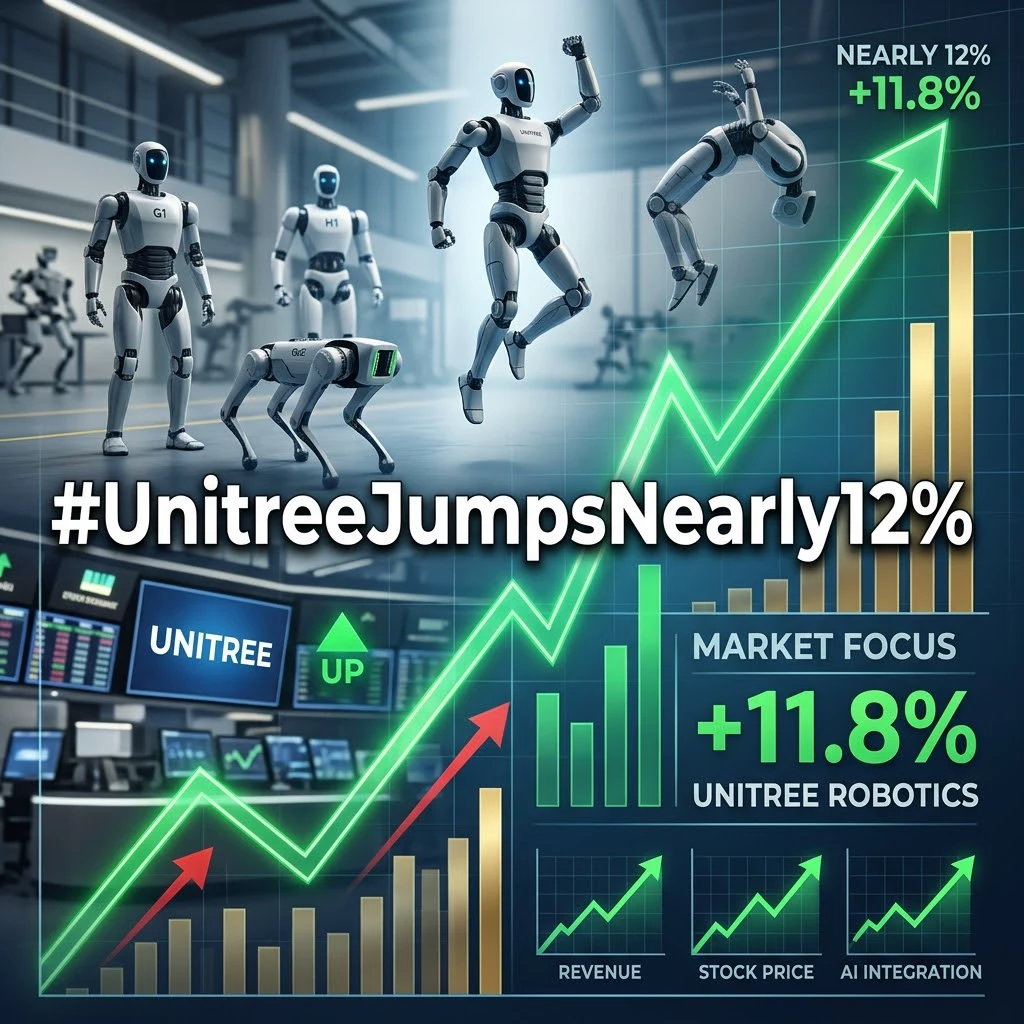
#UnitreeJumpsNearly12% #ShareWeekly

Unitree Robotics and the Physical AI Revolution: Why a Nearly 12% Rally Is Attracting Global Investor Attention

The robotics industry is entering a new phase, where artificial intelligence is moving beyond digital applications and beginning to interact directly with the physical world. One company attracting significant attention in this transformation is Unitree Robotics. Its recent share-price advance of nearly 12% highlights growing investor interest in humanoid robots, intelligent automation, and the emerging physical AI economy.

My assessment is tha
CryptoChampion
#UnitreeJumpsNearly12% #ShareWeekly
Unitree Robotics and the Physical AI Revolution: Why a Nearly 12% Rally Is Attracting Global Investor Attention
The robotics industry is entering a new phase, where artificial intelligence is moving beyond digital applications and beginning to interact directly with the physical world. One company attracting significant attention in this transformation is Unitree Robotics. Its recent share-price advance of nearly 12% highlights growing investor interest in humanoid robots, intelligent automation, and the emerging physical AI economy.
My assessment is that Unitree represents an important company to watch in the next generation of technological development. However, the real question is whether its impressive market momentum can be supported by sustainable commercial growth, technological innovation, and actual demand for robotic solutions.
1. Unitree Is Moving Beyond Experimental Robotics
Founded in 2016 by Wang Xingxing, Unitree Robotics has developed a reputation for building advanced quadruped and humanoid robots. The company initially gained recognition through its highly mobile four-legged robots, which demonstrated impressive movement, balance, and adaptability.
Its humanoid platforms, particularly the G1 series, have further strengthened its position. These machines demonstrate walking, running, jumping, balancing, and performing complex movements that previously seemed difficult for commercially accessible robots.
What makes Unitree particularly interesting is its focus on combining engineering performance with relatively competitive pricing. Instead of concentrating exclusively on expensive research prototypes, the company is working toward making advanced robotics more accessible to developers, research institutions, and commercial customers.
2. Why Did Unitree Shares Rise Nearly 12%?
A nearly 12% advance represents a meaningful shift in market sentiment. Investors are increasingly evaluating the potential of companies developing technologies that could benefit from the next wave of AI adoption.
Several factors may contribute to this renewed enthusiasm:
- Growing global interest in humanoid robotics.
- Rapid improvements in artificial intelligence and machine learning.
- Expectations of expanding industrial automation.
- Increasing attention toward physical AI applications.
- Strong visibility from Unitree's robotic demonstrations and product development.
- Broader positive sentiment across China's robotics technology sector.
However, a share-price increase should not automatically be interpreted as proof of improving financial performance. Investors must distinguish between market expectations and measurable business results.
3. Physical AI Could Become the Next Major Technology Opportunity
For years, artificial intelligence has primarily transformed digital activities, including data processing, software development, financial analysis, and communication.
Physical AI introduces another dimension: intelligent machines capable of understanding their surroundings, processing information, making decisions, and performing physical tasks.
This development could eventually create opportunities in manufacturing, warehouses, logistics, energy infrastructure, healthcare support, inspection, and other industries.
Unitree is positioning itself within this transition by developing the hardware platforms required for intelligent machines to operate in real environments.
The long-term opportunity is not simply building robots that can walk or perform impressive demonstrations. It is creating reliable machines that can complete useful tasks safely, efficiently, and economically.
4. Commercialization Will Determine Long-Term Success
One of the most important factors investors should monitor is Unitree's ability to convert technological achievements into sustainable revenue.
Robot demonstrations attract attention, but commercial adoption requires much more:
- Consistent product reliability.
- Affordable manufacturing costs.
- Efficient battery performance.
- Advanced sensors and actuators.
- Intelligent software and autonomous navigation.
- Practical applications that generate measurable economic value.
- Reliable after-sales service and technical support.
Unitree's experience in quadruped robotics provides an important foundation. Its expansion into humanoid platforms could open additional markets, although widespread adoption will likely require further technological and commercial progress.
5. Competition Is Becoming Increasingly Intense
The robotics market is not a one-company opportunity. Chinese manufacturers, American technology companies, established industrial automation businesses, and emerging AI developers are all investing in intelligent machines.
Competition will likely accelerate improvements in hardware, software, manufacturing efficiency, and pricing.
Unitree's competitive advantage will therefore depend on its ability to maintain engineering leadership while reducing production costs and expanding its commercial ecosystem.
Partnerships with AI developers and access to advanced computing platforms could also become important advantages. Nevertheless, partnerships and technological demonstrations must eventually translate into measurable business results.
6. What Should Investors Watch After the 12% Rally?
From a market perspective, I believe the next few trading sessions could provide important information about the strength of this movement.
Rather than focusing exclusively on the percentage gain, investors should monitor four important indicators:
First, trading volume. Increasing volume during upward movements could indicate stronger participation, while declining volume may suggest weakening momentum.
Second, price stability. If shares consolidate without experiencing aggressive selling, it could indicate that buyers are willing to defend higher price levels.
Third, company developments. New product announcements, commercial contracts, production updates, and financial results could provide fundamental support for the valuation.
Fourth, broader market sentiment. Chinese technology stocks, AI-related companies, and global risk appetite can all influence short-term performance.
A strong rally followed by a healthy consolidation may be more sustainable than repeated sharp increases without sufficient fundamental confirmation.
7. My Personal Market Outlook
I remain constructive on the long-term potential of robotics and physical AI. Unitree has established meaningful visibility through its engineering capabilities, recognizable products, and growing presence in the humanoid robotics industry.
However, I would avoid treating a nearly 12% increase as an automatic buying signal. Rapid rallies can create short-term opportunities, but they can also increase volatility and expose late buyers to sudden corrections.
My preferred approach is to observe volume confirmation, market structure, company announcements, and subsequent price action before considering any position.
Investors should also evaluate valuation, profitability, cash flow, and execution risks rather than relying entirely on excitement surrounding AI.
Final Thoughts
Unitree Robotics represents more than an interesting robotics manufacturer. It is part of a broader technological transformation in which artificial intelligence could move from computer screens into factories, workplaces, infrastructure, and eventually everyday environments.
The nearly 12% share-price advance reflects growing market enthusiasm for this opportunity, but long-term success will depend on execution rather than headlines.
For me, the biggest investment question is not how high Unitree shares can rise in one trading session. It is whether the company can turn its impressive robotic technology into scalable products, sustainable revenue, and lasting competitive advantages.
The physical AI revolution is still developing, and Unitree is certainly a company worth watching closely.
This is my market perspective, not financial advice.
#WCTCS9 #Gate股票畅聊季 @Gate_Square #GateSquareTradingChallenge
repost-content-media
Prediction Markets NBA Trading Championship: Earn Up to 10,000 USDT per Person and Share a 65,000 USDT Prize Pool https://www.gate.com/campaigns/6846?ref=VLARBF1YAG&ref_type=132
CryptoChampion
Prediction Markets NBA Trading Championship: Earn Up to 10,000 USDT per Person and Share a 65,000 USDT Prize Pool https://www.gate.com/campaigns/6846?ref=VLARBF1YAG&ref_type=132
repost-content-media
No transfer fees — get a +20% boost on incoming transfers. https://www.gate.com/campaigns/6677?ref=VLARBF1YAG&ref_type=132
CryptoChampion
No transfer fees — get a +20% boost on incoming transfers. https://www.gate.com/campaigns/6677?ref=VLARBF1YAG&ref_type=132
repost-content-media
ON+4.77%
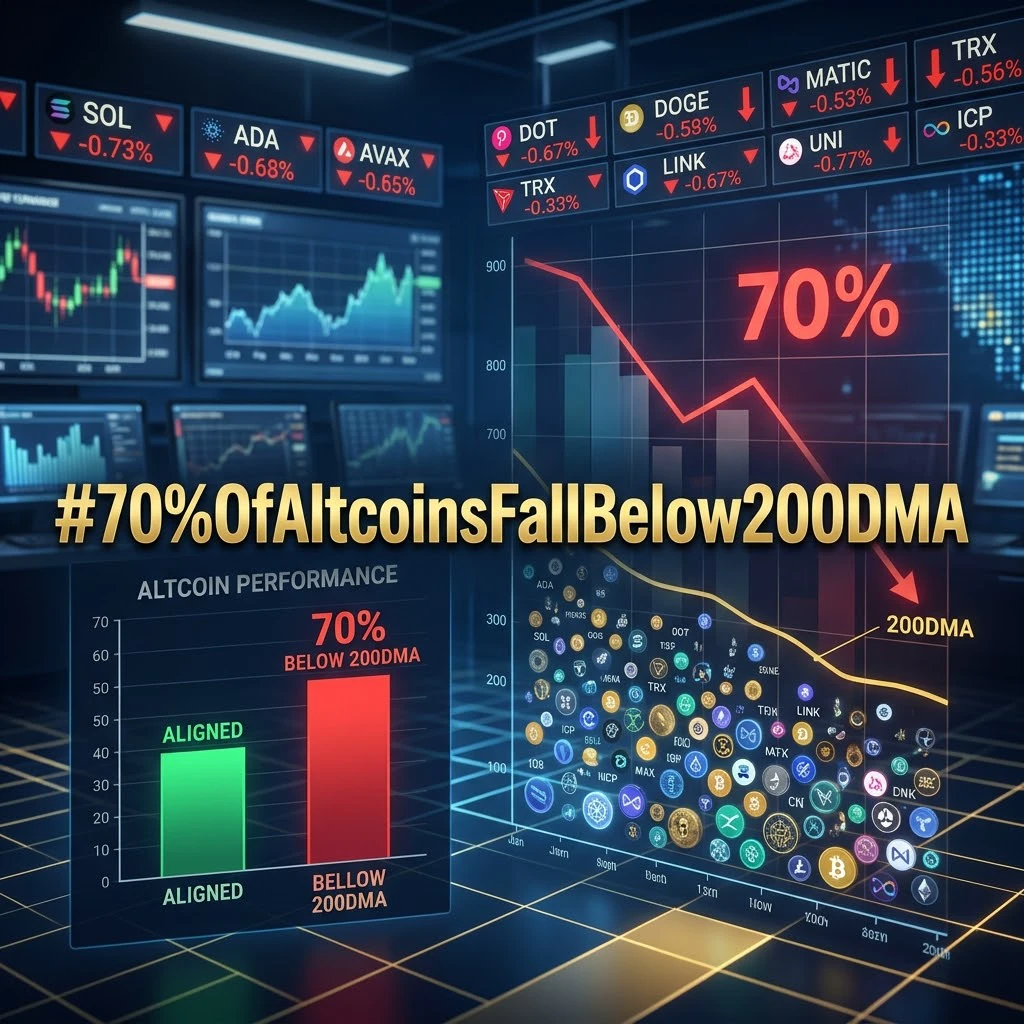
#70%OfAltcoinsFallBelow200DMA #ShareWeekly

Altcoin Market Structure Is Deteriorating: Is Capital Preparing for a Rotation or Leaving the Market Entirely?

The altcoin market is entering a critical phase, and the latest technical data deserves serious attention. According to CryptoQuant analyst Darkfost, approximately 70% of altcoins are now trading below their 200-day moving average. At the beginning of October, this figure was only around 10%. Such a dramatic shift in a relatively short period suggests that market weakness is spreading across the broader digital asset ecosystem rather than
CryptoChampion
#70%OfAltcoinsFallBelow200DMA #ShareWeekly
Altcoin Market Structure Is Deteriorating: Is Capital Preparing for a Rotation or Leaving the Market Entirely?
The altcoin market is entering a critical phase, and the latest technical data deserves serious attention. According to CryptoQuant analyst Darkfost, approximately 70% of altcoins are now trading below their 200-day moving average. At the beginning of October, this figure was only around 10%. Such a dramatic shift in a relatively short period suggests that market weakness is spreading across the broader digital asset ecosystem rather than remaining limited to individual projects.
My interpretation is that this development reflects a deeper change in market structure. The important question is no longer simply why altcoin prices are falling, but whether the market is experiencing temporary capital rotation or a more sustained reduction in risk appetite.
1. Market Breadth Is Sending a Strong Warning
One of the most important aspects of this data is market breadth. Bitcoin and a few large-cap cryptocurrencies can sometimes maintain relatively stable prices while hundreds of smaller assets continue losing value.
When 70% of altcoins trade below their 200DMA, it indicates that the majority of the market is struggling to maintain its longer-term bullish structure. This is particularly important because the 200DMA is commonly used to evaluate broader trends and distinguish sustained strength from temporary price movements.
In my view, investors should pay more attention to the percentage of assets recovering above this level than to isolated rallies in individual tokens.
2. The $200 Billion Capitalization Decline Changes the Picture
The altcoin sector has reportedly lost approximately $200 billion from its recent market capitalization peak, reversing nearly two-thirds of the gains accumulated during August and September.
This is a significant development because falling prices and declining market capitalization together suggest that speculative enthusiasm has weakened considerably.
When capital becomes defensive, investors generally prioritize liquidity, established projects, and assets with stronger market positions. Smaller altcoins often face greater pressure because they have less liquidity and can experience sharper price movements during periods of uncertainty.
3. Oversold Conditions Could Create an Opportunity
Interestingly, extreme market weakness can eventually create the conditions for a recovery.
When a large proportion of assets trades below long-term averages, selling pressure may become increasingly exhausted. This can create opportunities for short-term relief rallies and potentially attractive long-term entry zones.
However, I would not confuse a depressed market with a confirmed market bottom. An asset can remain below its 200DMA for months, particularly when liquidity remains weak and buyers are unwilling to take additional risk.
The distinction between a genuine reversal and another temporary bounce will be extremely important.
4. Three Indicators Could Define the Next Direction
I am monitoring three major developments:
- Bitcoin market structure: BTC needs to demonstrate stability and stronger support before confidence can return to the wider altcoin sector.
- 200DMA recovery: A consistent increase in the number of altcoins reclaiming their 200DMA would provide stronger evidence of improving market breadth.
- Liquidity and trading volume: Rising prices accompanied by genuine buying participation would be more convincing than low-volume recovery attempts.
Bitcoin dominance also deserves attention. If dominance continues increasing, capital concentration in BTC could delay a broader altcoin recovery.
5. My Strategy: Follow Confirmation, Not Market Excitement
My current approach is selective positioning rather than aggressive accumulation. I prefer identifying projects with strong fundamentals, sustainable development, healthy liquidity, and realistic long-term demand.
I would divide potential entries into smaller positions instead of committing all available capital at once. I also consider invalidation levels, stop-loss discipline, and the possibility of further downside before entering a trade.
For me, preserving capital during uncertain conditions is just as important as identifying opportunities during a recovery.
Final Market Perspective
The move from 10% to 70% of altcoins below their 200DMA, combined with an estimated $200 billion decline in market capitalization, represents a substantial deterioration in market breadth.
Nevertheless, extreme weakness can eventually become the foundation for a new market cycle. The real opportunity will emerge when liquidity improves, market participation expands, and long-term technical structures begin recovering.
What is your approach to the current altcoin environment? Are you prioritizing Bitcoin, waiting for confirmation above the 200DMA, or gradually accumulating fundamentally strong altcoins?
This is my personal market perspective, not financial advice.
#WCTCS9 #Gate股票畅聊季 @Gate_Square #GateSquareTradingChallenge
repost-content-media
BTC-0.67%
Trade & Hold Daily, Unlock the $60,000 TSLAG Prize Pool https://www.gate.com/campaigns/6626?ref=VLARBF1YAG&ref_type=132
CryptoChampion
Trade & Hold Daily, Unlock the $60,000 TSLAG Prize Pool https://www.gate.com/campaigns/6626?ref=VLARBF1YAG&ref_type=132
repost-content-media
TSLAG+1.28%
  • 1
Load More