#CorePCEandGDPFinalReading Tonight’s U.S. data matter, but the real question is not simply whether the numbers beat or miss expectations.
It is whether they change the inflation story the Federal Reserve is already dealing with.
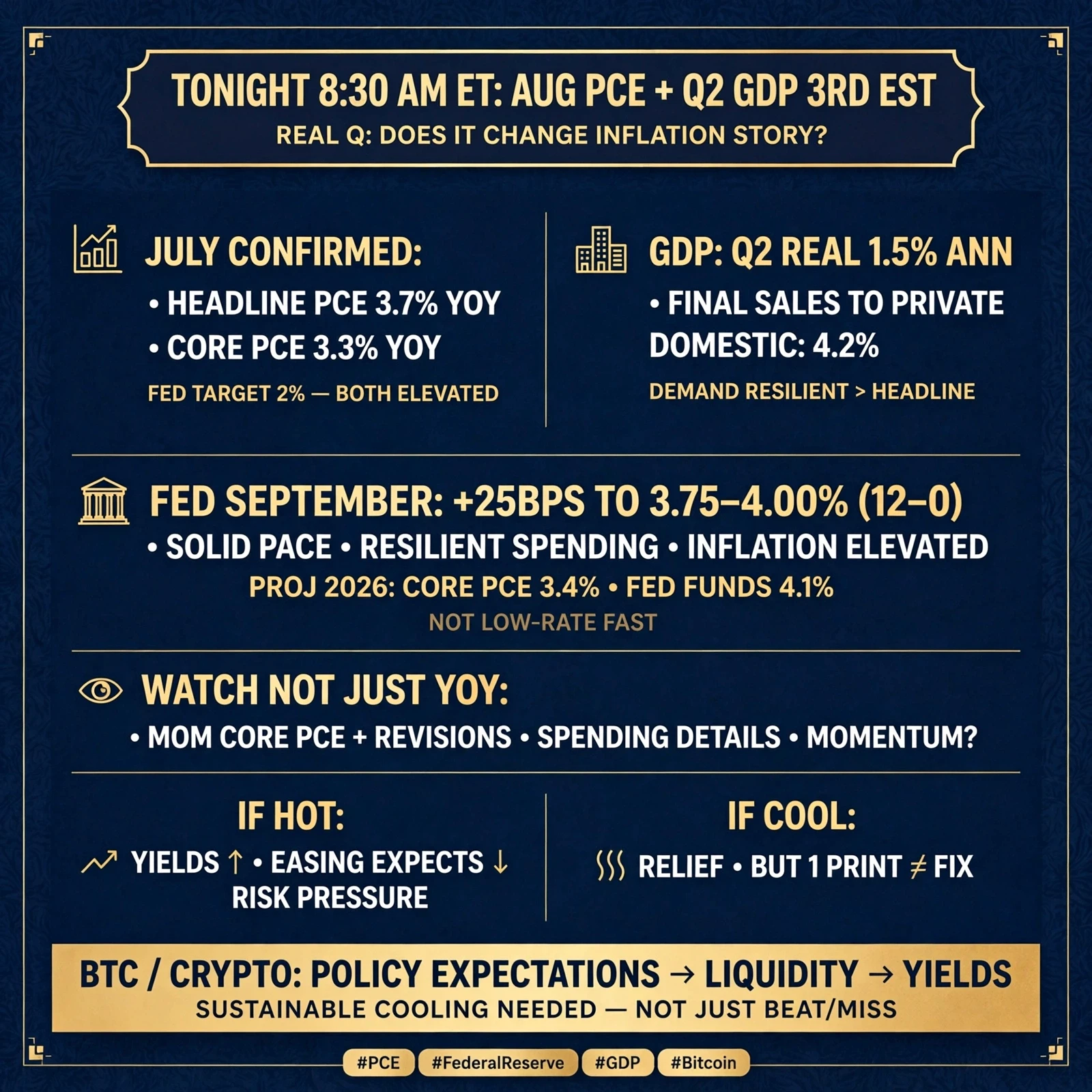
The August PCE inflation report and the third estimate of Q2 GDP are scheduled for release at 8:30 a.m. ET today. The latest confirmed July data showed headline PCE inflation at 3.7% year over year and core PCE at 3.3%, both still well above the Fed’s 2% inflation objective.
At the same time, the U.S. economy has not shown the kind of sharp slowdown that would force an immediate policy reversal. Q2 real GDP was previously estimated at 1.5% annualized, while real final sales to private domestic purchasers were running at 4.2%, showing that underlying private domestic demand remained considerably stronger than the headline GDP number alone suggests.
That creates an uncomfortable combination for monetary policy: inflation is still elevated, while economic activity and consumer demand remain resilient.
And the Fed’s September meeting already made its position clear. The FOMC raised the federal-funds target range by 25 basis points to 3.75%–4.00%, with the decision passing 12–0. The statement said economic activity was expanding at a solid pace, domestic spending remained resilient, and inflation remained elevated.
The September projections are even more important for the bigger picture. Fed officials’ median projection put 2026 core PCE inflation at 3.4%, while the median federal-funds-rate projection for the end of 2026 was 4.1%. That is not a forecast of rapidly returning to a low-rate environment.
So tonight’s numbers should be read through that lens.
If August core PCE comes in hot, the market can push Treasury yields higher and further reduce expectations for near-term easing. If inflation cools, the reaction could be the opposite — but one softer monthly reading would not automatically erase the broader inflation problem.
The important number is therefore not just the headline YoY figure.
Watch the monthly core PCE, the revisions to previous months, consumer spending, and the details underneath the inflation print. Those will tell us whether price pressure is actually losing momentum or simply moving around from month to month.
For Bitcoin, crypto and other risk assets, this matters because monetary-policy expectations remain closely tied to liquidity and Treasury yields.
The market does not need a dramatic surprise tonight. It needs evidence that inflation is sustainably moving lower. Until that becomes visible in the data, the Fed has little reason to rush toward aggressive easing.
#PCE #FederalReserve #GDP #Bitcoin