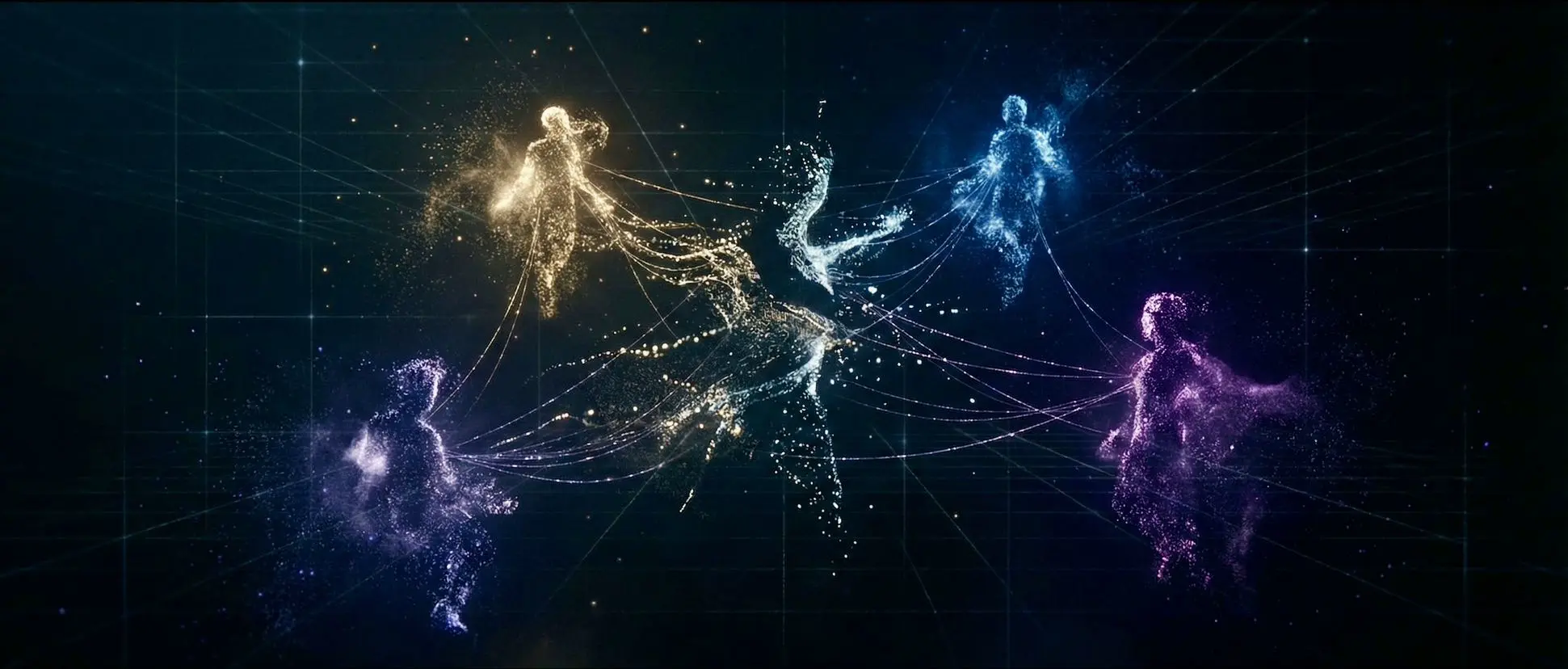
A survival audition show featuring 108 contestants has recently been gaining attention. What makes it unusual is that none of them are real people. Every contestant is an AI-generated virtual idol.
And yet, people vote for them, form fan communities, and become emotionally invested in characters that do not physically exist.
AI is reshaping entertainment faster than many expected. We are even seeing human artists join dance challenges built around original songs created by AI.
But amid all this technological change, I believe there is one frontier AI cannot replace: the human story.
No matter how sophisticated the algorithm or efficient the production, what ultimately moves people is storytelling that speaks to what we lack, and genuine emotional connection.
Even a virtual being only truly comes alive when there is an authentic human story behind it. That is where deeper relationships begin.
Turning intangible virtual value into real-world belief is never easy. Nor is translating that belief into market value. So it is natural to hear concerns when markets become volatile. When numbers move sharply, we begin to wonder whether the fundamentals we believed in are moving with them.
But markets will always swing between excitement and fear.
Beyond that noise, something much larger is happening: virtual ecosystems are already moving people and creating real value.
That is where our attention should remain.
Numbers may fluctuate, but the direction of the ecosystem we are building, and the value of the relationships within it, do not change with every chart.
Real trust is not built when everyone is cheering.
It is built when uncertainty tests us, and we continue proving what matters.
That is why, even in an unpredictable market, we keep our center and keep moving forward. $TOWN
And yet, people vote for them, form fan communities, and become emotionally invested in characters that do not physically exist.
AI is reshaping entertainment faster than many expected. We are even seeing human artists join dance challenges built around original songs created by AI.
But amid all this technological change, I believe there is one frontier AI cannot replace: the human story.
No matter how sophisticated the algorithm or efficient the production, what ultimately moves people is storytelling that speaks to what we lack, and genuine emotional connection.
Even a virtual being only truly comes alive when there is an authentic human story behind it. That is where deeper relationships begin.
Turning intangible virtual value into real-world belief is never easy. Nor is translating that belief into market value. So it is natural to hear concerns when markets become volatile. When numbers move sharply, we begin to wonder whether the fundamentals we believed in are moving with them.
But markets will always swing between excitement and fear.
Beyond that noise, something much larger is happening: virtual ecosystems are already moving people and creating real value.
That is where our attention should remain.
Numbers may fluctuate, but the direction of the ecosystem we are building, and the value of the relationships within it, do not change with every chart.
Real trust is not built when everyone is cheering.
It is built when uncertainty tests us, and we continue proving what matters.
That is why, even in an unpredictable market, we keep our center and keep moving forward. $TOWN