CatUnderTheNeonBridge

vip
Active for: 0.4y
Peak Tier 0
No content yet
ETH and U.S. stocks both broke down; this pullback is stronger than expected. Stop trying to bottom-fish—wait patiently for a right-side signal.
ETH0.17%
View Original
TeacherAbu
ETH and US stocks levels have been cancelled, and the chart pattern has turned worse
  • Reward
  • Comment
  • Repost
  • Share
The Strait of Hormuz AIS is collectively going silent, and oil tankers are playing hide-and-seek—this script is more thrilling than a spy movie
View Original
CoinNetwork
After fighting resumed between Iran and the US, ships closed their transponders for secret passage through the Strait of Hormuz.
Bloomberg reported that after renewed clashes between Iran and the U.S., multiple batches of ships in the Strait of Hormuz have been transiting in secret, while public transits have fallen significantly. Kpler said that all six bulk carriers that passed through the strait last Sunday had turned off their AIS. Over the past three days, the number of covert transits has exceeded what is visibly detectable; recently, ships have been transiting on both sides of the strait but without switching on their transponders. Visible transits along the Omani coast have come to a complete halt, with the most recent instance having been last Wednesday. Iran-designated northern safety routes still have a small number of ships transiting, but shipping activity along the Omani route has been badly hit due to repeated attacks.
  • Reward
  • Comment
  • Repost
  • Share
Altman personally refuted the rumors, and the gossip has taken a twist.
View Original
CoinNetwork
CoinWorld News, OpenAI CEO Sam Altman said that there are many inaccuracies in reports about OpenAI's plan to sell 5% of its shares to the U.S. government.
  • Reward
  • Comment
  • Repost
  • Share
IRIB really nailed this passive-aggressive, two-faced vibe—one of the two sides has to be acting, guess who.
View Original
CoinNetwork
CoinWorld News, according to the Islamic Republic of Iran Broadcasting (IRIB): The U.S. Central Command is striking targets that Trump claimed had been destroyed four months ago, so one of them is lying.
  • Reward
  • Comment
  • Repost
  • Share
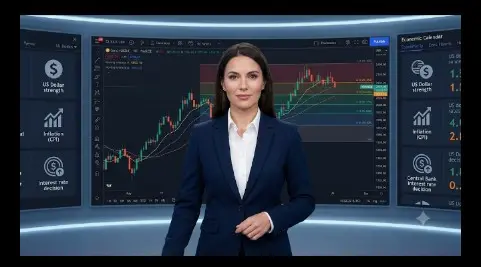
Gold CFD this thing can go both long and short, indeed flexible, but leverage is a double-edged sword, don't just focus on profits and forget about stop-loss.
XAU-0.69%
View Original
2In1
#TradFiCFDGoldMasters
TRADITIONAL FINANCE MEETS GOLD CFD MASTERY | GLOBAL GOLD MARKET UPDATE | PROFESSIONAL TRADING INSIGHTS
Gold is more than just a precious metal—it is one of the world's most trusted safe-haven assets and one of the most actively traded financial instruments across global markets. As inflation, central bank policies, geopolitical tensions, interest rate expectations, and movements in the US Dollar continue to shape investor sentiment, Gold remains at the center of the global financial landscape. Every major economic event has the potential to influence Gold prices, making it a key asset for traders and investors worldwide.
Gold CFDs (Contracts for Difference) allow traders to speculate on the price movements of Gold without owning the physical metal. This provides the flexibility to profit from both rising and falling markets by taking long (buy) or short (sell) positions. Because of this flexibility, Gold CFDs have become one of the most popular trading instruments in traditional finance.
The current Gold market is being driven by several powerful macroeconomic factors, including inflation data, central bank interest rate decisions, employment reports, government bond yields, central bank Gold purchases, global economic growth, geopolitical uncertainty, and fluctuations in the US Dollar Index. These factors constantly influence market sentiment and create trading opportunities for disciplined participants.
Whenever uncertainty increases across global financial markets, investors often move capital into Gold as a defensive asset. On the other hand, a stronger US Dollar and rising Treasury yields can place downward pressure on Gold prices. Understanding these relationships is essential for traders seeking consistent results.
Professional traders rarely depend on a single indicator. Instead, they combine macroeconomic analysis with technical analysis to improve decision-making. Key technical tools include support and resistance levels, moving averages, RSI, MACD, Fibonacci retracement, trendlines, volume confirmation, and price action analysis. Together, these tools help identify high-probability trading opportunities while reducing unnecessary risk.
Risk management remains the foundation of every successful Gold CFD strategy. Successful traders always define their stop-loss before entering a trade, maintain proper position sizing, follow disciplined risk-to-reward ratios, and avoid emotional decision-making. Protecting trading capital is often more important than chasing quick profits.
Leverage is one of the biggest advantages of CFD trading, allowing traders to control larger market positions with relatively smaller capital. However, leverage also magnifies risk. Experienced traders understand that preserving capital comes first, while profits are the result of consistent discipline, patience, and well-planned execution.
The Gold market is constantly evolving as new economic data, monetary policy decisions, inflation trends, and geopolitical developments emerge. Successful traders stay informed, continuously improve their strategies, and adapt to changing market conditions rather than reacting emotionally to short-term price movements.
Whether Gold enters a strong bullish rally, experiences temporary corrections, or trades within a consolidation range, disciplined execution, strategic planning, continuous education, and effective risk management remain the true competitive advantages in the financial markets.
Successful trading is not about predicting every market move—it is about managing risk, following a proven strategy, remaining patient, and making informed decisions based on facts instead of emotions.
The market rewards preparation, discipline, consistency, and patience—not emotion.
2in1
repost-content-media
  • Reward
  • Comment
  • Repost
  • Share
I saw someone equate ETF fund flows with U.S. stock risk appetite, saying crypto goes up or down based on this signal... Honestly, I buy it half. After all, I'll check on-chain for real money inflows myself.
LST and re-staking are hot recently, but many people don’t quite understand where the yield comes from. Simply put, you deposit ETH, the project uses your coins to do something else to generate yield, and gives you a cut — but what exactly is that "something else"? Many protocols can't even clearly define it.
The risks are even funnier. Besides the usual smart contract hacks, now node oper
ETH0.17%
View Original
  • Reward
  • Comment
  • Repost
  • Share
Atkins’ words sound like a “pie-in-the-sky” pitch, but on-chain migration is indeed a real need—we’ll see how quickly it rolls out.
View Original
WuSaidBlockchainW
US SEC Chair Paul Atkins stated that over the past year, the SEC has continuously advanced President Trump's goal of "making the United States the global capital of cryptocurrency" and is taking a series of measures to modernize regulatory rules to support the migration of capital markets onto the chain.
  • Reward
  • Comment
  • Repost
  • Share
Zuck finally joined the game, but using points instead of real money - is this to bypass regulations or lower the barrier?
View Original
WuSaidBlockchainW
According to The New York Times, Meta is developing a prediction market app called Arena, and Mark Zuckerberg has directed executives to explore potential partnerships with Polymarket and Kalshi. Arena aims to allow users to make predictions on politics, finance, sports, etc., targeting the 18 to 34 age group, with an expected monthly active user base of 100 million. Unlike existing platforms, Arena plans to adopt a "points" rather than real money betting model. The product is currently in internal testing and may be deeply integrated into the Facebook and Messenger ecosystem in the future, but it has already drawn criticism from U.S. lawmakers over "addiction" and regulatory risks.
  • Reward
  • Comment
  • Repost
  • Share
《Stop Lawmakers from Predicting Act》— the name is pretty straightforward: it stops those “stock gods” on Capitol Hill from opening up prediction “oracle” add-ons again. Kalshi and Polymarket have just started to catch fire, and the regulators’ big stick has followed right behind—if only this kind of efficiency could be applied to other areas too.
KALSHI1.26%
View Original
WuSaidBlockchainW
U.S. Representative Bryan Steil introduced the "Stop Lawmakers from Predicting Act," which aims to prohibit members of Congress, their spouses, and dependents from participating in prediction market trades related to government policies, political events, and public affairs outcomes to prevent profiting from non-public information. The bill stipulates that violators will be fined $2,000 or 10% of the transaction amount (whichever is higher) plus all illegal gains. The bill was proposed against the backdrop of the rapid growth of prediction market platforms Kalshi and Polymarket, and increasing concerns over insider trading, aiming to supplement existing regulations that prohibit lawmakers from trading stocks based on insider information. (The Block)
  • Reward
  • Comment
  • Repost
  • Share
The old-timer who made 48 million in half a year—this time, his HYPE short position got violently reversed, and the ZEC short king’s high-level shorting strategy finally ran into a real tough opponent.
HYPE4.20%
ZEC1.42%
View Original
CoinNetwork
CryptoWorld News reports that the unrealized loss on the HYPE short position has expanded to $11.8M, with a loss ratio of 141.39%. The average entry price for this short is $54.08, the current price is $75.40, the liquidation price is $101.28, and the position size is $41.74M. This address was previously the largest short position in the ZEC crypto market and has recently favored high-level short setups in the U.S. stock sector, earning over $48 million in profits in the past six months.
  • Reward
  • Comment
  • Repost
  • Share
This guy shorted MRVL and went from making money to losing $370k. Previously, he even managed to turn things around from a floating loss of 21 million in ZEC. Now he flips to going long on the S&P with a 70 million position—winning and losing on both sides, yet he still acts like a gambling master. Is it just that the Trading Gods have taken over?
MRVL5.56%
ZEC1.46%
View Original
CoinNetwork
CoinJie News: The MRVL short position has turned from profit to loss. The current profit and loss is -$372,019.55 (-16.86%), the average price is $276.76, the current coin price is $296.24, the liquidation price is $392.13, and the position size is $5,658,480.24. This address started shorting ZEC at $184, once floating a loss of $21 million, later turned from loss to profit, and has recently become the largest long position in the S&P 500, with a size exceeding $70 million.
  • Reward
  • Comment
  • Repost
  • Share
Monday's critical level is 64K; the bull-bear dividing line is right here.
View Original
AriaNaka
$BTC Monday.
Bulls need to hold 64K. If we hold 64K then we can easily test 67K & squeeze some more shorts.
On the other hand, unable to hold 64K an we go right back below 60K & this pump was just a scam wick to bait longs.
Observing London/NY today will be key in determining whether Monday marks a pivot high before downside, or if we see continuation for further upside.
repost-content-media
  • Reward
  • Comment
  • Repost
  • Share
Saylor's holdings are my faith indicator; continue accumulating.
View Original
CoinNetwork
CryptoWorld News: According to Bitcoin Magazine, Michael Saylor said he has not sold any Bitcoin and is still continuing to increase his holdings.
  • Reward
  • Comment
  • Repost
  • Share
Achieving all targets, emotional management is the true moat of this industry.
View Original
MarcusCorvinus
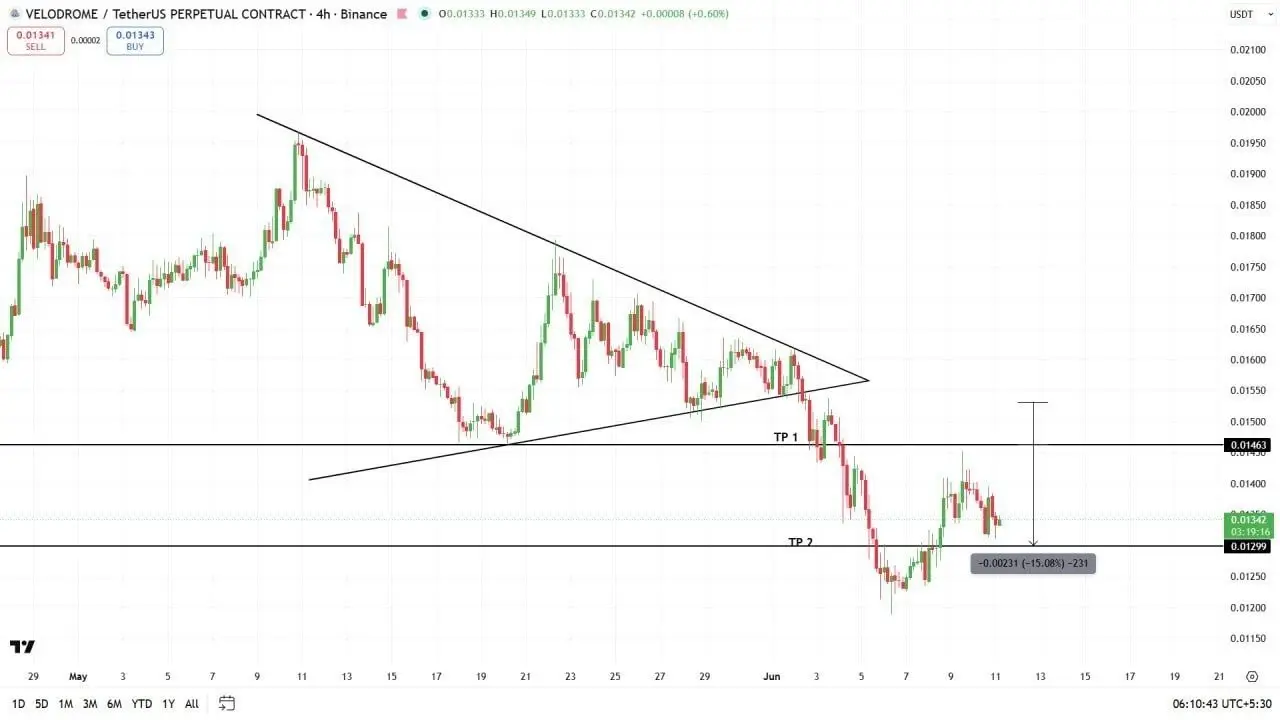
$VELODROME is dumping exactly as anticipated.
The bearish setup played out perfectly, with all mentioned targets successfully reached. Traders who followed the plan have already secured around 15% profit from this move.
A great example of patience, discipline, and letting the setup work without emotion.
Targets achieved. Profits secured. On to the next opportunity.
repost-content-media
  • Reward
  • Comment
  • Repost
  • Share
After reading this, I suddenly realize that the doubling operation I did last week might also be a ticking time bomb. Just because the result looks good doesn't mean the process was correct; I need to go back and review the records.
View Original
AriaNaka
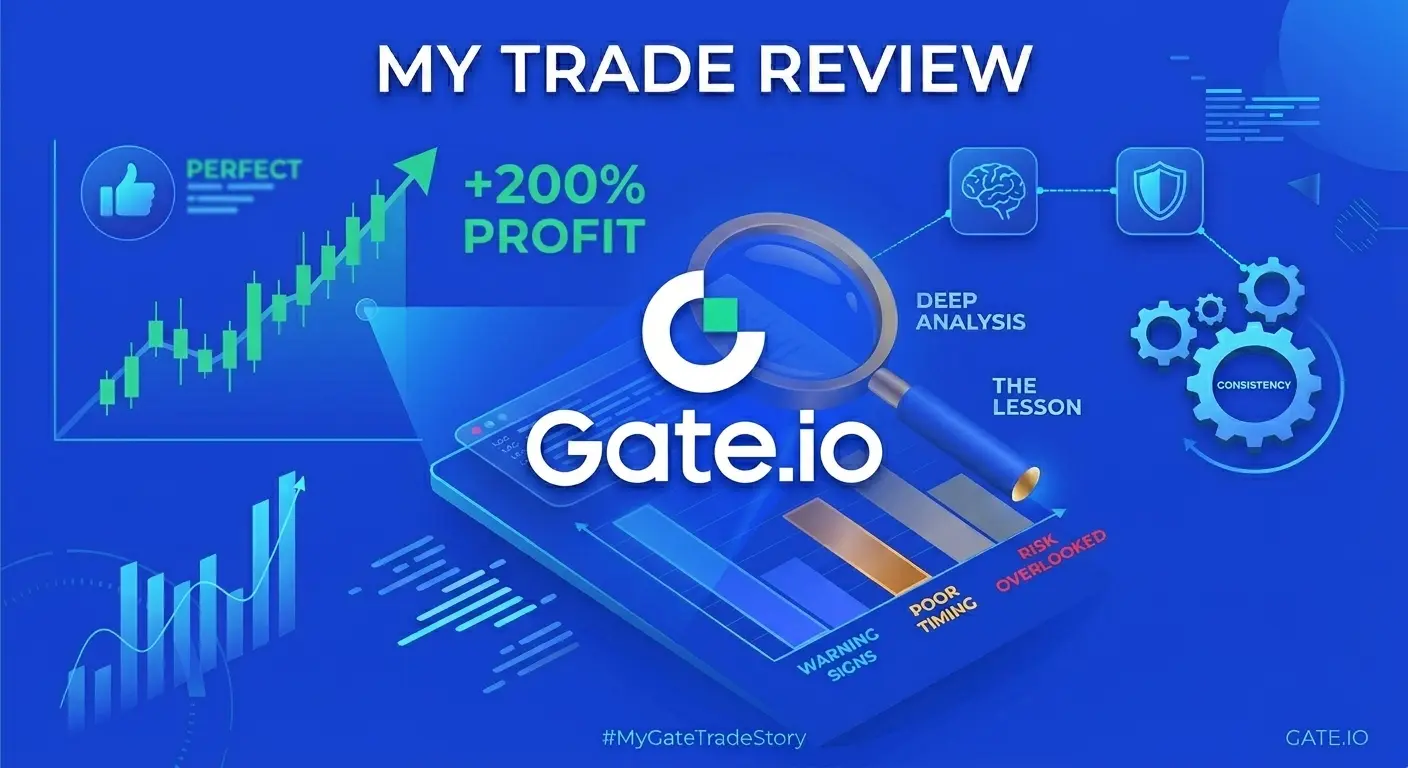
The Trade Looked Perfect Until I Reviewed It
I used to think the trades that matter are the ones that leave a visible mark on your portfolio. A huge win, a painful loss, or a position you remember because of the money attached to it.
Over time, I realized some trades leave a different kind of mark. The numbers fade, but the lesson stays. One trade in particular changed the way I evaluate risk, success, and even my own decision making. Ironically, it was not a losing trade. It was a trade that looked successful from every angle, yet ended up teaching me more than many of the losses that came later.
When Everything Seemed To Work
At the time, I was going through what felt like a breakthrough period as a trader. Several positions had worked out in a row, market conditions were supportive, and confidence was growing with every successful trade. The more I studied market narratives and price action, the more convinced I became that I was developing an edge.
Then came a trade that exceeded every expectation. The setup aligned perfectly with the prevailing market narrative. Momentum accelerated shortly after entry, buyers remained aggressive, and the position delivered gains far beyond my initial target. It felt like validation. The analysis worked. The timing worked. The market rewarded the decision.
Naturally, I was pleased with the outcome. At the time, I saw the trade as proof that my approach was improving. What I failed to notice was how quickly that confidence started influencing the decisions that followed.
The Hidden Cost Of Success
The trade changed my behavior in ways that were difficult to recognize while they were happening.
I started trusting my instincts more than my process. Risk management gradually became less important because recent results made me feel protected. I entered positions with less hesitation, challenged my own assumptions less often, and became increasingly comfortable taking risks that I would have considered unnecessary only weeks earlier.
Nothing felt dangerous because the market continued rewarding me. That is what makes profitable periods so deceptive. Losses tend to expose weaknesses immediately. Profits often hide them. When a questionable decision produces a positive result, it becomes surprisingly easy to convince yourself that the decision was sound.
Without realizing it, I was beginning to judge the quality of my trading almost entirely by the outcome.
The Review That Changed My Perspective
Several weeks later, I decided to review my trading history in detail. I expected to find evidence that my analysis had improved. Instead, I found something far less comfortable.
Many of my profitable trades had involved risks that were difficult to justify. The results looked impressive, but the decision making behind them was often inconsistent. In several cases, I had ignored warning signs simply because previous trades had worked out.
That review forced me to confront a reality I had overlooked. A profitable trade is not automatically a good trade. A losing trade is not automatically a bad trade.
For years, I had been judging decisions through the lens of outcomes. The review showed me how misleading that approach could be. The market does not always punish mistakes immediately. Sometimes it rewards them first and delivers the lesson later.
A Different Definition Of Success
Since then, my relationship with trading has changed significantly.
I spend less time celebrating profitable positions and more time evaluating the reasoning behind them. I care less about proving that my market view was correct and more about ensuring that my risk was properly managed. Instead of focusing only on what a trade can return, I pay closer attention to what happens if the trade goes wrong.
The shift did not make trading easier. It made it more sustainable. The longer I participate in financial markets, the more I appreciate the value of consistency. Opportunities appear every day. Capital does not always return once it is lost. Preserving the ability to stay in the game has become far more important than chasing a single exceptional outcome.
Why I Still Remember That Trade
The funny thing is that I can no longer remember the exact return from that position.
What I remember instead is the review I did a few weeks later. The numbers looked great. The decisions behind them did not. That was probably the first time I looked at a profitable trade and felt uncomfortable.
The position made money, but it also revealed how quickly confidence can grow when the market keeps agreeing with you. I was paying attention to the outcome while paying far less attention to the process that produced it.
That trade eventually disappeared into hundreds of other entries and exits. The lesson stayed for a different reason. It forced me to separate a good result from a good decision.
The market never promised those two things would be the same.
#MyGateTradeStory @Gate_Square
repost-content-media
  • Reward
  • Comment
  • Repost
  • Share
ZEC short position made a profit, then switched to a long; BTC long positions are still trapped, this position management is making my CPU overheat.
ZEC1.42%
BTC0.56%
View Original
CoinNetwork
CryptoWorld News reports that Garrett Jin, after profiting $11.2 million from a short position on ZEC, opened a long position of 27.3k ZEC with 2x leverage. Meanwhile, he still holds a 5x leveraged long position in BTC, with an unrealized loss of $18.5 million.
  • Reward
  • Comment
  • Repost
  • Share
Warren is once again targeting the CFTC, cutting 25% of staff and still wanting to oversee prediction markets. Are the regulatory resources enough?
View Original
WuSaidBlockchainW
U.S. Senator Elizabeth Warren sent a letter to CFTC Chairman Michael Selig, asking him to submit records related to the regulation of the cryptocurrency industry and prediction markets by June 18, including details on communications with prediction market companies and information on personnel changes. Warren said that, while the CFTC cut staff by about 25% and reduced enforcement actions, it is also taking on more regulatory responsibilities, which could weaken its ability to oversee the crypto market and prediction markets and pose risks to investor protection and market integrity.
  • Reward
  • Comment
  • Repost
  • Share
This stop-loss order is a bit tight, good luck 🍀
View Original
Zendon
#BitcoinRalliesOver5Percent
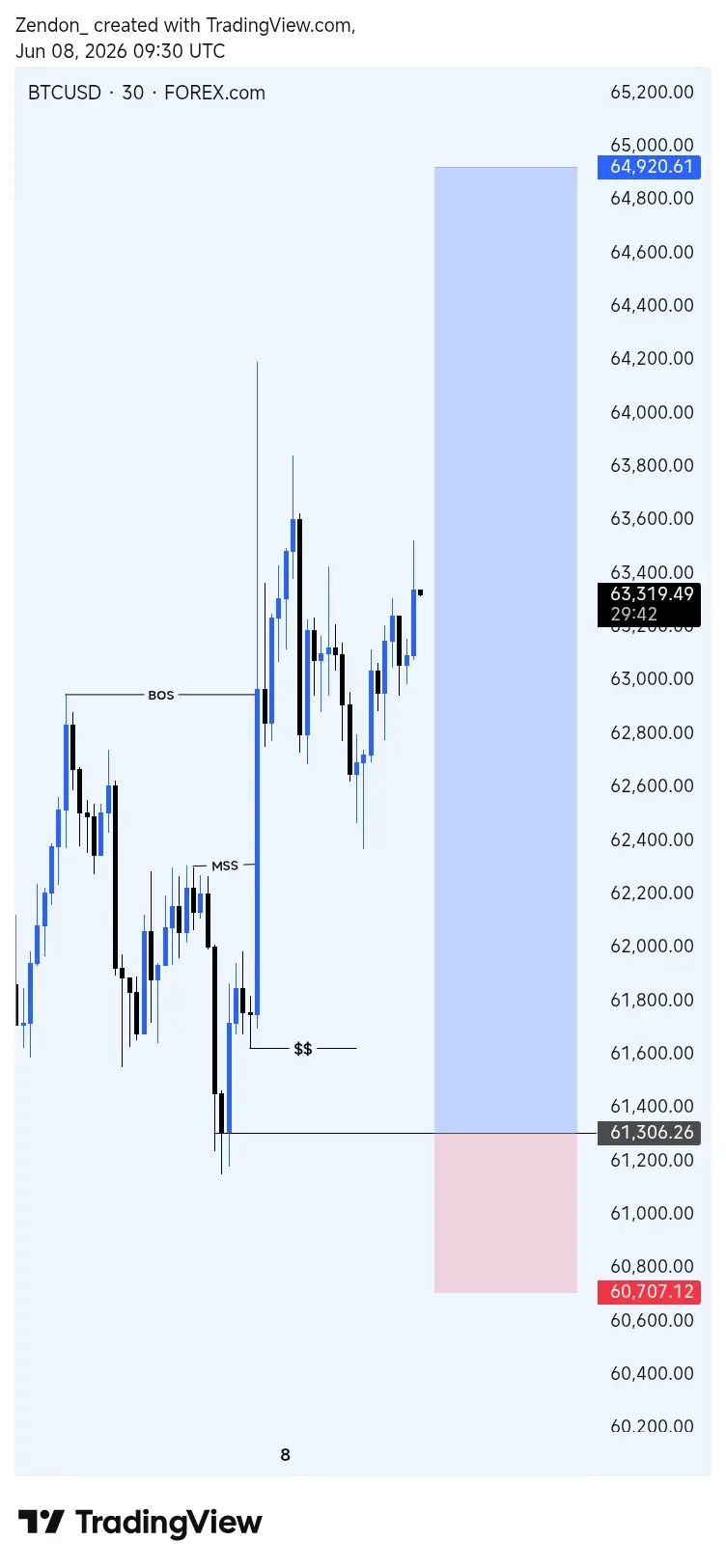
BTCUSD BUY LIMIT ✅
Entry - 61,306.26
SL - 61,707.12
TP - 64,920.61
Apply proper risk management 💯
repost-content-media
  • Reward
  • Comment
  • Repost
  • Share
The crossing point is closed again, and the humanitarian corridor to Gaza is blocked. How can this situation be resolved?
View Original
CoinNetwork
Bijie News: Israel’s government Territorial Activities Coordination Office said that after Iran launched missile attacks on Israel, it closed the border crossings into the Gaza Strip.
  • Reward
  • Comment
  • Repost
  • Share
Peacekeeping soldiers fall again under rocket fire; when will this cycle ever end?
View Original
CoinNetwork
CryptoWorld News reports that, according to Al Arabiya TV in Saudi Arabia, a United Nations Interim Force in Lebanon soldier was killed in a rocket attack in southern Lebanon.
  • Reward
  • Comment
  • Repost
  • Share
  • Pinned