Square
Following
Hot
News
Notifications
Profile

Luckylu

vip
No content yet
Live TradingPeak Tier VIP 05.6 Year(s)
3
Following
0
Followers
Sharing this: This article clearly explains the market pricing and differing views on a December rate hike. Whether there’s another consecutive hike in January is the real key variable. Worth a read.
ThisIsTranslateContent:
#美联储12月加息概率超97% #每周来晒 Fed’s December Meeting Preview: A Rate Hike Is All but Certain; Debate Shifts to Pace and Peak
The Federal Reserve will hold its final policy meeting of the year on December 8–9. As of late November, markets had almost fully priced in a 25-basis-point rate hike that month. The real outstanding questions are whether the Fed will hike again in January and where rates will land over the course of 2027. Bringing together officials’ comments, institutional forecasts, and the dollar’s trajectory, the bottom line is this: a 25-basis-point hike in December is all but certain, and the market’s real focus has shifted to what the statement, dot plot, and press conference reveal about the rate path for January and all of 2027. This article reviews what is known ahead of the meeting and where opinions diverge, from four angles: market pricing, officials’ comments, institutional forecasts, and the dollar’s performance.
I. The Meeting and Market Pricing
CME FedWatch data show that the probability of a 25-basis-point hike in December started at about 91.4% on November 22 and rose to above 97% after the October PCE data were released; some reports showed readings as high as 99.8% or even 100%. The reading was about 98% on November 26, then fell to 97.4% on November 27, while the probability of rates staying unchanged dropped to around 2%. The key trigger for this repricing was October headline PCE inflation of 3.8% year over year and core PCE inflation of 3.3% year over year, the latter reaching its highest level since November 2023.
The current federal funds target range is 3.75% to 4.00%. If the Fed hikes by 25 basis points in December as expected, the range will rise to 4.00% to 4.25%. Pricing further out is similarly tight: the probability of a cumulative 50-basis-point hike by January next year is around 58% to 63%.
On the Treasury side, the 10-year yield rose amid hawkish expectations. The decline in futures prices on November 23 corresponded to a yield increase of about 4 basis points, and institutions warned that rising Treasury yields would tighten global liquidity. The 2% inflation target remains the anchor for pricing, and October core PCE inflation of 3.3% remains far from that level, explaining why both officials and markets favor further rate hikes.
With the probability of a hike approaching 100%, the decision itself is no longer news on meeting day; the information will come in the statement, dot plot, and press conference that follow.
The probability curve’s trajectory in late November was as follows: 91.4% on November 22 marked a low after the stock market sell-off; it rose to 98% on November 26, then edged down to 97.4% on November 27. It remained in the “almost fully priced in” range overall, and the pullback was not large enough to undermine the baseline view that the Fed will hike in December.
II. Officials’ Comments
Before the blackout period began, Fed officials broadly maintained a hawkish tone in late November. New York Fed President Williams said on November 23 that “there is still work to do” to bring inflation down to the 2% target, did not rule out consecutive rate hikes, and forecast overall inflation of about 3.5% this year, returning to 2% only by 2028.
Governor Waller advocated a 25-basis-point hike at the December meeting and said that if the Fed could not clearly signal another hike in January, he would favor a one-time 50-basis-point hike. Other officials’ comments pointed in the same direction.
St. Louis Fed President Musalem said “multiple rate hikes” would be needed before spring 2027; Chicago Fed President Goolsbee said all options were under consideration for next month’s meeting and did not rule out an outsized hike; and Governor Cook said financial conditions remained too loose.
The minutes of the October meeting showed that almost all participants considered further rate hikes appropriate, with two officials suggesting a hike of more than 25 basis points in December. The minutes predated the flurry of comments in late November, indicating that the inclination toward consecutive hikes had taken shape within the committee before it was fully priced in by markets.
From Waller’s “25 basis points plus a signal of continued hikes” to Goolsbee’s “outsized options,” officials differ on the size and pace of hikes, but agree on the direction: there is no opposition to a December hike; the real disagreement is whether to continue hiking afterward.
III. Institutional Forecasts and Divergence
Investment banks are almost unanimous in expecting a 25-basis-point hike in December; their disagreement centers on the rate path in 2027. Goldman Sachs, Morgan Stanley, and UBS expect 25-basis-point hikes in December and next March, with a peak of 4.25% to 4.50%; JPMorgan, BofA, and Deutsche Bank are more hawkish, expecting three consecutive hikes in December, January, and March, with a peak of 4.50% to 4.75%. Nomura has also made a hike next March part of its baseline forecast.
Asset managers are broadly more dovish: BlackRock expects only one more hike in the first half of 2027 after December, and its think tank considers market pricing of three hikes over the next 12 months too aggressive; Invesco strategist Levitt believes there may be only one or two more hikes.
The gap between investment banks and asset managers is also clear: most of the former project a path of consecutive hikes, while the latter believe market pricing of three hikes over the next 12 months is too aggressive.
The disagreements can be summarized in three points.
First, whether the Fed will hike again in January, which directly determines the peak rate.
Second, when rate cuts will begin: Goldman Sachs expects cuts to begin at the end of 2027, with Securities Times reporting November and Shanghai Securities News reporting December; Morgan Stanley believes the timing will be pushed back to 2028; UBS expects the hiking cycle to end in the first quarter of 2027; and Citi expects three rate cuts in 2027 after a December hike.
Third, whether stock market turmoil can halt tightening: Treasury Secretary Bessent and hedge fund manager Ackman warned that excessive tightening could trigger a recession; Apollo Chief Economist Slok said rates might need to be cut if the AI outlook is taken into account; BofA’s Hartnett calculated that a drop in the S&P 500 back to 6845, wiping out its gains for the year, would be enough to stop rate hikes; former Goldman strategist Brooks warned that a market plunge before the meeting could force the Fed to abandon a hike; and Jefferies’ Kumar believes the December meeting may mark the hawkish peak of this cycle.
These three disagreements ultimately converge on the same variable: when inflation will peak. The later the peak, the higher the probability of another hike in January and further tightening in 2027; the earlier the peak, the sooner discussions of rate cuts can resume.
IV. Macroeconomic Background to the Dollar’s Performance
The dollar index provides the macroeconomic backdrop for this round of hawkish expectations.
Oriental Wealth market data show that over the nearly 60 trading days from September 7 to November 27, 2026, the ICE U.S. Dollar Index (DXY) closed at 98.92 at the start of the period and 104.04 at the end, a change of +5.18%, with annualized volatility of 4.75%. The change over the period is calculated as “ending close / starting close minus 1,” and annualized volatility as “the sample standard deviation of daily log returns multiplied by √252.”
In terms of its trajectory, the index started at 98.92, rose above 100.33 on September 16, broke through 102.04 on October 1, climbed above 103.42 on November 13, and reached a period high of 104.33 on November 23. It then edged down, closing at 104.04 on November 27, near the top of the period’s range.
The stronger dollar and hawkish expectations are two sides of the same coin: rate hike expectations lift Treasury yields and support the dollar, while a stronger dollar tightens global financial conditions. This is the macroeconomic chain behind institutions’ warning that rising Treasury yields will tighten global liquidity. Annualized volatility of 4.75% means the dollar’s upward trajectory has been moderate; it rose gradually over nearly 60 trading days rather than surging in a single day.
V. From the Blackout Period to 2027
On November 28, the Fed entered its blackout period, and officials stopped making public comments. The wording of the statement, the dot plot, and the chair’s press conference became the only new signals available to markets.
There is little suspense about the December 8–9 decision: interest rate futures have almost fully priced in a 25-basis-point hike, while the probability of rates remaining unchanged is only around 2%. After the decision, markets will turn their attention in sequence to the statement, dot plot, and press conference: whether the statement maintains its hawkish wording, how the dot plot revises the rate path for 2027, and how the chair responds to consecutive hikes and stock market volatility will together determine how markets price the outlook from December onward. The January meeting a month later is where the disagreements will first collide.
Guolian Minsheng presents two scenarios: if the December statement is hawkish and inflation proves more persistent than expected, there will be hikes next January and March; if the tone is cautious and moderate, hikes will proceed quarterly, with one in March and another in June depending on the data. Current market pricing for this outcome puts the probability of a cumulative 50-basis-point hike by January next year at around 58% to 63%—above 50%, but not yet overwhelming. Whether the Fed hikes again in January therefore remains a point of disagreement.
For all of 2027, institutions’ disagreement shifts from rate hikes to rate cuts. Goldman Sachs expects cuts to begin at the end of 2027, Morgan Stanley pushes the timing back to 2028, UBS believes the hiking cycle will end in the first quarter of 2027, and Citi expects three cuts in 2027 after a December hike. These differing views share the same premise: whether inflation will peak in the first quarter of next year. The verifiable figure from BofA’s Hartnett is that a drop in the S&P 500 back to 6845, wiping out its gains for the year, would be enough to stop rate hikes—a view tied to a specific level, one of the few expressed ahead of the meeting.
As for where the dot plot will put the median rate for 2027, institutions have not provided verifiable forecasts.
Overall, a 25-basis-point hike in December is a foregone conclusion. The real variables have shifted to January and 2027: the focus is on whether the Fed will hike again in January and whether inflation will peak in the first quarter.$NAS100 ‌

repost-content-media
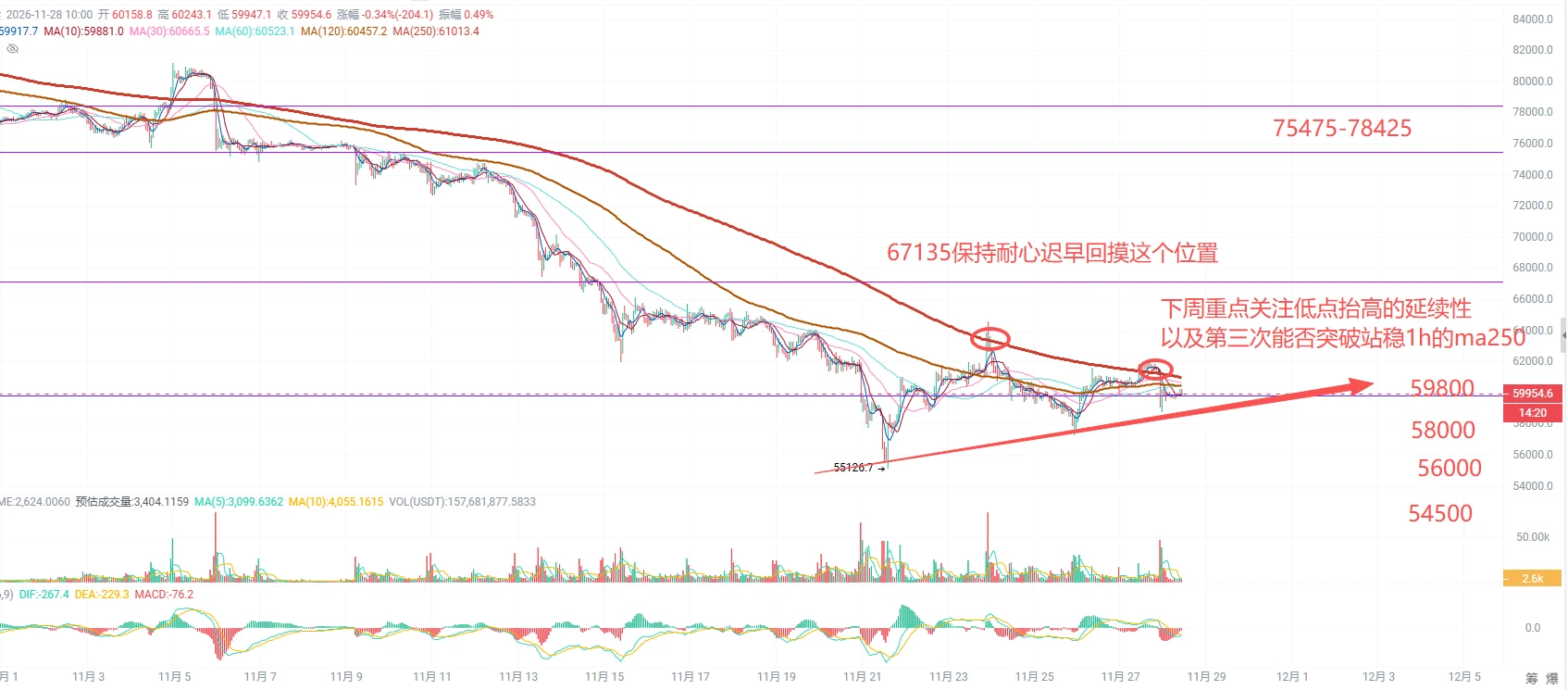
The Fear and Greed Index has hovered around 10 for 13 days. Both long and short positions are viable during the choppy recovery phase, but be sure to use stop-losses. There’s room for a recovery only if 58,000 holds.
DominanceWillMakeYou
A quick weekend chat
The Fear and Greed Index is at 10 and has stayed around 10 for 13 days. Liquidation amounts and numbers of traders this month are no lower than during January’s crash at the start of the year!
Since last October 11, the market has remained in a state of extreme liquidity scarcity and outflows!
The market is entering a period of choppy recovery and intense battles between bulls and bears; there are opportunities on both sides!
BTC support/resistance levels: 67135/59800/58000/54750
It surged to 62206 intraday, then plunged $2,600 in a straight line to 58750 in the evening as North America opened. It has now recovered to around 59800 and is consolidating; a healthy shakeout is good. Hold your spot, and if you’re trading futures, use stop-losses and take a shot on either side as you see fit;
ETH support/resistance levels: 1835/1775/1640/1595/1520
Last night it fell to a low of 1634, quickly reclaimed 1640, and is now consolidating around 1660. The price action is pretty textbook, with both rises and falls happening quickly. If you take a small position in either direction, reduce it and move your stop to protect your capital; stay safe while trading in this market;
Gold and U.S. stocks rebounded nicely last night. If there’s a sharp drop early Monday, that could be a good trading opportunity; if the market moves sideways, stay out!
This is not investment advice: stay calm, find a pace that suits you, and don’t let outside factors influence you. The market will recover eventually. Our job is to position ourselves before the recovery; for futures trading, simply set take-profit and stop-loss plans in advance and stick to them!
#闪迪大涨16%领涨标普500
repost-content-media
A One-Day Trip to $62,000: Bitcoin Surges Then Retreats Below $60k, While U.S. Stocks Post Their Strongest Week of the Year
Bitcoin surged to $62,248 before retreating below $60k, while US stocks posted their strongest week of the year; ETF outflows slowed but continued, with $62,000 as key resistance and $58,000 as support below.
BTC-0.67%
ETH-1.26%
BNB-0.76%
SPX+0.33%
NAS100-0.07%
The bill’s progress is clearly laid out: November 24 was only when it entered the queue for a vote. Near-term market action still depends on ETF flows and interest rates. Sharing this as a reminder not to treat it as a legislative tailwind already in effect.
InternetCelebrityMiMiLao
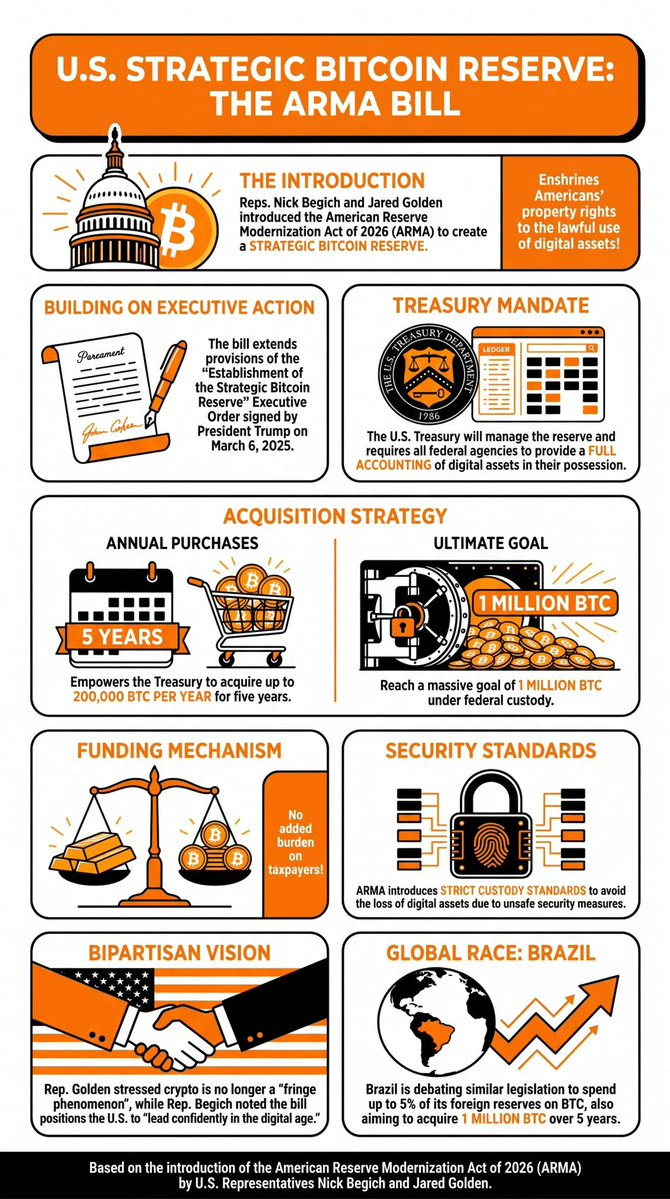
🔥【Major News | H.R.8957 U.S. BTC Strategic Reserve Act to Face House Floor Vote on 11.24】
📄Bill: American Reserve Modernization Act (ARMA), 2026 version
🗓️Timeline
✅5.21 Introduced
✅9.16 Passed Financial Services Committee vote 28:21
✅11.24 Bill formally reported to the House and placed on the list of bills pending a full House vote
(Widely interpreted by the market as a key positive development. Only the House vote, Senate approval, and presidential signature remain before it becomes law.)
📜Core provisions
If enacted:
▪️The U.S. Treasury must lock up its BTC reserves for 20 years. Selling, pledging, or auctioning them off during that period is prohibited.
▪️After the lock-up period expires, no more than 10% of the total reserve may be sold every two years.
▪️The BTC will still come from assets seized through law enforcement, not from purchases using taxpayer funds.
▪️Regular proof of reserves (PoR) and third-party audits are mandatory.
🔍Two things to distinguish
▫️2025.3.6 Executive order: currently in effect, but the next president can revoke it directly.
▫️2026 ARMA bill: aims to enshrine the reserve in federal law for the long term, significantly improving its stability.
📊Impact on the crypto market
✅Medium- to long-term outlook:
If it completes the entire legislative process, this would be a historic institutional win for BTC. Recognizing BTC as a reserve asset at the national level and locking it up for 20 years would directly tighten the circulating supply and boost long-term institutional confidence.
⚠️Short-term reminder:
11.24 only marks its entry onto the queue for a vote; it does not mean the bill has become law. It will not bring in new buying pressure in the short term. Market direction will still be driven primarily by Fed interest rates and ETF flows. The bill faces significant headwinds in the Senate, and the risks of a failed vote or watered-down provisions remain. Don’t blindly take on a large position to bet on this positive development.
#BTC #Bitcoin #StrategicBitcoinReserve #ARMA #Crypto Macro
⚠️ This information is for policy interpretation only and does not constitute investment advice.
repost-content-media
Reposting this: The strategic reserve bill has advanced to a full House vote, and I’m still sticking with DCA for installment #423. The 60K consolidation phase is all about patience.
Alex30YearsBtc
Day 423 | $BTC US Strategic Reserve Act passes, yet BTC is still stuck around $60K — Issue 423
Just updated today's spreadsheet, and the unrealized loss on paper has reached -$29,356
Yesterday my losses had just climbed back above RMB 200,000, and today another $300-plus got added,
For the past few days, the unrealized loss has stayed firmly stuck around RMB 210,000—keeping my emotions remarkably steady. 😂
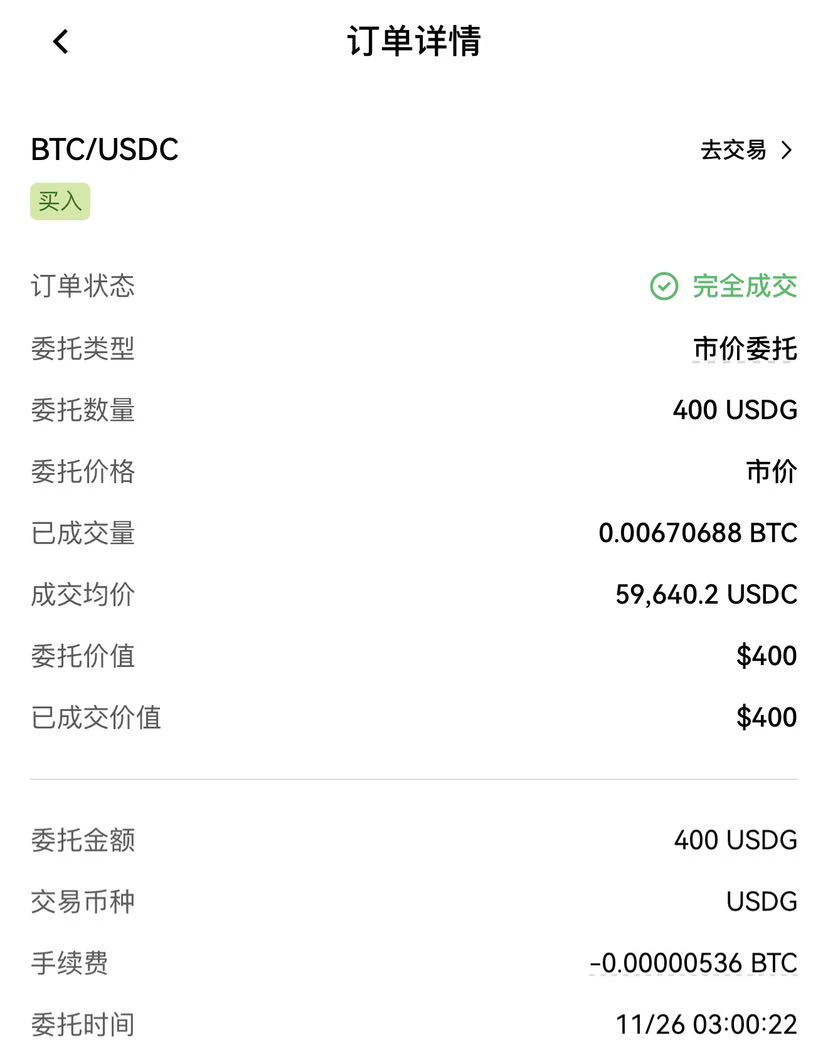
Today's purchase: 400 U @ $59,640.2
Progress: 1.8619 / 3.00 BTC (62.06%)
Average cost: $75,407
Saying it doesn't hurt at all to see a RMB 210,000 loss on paper would be pure posturing.
But this morning I saw that the U.S. Strategic Bitcoin Reserve Act had officially passed a House committee and was being prepared for a full House vote.
Then I looked back at my progress bar, which had officially passed 62%, and saw my average cost drop another $57. Somehow, I felt steady again.
The more the market plays dead in the face of good news, the better it feels for zero-leverage spot buyers to pick up cheap coins. I don't owe the exchange a cent, can still sleep soundly at night, and will keep buying at 3 a.m. tomorrow.
With the Strategic Reserve Act having taken a big step forward while BTC is still grinding around $59K, do you guys think this move is building up strength?
repost-content-media
After a hotter PCE reading, Bitcoin makes a V-shaped recovery to reclaim 60k: With the tariff proposal landing during the Thanksgiving market closure, can this rebound hold?
After hotter-than-expected PCE and a major GDP beat, Bitcoin staged a V-shaped recovery to reclaim $60k, but the tariff proposal and ETF outflows remain unresolved. With liquidity thin during the Thanksgiving market closure, the first thing to watch is whether $61k can hold.
Hotter-than-expected PCE and a major GDP beat: Core PCE at 3.3% meets $58,000—can Bitcoin hold?
Key level unchanged: $58,000 is the dividing line between bulls and bears. Holding it would extend range-bound trading, with $60,000–$61,682 as the next upside target and $63,000 still a resistance zone; a decisive break below $58,000 would put $55,130 in sight. Tomorrow, November 26, is Thanksgiving, and U.S. stock markets will be closed. Thin liquidity could amplify volatility, so avoid heavy directional bets around data releases and wait for confirmation from the first candle after the market opens before acting.
Sharing for educational purposes. Stay cautious ahead of tonight’s PCE data; bears have the upper hand, so don’t rush to buy the dip.
Trader
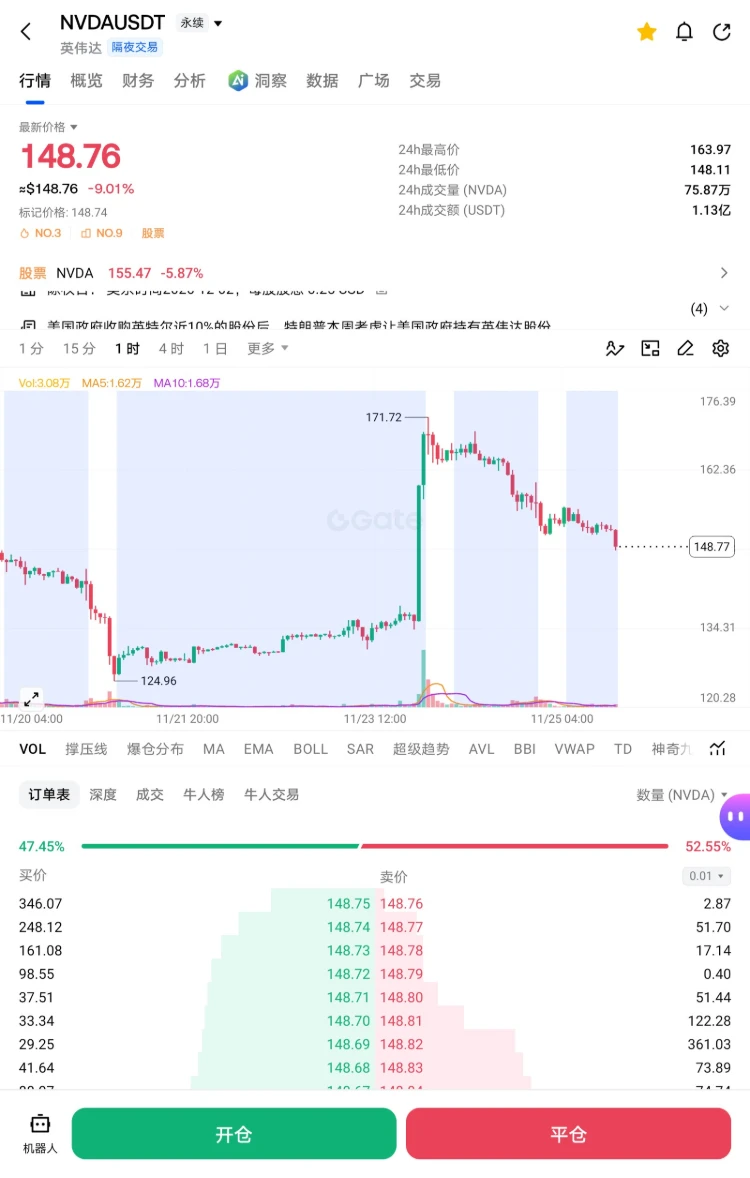
$NVDA Shorts are in a strong position; don't rush to buy the dip in futures. Being stuck in stocks with small positions isn't much of a concern. #PCE与GDP数据将揭晓 #作手分析
repost-content-media
Tonight at 21:30, the PCE showdown: Bitcoin is stuck at $59k. Will core inflation at 3.2% be the straw that breaks the camel’s back?
In terms of trading, volatility will increase significantly around tonight’s data release. $58,000 is the dividing line between bulls and bears: holding above it means range-bound trading continues; a decisive break below opens the door to a trend-driven decline. Avoid taking large directional bets before the data is released. Wait for confirmation from the first candlestick after 21:30 before acting for a higher probability of success.
Correction: Nvidia Soars 31% in a Day, Jensen Huang Returns—Why the U.S. Stock Market’s Revenge Rally Failed to Lift Bitcoin
Conclusion: The recovery in risk appetite in U.S. stocks is real, but the crypto market’s follow-through is weak. Until Bitcoin firmly holds $62,000–$63,000 and ETF flows turn from negative to positive, this should still be viewed as a continuation of the oversold rebound, not a trend reversal.
NVDA+0.81%
BTC-0.67%
NAS100+2.03%
US500+1.05%
TSLA+5.22%
ETF sees $1.79 billion in weekly outflows: IBIT loses nearly $1.1 billion in two days, institutions continue exiting
U.S. spot Bitcoin ETFs saw weekly net outflows of about $1.79 billion, marking the fourth consecutive week of outflows. The price rebound has coincided with outflows, casting doubt on its sustainability.
BTC-0.67%
BLK+2.36%
Ethereum returns to $1,700, BNB holds above $560: Strength diverges amid the rebound
Ethereum returns to $1,700, BNB holds the $550 support zone, and both outperform Bitcoin, but capital has not flowed into the broader market. The quality of the rebound depends on whether Bitcoin can hold $60k and break higher.
ETH-1.26%
BNB-0.76%
BTC-0.67%
SOL-0.77%
XRP-1.15%
Nasdaq plunges 5.28%, Nvidia down 14% in a single day: How the AI trade collapse is spilling over into crypto markets
U.S. stocks were hammered, with Nvidia falling 14% in a single day. The collapse of the AI trade is spilling over into crypto through risk appetite and liquidity; until the Nasdaq stabilizes, crypto’s rebound should be viewed as a follow-on recovery.
NAS100-0.07%
NVDA+0.81%
US500+1.05%
AMD+4.35%
AVGO+3.92%
Bitcoin Reclaims $61k: Oversold Bounce or Trend Reversal?
Bitcoin rebounds above $61k; the short-term rebound continues, but the medium-term trend remains downward. Until $62,000 is decisively reclaimed, treat this as an oversold recovery.
BTC-0.67%
At the end of rate hikes, hold crypto;
At the beginning of rate cuts, add to your positions.
When the economy is rising, expand your assets;
When the economy is declining, hold cash.$NVDA ‌
NVDA+0.81%
#WCTCS9 Look how badly this has fallen.

Three developments to watch next:

First, whether gold continues to face indiscriminate selling.

Second, whether U.S. credit spreads widen rapidly as the dollar continues to strengthen.

Third, when BTC and U.S. stocks rebound, whether they can attract sustained genuine buying again, rather than just short covering.

Especially BTC.

If this sell-off is mainly driven by leverage being flushed out, the market could see a very sharp rebound once forced selling ends.

But if it reflects ongoing capital outflows and credit contraction, any rebound may just
GLDX-0.40%
PAXG+0.37%
BTC-0.65%
$SPCX Target: 2000
SPCX+4.92%
Load More