OneUnfilledOrder

vip
Active for: 0.4y
Peak Tier 0
Placing limit orders and waiting patiently, used to relying on limit and market orders; prefers low-frequency trading, but still keeps an eye on key price levels.
Does the U.S. SEC and CFTC both rush to regulate, or neither of them? Only after BTC options are clarified—who they fall under—can the market gain real certainty.
BTC8.48%
View Original
AFx_Crypto
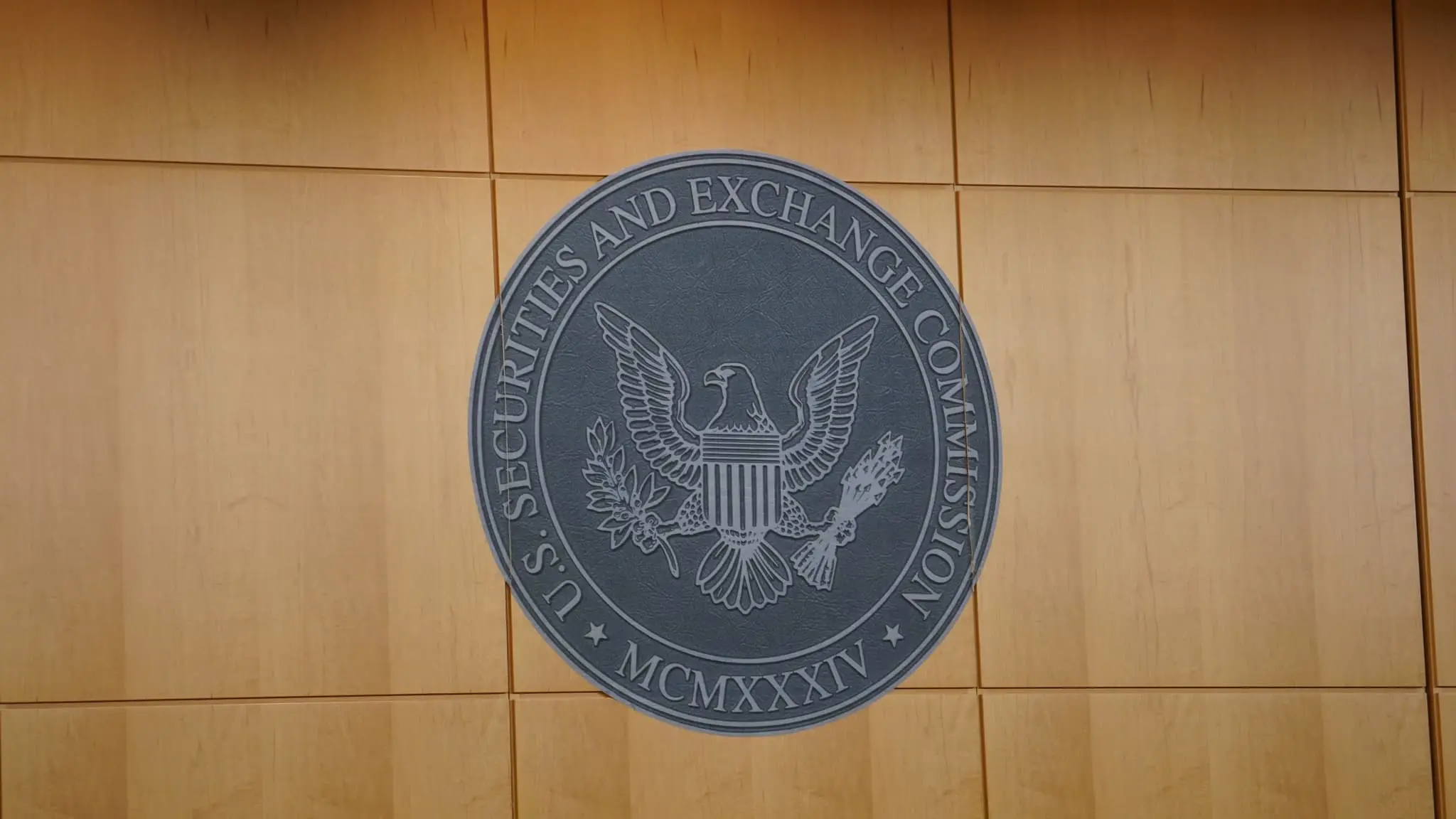
A new regulatory development is drawing attention to the relationship between the SEC and the CFTC in the U.S. crypto market.
According to recent reports, the SEC is reviewing its approval of Nasdaq's Bitcoin options after a challenge from CME Group. The key issue is not whether Bitcoin exists as an asset, but which regulator should oversee certain Bitcoin-related financial products.
CME argues that because Bitcoin is classified as a commodity, options linked to its value should fall under the jurisdiction of the Commodity Futures Trading Commission (CFTC) rather than the Securities and Exchange Commission (SEC).
At this stage, the review does not mean that Bitcoin options have been rejected or permanently suspended. It is part of the regulatory process to determine whether the approval aligns with existing legal authority.
To me, this highlights a broader challenge facing the digital asset industry. As crypto products continue to evolve, regulators are still working to define clear responsibilities and oversight. Greater regulatory clarity could help reduce uncertainty for both investors and financial institutions.
Educational only. This article is based on publicly reported information and is not legal or financial advice. Always verify updates through official sources.
#USD1StakingEarnUpTo8%APR
repost-content-media
  • Reward
  • Comment
  • Repost
  • Share
Honestly, I’ve found that my tolerance for being in an unrealized loss is even worse than my patience for an unrealized gain. When I’m in a floating loss, even waking up in the middle of the night, I’ll check my phone to see whether it has broken my psychological price level again. But when I’m up instead, I can sleep soundly. Thinking about it afterward, maybe I’m just too afraid of the feeling of getting “trapped.” If a limit order goes cold, it doesn’t matter—but actually getting trapped is really uncomfortable. With all the recent hype around AI Agents and automated trading, I feel the opp
View Original
  • Reward
  • Comment
  • Repost
  • Share
On the third time, it really went to zero when the options expired. Honestly, every time before buying calls, I feel like I’ve calculated things pretty accurately—yet the time value keeps bleeding away day by day, and in the end there’s nothing left. Flip it around and think about the seller: they just lie back and collect the premium—basically, they’re charging rent for time. I’ve tried being the seller a few times; it’s indeed steady, but once the direction suddenly changes, you can’t sleep at night. Now there are a bunch of AI Agents on-chain doing automated trading—it looks impressive, but
View Original
  • Reward
  • Comment
  • Repost
  • Share
I’ve been waiting lately—what I’m waiting for isn’t really something I can say, but basically, I’m just waiting. I’ve looked at a lot of PFPs and membership offerings, as well as other brand projects, but I still haven’t made a move. To put it plainly, whether these things have long-term value or just short-term attention—I always feel like I should wait for the market to run through a first round before deciding. Like now, with RWA, on-chain yield products, and US Treasury yield rates being compared side by side, I’m actually pretty curious, but I’m not in a rush to jump in. I’m afraid I migh
RWA4.83%
View Original
  • Reward
  • Comment
  • Repost
  • Share
Sometimes RPC nodes act up and the displayed transaction status lags behind by half a beat. I thought the chain was stuck, but after refreshing a few times, I realized it had already been settled earlier. Put simply, what you see isn’t necessarily real-time—especially if the node you’re using can’t keep up with indexing, which makes it easy to get the wrong impression. Lately, the modular blockchain and DA-layer narrative has developers pretty excited, but for someone like me, it’s a bit confusing. Either way, it feels like the underlying layer is more complex, but the user experience doesn’t
View Original
  • Reward
  • Comment
  • Repost
  • Share
I just saw a post about a chain game economy collapse, and it made me feel a bit emotional. To put it simply, studio bots and inflation smashed the token price through the floor—then players bailed, and it spiraled downward. This is actually a lot like the “queue-jumping” in on-chain MEV: the fast movers with more resources got the advantage first, while retail traders lagged behind and could only stare. I usually place limit orders in a pretty laid-back way, but seeing those kinds of racing transactions (or what you could call front-running) really pisses me off. In a fair enough on-chain env
View Original
  • Reward
  • Comment
  • Repost
  • Share
Yesterday I saw a discussion about modular blockchains and what changes they bring to the end-user experience. I thought about it, and to be blunt: when ordinary users actually get to the point of doing things on-chain, the interface is still the same, and the wallet is still the same. Other than maybe lower fees or a bit faster speed, you really don’t feel any fundamental difference. No matter how much you break it down and keep modularizing it, in the end what’s put in front of you is still the same swap or lending page. As for whether the underlying layer is the data layer or the settlement
View Original
  • Reward
  • Comment
  • Repost
  • Share
Testnet points—lately it feels like things have changed a bit. In the past it was just for practice, but now everyone quietly treats it as an expectation, starting to figure out whether they “lost or not.” I’m also reflecting: if it’s just practice, then there’s no need to be so tight with it; but once there’s an expectation, you have to cut losses—whether or not any real money was spent, time cost is still cost. For myself, I set a “mindset stop-loss”: if I get anxious enough that I can’t help waking up at 5 a.m. to check the validators, then I should step back from the project. Watching them
View Original
  • Reward
  • Comment
  • Repost
  • Share
The market has been swinging back and forth recently, and people like me who set limit orders and just let them sit actually sleep pretty soundly… I tried going all-in once, and woke up in the middle of the night to check my phone—my heartbeat was racing. After that, I went back to doing things the old-fashioned way: switch back to grid trading and DCA. If you’re just waiting for fills, the market can come or not come. To put it plainly, high-frequency tinkering isn’t as good as slowly grinding it out—watch the screen less and worry less. That said, hardware wallets have been in short supply l
View Original
  • Reward
  • Comment
  • Repost
  • Share
I saw a post about a cross-chain bridge being hacked, and I was just about to rush in to buy the dip—then, a second later, the oracle price jumped. I immediately pulled back my limit order, and while I was at it, I cleared the wallet permissions.
The hot trends rotate faster than a coin flipping—chase once and you get buried once. I’ve learned my lesson: don’t look for who shouts first, only trust those three words, “wait for confirmation.” After a cross-chain bridge is hacked, even if you beg me on your knees to go all in, I only accept the final, hard confirmation. If the oracle reports an
View Original
  • Reward
  • Comment
  • Repost
  • Share
The hot topics keep flipping like turning pages—today it’s AI Agents, tomorrow it’s automated trading. I just barely manage to catch on to something, and then there’s a whole new term. Anyway, if I don’t understand it, I won’t follow. I’ll just place a limit order and wait, letting the market come find me. To be honest, listening to others hype narratives is pretty lively, but I’m more focused on who’s really tightening up safety—especially the kind of code logic involved in on-chain interactions; it gives me a headache just looking at it, so I’ll put that aside for now. I only have so much at
View Original
  • Reward
  • Comment
  • Repost
  • Share
Floating losses and floating gains feel totally different in style. With the same trade, when you’re up on paper, you can sleep fine—maybe even in the middle of the night you can’t help opening the chart to take a look, then happily go back to sleep. But once you’re down on paper, even if it’s only a small loss, staring at that line feels like staring at an ECG—you get tense before you even realize it.
A few days ago I saw someone talking about things like re-staking again and shared security, and how the yields stack up. People criticized it as “Russian doll” structures. I took a look too, an
View Original
  • Reward
  • Comment
  • Repost
  • Share
Someone asked me why it’s called “One Cup Never Gets Filled.” Honestly, it’s not really a meme—there are simply too many open orders. They often stay there, cold, all day long. Recently I’ve been watching governance token voting, and it makes me want to laugh. Tell me, who did it “cure”? Voting with a wallet and renting tickets to game the vote are the norm. Big holders have a few million tokens—while you, as a retail user, place just a couple of orders, and your voting power barely counts as anything at all. I remember a project last year where the voter turnout was only around the teens in p
View Original
  • Reward
  • Comment
  • Repost
  • Share
When it comes to sorting out transaction records by the end of the year, I already got burned last year—thinking about it now, I still feel like I need to take precautions in advance.
Anyway, I initially thought that saving screenshots to my photo album would be enough. Then by the end of the year, I flipped through everything and found a mess of on-chain records, exchange CSV files, and a few scattered screenshots that simply didn’t match up—my head was spinning.
Later I learned my lesson: I now spend half an hour every month, record every transaction hash, time, amount, and fee into Exce
View Original
  • Reward
  • Comment
  • Repost
  • Share
Floating losses are more likely to disrupt sleep than floating gains—I totally get that.
My habit is to place limit orders and wait. Sometimes the order gets hung up, the market moves for a bit, and the unrealized loss feels like ants crawling on my chest; I toss and turn and can’t fall asleep. But when it’s a floating profit? Oddly, I don’t feel that excited. As long as the market hasn’t filled the trade, the money hasn’t landed in my wallet, so it’s hard to feel truly solid.
Recently I’ve been watching those new L1/L2 roll out incentives to boost TVL, and I understand the old users who a
View Original
  • Reward
  • Comment
  • Repost
  • Share
To be honest, retail investors don’t really need to go too deep into concepts like block builders and bundling—we only need to understand that “someone is doing on-chain ordering business.” It’s like ordering takeout: you know there are chefs in the restaurant’s kitchen, but you don’t need to care whether they add salt or oil first. Just don’t get sandwiched by sandwich attacks—if the gas is too outrageous, wait for the next block.
I just came across social mining and fan tokens, and it feels like we’re back to the old topic of “attention is mining.” As far as I’m concerned, attention is like
View Original
  • Reward
  • Comment
  • Repost
  • Share
The order just sat there until it cooled off. I watched the chart for a bit again—seeing those Memes surge so hard actually made me feel even more uneasy. Veteran players always say not to grab the last baton, but newcomers always think they can run faster. Honestly, though, I’d rather judge whether the project team is actually doing serious work; it’s simpler than that—just see whether the treasury spending matches the milestones. Don’t listen to whatever they brag about regarding “community consensus.” Where is the real money going, and how far has the progress bar moved? If it lines up, it
MEME7.42%
View Original
  • Reward
  • Comment
  • Repost
  • Share
I just came across a DAO proposal. The voting options are written clearly and plainly, but the incentive structures behind the scenes can actually be seen if you look up the on-chain records. I used to always think that looking at on-chain data was the cleanest—everything was transparent—but later I found that emotions can be pretty lethal too. For example, during the recent wave of stablecoin regulation, people in the group were passing around all kinds of audit reports, and rumors of depegging were flying everywhere. The on-chain data didn’t change, but the mood collapsed first—limit orders
View Original
  • Reward
  • Comment
  • Repost
  • Share
I’ve been getting a bit too into GitHub lately—just because I have nothing better to do. I used to think that once an audit report was done, everything was fine. But now I’ve found there are a lot of real details inside. Basically, many projects still change their code after getting audited. After they make changes, does that new version go through another audit? No one knows.
Upgrading to a multisig is even more confusing. A bunch of people rush to praise it as “decentralized,” but when you look at the signing addresses, some are team insiders, and others are dead accounts that are basically
View Original
  • Reward
  • Comment
  • Repost
  • Share
Are people born in the 2000s already this strong? They added a 29M position just like that.
View Original
CoinNetwork
CoinBureau news: 00s trader 0xray recently increased his BTC long position by 69.06 BTC, worth approximately $4,513,273.10. His total position size has reached $29,989,312.95. His average entry price has been adjusted from $64,223.90 to $64,234.30. The current profit and loss on this long position is +$50,639.23 (+1.69%). The current BTC price is $64,342.95, with a liquidation price of $55,383.76. 0xray is a well-known 00s crypto trader on X. He previously saw unrealized gains exceed $6 million within the month when he built positions on the HyperLiquid platform. Recently, his trading focus has gradually shifted from crypto assets to on-chain stock contracts.
  • Reward
  • Comment
  • Repost
  • Share
  • Pinned