Square
Following
Hot
News
Profile

DexterRamen

vip
Peak Tier 0
Active for: 0.6y
Even when trading on a DEX, you need to pay attention to the details: slippage, liquidity depth, and routing. Prefer low-fee chains, and enjoy sharing test screenshots and brief summaries.
65
Following
11
Followers
4
Liked
The odds of a 25 bp Fed rate hike in December have surged to 70%. Market pricing is quite aggressive, but the remaining 30% chance of a surprise is what matters for P&L.
FlyFan
Prediction market:
The probability of the Fed raising interest rates by 25 basis points in December is 70%,
Just got sandwiched, and Gas was ridiculously high. Turned out I did all that for nothing.
I used to think MEV was someone else’s game. Now I realize that if you’ve ever clicked “Confirm” on a DEX, you’re basically one of the ingredients on the table. Set slippage too low and the trade gets stuck; set it too high and you get sandwiched. Either way, you’re paying tuition.
Lately I keep seeing talk of restaking stacking yields and security. Honestly, it feels a little familiar… Isn’t that just putting another layer of bread in the sandwich? By the end of the stack, I still haven’t figured out wh
After getting taught a lesson by liquidation bots for the third time, I finally started taking oracle delays seriously.
I used to think, what difference could a few seconds in price feeds make? Then last week I watched the on-chain quote still sitting at 3900 while the actual price had already crashed below 3850. By the time the update came through, my position was gone. Put simply, liquidation doesn’t wait for you to react; it only looks at that delayed number.
Now, with tax hike rumors heating up again and fiat on- and off-ramps getting finicky, everyone’s getting even more precise with leve
Double-digit pumps feel great, but don’t forget I’ve seen even harsher reversals—set your take-profit line first.
Jens
🔥 $USELESS — Double-Digit Momentum
$USELESS has jumped 10.28% to $0.15217.
The $0.16 area is the next psychological test.
A clean breakout could attract more momentum, but speculative rallies can reverse sharply.
#ShowOffMyPortfolioReturns Seeing everyone make money hurts me more than losing money myself, but I still have to say congratulations.
A大溜溜
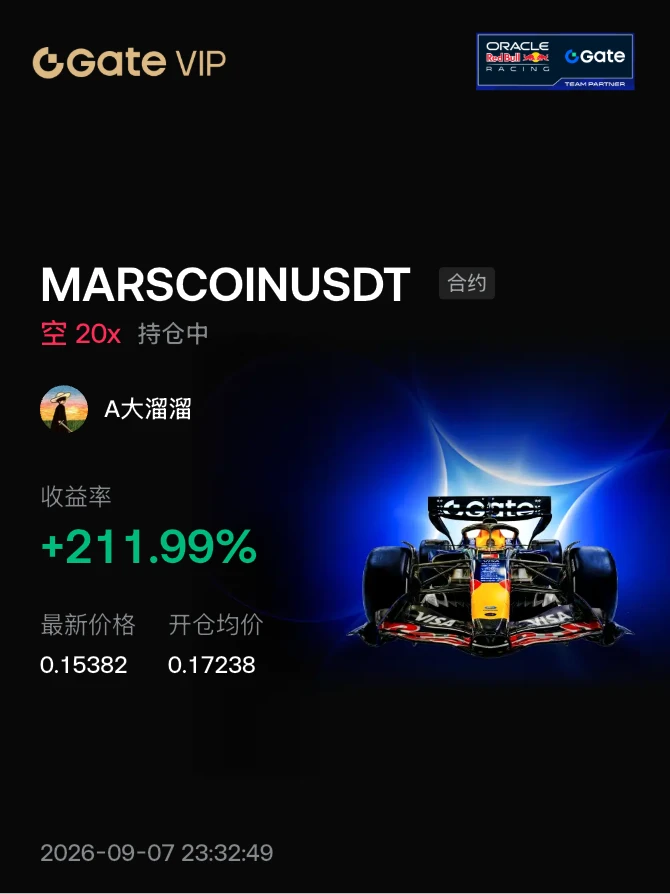
That liquidation trade taught me to cut my losses; even now, thinking about it makes my palms sweat—but without it, I would have left crypto long ago.
HECTOR
Every Trader Has That One Trade...
You know the trade I'm talking about.
You enter confidently.
The chart suddenly moves against you.
You tell yourself, “It will recover.”
Then it drops again.
Looking back, those painful trades were actually some of my best lessons about patience, risk management, and emotional control.
Gate reaching 60 million users shows how many traders around the world are sharing similar experiences.
What's the trade you will NEVER forget?
#Gate60MUsers
I just bridged and am waiting for confirmation, staring blankly at the transaction history. Honestly, after spending so long getting wrecked on DEXs, I’m always checking slippage depth; cross-chain bridges test your nerves even more. I’m wary of bridging—not because it’s slow, but because I’m afraid it’ll stay slow until it disappears. A bridge’s risks are mostly hidden. Multisigs look reassuring, but what if the signers are all part of the same group? Oracles are even murkier: if the price-feed data source is manipulated, you may not even have time to react. So when I see “wait 30 minutes for
Yesterday I bought a call and checked the theta before going to bed. The feeling is hard to describe—it was like paying rent to someone when you haven’t even moved in yet, but the bill has already arrived. Honestly, I’m probably not cut out to be a buyer. Every time I watch the time value bleed away, I keep fantasizing that the market will make its move, even though deep down I know that money was probably just buying the seller dinner.
Recently, while chatting with people about options, I found that many only focus on delta and completely ignore Mr. Theta. Put more formally, buyers are bettin
I just looked up an address on Dexscreener. The label says “a certain institution market-maker,” but when I clicked in, the entire fund flow turned out to be small accounts moving bricks and cross-chain arbitrage. Things like address profiling on 🤷—sometimes they’re accurate, sometimes they’re just “data that someone fed in.” If you trust it blindly, you’re likely to step into a trap. I usually only look at the fund flow and the list of interacting protocols. The labels can only be a reference, especially for addresses that have been “tainted” (for example, ones that have been used to mix fun
When the liquidation line is still three steps away from you, do you panic?
Actually, panicking is useless. I just open that borrowed-coin pool and take a look first—slippage, depth, and routing. If any one of those looks off, I pull out half before anything else. I’d rather earn less than get swept away in one wave. Recently, a certain mainstream public chain just finished an upgrade, and during the downtime maintenance, everyone in the group was speculating whether ecosystem projects would move en masse. The liquidity really did wobble. I figured that instead of betting that rates will imp
I just tested an NFT lending pool on a DEX—my slippage was so small it was basically negligible, and the depth was better than I expected. Recently, the floor price has been dropping pretty hard, but I noticed that after some projects turned royalties into an optional setting, the community actually became more willing to trade—even if it’s only small limit orders. In plain terms, people care more about real liquidity now than pure narrative hype. Also, by the way, a major chain recently rolled out an upgrade—during the downtime for maintenance, a lot of people wondered whether the ecosystem p
Hey, today I cleared my position for the third time, and I still lost money. Stop-loss is really like a breakup—if you keep dragging it out, it turns into sunk cost. Better to cut it early and save on interest. Last week I made a trade. I clearly saw the slippage was off, and I still thought I’d wait a bit longer—then the depth just collapsed. I lost so much I can’t even afford to eat out. Anyway, I’ve learned my lesson now: set a stop-loss order, out of sight, out of mind. Consider it paying for a lesson.
As for social mining—honestly, I tried a few fan tokens. The list of followers went up,
Just saw a transfer and, on the first glance, I really thought it was a “coincidence”—tens of millions of USDC crossed over via cross-chain, and almost at the same time, the same amount was sent out on another chain. The group chat immediately blew up—everything from depegging to “audit hiding bombs” was being discussed. Later I found the path was actually pretty clear: a certain protocol was doing cross-chain route arbitrage, passing through a liquidity pool in the middle, and the order was simply offset by block time. To put it bluntly, most on-chain “coincidences” are just information gaps;
USDC+0.01%
Recently, I’ve been researching re-staking, and the more I look, the more it feels like the revenue source is actually pretty straightforward: it’s basically just taking a share of the rewards paid to validators and also getting a slice from MEV. But the risks don’t really hide either—node operators are uneven, and if anything goes wrong, your staked LST could end up getting hit by penalty notices.
Thinking about it later, it’s kind of ridiculous. Back then, I thought the three words “wait for confirmation” were pretty reliable. But last week’s cross-chain bridge theft, along with the oracle
The airdrop season is back again. Honestly, I’m a bit conflicted—I love it and I’m afraid of it. On a few earlier occasions, I got a little too excited and chased it; after the gas got burned, I checked in the end and ended up getting reverse-scammed. I was so angry that I just laid flat. Now I’ve learned my lesson: first, check whether the protocol actually has a real user base, and look at on-chain activity—then decide whether to interact or not. Last week I did a new project’s interaction; the slippage settings were reasonable, and the routing was solid. It felt a lot safer than blindly har
To be honest, switching back and forth between the mainnet and L2 recently is a bit head-spinning. With a big ETH account, the gas can be just a few cuts away every time—gas fees are really not worth spending that money on a few more bowls of noodles. But when I switch to a smaller chain, I worry the slippage will be too brutal and the liquidity depth won’t be enough. Anyway, what I do now is get a quick look at the route first and then decide—save a little whenever you can.
Recently, there’s been no shortage of people in my social circle asking about hardware wallet stockouts. I actually thin
ETH-1.26%
Just muted the group chat—everything is a lot quieter now. I used to keep notifications on, but it was all people bickering and ads, while the truly useful data got drowned out. Lately, when I’ve been doing on-chain testing, I keep running into that “lags for a second” kind of issue. At first, I thought it was my own network, but later I realized it’s because the indexer is updating slowly, or the RPC is being rate-limited—either way, you want to check a trading pair’s slippage, and Subgraph still returns data from ten minutes ago. 🌚
Especially when running on smaller chains: there are fewer
I just went back and reviewed the settlement logic of a few LST protocols. In plain terms, the returns come in two layers: one is the interest on the underlying staked native token, and the other is the protocol’s own re-staking or strategies from its vault to help you earn a bit more. But the risks are also tucked in there: if the protocol uses the assets to provide collateral to other nodes, or participates in some testnet points incentive activity, then if those nodes get penalized or have their funds confiscated, you’ll be taking the loss along with them.
Lately, everyone’s been talking ab
Keep刷Chain data……Today I saw a transfer. Looking at the address and the amount, my first reaction was, “Damn—these two addresses look suspicious.” As it turned out, when I followed the middle routing step by step, I found it was just the tail end of a sandwich liquidation: a bot borrowed one protocol on-chain, then sent it on through another layer of stablecoin. It looks like “coincidental” cross transfers, but really, every step leaves clear accounting traces of gas and slippage. Honestly, this kind of “coincidence” is really too common on low-fee chains—especially lately, when funding rates
Load More