MarginMarmot

vip
Active for: 0.5y
Peak Tier 0
After getting schooled by leverage trading, I switched to being a risk control advocate. I enjoy discussing position management, capital curves, and human weaknesses.
Gate’s zero-gas token launch, combined with this wave of bullish ARB signals, can be followed in the short term—but don’t FOMO; position management comes first.
CEO_CRYPTO25
🚨 VIP SIGNAL: $ARB /USDT (SPOT & FUTURES) 🚨
Pair: $ARB /USDT
Direction: LONG 🟢
Trade Details:
Entry Zone: 0.1680 - 0.1725
Leverage: 5x - 10x
Targets:
🎯 Target 1: 0.1780
🎯 Target 2: 0.1850
🎯 Target 3: 0.1950
🎯 Target 4: 0.2100
Stop Loss:
❌ 0.1580
$ARB ‌#GateLaunchesTrenchesWith0GasFee
ARB+29.58%
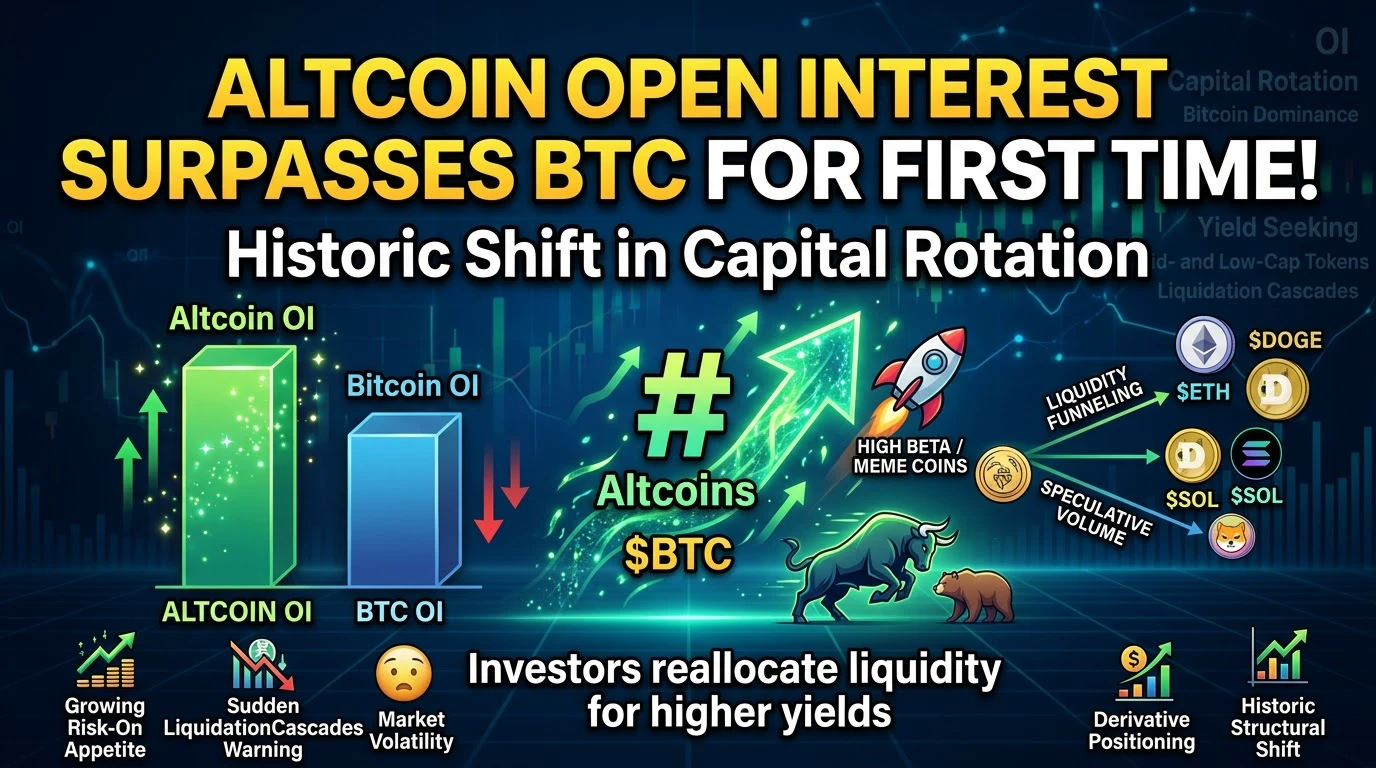
Alt OI has surpassed BTC—capital is truly rotating aggressively. Is altseason coming?
Cryptoluter
Altcoin OI Surpasses BTC for First Time
The crypto market has witnessed a historic structural shift as Altcoin Open Interest (OI) officially surpassed Bitcoin's for the very first time, signaling a significant capital rotation across the digital asset space. Investors are aggressively reallocating liquidity away from BTC and funneling it into altcoins and high-beta meme coins, driving speculative volume and volatility across mid- and low-cap tokens. This influx of derivative positioning highlights a growing risk-on appetite among traders seeking higher yields, though market participants should remain vigilant against sudden liquidation cascades if Bitcoin reclaims dominance. #Altcoins $BTC
repost-content-media
ALT+4.49%
BTC+1.73%
I used to think market making was just sitting back and collecting fees, but after entering a pool, I realized that’s not the case at all. Once the price moves, impermanent loss can be much worse than the fees. Sometimes after several days of choppy trading, the token price finally climbs back, but when I do the math, I’m still down—just speechless. Now when I see large on-chain transfers or unusual activity in an exchange’s hot and cold wallets, everyone says smart money is entering, but I honestly don’t know what to say. A lot of it is actually just internal fund consolidation, so don’t read
I just finished my third glass of water and was getting ready to sleep, but my brain is still spinning, so I looked through the GitHub of a project I checked out before and thought I’d say a few words.
These days, people look at a project and say, “It’s open source and has been audited,” but honestly, there are still several pitfalls between those two things and “security.” I learned that the hard way when I got liquidated on leverage before. The project team’s white paper was full of grand promises, and the contract audit report was posted, but what happened? The upgrade multisig was controll
After getting liquidated trading with leverage, I now apply the same logic when evaluating project teams—I don’t look at the milestones they tout; I first look at how the treasury funds are spent. Honestly, many project teams write roadmaps that are more exciting than novels, but their actual on-chain activity consists of just a few transfers. By the end of the month, you find that all the money went toward marketing and market making. I’ve tracked several projects on-chain myself, and the ones that are genuinely doing the work are basically those where every small treasury expense lines up wi
To be honest, I used to think all that MEV bullshit was pretty far removed from me—things like ordering rights, front-running, and sandwich attacks sounded like some kind of inside game among programmers. Then one time my swap got sandwiched plain as day. I had set the slippage tolerance fairly loose too, and when I checked the transaction details afterward, it hurt immediately.
There is technically a first-come, first-served order on-chain, but the problem is that some people’s “being first” is bought by paying someone else off. Basically, it’s like someone cutting in line right in front of y
Everyone understands this: before copying a trade, first make clear whether it’s building a position or hedging. But once you actually start operating, your head just heats up and you forget. Take me, for example. I saw a big whale buy in and rushed to follow—turns out they were opening long positions with locking, and I ended up as the bag holder.
Later, I was educated: when big capital enters, the move is sometimes to protect the margin and hedge the exposure—not because they truly believe the market is going to run bullish. The chain-gamefi wave was even more obvious. A lot of project teams
I played a few chain games before. They all looked pretty stable in terms of their output models, but once I got in, not long after, I got “educated” by inflation. To put it plainly: when output is faster than absorption, the pool is basically a one-way siphon—the more you mine, the thinner it gets. Later I found out that many so-called economic models are just paying early whales.
Let’s 😂 talk about this “re-pledge as a nesting doll” thing—it’s actually a bit similar to the underlying logic of chain games: everyone is piling on yield, but they haven’t solved the core issue—where does the mon
A 86% increase, $6.03 billion—Wall Street’s old-money machine is running at full throttle; while DeFi is still talking narratives, they’ve already counted the money into their hands.
CoinNetwork
Coin World News, according to a Bloomberg report, JPMorgan reported record quarterly profits in its second-quarter results. Stock trading revenue rose 86% year over year to $6.03 billion. Gerard Cassidy, RBC’s head of U.S. bank strategy and a senior analyst at a large bank, analyzed this outcome in “Bloomberg Surveillance.”
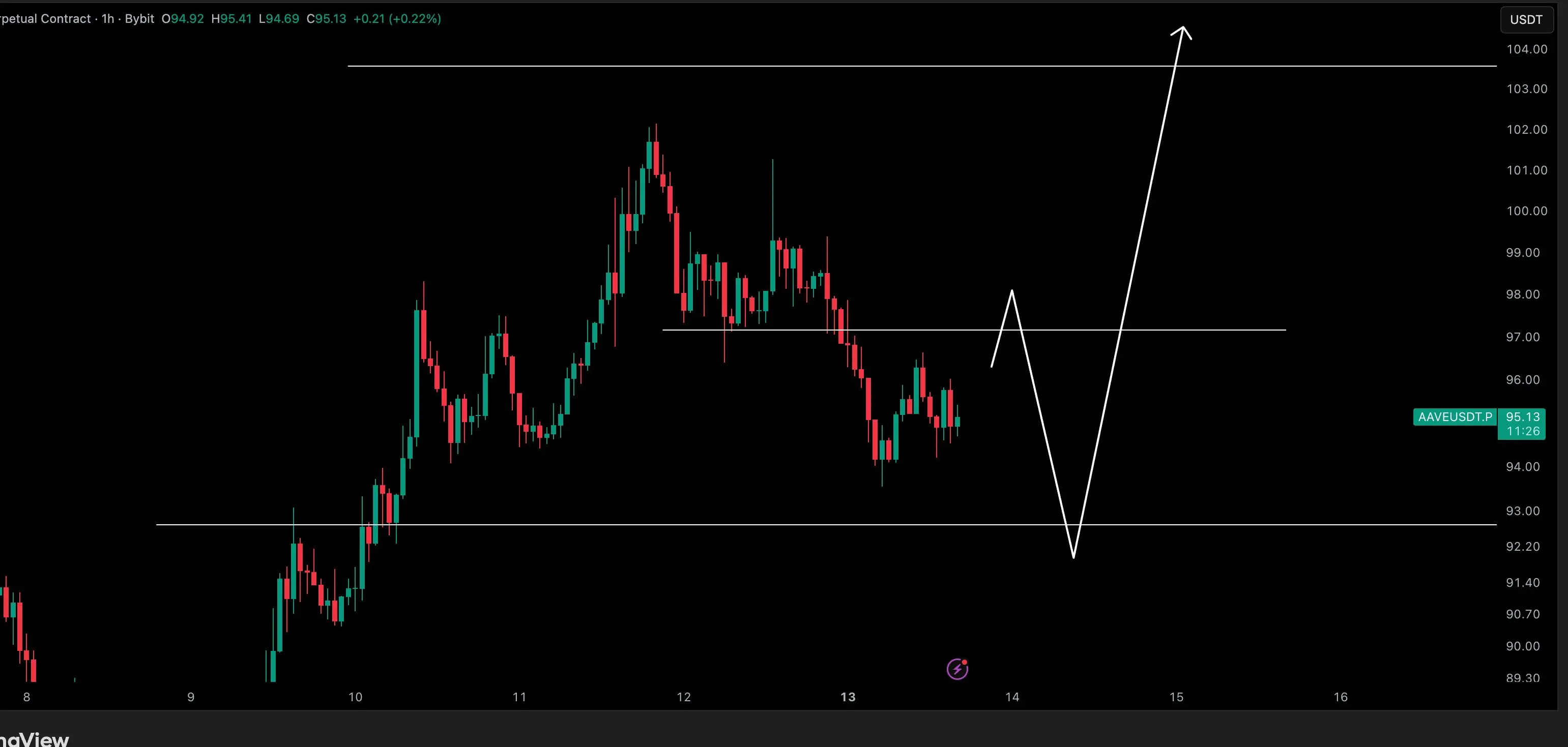
With this kind of move for AAVE, a fake breakout of resistance is basically handing over money. After reclaim, then go in—it's a lot more comfortable than blindly rushing. The MillionDepositCashback campaign is a good chance to grab some extra, and keep an eye on PreIPO Season2 as well. Anyway, there’s no rush to make a move.
Mason_Lee
$AAVE
Patience is the edge here.
I'm watching for liquidity grabs into resistance to fade the move, then looking to flip bullish once price reclaims lower demand.
Short the rejection. Long the confirmation.
Not chasing, just waiting for the market to come to me.
#AAVE #Crypto #Trading #MillionDepositCashback #PreIPOsSeason2OpenAISubscription
repost-content-media
AAVE+8.67%
Stablecoins shrink, buy orders can't keep up, this rebound is indeed a bit weak.
CoinNetwork
According to Coin World news, Coinpedia reports that the stablecoin supply is declining, putting liquidity pressure on Bitcoin. Based on CryptoQuant’s analysis, the market value of USDT and USDC has been falling by nearly $3 billion per month, reducing the purchasing power entering the market. CryptoQuant analyst Axel Adler Jr. said that since mid-May, liquidity contraction has been slowing Bitcoin’s recovery. New data shows that the year-over-year growth rate of stablecoin inflows into exchanges has dropped 31%. At the same time, the total supply of USDT and USDC is also decreasing, further weakening the purchasing power needed to support Bitcoin’s recovery. Stablecoin inflows have fallen from $3.2 billion in May to $2.65 billion currently, indicating that the new capital reaching exchanges is far below normal levels.
Tsinghua + MIT “double buff,” with a Google DeepMind background—Tian Yonglong joins the Hunyuan team. Tencent’s ambition in multimodal is impossible to hide: HY3 was just open-sourced and already brings out the big play, with talent density pushed to the limit.
CoinNetwork
CoinWorld News reports that former OpenAI technical team member Tian Yonglong has confirmed that he has joined Tencent’s Hunyuan team, where he will participate in research and development related to visual language models. Tian Yonglong graduated from Tsinghua University with a bachelor’s degree, and obtained his Ph.D. from the Massachusetts Institute of Technology (MIT). He previously served as a senior research scientist at Google Research and Google DeepMind, focusing mainly on computer vision and generative models. This is another top-tier Chinese AI researcher introduced by Tencent Hunyuan following the recruitment of Chief AI Scientist Yao Shunyu in December last year. Tencent has recently rolled out the official version of the Hunyuan HY3 model led by Yao Shunyu, and it is using an open-source agreement. With Tian Yonglong joining, Tencent Hunyuan’s large model will further increase talent density in multimodal and visual R&D.
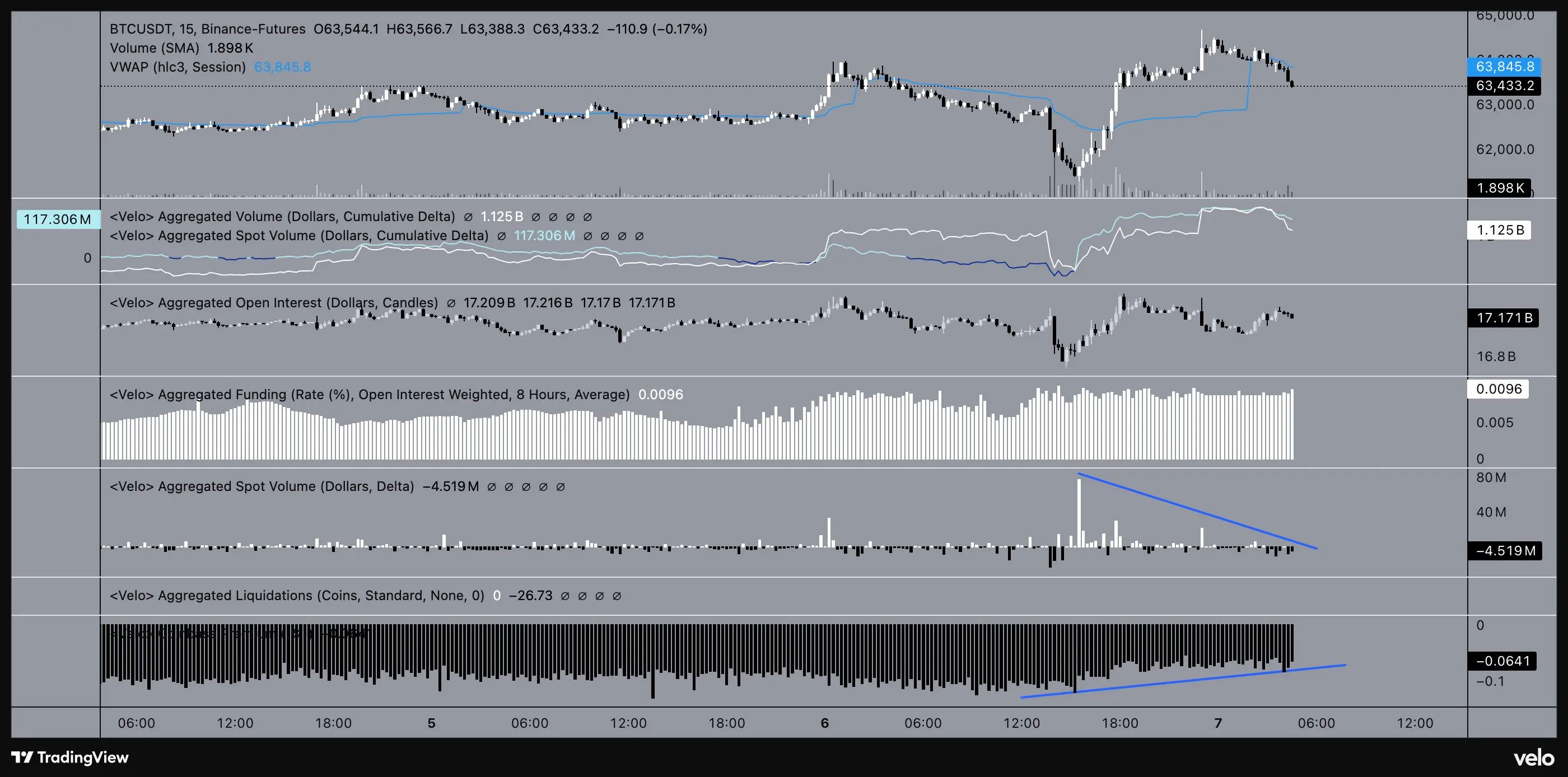
Spot is still holding, but funding and OI are both high. When perp selling pressure picks up, it easily leads to cascading liquidations. Keep an eye on whether spot can hold.
AriaNaka
$BTC Orderflow Update
> We saw very strong spot aggression throughout the recovery, but that buying slowed noticeably into yesterday evening.
> The current correction remains relatively controlled. If leverage starts taking over, this can accelerate quickly.
-> spot not rolling over yet
> Funding has continued to grind higher, while OI remains elevated -> a lot of leverage was added on the move up
> Into the highs, participation faded. Volume declined and we saw a number of shorts getting squeezed out near the end of the move.
> Right now, perps are showing stronger selling aggression. If spot demand fails to hold agaisnt it, this could unwind fast
Still watching whether spot continues defending or starts giving way.
repost-content-media
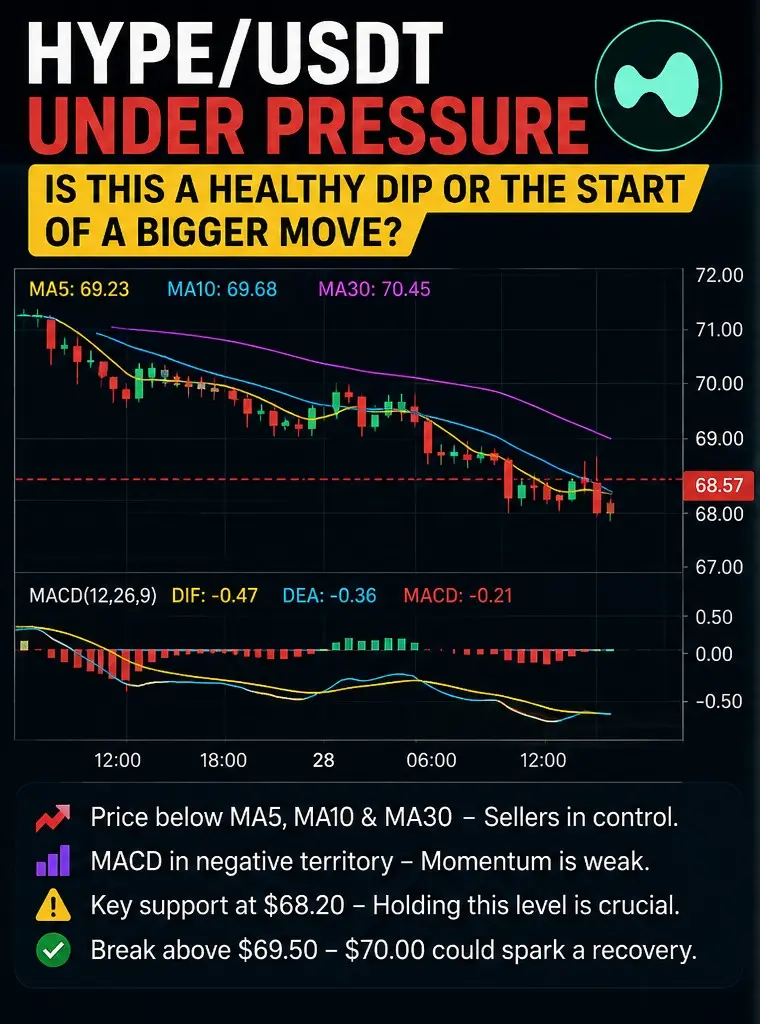
Whether 68.20 can hold is key. If it holds, expect a rebound. If it breaks, we'll have to wait for the next support. Don't rush to go all-in.
2In1
#HYPEUSDT
HYPE/USDT UNDER PRESSURE – IS THIS A HEALTHY DIP OR THE START OF A BIGGER MOVE?
The crypto market never moves in a straight line, and HYPE/USDT is currently reminding traders of that reality. After facing strong selling pressure, the price has slipped to around $68.57, showing a noticeable short-term correction. While many traders are reacting emotionally, experienced investors know that every pullback deserves careful analysis rather than panic.
Looking at the 1-hour chart, the trend remains bearish in the short term. The price is trading below the MA5, MA10, and MA30, indicating that sellers currently have the upper hand. Until buyers reclaim these moving averages with convincing volume, any upward movement should be treated as a potential relief bounce rather than a confirmed trend reversal.
Another important signal comes from the MACD indicator, which remains in negative territory. Momentum is still weak, suggesting that buyers have not yet regained full control. However, markets often reverse when sentiment becomes overly negative, making the next few candles extremely important for determining the direction ahead.
The immediate support zone around $68.20 deserves close attention. If this level holds and buying volume increases, HYPE could attempt a recovery toward the $69.50–$70.00 area. On the other hand, a clean break below support may invite another wave of selling before a stronger base is formed.
For futures traders, this is a market where discipline matters more than prediction. Chasing every candle or using excessive leverage can quickly turn a manageable trade into a significant loss. Professional traders focus on confirmation, proper risk management, and patience instead of emotional decisions.
It's also worth remembering that corrections are a natural part of every healthy market cycle. Strong projects often experience temporary declines before continuing their broader trend. This is why successful traders pay attention to market structure, liquidity, and volume rather than relying only on price movements.
📊 Key Levels to Watch
🔴 Support: $68.20
🟢 Resistance: $69.50 – $70.00
📈 Bullish Trigger: Strong breakout above moving averages with rising volume.
📉 Bearish Risk: Sustained trading below $68.20 could extend the correction.
Final Thought:
The next move in HYPE/USDT will likely depend on whether buyers can defend the current support zone. Stay patient, follow your trading plan, and let the market confirm the direction before making high-risk decisions.
What do you think? Is HYPE preparing for a strong comeback, or is another leg down still ahead? Share your analysis below. 🚀📉
repost-content-media
Last night, when I was liquidating a certain altcoin clone, the market order slipped by nearly two points. What could’ve been a break-even turned into getting forced to cut my losses. I watched the K-line replay for half an hour; the depth book had already been as thin as paper by then. I still insisted on rushing those few seconds, afraid that “waiting longer would make it worse”—but the real thing that made it worse was my own panic.
Now, when I look at those airdrop task platforms, the anti-sybil checks are enough to drive you mad. The points system turns “farming airdrops” into a punch-clo
The printing press is running again, risk assets are popping off first.
CoinNetwork
CoinJie.com news: Coin Bureau reports that the U.S. money supply is growing at the fastest pace in five years, indicating that liquidity is returning to the market. More liquidity typically supports risk assets such as stocks, Bitcoin, cryptocurrencies, and high-growth tech. If inflation stays within a controllable range, this could be positive for the market; however, if it reignites concerns about inflation at the Fed, the risks increase.
The 200-week moving average has been broken, 320 million long positions are trapped. This script is terrifyingly familiar.
CoinNetwork
Bitcoin falls below 200-week moving average for the first time, market volatility intensifies
Bitcoin has fallen below the 200-week moving average for the first time since October 2023, marking a bull-bear boundary, with over $320 million in leveraged longs liquidated within 24 hours. While some see this as a buying opportunity, concerns over deeper pullbacks persist. MicroStrategy holds approximately 847,363 BTC; if it breaks below $58,000, it could drop to $49,000. The current price is about 53% down from the all-time high.
Circle was kicked out of the Russell Growth Index; passive fund selling pressure, stacked with Open USD competition, has left CRCL taking a pretty hard hit—down to $62.
WuSaidBlockchainW
Circle (CRCL) has been removed from multiple Russell Growth Indexes
According to Simply Wall St, Circle (CRCL) was removed from several growth indices during the Russell annual reconstitution on June 26, which may lead to institutional and passive funds tracking the benchmark reducing holdings and lowering liquidity. CRCL has fallen 32.8% over the past 30 days, likely reflecting selling pressure; additionally, following the news of Open Standard launching the stablecoin Open USD, it dropped to $62 today, with a 24-hour decline of 16.55%.
CRCL+5.69%
USDC Treasury minted another 250 million on Solana. At this rate of liquidity injection, is DeFi summer coming back?
WuSaidBlockchainW
Wu learned that, according to Whale Alert data, at 19:35, USDC Treasury minted 250M USDC on the Solana network, corresponding to approximately $250 million. According to the Circle official website, as of June 25, the total circulation of USDC was $73.6 billion, with reserve assets of $73.9 billion.
USDC0.00%
SOL+5.73%
Kalshi's AI is quite aggressive, directly having Claude act as "Harrison" to review contracts, find vulnerabilities, and push new markets. With the first week of the World Cup reaching $5.1 billion in trading volume, the prediction market sector is really heating up.
CoinNetwork
Crypto界网消息,据彭博社报道,预测市场平台Kalshi已开发内部AI代理“Harrison”,用于测试合约规则、识别潜在漏洞、推荐新市场及辅助市场结算。该工具基于Anthropic Claude模型构建。Kalshi表示,目前拥有超过500个预测市场模板,AI已成为市场团队的重要辅助工具。数据显示,Kalshi世界杯首周交易量达5.1B美元,创历史新高。
KALSHI+2.82%